


 0
“In its Supreme Court petition, Celanese argued ‘the Federal Circuit adopted a contrary rule only by flouting the bedrock principle that statutory interpretation starts (and often ends) with the text.’”
 The U.S. Supreme Court today denied a petition seeking to clarify “whether the sale of an end product made by secret use of a claimed process places the process itself on sale, rendering the process unpatentable under the AIA’s on-sale provision.”
The petition was an appeal from the August 12,2024, precedential decision of the U.S. Court of Appeals for the Federal Circuit (CAFC) in Celanese International Corp. v. International Trade Commission (ITC) affirming the ITC’s ruling that process patents owned by Celanese were invalid due to secret sales of products made by the claimed process prior to the one-year on-sale bar, codified at 35 U.S.C. § 102(a). Following the U.S. Supreme Court’s reasoning in Helsinn Healthcare v. Teva Pharmaceuticals (2019), the Federal Circuit rejected Celanese’s contentions that statutory changes wrought by the America Invents Act (AIA) altered the on-sale bar such that sales of products manufactured by an undisclosed process would not invalidate patents claiming that process.
Celanese petitioned the ITC concerning high-potency sweeteners sold by Chinese chemical manufacturer, Anhui Jinhe, which allegedly infringed claims of three Celanese patents covering processes for making artificial sweeteners. During that proceeding, it was undisputed that, more than one year prior to the patents’ effective filing date, Celanese’s process was in secret use in Europe resulting in sales of Ace-K sweetener into the United States. The ITC proceeding ended with a determination of no Section 337 violation after the presiding administrative law judge rejected Celanese’s arguments that the AIA’s passage changed the meaning of Section 102(a)(1)’s on-sale bar.
The Federal Circuit’s ruling noted that the on-sale bar has been a part of U.S. patent law since passage of the Patent Act of 1836, and that the bar has long been interpreted as barring patentability based on sales of products made by a secret process. This interpretation of Section 102(a)(1)’s on-sale bar was not impacted by statutory changes enacted by the AIA under the Supreme Court’s reasoning in Helsinn. In that case, the Supreme Court noted that Congress re-enacted the on-sale bar within the context of a substantial body of law finding the on-sale bar triggered by sales that do not disclose details of the invention to the public. That settled judicial interpretation made it appropriate to presume that Congress’ decision to reenact the “on sale” language in the AIA retained its meaning.
Celanese argued that the AIA’s change of “invention” to “claimed invention” in Section 102(a) meant that the process to make its artificial sweetener must itself have been sold to invalidate its process patent claims. Further, the addition of the catch-all phrase “otherwise available to the public” meant that details of the claimed process invention must be public to result in invalidation, according to Celanese.
Rejecting these arguments, the Federal Circuit found that the statutory change to “claimed invention” was simply a clerical refinement reflecting the same meaning, noting that case law interpreting the on-sale bar has interchangeably referred to either the “invention” or the “claimed invention.” As well, the same argument regarding Section 102(a)(1)’s catch-all phrase was at issue in Helsinn, the appellate court noted, and the Supreme Court found that the addition of this new phrase was meant to capture material that didn’t fit enumerated categories like “on sale.”
In its Supreme Court petition, Celanese argued “the Federal Circuit adopted a contrary rule only by flouting the bedrock principle that statutory interpretation starts (and often ends) with the text.” Instead, said the petition, the CAFC looked to its own precedent and reenacted it despite the fact that its precedent relied on a “bygone era” in which courts interpreted statutes by trying to guess what congress meant and, ultimately, making policy judgments themselves. “Relying solely on policy judgments, the Federal Circuit had adopted conflicting policies for different sellers: a patentee’s sales of products made using a claimed process triggered the on-sale bar, but third-party sales of the same products did not,” added the petition.
Celanese urged the Court to take the case in order to 1) clarify the proper interpretation of the on-sale provision; 2) to avoid uncertainty about other provisions of the AIA, such as third-party sales of end products and the grace period for prior art; and 3) and because to allow the decision to stand “would set precedent for courts interpreting other statutes to disregard unambiguous text in favor of their own old decisions.”
The National Association of Manufacturers also filed an amicus brief in support of Celanese, arguing that the Federal Circuit’s decision “has
injected instability and inconsistency about the scope of activities that bar process patents.” But the Court today declined to review the case.
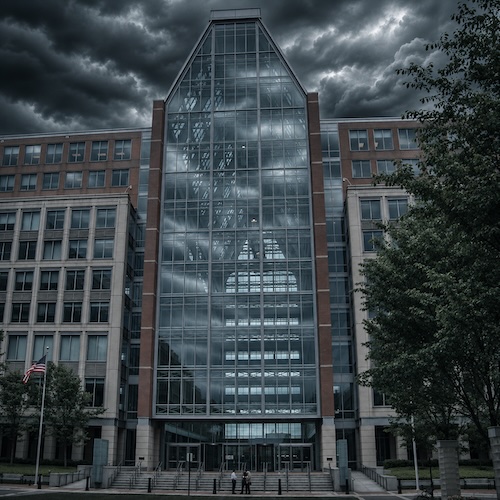
Image Source: Deposit Photos
Author: Willard
Image ID: 21904741














Join the Discussion
No comments yet.