


 0
“A halo strategy does not require a loss. It requires looking beyond the flagship’s own income statement.”
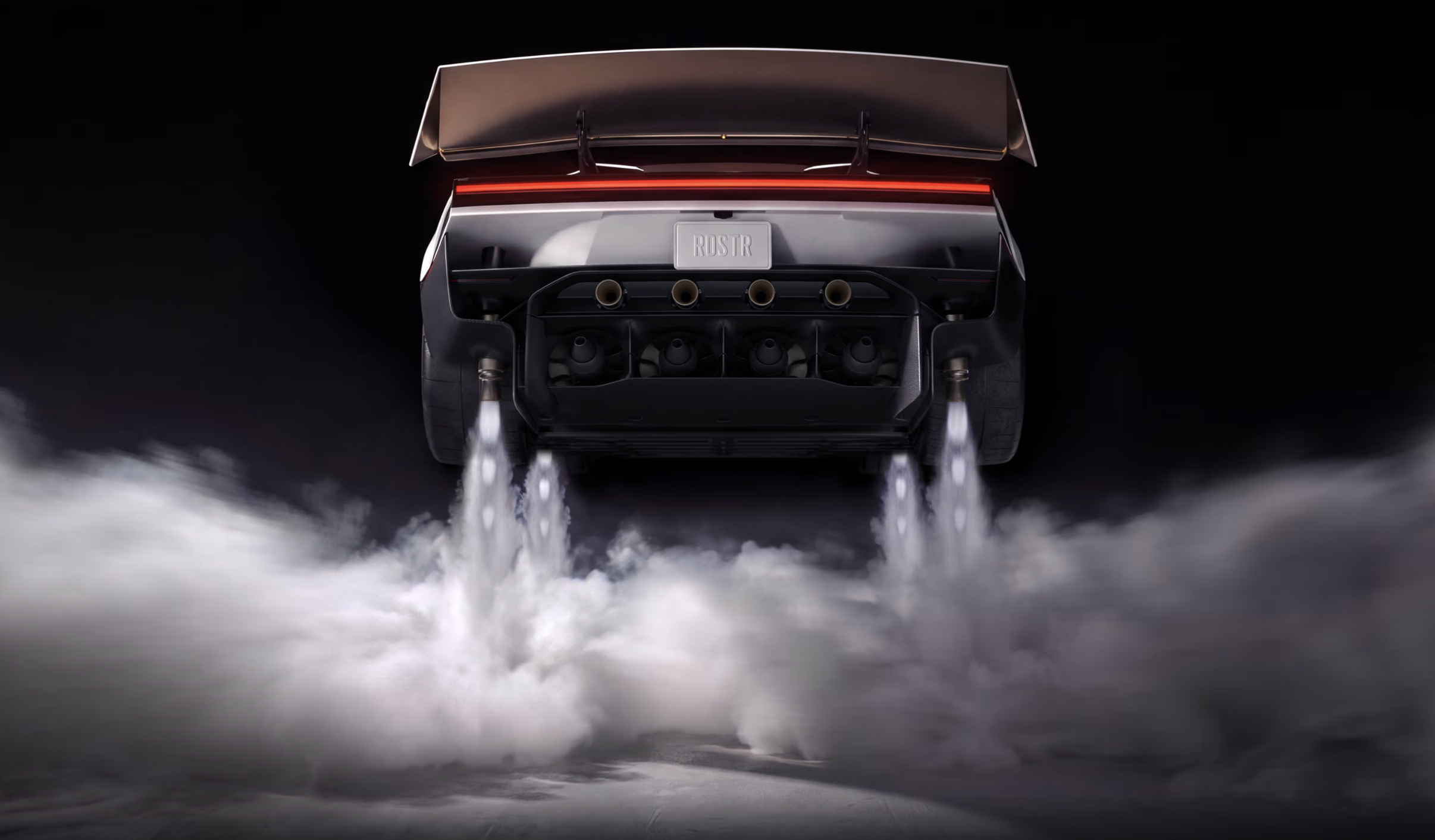
Source: Tesla.com
On October 15, 2026, a TESLA ROADSTER hung upside down, flipped into the air, and briefly hovered. Powered fans supplied suction for inverted travel. Cold-gas thrusters drawing on SPACEX technology controlled the airborne maneuver. The engineering question was how to make a car fly. The commercial question is what else that car could sell.
TESLA’s October 21 investor update still lists ROADSTER as being in design development. Its brand can nevertheless benefit before the car reaches a customer’s garage. A shopper impressed by the demonstration may choose a TESLA family car, even without the slightest interest in flying.
That is the business case for a “halo product”. Manufacturers need not justify these projects through profit on the extraordinary product itself. Their larger return may come from goodwill in the trademark shared with products that sell in volume. Sometimes the showpiece need never sell at all.
The Audience is Larger Than the Order Book
Limited production leaves few buyers to absorb development and tooling costs. A high price does not guarantee recovery. The engineering test-bed explanation can be entirely sincere: an ambitious project may prove technology for later vehicles. Whether planned or incidental, the resulting reputation can travel further than the technology.
PORSCHE describes its 1980s 959 as a technology platform, built in a limited series of 292. Its audience was much larger than its ownership circle. Someone who never drove a 959 could still associate PORSCHE with the engineering achievement. The manufacturer sold other cars bearing that name.
Direct profit and a halo can also coexist. CHEVROLET has expressly called CORVETTE a halo, and GM described it as profitable in 2013. A halo strategy does not require a loss. It requires looking beyond the flagship’s own income statement.
From Upside-Down Dresses to Perfume
Fashion already knows something about inverted products. VIKTOR&ROLF’s 2023 couture collection included gowns worn upside down and sideways. The same name appears on FLOWERBOMB, produced under a fragrance license with L’ORÉAL. Parent company OTB identifies it as a worldwide bestseller. A customer need never contemplate wearing the gown to want the perfume.
TIFFANY takes the idea further: its showpiece is not offered for sale. The company expressly confirmed that status for its celebrated 128.54-carat yellow diamond in 2021. That year, Beyoncé wore it in the house’s advertising campaign. The stone could promote the name without changing owners.
The connection to attainable goods is unusually concrete. TIFFANY entered a fragrance agreement with COTY in 2016. COTY’s 2017 perfume launch materials invoked the famous yellow diamond as part of the brand’s heritage. A customer could buy into that heritage without buying a diamond.
Nothing about a 128-carat diamond improves a fragrance’s scent. Yet the jeweler’s reputation for rarity and craftsmanship can affect what buyers will pay for the bottle. That is why the trademark matters. It allows the association with excellence to travel between products that share none of their materials.
A Million-Dollar Spectacle with a Retail Counterpart
VICTORIA’S SECRET made the next purchase explicit. In 2018, ATELIER SWAROVSKI created its Fantasy Bra and body chain, valued together at $1 million. Vogue reported that a retail version would be available for $250. That version used SWAROVSKI crystals. Admirers had something attainable to buy, with a recognizable connection to the extraordinary creation.
Attainable is relative. A $250 bra remains a premium purchase. Beside a million-dollar showpiece, however, it can feel like admission to something more exclusive. The halo can therefore support the middle of a brand’s range while preserving a premium over competitors. The customer buys an association as well as an object.
The distinction is between the audience for the spectacle and the market for the showpiece. The first can be enormous even when the second is tiny. Licensed perfume, co-branded accessories, and products from the manufacturer’s own range offer different ways to turn admiration into purchases. Their margins and royalties can help repay the investment.
Protect the Name and Plan the Next Purchase
Trademark law gives that investment a commercial foundation. In Qualitex Co. v. Jacobson Products Co., 514 U.S. 159, 164 (1995), the Supreme Court explained that trademarks help producers capture the financial and reputational rewards of desirable products. Although the case concerned color, its explanation of trademark incentives applies more broadly.
Licensing extends the opportunity beyond goods the brand owner manufactures. A specialist can make and distribute the products while the trademark owner earns royalties under the agreement. The reputation can generate income without the brand owner building another factory or mastering another manufacturing process.
The financial stakes can be substantial. In its 2023 accounts, ESTÉE LAUDER allocated the entire $2.578 billion cost of acquiring the TOM FORD brand to the trademark asset. Its ownership also supported licenses for fashion and eyewear. The name itself was an asset capable of earning revenue across product categories.
For management and counsel, the work begins before the reveal. Identify which attainable purchase should follow the spectacle. Secure trademark rights for that expansion, and settle whose name receives the credit when partners collaborate. Licensing agreements should address quality standards and brand presentation. Disappointing goods can squander the reputation the flagship created.
The return still needs evidence. These examples establish commercial connections, not a measured profit caused by each spectacle. Compare incremental margins and royalties with the cost of creating and promoting the flagship. Account for other advertising and product changes. A large audience alone does not establish a profitable investment.
The practical lesson is to design the attainable purchase alongside the extraordinary product. TESLA’s hovering ROADSTER may help sell family cars; a spectacular jewel can help sell perfume. The most valuable customer may never buy the showpiece. The opportunity is to give that customer something desirable to buy under the same protected name.














Join the Discussion
No comments yet. Add my comment.
Add Comment