
![[IPWatchdog Logo]](https://ipwatchdog.com/wp-content/themes/IPWatchdog%20-%202023/assets/images/temp/logo-small@2x.png)
 6
6 This week on IPWatchdog Unleashed we enter the world of innovation politics with a discussion about what to expect for the patent world during President Trump’s second term, what to specifically expect from the Patent Office, what to expect in Congress relating to the patent reform bills that we can expect to be reintroduced, which are namely PREVAIL, which relates to reforming the Patent Trial and Appeal Board (PTAB), the Patent Eligibility Restoration Act (PERA), which relates to reforming the law on patent eligibility to make it easier to patent software—including artificial intelligence—and to make medical diagnostics patentable again, and RESTORE, which relates to overruling the Supreme Court’s 2006 decision in eBay v. MercExchange, which has made it virtually impossible to obtain injunctive relief even when patent owners win and prove ongoing infringement.
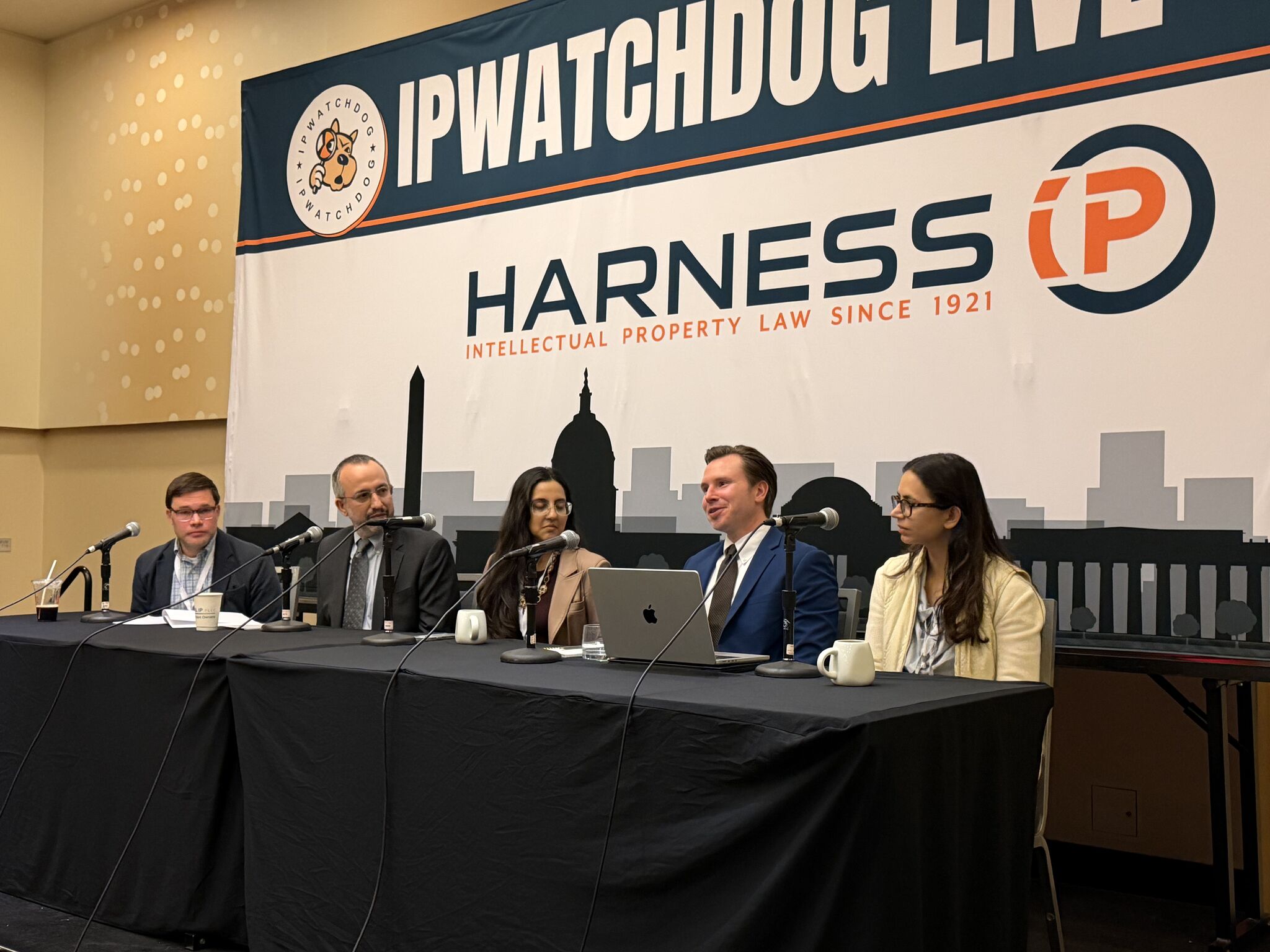
The conversation that you will hear happened at the annual IPWatchdog PTAB Masters™ program, which was held at the end of January at IPWatchdog Studios. The panelists were Chief Judge Paul Michel, former Chief Judge of the United States Court of Appeals for the Federal Circuit, David Kappos, a partner with Cravath and a former Director of the Patent Office during President Obama’s first term, and Chris Israel, who is a senior partner at American Continental Group and served in the George W. Bush White House as the first U.S. International Intellectual Property Enforcement Coordinator. Also joining the conversation is Scott McKeown, who is a shareholder at Wolf Greenfield and was Chair of the PTAB program. Scott, as most of you know, is also one of the leading experts on PTAB practice in the United States.
“I think you just feel a different intensity with this administration,” Chris Israel said to lead off the discussion. “I know that’s super macro and we’re going to talk about IP and patents, but just to level set, I just think we need to realize the space that we’re operating in and how many other just unbelievably consequential issues are moving at the same time. And that’s all competing for the attention… just all operating in that space at Mach 10.”
 “I would tell you there are some things that aren’t going to change between now and tomorrow or now and next week or now and next month or even probably now and next year,” said Kappos, acknowledging the fluidity of the moment. “One of them is we need to stand behind the PTO. We need to be all on Team PTO.And that means really basic things like fee diversion. The last thing in the world we want is for that to somehow creep back into the world. That means really basic things like dealing with backlogs and pendency. because if the PTO can’t get that back under control, it’s really not going to be able to do anything else… The other thing that won’t change is that we need PTAB reform. That’s the PREVAIL Act.”
“For the first time in my recollection, we’ve got people coming in at cabinet and call it uber-cabinet levels who at least think they know something about patents and the patent system,” Kappos went on to explain. “And that is going to create a very different dialogue and dynamic than we’ve really ever seen before in my life. I don’t remember when there’s ever been a Secretary of Commerce who would claim to know anything about patents or really anyone else at the top of the Administration.”
“Well, it’s very hard to make predictions, so I won’t try to do that,” said Chief Judge Michel. “Let me just lay a bit of a baseline because soon I’m going to be very critical of some aspects of the PTAB. But I want to be clear that I support the AIA. It was necessary. Overall, it was very good. It was implemented as well as could be, given some of the design defects embedded in the IPR proceedings in the statute itself. I’m in favor of the PTAB. I think overall it’s doing a very good job, a very necessary job. And I think that the overall situation of the country for our innovation engine is that the courts unintentionally, unwittingly, unnecessarily have created a big mess.”
“The patent profession is going to have to rescue the country’s innovation machine by influencing Congress, by correcting errant initial assumptions by incoming powers,” explained Chief Judge Michel. “So, it’s really on the shoulders of the patent community, all of you, to help straighten out this considerable series of messes. I think it’s possible. I think it’ll happen. It won’t be easy, and it won’t happen unless everybody gets quite involved, including in ways that may be uncomfortable. For example, there’s going to have to be a lot of lobbying on Capitol Hill to educate staffers and members about these reforms that Dave Kappos has mentioned. I support them all a thousand percent, and I would even add a few more, but I won’t go into that right now. But it’s a time of tremendous opportunity, but it’s also a time of tremendous danger. And to make sure the outcome is right is going to take everybody to get involved in a very constructive and kind of brave way.”
“I may make just some very quick opening remarks myself,” I told the audience and panel at the program. “And I almost can’t believe I’m about to say this because of so much that I have written in the past about what an atrocity having a million plus backlog is, but what difference does it make? And I say, what difference does it make is because I don’t think patents in the U.S. are worth very much anymore. And that’s a sad commentary for a whole host of reasons. Now, I don’t know where that goes. I do hope that [Acting Director] Coke Stewart and whoever winds up being the Director can fix this whole system from top to bottom, but if we can’t fix the system from top to bottom, the least of our worry is going to be having a backlog where people can’t get patents.”
And that is where our conversation began. We would go on to discuss the almost certain reintroduction of PREVAIL, PERA, and RESTORE, as well as the odds of getting patent reform during this Congress—which no one thinks was very likely unless President Trump himself steps up and makes it a priority. We also discuss the “helter-skelter” nature of the U.S. patent system, where the pieces don’t fit together, don’t integrate, leads to low predictability, and innovation-killing reality that simply does not incentivize investment in innovation. We also discuss the Administrative Patent Judges (APJs) of the PTAB being ordered back to the Office, and what that will mean for the number of petitions challenging patents that could possibly be instituted. And we discuss how antitrust enforcement would be unnecessary if we had a strong patent system that let young companies compete fairly based on innovation merit, and how Elon Musk is almost dead-on correct when he says that patents are for the weak—although Chris Israel suggested it would make more sense to say that “patents are for the young”.
So, without further ado, we invite you to listen to full conversation. You can listen to our full discussion wherever you get your podcasts (links here) or you can visit IPWatchdog Unleashed on IPWatchdog.com. You can also watch the video below, or on the IPWatchdog YouTube channel.
More IPWatchdog Unleashed
For more IPWatchdog Unleashed, see below for our growing archive of previous episodes.
![[Advertisement]](https://ipwatchdog.com/wp-content/uploads/2026/03/NLPatent-Apr-2-2026-sidebar-700x500-1.jpg)
![[Advertisement]](https://ipwatchdog.com/wp-content/uploads/2026/02/Junior-Apr-7-2026-sidebar-700x500-1.jpg)







![[Advertisement]](https://ipwatchdog.com/wp-content/uploads/2021/12/WEBINAR-336-x-280-px.png)
![[Advertisement]](https://ipwatchdog.com/wp-content/uploads/2021/12/Ad-4-The-Invent-Patent-System™.png)





Join the Discussion
6 comments so far.
Anna Krengel
April 2, 2025 07:29 pm1st . . Eliminate the PTAB
2nd. .Eliminate the PTAB
3rd . .Eliminate the PTAB!
glenn day
February 12, 2025 08:51 pmThe system we have now allows large companies to steal the value of IP from smaller companies. This must stop or innovation will suffer. Justice demands that companies be able to depend on patents granted without years of back and forth from the Patent Appeal Board. Also, small companies must be able to receive injunctive relief from ongoing patent infringement. This is simple justice.
Bob Dickerman
February 12, 2025 10:16 amThank you for presenting an excellent panel discussion.
Night Writer
February 12, 2025 09:34 amNotice that part of this is proposed legislation that would allow citizens to remove their case to Article III courts.
Night Writer
February 12, 2025 09:32 amhttps://www.youtube.com/watch?v=3W8IdcNBop8
Here is a good hearing on how ALJs violate our Seventh Amendment rights.
Josh Malone
February 11, 2025 10:56 amLots of America Invents Act and PTAB advocacy on this blog. What about the legislation that that will help inventors like RALIA and BIA?