


 17
17 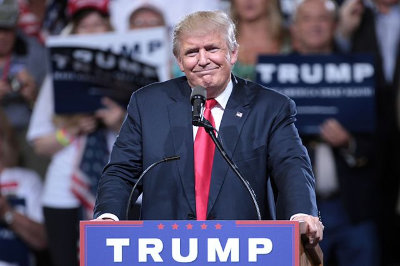 In the immediate wake of such an historic election, it is far too early to know what the intellectual property landscape will really be like under a second Trump Administration. However, IPWatchdog reached out to IP stakeholders for some initial comments, and their educated predictions and insights are included in full below.
Alden Abbott , Former FTC General Counsel; Senior Research Fellow Mercatus Center at George Mason University
“The reelection of President Trump likely will lead to a major recalibration of IP policy in a pro-innovation direction.
In antitrust, one may expect the Justice Department (DOJ) to reinstitute the strong property rights-oriented “New Madison Approach” advanced by Assistant Attorney General Makan Delrahim during Trump’s first term. In a nutshell, that approach stresses that patentees have no duty to license their patents, and that standard essential patents (SEPs) should have the same status and legal protections as other patents (including the patentee’s right to an injunction for infringement). Relatedly, the Trump Administration’s SEP-friendly NIST/DOJ/PTO SEP policy statement on licensing (rescinded by the Biden Administration) should be adopted once again. One may also expect the DOJ (and, perhaps, the Federal Trade Commission) to take a more permissive approach to patent licensing arrangements, recognizing that they are key to promoting the efficient transmission and diffusion of new technologies. This could be part of an ‘innovation-centered’ focus by the new Administration.
More generally, the second Trump Administration hopefully would also reject and replace the ‘weak-IP’ orientation of the Biden Administration, by, for example: (1) supporting legislation to clarify broad section 101 patentable subject matter reform; (2) supporting legislation to reinstitute the presumption of a right to an injunction as a remedy for patent infringement; (3) reinstituting U.S. Trade Representative (USTR) support for robust TRIPS IP protection (including rejection of TRIPS waivers); (4) rejecting the Biden Administration’s attempt to broaden Bayh-Dole ‘march-in” to regulate patent licensing prices; (5) rejecting price regulation of pharmaceutical patents; and (6) advancing a pro-IP policy both domestically and internationally (including, for example, rejoining digital free trade negotiations).”
Hon. Susan G. Braden , Jurist-In-Residence, Center for Intellectual Property x Innovation Policy C-IP2
“In my judgment, the re-election of President Trump is a major victory for the respect ALL property rights, including intellectual property rights! It should mean the demise of the ill- conceived ‘March- In Guidance,’ hopefully a restoration of the core mission of the USPTO to issue quality patents- first and foremost, and potentially a renewed interest by Congress to significantly reform the Patent Trial and Appeal Board. At the Federal Circuit, several vacancies should arise to add judges of the caliber of Judge Newman, if not her restoration to service. And a renewed appreciation for small inventors and entrepreneurs who have been overlooked for too long! And I suspect both Justices Thomas and Alito likely will retire, opening up room for a Justice that may have an interest in revisiting eBay, in particular.”
Michelle Cooke , Partner, ArentFox Schiff
“One thing is for certain – the president-elect understands the power and value of branding. Trademark laws will remain strong and consistent. In contrast, the election will impact the future of AI regulation. A year ago, the Biden administration issued guidelines and directives to various government agencies to assess the government’s role in AI, the impact of AI on commerce and security, and potential risks and guardrails. President Trump is firmly footed in the camp of deregulation as a driver of economic growth, an approach favored by many of his tech industry supporters. As U.S. companies dominate the AI industry, an economic juggernaut, a Trump administration will likely support helping the U.S. maintain its competitive edge and leadership role in the field over other concerns. In the absence of a major negative event directly tied to AI, less U.S. regulation as to AI should be expected.”
Heath Hoglund , President, Via Licensing Alliance
“The President plays a critical role in setting the tone with other key global trade partners, and President Trump historically took a tough line on trade with China during his last administration. While the full impact of the election on global IP rights and practice remains to be seen, one thing is certain. Though we may see increasing global fragmentation between the East and the West on issues of trade policy if the new administration takes the tough stance many expect, from an IP and patent licensing perspective, the United States remains inextricably linked with China and other partners in Asia.”
Hon. Paul R. Michel , Chief Judge (ret.), U.S. Court of Appeals for the Federal Circuit
“Because IP will not be a high priority for the new Trump Administration, policy will be set mostly by whomever finally emerges, perhaps in year 2, as its choice for Director of the USPTO. If that person is does not favor strong, reliable patents, the policy will undermine patents as the incentive for the massive technology investments the nation needs. Conversely, if the appointee supports robust patenting and balanced and predictable validity reviews at the PTAB, economic security, global competitiveness, job creation and national security will all thrive. Names rumored to date include persons in both camps. We need to try to assure a director who actually understands how work patents to drive innovation. It should not be too much to ask that the head of the patent office must believe in patents! The president-elect would also be well advised to appoint an ‘innovation czar” at the cabinet level to coordinate the many agencies involved so they all pull in the same direction.”
Nathan Mutter , Partner, Holland & Hart
“Although Trump didn’t make any promises on the campaign trail that would directly target patent law, it’s likely that at least some of the USPTO’s recently-proposed rules are going to wind up in the incoming administration’s crosshairs. Perhaps first to go will be the proposed rule to add a conditional enforceability restriction on patents having a terminal disclaimer (TD) filed to obviate the judicially-created obviousness-type double patenting (ODP) rejection. The proposed rule introduces a range of new risks to patent filers and has received a wave of criticism for potentially enabling challengers to substantively invalidate several patents in a family through the invalidation of just a single claim in one of those patents. It’s likely that a rule having such sweeping and potentially negative implications for a range of large businesses will be critically viewed by the Trump administration, which has historically supported policies seen as pro-patentee.”
Hon. Randall R. Rader , Former Chief Judge (ret.), U.S. Court of Appeals for the Federal Circuit
“President-elect Trump is, above all, a businessman. He knows the value of intellectual property. He faces a challenge to deliver economic recovery and a path to prosperity in short order. Innovation and invention have always been the keys to U.S. economic growth. Thus, he is likely to appoint the people and adopt the policies that will revive the U.S. inventive spirit. In my mind, that includes the legislation to restore a sounder eligibility policy and a USPTO devoted to creating new economic directions.”
![[Advertisement]](https://ipwatchdog.com/wp-content/uploads/2026/10/Junior-Oct-15-2026-sidebar-700x500-1.jpg)
![[Advertisement]](https://ipwatchdog.com/wp-content/uploads/2026/10/BlackBox-IP-Oct-20-2026-sidebar-700x500-1.jpg)
![[Advertisement]](https://ipwatchdog.com/wp-content/uploads/2026/10/Questel-Oct-22-2026-sidebar-700x500-1.jpg)
![[Advertisement]](https://ipwatchdog.com/wp-content/uploads/2026/09/WE-BUY-PATENTS-SIM-IP-Ad-1-revised-on-Sep-28-2026-700x500-1.jpg)
![[Advertisement]](https://ipwatchdog.com/wp-content/uploads/2026/09/Life-Sciences-2026-sidebar-early-bird-date-corrected-700x500-1.jpg)
![[Advertisement]](https://ipwatchdog.com/wp-content/uploads/2024/09/Patent-Prosecution-Training-sidebar-700x500-2025-03-27.jpg)




![[Advertisement]](https://ipwatchdog.com/wp-content/uploads/2021/12/WEBINAR-336-x-280-px.png)
![[Advertisement]](https://ipwatchdog.com/wp-content/uploads/2021/12/Ad-4-The-Invent-Patent-System™.png)



Join the Discussion
17 comments so far.
F22strike
November 9, 2024 03:09 pmRob Curylo –
January 6 has nothing to do with “Trump’s approach to IP.” Moreover, you ignore the fact that in his speech, Trump told his followers to protest peacefully on January 6.
The use of music recordings at Trump’s rallies was very likely authorized by blanket licenses.
In my opinion, the harm to the safety and security of our nation from Kamala’s misrepresentations about Biden’s mental fitness far outweighs any harm from Trump’s comments about immigrants eating dogs and cats.
Yenrab
November 8, 2024 10:21 amIt’s likely Clause Eight will have to be amended to clarify what an author or inventor is, what writings and discoveries are, and more fundamentally, what is meant by the progress of science and useful arts. This won’t be immediate, considering how long it takes to get three-quarters of the state legislatures to agree ln just about anything.
Frank Coppa
November 8, 2024 09:02 amNice summary, Eileen. IP was certainly not an issue splashed across the national campaign pages for the past 4 months, but it’s certainly of great interest to our community.
Rob Curylo
November 8, 2024 07:10 amThe interesting thing about Trump’s approach to IP is that he instigated and refused to de-escalate an attack on the Capitol that directly killed one police officer and led several officers to commit suicide in the days following the attack. I suppose his campaign’s consistent use of artists’ songs at rallies without permission could be a tea leaf on copyright and generative AI, but that’s a bit of a stretch.
More generally, the finer (or broader) points of IP strategy might be beyond the capability of a man who responds to a policy question on his pet issue of immigration with a “They’re eating the dogs!” rant that got schools closed from bomb threats. His policy will probably be set by the whims of whichever advisor or cabinet-level appointee happens to have opinions on IP.
Irritated
November 7, 2024 07:35 pmMaybe we’ll get a director at the USPTO who will do what we need – up the quality and lower the pendency of applications. These lazy Examiners take too much time to search an application. Cut their time in half and make them substantively respond to a minimum number of 8 applications per week. Not advisory responses, I mean first actions.
Hold them to the fire. The pendency backlog is too big and Dir. Vidal has only presided over it getting bigger.
Anonymous
November 7, 2024 04:47 pmWhat Judge Michel does not say is that Vishal Amin (Intel lobbyist) is one of the rumored people for the Director position. How Trump could even consider appointing a Big Tech lobbyist is beyond me. Maybe he isn’t. Or maybe he doesn’t even know this is happening.
Max Drei
November 7, 2024 04:07 pmPro Say, you can wait with “baited” breath if you like but if you don’t mind I would prefer it to be “bated”. I agree with the very first comment in this thread, that the President Elect’s attention span will not reach as far as IPR any time soon, if ever. There are quite a few other matters which occupy his mind unremittingly and grippingly.
And Paul Michel convinces me, when he surmises that the person picked by the new administration to run the PTO will set its course for IPR.
Pro Say
November 7, 2024 02:32 pm“If we get stronger patent rights as a result of the Trump administration, it will be by accident — not intent.”
That.
. . . while we wait with baited breath to see all the things the unhinged, immoral, megalomaniac Trump says and does not say . . . does and does not do . . . during his four year stint.
What could go wrong?
Paul Morgan
November 7, 2024 12:43 pmI also agree with former Judge Michel that patent policy changes, if any, will primarily be set by whomever Trump finally nominates for PTO Director. Lets hope it is a real and rational patent attorney and not a clueless and extremist political apointment. Plus, as noted, there will be the continuing competing lobbying interests of Pharma and Silicon Valley companies on certain patent law issues, and no likely Sup. Ct. decisional changes in patent law.
Nancy J Linck
November 7, 2024 12:25 pmTraditionally, Republican presidents have supported stronger IP rights. When Trump was previously in the White House and appointed Director Iancu, we saw that. There’s no reason not to expect the same will happen this time, as predicted by IP360. Reading the comments, it appears there are those who are liberal and don’t want to admit that what has happened will be good for IP holders whether that’s directly or indirectly.
Curious
November 7, 2024 09:43 amBecause IP will not be a high priority for the new Trump Administration, policy will be set mostly by whomever finally emerges, perhaps in year 2, as its choice for Director of the USPTO.
Judge Michel, as is typical, gets it right. Neither party (with a couple notable exceptions) cares anything about intellectual property rights.
Remember, the most destructive force to patent rights the last 30 years has been the right-dominated Supreme Court.
Regardless, whoever is going to be setting policy regarding intellectual property rights is going to be someone further down the food chain from the President. Also consider the possible influence of Elon Musk who (in)famously said that “I don’t care about patents … patents are for the weak.” In a 2014 memo to Tesla employees, Musk also wrote “[Patents] serve merely to stifle progress, entrench the positions of giant corporations and enrich those in the legal profession, rather than the actual inventor.”
If Musk has Trump’s ear on the issue, does anyone seriously think we’ll be getting strong patent policy?
And reading the comments below, Mark Summerfield got it right. It’ll be the lobbyists that have the biggest impact on patent policy, and the lobbyists with the greatest pull (i.e., Big Tech) are going to be advocating for weak patent rights.
If we get stronger patent rights as a result of the Trump administration, it will be by accident — not intent.
Robert Dickerman
November 7, 2024 09:08 amAs I posted in another thread on this topic, starting in January, every American will receive a lengthy and very expensive lesson on fascism.
I agree, Josh, that Musk will be partly to blame for this, due to his $44B propaganda channel, and his multi-$1M giveaway election tampering scheme.
Again, perhaps democracy will eventually be revived – after all, Germany is doing well after 100 years – but it’s too early to tell.
Eileen McDermott
November 7, 2024 08:54 am@JoshSchoonover: Neither of your comments was posted immediately because it’s the first time you’ve ever commented and the system requires approval – I wasn’t at my computer at 6:57AM to approve it. Every comment in this roundup is pro-Trump so I have no idea what you’re talking about.
Josh Schoonover
November 7, 2024 08:27 amMy prior comment stating “the future looks bright” disappeared but the one falsely suggesting the Trump administration will gift half of Ukraine to Russia stands. Almost like one side (the majority btw) is not allowed to participate and is being censored in the comments. I’ll move on, but for me IPW has identified itself as part of the problem. For the revisionist at IPW, I dont think GQ would approve of such censorship.
Robert Dickerman
November 7, 2024 07:15 amIn my (uneducated) opinion, your IP stakeholders are way over-thinking this. Question: Do you know who has Trump’s ear on this topic? Answer: Musk, who famously said “patents are for the weak.” Extrapolate from there.
Josh Schoonover
November 7, 2024 06:57 amA Trump administration will focus on America First. I expect they will disrupt bad ideas like US subsidies for ePacket shipping. With Lina Khan out of the way, US companies can do business again. The lawfare of the radical left will end, which is good for all of Elon’s companies and their investors, among many others. Bitcoin will surge as the United States increases its position. A 15% corporate tax will be much preferred to a 28%er, allowing businesses to invest in people and assets, growing the economy and revenue for the country. I think the new administration will have better intentions for use of March In Rights. There will be no more talk of taxes on unearned capital gains, which would have destroyed capital for emerging public companies (especially biotech) if actually implemented. I can go on forever. The next administration will be influenced by the Avengers, Trump, Vance, eMusk, tGabbard, rfKennedy, Vivek, and others. The American people voted for better management of public affairs in light of recent collapse of morals and policies devoid of common sense. IP policy should remain stable, but policies affecting business will be relieved of recent stranglehold. No more DEI, a focus in the fed government will now be who is most qualified instead of what do we look like. The war machine, intelligence machine, NGOs, and big food will be forever changed, no longer part of a totalitarian dark force undermining the Constitution. America is a nation of builders, soon we will be free to build. This was the best outcome for the country and should unleash innovation and the economy. I expect an uptick in # of filings, which if true will be great for IP practitioners. I expect Trump administration 2.0 to be a very good thing for us all. Thank Elon for that $44B investment in freedom! The future looks bright!
Mark Summerfield
November 7, 2024 05:38 amWhat a load of BS! I’ve been around for long enough (over 30 years, first as a researcher and innovator, and then as a patent attorney) to have observed that IP policy does not divide along party or ideological lines. The liberal 101 jurisprudence of State Street emerged from the Clinton era. The more restrictive jurisprudence that led to Bilski, Alice et al. emerged from the George W Bush era. The America Invents Act – love it or hate it – was the bipartisan work of Smith and Leahy. Presidents have rarely played a significant role: the minutiae of IP barely registers with them. Lobbyists walking the corridors of Congress have a bigger impact than the person in the Oval Office.
Trump will have a big impact on the world. Maybe he will gift half of Ukraine to Russia. Maybe he will sit by while China annexes Taiwan. Maybe he will keep his word, and undo more than half a century of expansion of global free trade (driven by the US) by introducing huge tariffs. But what he won’t do is direct any of his limited attention span to the details of IP.