
![[IPWatchdog Logo]](https://ipwatchdog.com/wp-content/themes/IPWatchdog%20-%202023/assets/images/temp/logo-small@2x.png)
Posts in Patents
Expanding Access to the ‘100-Day’ Program: ITC Announces Pilot Program Authorizing Interim Initial Determinations
Since the Supreme Court restricted access to permanent injunctions in eBay v. MercExchange, LLC, more and more patent owners have flocked to the International Trade Commission (ITC) to pursue a Section 337 investigation in hopes of obtaining a coveted and comparable exclusion order. These investigations address unfair practices in import trade—many of which involve allegations of patent infringement—and often lead to exclusion orders preventing infringers from importing their goods into the United States. The ITC’s statutory duty compels prompt completion of these investigations, with matters often proceeding to a full evidentiary hearing less than a year after the complaint is filed. However, with the rapid rise of disputes in the ITC, the agency is under relentless pressure to develop new approaches to facilitate efficient resolution of its investigations.
Waiving IP Rights: The Wrong Path to the Right Goals
Waiving intellectual property (IP) protections for COVID-19 vaccines will hinder rather than further three meritorious objectives of the current U.S. Presidential Administration: ending the pandemic as soon as possible, leveling the IP playing field with China, and pursuing a worker-centric trade policy. Ensuring equitable, widespread, and successful distribution of vaccines across the globe to meet the challenges of COVID-19, ending the erosion of U.S. IP at the hands of China, and putting Americans back to work are goals that most of us in the U.S. share. An examination of the facts, however, demonstrates that waiving IP rights in the name of COVID-19 relief undermines each of these three U.S. government goals.
CAFC Affirms District Court Section 101 Dismissal in Patent Infringement Suit Brought Against Samsung/Apple; Newman Dissents
On June 11, the U.S. Court of Appeals for the Federal Circuit (CAFC) affirmed the U.S. District Court for the Northern District of California’s grant of a motion to dismiss for Apple and Samsung in a patent infringement action brought by Yanbin Yu and Zhongxuan Zhang (collectively, “Yu”). Yu alleged infringement of Claims 1, 2, and 4 of U.S. Patent No. 6,611,289 (the ‘289 patent), titled “Digital Cameras Using Multiple Sensors with Multiple Lenses,” and the court dismissed due to ineligibility under Section 101. Judge Pauline Newman dissented.
CAFC Remands Walker Process Antitrust Issue to Fifth Circuit under Xitronex I Precedent
On June 10, the U.S. Court of Appeals for the Federal Circuit (CAFC) transferred Ronald Chandler et. al. v. Phoenix Services, LLC to the United States Court of Appeals for the Fifth Circuit due to lack of jurisdiction, since the case did not arise under the patent laws of the United States. The CAFC previously affirmed a holding that U.S. Patent No. 8,171,993 (‘993 patent) was unenforceable due to inequitable conduct because Heat On-The-Fly, the company that filed for the ‘993 patent, knowingly didn’t disclose prior uses of the process. The plaintiffs, Chandler Manufacturing and Supertherm Fluid Heating Services (collectively Chandler), alleged that the defendant, Phoenix Services, continued enforcement of the ‘933 patent on their website and that this conduct constituted an antitrust violation under Walker Process Equipment, Inc. v. Food Machinery & Chemical Corp., 382 U.S. 172 (1965), a 1965 Supreme Court decision that held that enforcement of a patent procured by fraud on the United States Patent and Trademark Office (USPTO) can be the basis for an antitrust claim.
Piercing Halo’s Haze at Year Five: Smoke Clearing on Enhanced Damages
On June 13, 2016, the Supreme Court decided Halo Elecs., Inc. v. Pulse Elecs., Inc., addressing standards for recovery of enhanced damages for patent infringement pursuant to Section 284 of the Patent Act, under which a “court may increase the damages up to three times the amount found or assessed.” In Halo, the Supreme Court rejected damages-related requirements imposed by In re Seagate Tech., LLC, a 2007 decision from the U.S. Court of Appeals for the Federal Circuit. With patentee litigants freed from what the Supreme Court called Seagate’s “inelastic constraints” in favor of a totality-of-circumstances approach, a consensus developed that Halo would facilitate recovery of enhanced damages. Statistics suggest alignment with that view.
The DOJ Antitrust Division: Regulatory Capture at the Expense of U.S. Interests
Historically an esoteric area of law, in recent years, antitrust policy is drawing broader attention as a tool to curb the exercise of monopolistic market power, especially by big tech behemoths. Congressional reports on both Democratic and Republican sides of the aisle, multiple legislative initiatives to reform U.S. antitrust law, and a recent book by Senator Amy Klobuchar (D-MN), Chair of the Senate Judiciary Subcommittee on Competition Policy, Antitrust, and Consumer Rights, are some indicators of this trend. Along these lines, broad outcry broke out against rumored Department of Justice (DOJ) Antitrust Division leadership appointments of candidates representing big tech interests, such as Karen Dunn (Apple, Amazon), Renata Hesse (Google, Amazon), Susan Davies (Facebook), and against Deputy Attorney General Lisa Monaco’s (Apple, Google) involvement in deliberations over the nomination of a DOJ Assistant Attorney General (AAG) for Antitrust.
Biden Nominee Tiffany Cunningham Tackles Tillis’ Questions on IP Issues at the CAFC
President Joe Biden’s nominee for the U.S. Court of Appeals for the Federal Circuit (CAFC), Tiffany Cunningham, yesterday submitted written responses to a series of questions for the record (QFRs) presented by Senator Thom Tillis (R-NC), explaining her view on hot button issues like judicial activism, patent eligibility jurisprudence, the explosion of patent cases in the Western District of Texas, and forum shopping. Cunningham was announced as Biden’s nominee to the top IP court in March. She would replace Judge Evan J. Wallach, who announced earlier that month that he would retire from active service and assume senior status as of May 31, 2021.
Patent Procurement and Strategy for Business Success: Building and Strategically Using Patents that Target the Right Infringers and Thwart Competitive Countermeasures
Successful patent strategies for business are inexorably tied to the quality of the patents upon which the patent strategies depend. The quality of a patent depends upon the capacity of a patent prosecutor to resolve a series of non-trivial patent application drafting and/or examination challenges in order to secure the issuance of a valid patent that includes claims that provide a desired scope of protection. Such challenges can involve subjecting complex and/or unwieldy subject matter to patent form in a manner that yields an accurate, clear and complete detailed description of the invention and well-crafted claims. Moreover, they can involve managing difficult patent examiners who require the amendment of claims as a prerequisite to advancing the prosecution of the application. The detailed description and the claims are the parts of the patent that can be employed by the practitioner to imbue a patent with attributes that optimize their support of patent strategies for business.
Patent Filings Roundup: Light Week at PTAB; Acacia Campaigns Heat Up; Board Institutes Koss IPRs
It was another really light week at the Patent Trial and Appeal Board (PTAB), with just 14 new patent filings (two post grant reviews [PGRs] and 12 inter partes reviews [IPRs]). The district court filings kept their usual clip with 65. Four of those IPRs were Micron’s barrage against an Acacia-backed semiconductor non-practicing entity (NPE), and two were Intel filing against a semiconductor entity, Demaray LLC. New York University filed a new complaint against ResMed; Volkswagen was hit on relatively generic wireless communications patents by Corydoras Technologies (run by Anubias Techs, LLC) on their “SOS” call help buttons in certain Audi and other top-line models. An earlier suit run by Corydoras (or Anubias, all seemingly run by prolific inventor-assertor Iwao Fujisaki, a Japanese citizen) has filed against over a dozen companies, including Amazon, BestBuy, ASUSTek, Sony, ZTE, Huawei, Lenovo, LG, Apple, and Samsung on a portfolio numbering over 150 U.S. patents.
EU Offers Alternative to COVID-19 IP Waiver That Supports Innovation and Addresses Supply Chain Problems
On June 4, the European Commission submitted to the World Trade Organization (WTO) its proposal for improving access to COVID-19 vaccines and treatments in countries suffering from vaccine shortages. The plan was submitted as an alternative to other proposals that would eliminate international patent rights for COVID-19 vaccines and treatments under the premise that such action would improve vaccine access in poorer countries. While the EU alternative contemplates the possible use of compulsory licensing, it addresses supply chain issues that will help to inoculate the entire globe against COVID-19 much more quickly than any patent waiver could ever hope to accomplish.
Written Description in the Life Sciences: The Devil is in the Details
There is a quid pro quo under the U.S. patent laws. In exchange for disclosing her invention, an inventor receives a limited monopoly. Recent developments, however, have made it harder for those in the biotechnology industry to obtain the benefit of this bargain. The written description requirement mandates that a patent specification convey to one of skill in the art that the inventors had possession of their invention as of the day they filed their patent application. Ariad Pharms., Inc. v. Eli Lilly & Co., 598 F.3d 1336, 1351 (Fed. Cir. 2010). Over the last decade, three areas have proven troublesome in the life sciences.
Do Your Due Diligence Before Participating in an NFT Transaction
Nonfungible tokens, or “NFTs,” are dominating the news cycle lately. From the $69.3 million sale of digital artist Beeple’s “Everydays — The First 5000 Days,” at Christie’s Auction House, to a $9.00 three-pack of NBA digital trading cards, NFTs with varying price tags are everywhere. Whether this new craze is a bubble waiting to be burst or whether it is here to stay, those wishing to take part in an NFT transaction need to be aware of everyone’s roles. Here’s what buyers and sellers should know.
IBM-IPwe Partnership Hopes to Increase Patent Efficiency, Propel Transactions
Investors, both speculative and strategic, are adjusting to the emergence of a bold new category of assets—digital collectibles. NFTs, or Non-Fungible Tokens, are so called because they are irreplaceable or one-of-a-kind artifacts–effectively, digital “limited editions.” NFTs trade on blockchains or distributed ledgers, typically without middlemen or brokers. The primary advantage of most blockchains is transparency and efficiency. Agreements are recorded on an open ledger for all to see. This is especially attractive to frequent traders who require accurate pricing and full disclosure for difficult-to-value assets. Now, two stalwarts in the intellectual property world, IBM and IPwe, believe that NFTs can be used to take patent monetization to new heights.
CAFC Affirms District Court Ruling for Amazon on Claim Construction
Last week, the U.S. Court of Appeals for the Federal Circuit (CAFC) affirmed the United States District Court for the Northern District of California’s final judgment of noninfringement of SpeedTrack’s (Plaintiff-Appellant) patent U.S. Patent No. 5,544,360 (the ‘360 patent). SpeedTrack sued online retailers AMAZON.COM, BESTBUY.COM, LLC, OFFICEMAX, INC., MACY’S, INC., MACYS.COM, LLC and many others for infringement of its category-based filing system. The ultimate decision weighed on the district court’s construction of claims and whether or not the ‘360 patent had a hierarchical structure. The district court construed the claims to not have a hierarchical structure and determined that defendants-cross-appellants did not infringe. The CAFC, with Judge Prost writing for the court, agreed.
After Hyatt v. Hirshfeld, it Might Be Time to Pay Attention to Prosecution Laches
Gilbert Hyatt was one of many applicants who filed many patent applications shortly before the June 8, 1995 transition point, where patent terms transitioned from being defined based on 17 years from issuance to 20 years from filing. However, he was quite unique in that he was an independent inventor who filed 400 patent applications before this transition point. The vast majority of these applications are still pending – decades after filing. Hyatt asserts that the long pendency is due to bad-faith behavior of the USPTO, while the USPTO asserts that the extended pendency is due to inaction by Hyatt and the complexity of the applications.
Varsity Sponsors
![[Advertisement]](https://ipwatchdog.com/wp-content/uploads/2026/03/NLPatent-Apr-2-2026-sidebar-700x500-1.jpg)
![[Advertisement]](https://ipwatchdog.com/wp-content/uploads/2026/02/Junior-Apr-7-2026-sidebar-700x500-1.jpg)

Latest IPW Posts
The USPTO is Trying—But the Most Abusive Practices to Kill Patents Are Still in Play
April 1, 2026 @ 05:58 pmAs ‘Pro Codes Act’ is Reintroduced, Opponents Warn of Threats to Standards Development System
April 1, 2026 @ 02:15 pmUSPTO Solves U.S. Patent Eligibility Problems
April 1, 2026 @ 01:19 pmMainstream Media Attention for Judge Newman Suspension Grows as Saga Continues
April 1, 2026 @ 11:15 amHow to Draft AI Patents That Survive the Next Guidance Cycle, and the One After That
April 1, 2026 @ 07:15 am
Latest Podcasts
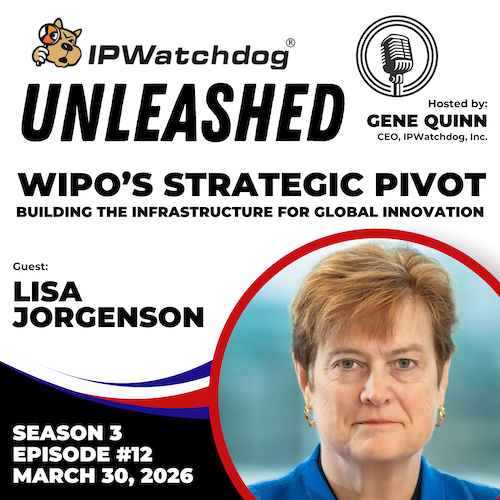

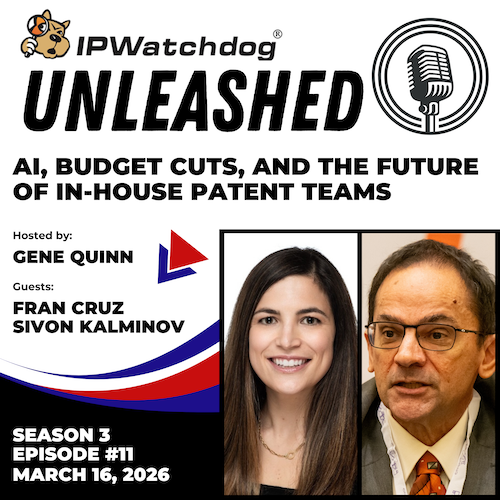

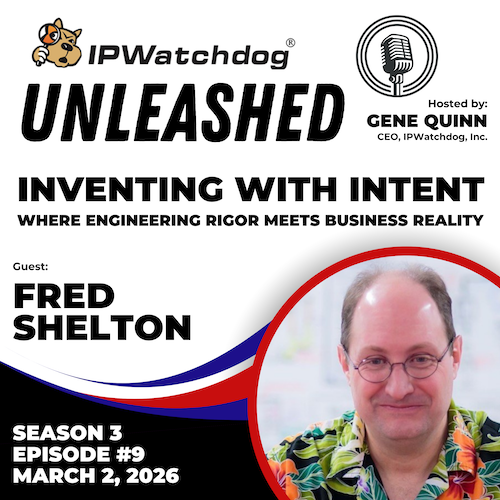
IPWatchdog Events
Webinar: Unlocking New Capabilities – The Real ROI of AI in Patent Practice
April 2 @ 12:00 pm - 1:00 pm EDTCLE Webinar: All in the Prompt – Crafting AI Prompts for Precision Outputs
April 7 @ 12:00 pm - 1:00 pm EDTWebinar: From Patent Tools to AI Agents – The Next Evolution of Patent Practice
April 14 @ 12:00 pm - 1:00 pm EDT
Industry Events
24th Annual Rocky Mountain Intellectual Property & Technology Law Institute
May 28 @ 8:30 am - May 29 @ 4:30 pm MDTFrom IPWatchdog
![[Advertisement]](https://ipwatchdog.com/wp-content/uploads/2021/12/WEBINAR-336-x-280-px.png)
![[Advertisement]](https://ipwatchdog.com/wp-content/uploads/2021/12/Ad-4-The-Invent-Patent-System™.png)