
![[IPWatchdog Logo]](https://ipwatchdog.com/wp-content/themes/IPWatchdog%20-%202023/assets/images/temp/logo-small@2x.png)
Posts in International
As many in U.S. remain skeptical of patents, China picks up the slack
“Increasing numbers of US operating companies dislike patent protection,” Ding explained to IAM. “[T]he production and manufacture of products are increasingly located in Asia and Asian companies have more and more patents… opportunities are being transferred to the East just like manufacturing was.” * * * Although strong patent licensing activities are surely welcome news to Huawei and the many people employed by that firm, stakeholders in the U.S. patent system likely can’t help but see this as a further harbinger that China’s innovation economy will overtake ours in the coming years.
Qualcomm files suit in China seeking to ban iPhone sales by asserting three non-SEPs
A major legal battle over patented technologies in the mobile device communication sector between San Diego, CA-based semiconductor developer Qualcomm Inc. and Cupertino, CA-based consumer tech giant Apple Inc. took a new turn as multiple news reports indicated that Qualcomm had filed suit in China seeking a ban on the sale and manufacture of iPhones. Qualcomm’s court filing in China is the latest salvo in a barrage of legal challenges between both company’s over licensing activities between Qualcomm, Apple and the many Asian contract manufacturers who fabricate smartphones for Apple which incorporate technologies allegedly covered by Qualcomm’s patents.
Tax Reform to Revive the American Innovation Culture
The U.S. patent promise of exclusivity has become nothing more than lip service with no credibility for more than half a century. A patent system maintained by offering lip service must fail over time. The American inventor population is vanishing rapidly as a result of the changed laws and anti-patent movement. If the patent reward fails, both those who are inventors and those who would be inventors will be influenced not to pursue innovating and society will see an era of slow progress. Bad policy advice has misled Congress into belief that inventing without the participation of inventors will be fine. Reality will soon prove it was a fatal mistake that the U.S. should not have made.
Renegotiate NAFTA to Make it the Gold Standard in IP Protection
As President Trump embarks on the renegotiation of NAFTA, it is critical that we seize the opportunity to make it the gold standard in intellectual property rights protections… The stakes are tremendous and cannot be ignored. In total, it is estimated that intellectual-property theft costs the United States approximately $600 billion per year. A recent New York Times article notes that this is the “greatest transfer of wealth in history”.
Qualcomm enters into 3G/4G license agreement with Turkish smartphone firm
On Monday, October 9th, San Diego, CA-based fabless semiconductor developer Qualcomm Inc. (NASDAQ:QCOM) announced that it had entered into a licensing agreement with Istanbul, Turkey-based General Mobile, a regional smartphone brand and a partner of the Android One smartphone project developed by Google. The royalty-bearing patent license grants General Mobile the right to develop, manufacture and sell 3G and 4G complete devices which incorporate technologies that are covered by patents in Qualcomm’s portfolio.
Is Europe really moving away from protecting Online platforms?
The media and political debate continues to rage: should new obligations be put on online platforms and other internet intermediaries to try to limit the availability of unlawful content online, and if so what should those obligations look like?… The combination of proposed Article 13 of the draft Copyright Directive and the Commission’s latest Communication will lead some to conclude that Europe is indeed moving away from protecting internet intermediaries. It certainly appears that the two developments would place a much greater onus on platforms than is currently the case. A fuller picture will be known in May 2018, when the Commission says the work of ensuring “swift and proactive detection and removal of illegal content online” will be complete, and the Copyright Directive in final form. But the direction European policy makers are heading in is already evident.
A TWIST in the tale: Not your typical cola war
This case was not your typical “cola war”, but rather involved TWIST, the well-known carbonated beverage brand which has been available in South Africa since the 1970s (originally as LEMON TWIST). Atlantic is the proprietor in South Africa of the TWIST, LEMON TWIST and DIET TWIST trade marks in relation to non-alcoholic drinks falling in class 32. PepsiCo applied to register the trade marks PEPSI TWIST and a PEPSI TWIST label, also in relation to non-alcoholic beverages in class 32… In finding in favor of Atlantic in the opposition, the Court felt it necessary to only rule on the issue of confusing similarity, ie. whether the proposed PEPSI TWIST trade marks were sufficiently similar to Atlantic’s trade marks to create a likelihood of deception or confusion.
As EU, Ukraine Agreement comes into force uncertainty remains
As of September 1, 2017, the Association Agreement between the European Union and Ukraine came fully into force. For three years Ukrainian legislative and executive authorities were obligated to implement the provisions of the Agreement in the national legislation, however much has not been done… With the Agreement in force without implementing Ukrainian legislation companies can approach the interpretation of European and national law in two ways. Competing companies can, and likely will, differ in their approach to and interpretation of certain provisions and they will have to fight their disputes in court.
Apple failed to block Swatch’s attempt to acquire the trademark for Steve Jobs’ catchphrase ‘one more thing’
The Swiss watchmaker Swatch’s effort to acquire the trademark for “SWATCH ONE MORE THING” has run in to opposition from Apple, which argues the phrase ‘one more thing’ is closely associated with the software giant’s founder Steve Jobs. During Apple press events, Jobs was known to precede new product announcements and introductions with the phrase “there is one more thing” in his keynote addresses. The “one more thing” prelude became a fixture at Apple events… Immediately after the JPO granted protection to the trademark, Apple filed an opposition in May 19, 2015 on the grounds that the trademark violates the main paragraph of Article 3(1) as well as 4(1)(vii), 4(1)(x), 4(1)(xv), and 4(1)(xix) of Japanese Trademark Law.
2nd Circuit upholds most of district court judgment in trademark case brought by Swiss army knife maker Victorinox
On Tuesday, September 19th, Victorinox AG, the manufacturer of the well-known Swiss army knife, saw a successful outcome of an appeal decided by the U.S. Court of Appeals for the 2nd Circuit, which affirmed in part a judgment in a trademark case filed in the Southern District of New York. The 2nd Circuit’s decision upholds a $1.75 million judgment entered in district court against Dallas, TX-based e-commerce company B&F System over the sale of red-handled, multi-functional pocket knives that infringed upon Victorinox’s registered trademark.
2017 Beijing International Book Fair sees an increase in copyright deals since last year’s event
The Beijing International Book Fair is one of the largest and fastest growing trade shows for the book publishing industry across the globe and 2017 marked the 24th annual version of the event. The year’s version of the Beijing book fair, which ran from August 23rd to the 27th, expected to see 2,500 exhibitors coming from 89 countries and regions, including new exhibitors in the genres of lifestyle, homemaking, health and wellness.
Nokia receives favorable arbitration award on patent license with LG Electronics
According to the press release issued by Nokia, licensing revenue from the agreement with LG will be reflected in the Finnish telecom’s earnings report for the third quarter of 2017 even though the expected revenues remain confidential at this time. The press release quotes Maria Varsellona, Nokia’s chief legal officer, as saying: “The use of independent arbitration to resolve differences in patent cases is a recognized best practice. We believe that this award confirms the quality of Nokia’s patent portfolio.” Varsellona also noted that Nokia sees additional opportunities for patent licensing agreements in at least the mobile communications market.
Former Oblon Attorneys Launch Patent Firm Grüneberg and Myers
Dr. Kirsten Grüneberg and Eric Myers are pleased to announce the launch of a new international patent firm, Grüneberg and Myers PLLC. The attorneys both formerly practiced at Oblon, McClelland, Maier & Neustadt LLP, where Grüneberg was head of European Practice. They are forming the firm with a former Oblon colleague, Dr. Richard Chinn, a chemical patent attorney.
Trademarked Stork Upheld in Canadian Copyright Case
A recent trademark infringement case between Stork Market Inc v. 1736735 Ontario Inc. (Hello Pink Lawn Cards Inc), 2017 FC 779 has resulted in a win for the plaintiff and retribution in the amount of $30,000. The copyright and trademark case deals with competitors in the business of renting and installing lawn signs for special occasions such as birthdays, anniversaries, and graduations. The trademark infringement case is based on claimed infringement of Stork Market Inc. and its registered trademarks of two images of a stork holding a baby above its head and under a banner that states the sex of the baby
China’s copyright regulator tells foreign and domestic music companies to improve copyright licensing, reducing piracy
In mid-September, the federal government of the People’s Republic of China issued statements which indicate that the country is looking to expand upon recent rhetoric over increased protections for intellectual property. According to state-controlled media outlet Xinhua, China’s National Copyright Administration (NCAC) informed a group of more than 20 domestic and foreign music companies that they must adhere to both market rules and international practices in order to widen licensing and improve the spread of copyrighted music online.
Varsity Sponsors
![[Advertisement]](https://ipwatchdog.com/wp-content/uploads/2026/03/NLPatent-Apr-2-2026-sidebar-700x500-1.jpg)
![[Advertisement]](https://ipwatchdog.com/wp-content/uploads/2026/02/Junior-Apr-7-2026-sidebar-700x500-1.jpg)

Latest IPW Posts
Mainstream Media Attention for Judge Newman Suspension Grows as Saga Continues
April 1, 2026 @ 11:15 amHow to Draft AI Patents That Survive the Next Guidance Cycle, and the One After That
April 1, 2026 @ 07:15 amTesla Partially Succeeds at CAFC with Ruling Finding Some EV Charging Claims Obvious
March 31, 2026 @ 04:28 pmCAFC Upholds Ineligibility of Targeted Ad Claims in Win for TikTok
March 31, 2026 @ 01:14 pmWIPO in Focus: Beyond Treaties, Toward a Market-Driven IP System | IPWatchdog Unleashed
March 31, 2026 @ 11:00 am
Latest Podcasts



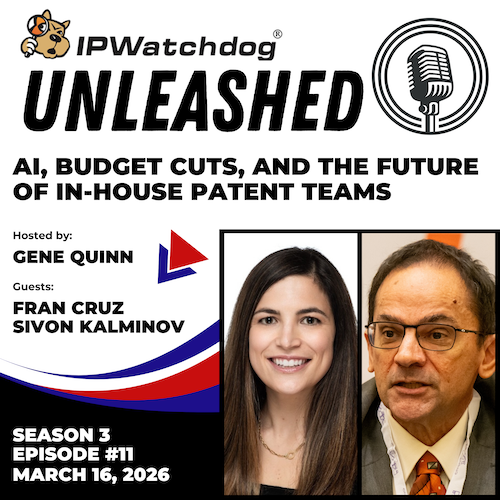

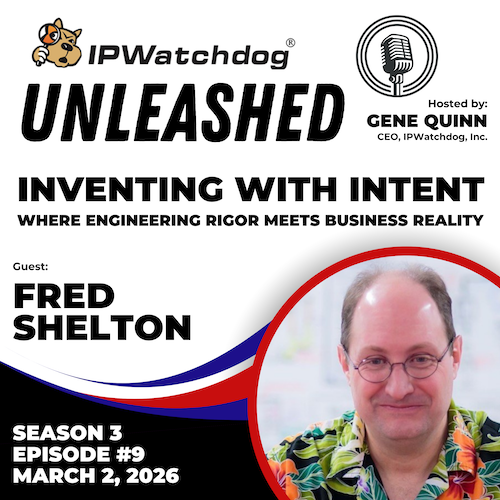
IPWatchdog Events
Webinar: Unlocking New Capabilities – The Real ROI of AI in Patent Practice
April 2 @ 12:00 pm - 1:00 pm EDTCLE Webinar: All in the Prompt – Crafting AI Prompts for Precision Outputs
April 7 @ 12:00 pm - 1:00 pm EDTPatent Masters™ 2026 – Portfolios, Licensing and Enforcement
June 8 @ 8:00 am - June 10 @ 5:00 pm EDT
Industry Events
24th Annual Rocky Mountain Intellectual Property & Technology Law Institute
May 28 @ 8:30 am - May 29 @ 4:30 pm MDTFrom IPWatchdog
![[Advertisement]](https://ipwatchdog.com/wp-content/uploads/2021/12/WEBINAR-336-x-280-px.png)
![[Advertisement]](https://ipwatchdog.com/wp-content/uploads/2021/12/Ad-4-The-Invent-Patent-System™.png)