
![[IPWatchdog Logo]](https://ipwatchdog.com/wp-content/themes/IPWatchdog%20-%202023/assets/images/temp/logo-small@2x.png)
Posts in Courts
Is it Time To Amend 101?
Rather than the drastic measure of abolishing § 101, such as that proposed by previous USPTO Director Kappos, we think that a simple change to § 101 that removes the confusing notion of “inventiveness” from statutory interpretation would do the trick. Our proposal strikes a middle ground, in that, while removing “inventiveness” concepts from § 101 analysis, it retains the historical exceptions rooted in pre-emption that were reiterated in the Triad.
Beatles’ 1965 Shea Stadium concert is the subject of copyright suit filed on behalf of former promoter
On Monday, September 12th, Sid Bernstein LLC, a company representing Bernstein who passed away in 2013, filed a lawsuit alleging copyright infringement on the use of the Shea Stadium footage in the recent documentary. The suit charges that Sid Bernstein is the sole owner of the Shea Stadium master tapes by virtue of being a producer of the concert event and the employer for hire of the Beatles. The infringement suit targets both Apple Corps, the multimedia corporation set up by members of the Beatles in 1968 and involved with producing the new documentary, and Subafilms Ltd. The case was filed in the U.S. District Court for the Southern District of New York (S.D.N.Y.).
Federal Circuit Affirms District Court Judgment on All Grounds in LifeNet Health v. LifeCell
Lifenet’s patent is for plasticized soft tissue grafts used for transplantation in humans. The specification discloses that plasticizers can be removed before implantation, although they need not be, as claim 1 discloses three options for the implanting technician, one option being direct implantation without removing plasticizers. LifeCell’s accused grafts are preserved in a solution prior to implantation, and it is undisputed that significant amounts of plasticizers are removed during this soaking process. During claim construction, the parties disputed the meaning of the term “non-removal.” The district court concluded that construction of this term was unnecessary because it was easily understood by a person of ordinary skill in the art to have its plain meaning.
Federal Circuit Provides Additional Insight on §101 Protections for Software Patents
In a September 13, 2016 decision relating to subject matter eligibility of software patents under 35 U.S.C. § 101, the Federal Circuit vacated the district court’s order granting Defendants’ motion for judgment on the pleadings under Fed. R. Civ. P. 12(c), and held that McRO’s patents were eligible for protection under 35 U.S.C. § 101. The disputed patent claims recited a method for “automatically . . . producing accurate and realistic lip synchronization and facial expressions in animated characters.” The McRO patents identified that a problem in the prior art was that animators, even using the assistance of computers, had to manually manipulate the character model for lip movement. The McRO patents solved this problem by using rules to automatically depict more realistic synchronization of lip movements and speech.
Trader Joe’s and Extraterritorial Application of the Lanham Act
Trader Joe’s sued Hallatt (d/b/a Pirate Joe’s) for trademark infringement in the Western District of Washington, invoking the court’s federal question and supplemental jurisdiction. Trader Joe’s alleged that: (1) Hallatt misled consumers into falsely believing Pirate Joe’s was authorized or approved by Trader Joe’s; (2) utilized a confusingly similar “South Pacific” trade dress for his Pirate Joe’s store; (3) displayed Trader Joe’s trademarks in connection with the sale of products at Pirate Joe’s; and (4) resold Trader Joe’s products without authorization and without adherence to Trader Joe’s’ strict quality control practices. Trader Joe’s claimed Hallatt’s behavior diluted its trademarks, confused consumers, and damaged Trader Joe’s reputation by associating it with high price, lower quality products. Trader Joe’s sought damages and to permanently enjoin Hallatt from reselling its goods or using its trademarks in Canada.
The Supreme Court May Give Product Designers Little to Cheer in Star Athletica
The Supreme Court granted certiorari this term in Star Athletica, L.L.C. v. Varsity Brands, Inc., which considers whether typical designs on cheerleading uniforms can be copyrightable subject matter. The appeals court believed that the designs were appropriate, but my guess is that several Supreme Court justices reacted with skepticism, which is why they decided to take the appeal. Those engaged with product development eagerly await the decision in this case because there is significant judicial uncertainty about the application of copyrights to useful products, and in particular, with how to draw the line between artistic craftsmanship and industrial design. Unfortunately, this case raises rather narrow issues, and the Court will be able to resolve them while skirting the most difficult debates. Thus, I believe that those looking for hard-and-fast rules will ultimately feel no more satisfied than observers did after the Court’s decisions with patentable subject matter, such as in Bilski v. Kappos.
Use of PTAB Decisions in District Court Litigation
As the above cases illustrate, PTAB decisions have affected district court cases in different ways. Determining whether the use of a PTAB decision is likely to be permitted or will have any effect requires a multifactorial analysis that considers at least the nature of the PTAB outcome (e.g., final or preliminary), factors contributing to that outcome (e.g., whether they were based on the merits of the case), and potential drawbacks attached to the requested use (e.g., jury confusion). Additional considerations might include, for example, the level of sophistication of the technology already being considered by the jury, which might factor into a court’s analysis of the likelihood of jury confusion. Parties seeking to rely on PTAB decisions in district court should consider these factors. The AIA has only been in place for five years and the law in this area will continue to develop over the next several years.
Free Webinar: Federal Circuit Trends in a Post-Alice World
Over the last several months certain new trends are developing at the Federal Circuit as the court pivots to address the new reality of a much more interested Supreme Court, and the reality of a dramatically increased case load thanks to the enormous popularity of the AIA-created post grant administrative proceedings. Join me on Tuesday, September 20, 2016, at 1pm Eastern for a discussion on Federal Circuit Trends in a Post-Alice World. I will be joined by Robert Schaffer and Joseph Robinson, partners at Troutman Sanders and co-authors of the Federal Circuit Review.
Jury’s Willfulness Determination Affirmed Under Modified In re Seagate Standard
Stryker Corporation was awarded $70 million in lost profits after a jury found that Stryker’s patents were valid and willfully infringed by Zimmer. The district court affirmed the jury’s verdict, awarded Stryker treble damages for willful infringement, and awarded Stryker attorney’s fees. Stryker’s patents concerned portable, battery-powered, and handheld pulsed lavage devices used in orthopedic procedures to deliver pressurized irrigation for medical therapies, including cleaning wounds.
Federal Circuit Affirms Disqualification of Counsel, Dismissal of Complaint Based on Confidential Information
Schlumberger raised Rutherford’s potential conflict of interest to the court in April 2014, and subsequently filed a motion to disqualify Dynamic’s counsel. The district court found that Rutherford’s work at Schlumberger was substantially related to her current work at Acacia. The court found that because the accused features of Petrel existed in the older versions that Rutherford was exposed to, and because she was involved at Schlumberger in efforts to license Petrel to other companies, the evidence created an irrebuttable presumption that she acquired confidential information requiring her disqualification.
More software patent eligible, Federal Circuit says lip synchronization not abstract
It is hard to ignore the fact that the Federal Circuit again continued to point out that the innovation at issued was an improvement. This should give patent practitioners important clues into how to characterize software related innovations so as to maximize the likelihood of prevailing in Alice inspired challenges and rejections. Hopefully the United States Patent and Trademark Office will not ignore McRo and will issue guidance to patent examiners. Taking a “nothing to see here” approach to this case would be inexcusable.
Square fights off Alice rejection on payment transfer patent proving financial patents are not dead
U.S. Patent No. 9378491, entitled Payment Transfer by Sending E-mail. This discloses a computer-implemented method which enables the seamless initiation of a payment transfer through e-mail from one mobile device to another without creating an account or logging into a service. The innovative system is designed for both simplicity of use as well as security and authentication in online financial transactions. A final rejection issued by a patent examiner on the ‘491 patent dated December 8th, 2014, doesn’t specifically mention Alice v. CLS, but the case’s effect on the examiner’s decision seemed evident. In arguments made in response to the final rejection, Square’s prosecution team on the ‘491 patent noted that it had amended the claims to make the patentable features of those claims more explicit.
PTAB invalidates three patents covering Teva’s Copaxone, opens door for Mylan’s generic version
On Wednesday, August 24th, the Patent Appeal and Trial Board (PTAB) issued decisions in two inter partes review (IPR) filings made against patents owned by private Israeli firm Yeda Research & Development Co. The company is the tech transfer arm of the Weizmann Institute of Science, a public research university located in Rehovot, Israel. The IPRs, which were filed by American pharmaceutical developer Mylan Inc. (NYSE:MYL), resulted in the invalidation of all claims in both Yeda patents. About a week later, on September 1st, PTAB invalidated a third patent owned by Yeda after another IPR challenge was filed by Mylan.
10% of judicial emergencies are in EDTX, the preferred venue for patent litigation
Three of the judicial emergencies, just less than 10 percent of all judicial emergencies in the U.S. federal court system, are in the U.S. District Court for the Eastern District of Texas (E.D. Tex.). With the judicial vacancies in E.D. Tex., the concern is that a growing docket of patent infringement cases could create a bottleneck for the court, greatly increasing the amount of time that it takes the court to issue a decision. Business litigation is typically given a backseat to criminal litigation in district courts as American law upholds a suspected criminal’s right to a speedy trial. The vacancies also naturally result in an increased percentage of U.S. patent infringement cases assigned to Judge Rodney Gilstrap. This January, we reported that Judge Gilstrap could be deciding as much as 20 percent of all patent infringement cases filed in U.S. district courts. The fact that one judge could be deciding as much as one-fifth of the patent infringement docket at the district court level seems a little less than democratic.
Is Nome, Alaska ready for Paragraph 4 ANDA litigation? How about San Juan, Puerto Rico?
Nome, Alaska and San Juan, Puerto Rico are both home to a federal courthouse where, ostensibly, under the recent Acorda Therapeutics holding and subsequent court decisions, a generic pharmaceutical company will be subject to personal jurisdiction if they file an Abbreviated New Drug Application (ANDA) with the Food and Drug Administration (FDA). In Acorda Therapeutics, Inc. v. Mylan Pharmaceuticals, Inc., 817 F.3d 755 (Fed. Cir. 2016), the Federal Circuit held that an ANDA filer opens themselves up to nationwide personal jurisdiction merely by virtue of filing an ANDA application. This is a broad holding that, in effect, subjects a generic company to personal jurisdiction in any forum that has a district court.
Varsity Sponsors
![[Advertisement]](https://ipwatchdog.com/wp-content/uploads/2026/03/NLPatent-Apr-2-2026-sidebar-700x500-1.jpg)
![[Advertisement]](https://ipwatchdog.com/wp-content/uploads/2026/02/Junior-Apr-7-2026-sidebar-700x500-1.jpg)

Latest IPW Posts
How to Draft AI Patents That Survive the Next Guidance Cycle, and the One After That
April 1, 2026 @ 07:15 amTesla Partially Succeeds at CAFC with Ruling Finding Some EV Charging Claims Obvious
March 31, 2026 @ 04:28 pmCAFC Upholds Ineligibility of Targeted Ad Claims in Win for TikTok
March 31, 2026 @ 01:14 pmWIPO in Focus: Beyond Treaties, Toward a Market-Driven IP System | IPWatchdog Unleashed
March 31, 2026 @ 11:00 amAmicus, Sanofi Urge USPTO Appeals Panel to Uphold Ex Parte Baurin’s Approach to ODP Analysis
March 30, 2026 @ 04:48 pm
Latest Podcasts
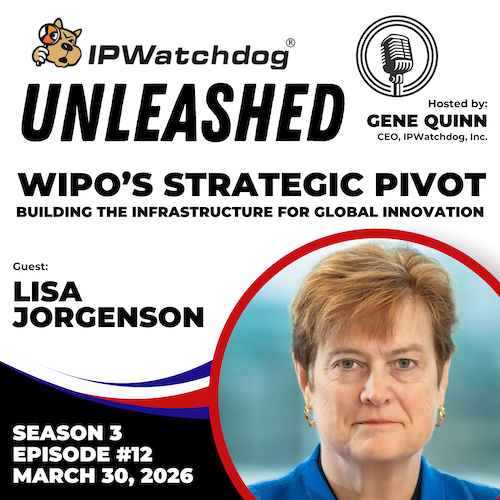


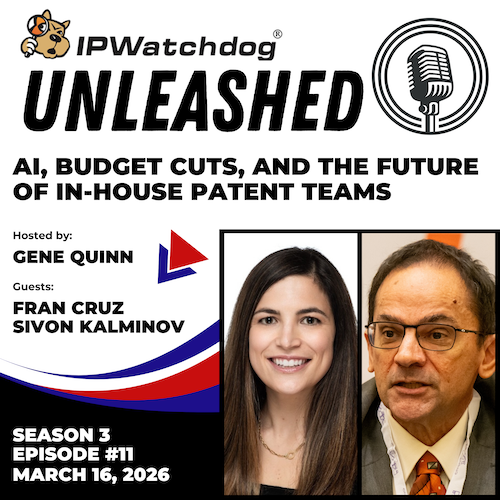

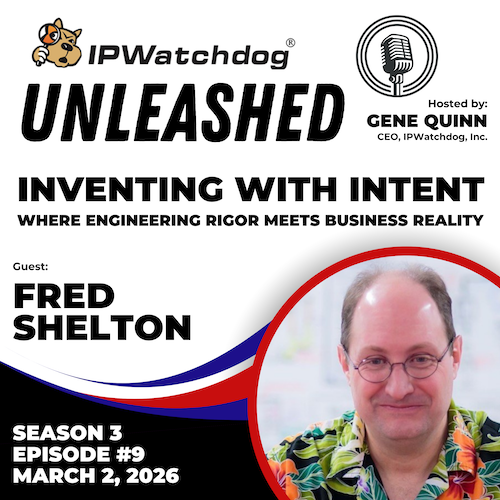
IPWatchdog Events
Webinar: Unlocking New Capabilities – The Real ROI of AI in Patent Practice
April 2 @ 12:00 pm - 1:00 pm EDTCLE Webinar: All in the Prompt – Crafting AI Prompts for Precision Outputs
April 7 @ 12:00 pm - 1:00 pm EDTPatent Masters™ 2026 – Portfolios, Licensing and Enforcement
June 8 @ 8:00 am - June 10 @ 5:00 pm EDT
Industry Events
24th Annual Rocky Mountain Intellectual Property & Technology Law Institute
May 28 @ 8:30 am - May 29 @ 4:30 pm MDTFrom IPWatchdog
![[Advertisement]](https://ipwatchdog.com/wp-content/uploads/2021/12/WEBINAR-336-x-280-px.png)
![[Advertisement]](https://ipwatchdog.com/wp-content/uploads/2021/12/Ad-4-The-Invent-Patent-System™.png)