
![[IPWatchdog Logo]](https://ipwatchdog.com/wp-content/themes/IPWatchdog%20-%202023/assets/images/temp/logo-small@2x.png)
Posts in Courts
Dr. Phil wins copyright case against former segment director who had alleged false imprisonment
It’s not everyday that a copyright case involves claims of false imprisonment but an order granting summary judgment entered on August 30th in the Eastern District of Texas granted a legal win to American TV personality and psychologist Dr. Phil and his production studio in just such a case. Judge Rodney Gilstrap decided to grant summary judgment sua sponte to Dr. Phil and Peteski Productions in a case against a former segment director for The Dr. Phil Show after the director recorded an iPhone video from archived footage of The Dr. Phil Show to build evidence for a emotional distress suit against Dr. Phil.
Nintendo to appeal $10.1M jury verdict of infringement after invalidating 5 of 6 iLife patents at PTAB
A jury verdict recently entered into a patent infringement case in the Northern District of Texas found that Japanese gaming giant Nintendo infringed upon a patent asserted by Texas-based medical tech firm iLife Technologies Inc. In the verdict, the jury agreed that iLife proved that it was owed $10.1 million in a lump sum royalty for the sales of a series of games for the Wii U console. The jury also found that Nintendo didn’t prove invalidity of the asserted patent. The jury found that sales of Nintendo’s Wii U games including Wii Sports, Wii Sports Resort, Wii Club Sports and Mario Kart 8, infringed upon claim 1 of U.S. Patent No. 6864796.
CAFC Vacates and Remands Inconsistent Rulings by the Board on Validity of two SynQor Patents
The Board failed to address all grounds for proposed rejections under the APA by ignoring certain arguments made by Vicor during the reexamination. Additionally, the Board failed to address all four Graham factors. “[E]vidence relating to all four Graham factors…must be considered before determining whether the claimed invention would have been obvious…” The Board’s decision was erroneous because the same panel reached inconsistent conclusions on the same issue between the same parties and on the same record, and without explanation.
A Patents as Property Rights History Lesson
Several of the briefs address the absurdity currently being advanced, claiming patents are so-called “public rights.” This novel notion — more in line with Karl Marx than John Locke — is a direct assault upon the very essence of private property rights… The Cato-ACUF brief reasons “public rights” into a sniveling lump: “Ultimately, the implications of the argument that merely because a right to particular property flows from a statutory scheme, such rights are ‘public rights’ and that disputes over them can be withdrawn from Article III courts are staggering. Such a conclusion would mean that anyone who derives his land title from the Homestead Act can be forced to have any disputes over that property be resolved by a bureaucrat in the Bureau of Land Management. Under this view, Congress could require that a dispute between an individual and a private financial institution over a mortgage or a student loan be heard before an official in the Treasure Department on the theory that the relevant loans were made pursuant to a federal statutory scheme. The government enacts statutes affecting property rights all the time, but that does not convert the rights that trace their roots to such statutes into ‘public rights.’”
What Changes Result from the Supreme Court Decision in TC Heartland?
Unfortunately, the answer may be not as much as many expected. Right after the decision there were 350 motions to transfer or dismiss in the EDTX. But the limitations imposed by TC Heartland have been called into question by a ruling from EDTX Judge Rodney Gilstrap in Raytheon Co. v. Cray Inc. In his decision, Gilstrap denied a motion by Cray seeking to transfer the case to another district in light of TC Heartland. Gilstrap found that the existence of a single employee in the district constituted “regular and established place of business,” and he established a four-factor test to decide whether newer cases belong in the district… As hopeful as some folks were about TC Heartland, it certainly hasn’t stopped NPEs. The IP community must acknowledge this and adjust accordingly – it’s still the wild west out there, for now.
USPTO files brief at CAFC supporting patent-infringing respondent Telebrands
Tinnus argues in its appeal that the PTAB panel applied standards for inter partes review (IPR) proceedings to a trial that was instituted as a PGR. “In its institution decision, the Board incorrectly applied the lower ‘reasonable likelihood’ standard used for IPRs, rather than the higher ‘more likely than not’ standard governing PGRs,” Tinnus’ appeal reads, adding that the PTAB panel didn’t recognize this error in its final written decision.
USPTO, PTAB refuse to follow Supreme Court Nautilus decision
The PTAB is openly refusing to follow the Supreme Court’s decision in Nautilus, Inc. v. Biosig Instruments, Inc., it has found a term previously determined definite by the Federal Circuit to be indefinite, and the Solicitor’s Office is siding with an infringer with a reputation as a knock-off artist over an independent inventor… But why doesn’t the USPTO follow Nautilus? Because the Patent Office feels that since they apply the broadest reasonable interpretation to claims that means that the indefiniteness standard set forth by the Supreme Court in Nautilus does not apply to the Office. Breathtaking!
Inquiry into Unexpectedness is Essential Even for Determining Obviousness in Inherency
The Federal Circuit reversed. Indeed, it found that the Board committed legal error by improperly relying on inherency to find obviousness and in its analysis of motivation to combine the references. The court found that the Board erred in relying on inherency to dismiss evidence showing unpredictability in the art in rejecting Honeywell’s argument that a skilled artisan would not have been motivated to combine the references with a reasonable expectation of success. It referred to an earlier opinion [citations omitted] to state that “the use of inherency in the context of obviousness must be carefully circumscribed because “[t]hat which may be inherent is not necessarily known” and that which is unknown cannot be obvious.”
In-N-Out files trademark suit against Smashburger over cheeseburger ad campaign
On Monday, August 30th, national fast food chain In-N-Out Burger filed a lawsuit alleging federal trademark infringement and other claims against fellow fast food chain Smashburger. The suit, filed in the Central District of California, alleges that Smashburger has recently adopted certain promotional advertising marks which infringe upon both state and federal trademarks held by In-N-Out. In-N-Out holds a series of 10 federally registered trademarks as well as seven trademarks registered within the state of California.
Board cannot shift burden of proving patentability to applicant, must articulate reasoning
The Federal Circuit vacated and remanded the Board’s decision, finding that it “failed to adequately articulate its reasoning, erroneously rejected relevant evidence of nonobviousness, and improperly shifted to Stepan the burden of proving patentability.” … The Board cannot shift the burden of proving patentability to the applicant, and must provide sufficient reasoning or explanation for why a skilled artisan would have found the claimed invention obvious, particularly when given evidence of unexpected results or “no reasonable expectation of success.” It is not enough for the Board to merely state that a combination of prior art would have been “routine.”
Federal Circuit dodges IPR joinder challenge because claims ruled obvious
Nidec argued that the Board improperly applied the joinder and time bar statutes. The Court held that it need not resolve this dispute because it affirmed the Board’s conclusion that all of the challenged claims are unpatentable as obvious. There was no dispute that the first petition was timely filed, and the joinder issues on appeal related only to the Board’s ruling on anticipation, which ultimately did not affect the outcome of the case… The Federal Circuit does not decide issues which have no effect on the outcome of the case. Thus, Board’s ruling that a party may add new issues to an IPR by joining two IPR proceedings was undisturbed and was endorsed in concurring opinion by two Federal Circuit judges.
Federal Government Not Barred from Petition for CBM Review
In a case of first impression, a majority of a Federal Circuit panel held that the U.S. Postal Service and the United States (collectively, “USPS”) were not statutorily barred from filing a petition for review of a covered business method patent (“CBM”). The majority also affirmed the Board’s determination that all challenged claims of the patent are directed to ineligible subject matter… The government qualifies as a “person” who may petition for CBM, and a party suing the government for improper use of a patented business method may be required to litigate issues before the Board in a CBM proceeding, and further the government appears to be exempt from the AIA’s CBM estoppel provision in a parallel litigation.
Making a Federal Case out of Trade Secrets
“The most important change was that DTSA allowed someone claiming their trade secret was being used improperly to go into a federal court,” explained Jacoby. “In most situations, the employer and the employee in a trade secret dispute are likely to be in the same state. Usually, two citizens of the same state can’t bring a lawsuit into a federal court unless an independent basis for federal jurisdiction over the case exists. So, if my client wants to sue the business next door to his yoga school for blasting out heavy metal during his meditation classes, I literally can’t make a federal case out of it.” However, DTSA changed that rule for trade secret protection — that claim now can be brought into a federal court even if the parties are both from the same state. Up until DTSA, that only happened if you had some other jurisdictional basis to be in federal court, such as the parties were from different states and met the jurisdictional amount for a diversity claim, or perhaps if you sued under another federal statute relating to IP.
Federal Circuit upholds CBM instituted in conflict with Unwired Planet decision
The U.S. Court of Appeals for the Federal Circuit issued a decision in Return Mail, Inc. v. United States Postal Services (USPS), which affirmed a finding of patent invalidity stemming from a December 2015 decision by the Patent Trial and Appeal Board (PTAB). Although not an issue discussed in the Federal Circuit decision, there is some question as to whether this particular covered business method (CBM) review was properly limited to financial service business method patents in light of at least one previous decision by a different Federal Circuit judicial panel, which overturned an invalidity finding for improper institution of a CBM.
Gary Shapiro takes self-righteous stand against patent trolls despite obvious bias in favor of infringers
It is difficult to witness people like Gary Shapiro self-righteously railing against the patent system when they stand to gain from weakened patent rights… Shapiro continues on his defense of the PTAB by noting similarities between patent validity challenges and trials: “Lawyers make their case to the Patent Trials and Appeals Board (PTAB), and three highly qualified administrative patent judges hear their case and come to a decision.” Highly qualified or not, there is at least one administrative patent judge (APJ) who has sat on panels issuing final written decisions on trials petitioned by a former employer, a situation which would require a sua sponte recusal in district court to answer any concerns over potential conflicts of interests. Furthermore, the Patent Office has admitted to stacking PTAB panels so that cases are decided in the manner desired by the Director, which is as difficult to believe as it is stunning. Clearly, the PTAB is not an independent tribunal that exercises decisional independence. The PTAB has also removed pro-patent decisions from its database, refused to consider timely submitted evidence, fundamentally misappled the law of obviousness, determined that an MRI machine is an abstract idea, and blatantly ignoring the law with respect to CBM patents. Shapiro paints a picture of a PTAB that defies experience and simply is not realistic.
Varsity Sponsors
![[Advertisement]](https://ipwatchdog.com/wp-content/uploads/2026/03/NLPatent-Apr-2-2026-sidebar-700x500-1.jpg)
![[Advertisement]](https://ipwatchdog.com/wp-content/uploads/2026/02/Junior-Apr-7-2026-sidebar-700x500-1.jpg)

Latest IPW Posts
The USPTO is Trying—But the Most Abusive Practices to Kill Patents Are Still in Play
April 1, 2026 @ 05:58 pmAs ‘Pro Codes Act’ is Reintroduced, Opponents Warn of Threats to Standards Development System
April 1, 2026 @ 02:15 pmUSPTO Solves U.S. Patent Eligibility Problems
April 1, 2026 @ 01:19 pmMainstream Media Attention for Judge Newman Suspension Grows as Saga Continues
April 1, 2026 @ 11:15 amHow to Draft AI Patents That Survive the Next Guidance Cycle, and the One After That
April 1, 2026 @ 07:15 am
Latest Podcasts



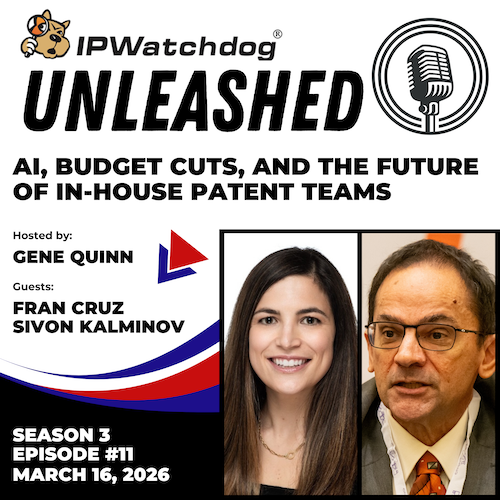

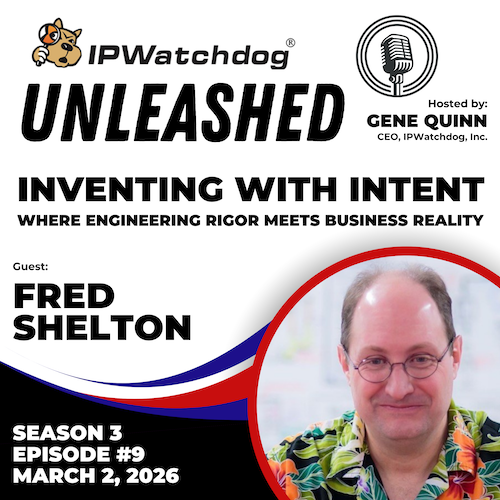
IPWatchdog Events
Webinar: Unlocking New Capabilities – The Real ROI of AI in Patent Practice
April 2 @ 12:00 pm - 1:00 pm EDTCLE Webinar: All in the Prompt – Crafting AI Prompts for Precision Outputs
April 7 @ 12:00 pm - 1:00 pm EDTWebinar: From Patent Tools to AI Agents – The Next Evolution of Patent Practice
April 14 @ 12:00 pm - 1:00 pm EDT
Industry Events
24th Annual Rocky Mountain Intellectual Property & Technology Law Institute
May 28 @ 8:30 am - May 29 @ 4:30 pm MDTFrom IPWatchdog
![[Advertisement]](https://ipwatchdog.com/wp-content/uploads/2021/12/WEBINAR-336-x-280-px.png)
![[Advertisement]](https://ipwatchdog.com/wp-content/uploads/2021/12/Ad-4-The-Invent-Patent-System™.png)