

 0
“[After Amgen], when a medication against a rare disease has been tested in patients with certain genetic mutations, is there any possibility of extrapolating the results to other untested mutations?”
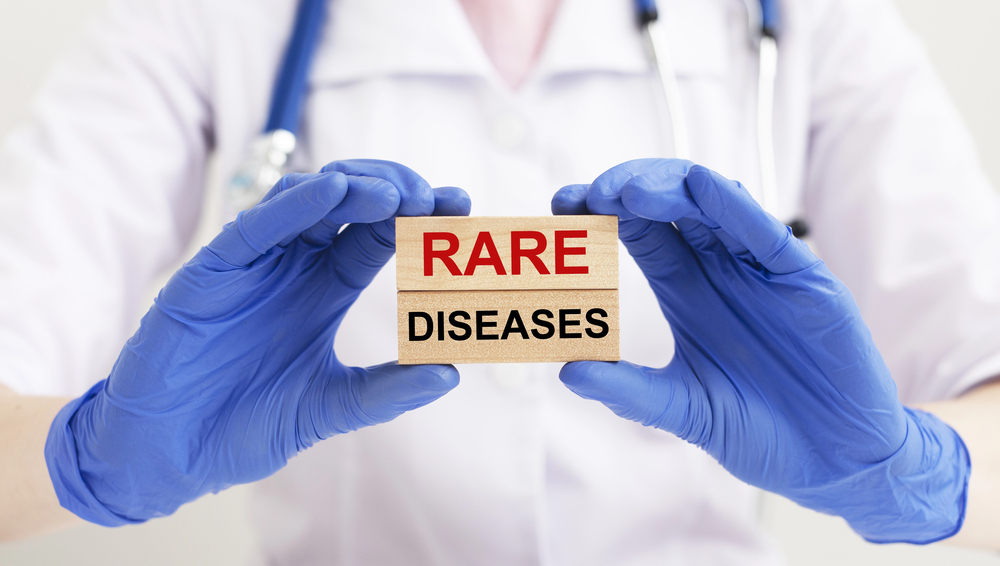 On October 14, 2026, the Food and Drug Administration (FDA) announced the Rare Disease Framework Initiative. The goal of this effort is quite essential for patients with rare (orphan) diseases – to develop an approach for assessing medicines for orphan diseases with a focus on the evidence that can be gathered for this assessment. The FDA proposes to include disease characteristics, patient needs, patient population size, and characteristics of orphan medications. The initiative does not itself establish new approval standards. Although the initiative relates to regulatory evidence matters, it also raises a separate legal question about the evidence needed to support patent claim scope.
This effort does not change any requirements of patent law. The core matter considering the initiative is the following: when a medication against a rare disease has been tested in patients with certain genetic mutations, is there any possibility of extrapolating the results to other untested mutations?
Defining Enablement for Orphan Disease Treatments
The definition of an orphan disease relates to the number of patients, generally fewer than 200,000 in the United States, and sometimes, affecting a much smaller population. Some pathogenic variants occur so rarely that a separate clinical trial may not be feasible. Different mutations can cause the same disease, which may be treated with the same treatment. If a patent is restricted only to mutations considered in clinical trials, the inventor may lose the opportunity to obtain protection for applications of an already disclosed therapeutic method. At the same time, if a patent is permitted to cover all mutations in a particular gene, it may extend to patients for whom the effectiveness of the treatment is not supported by the available data.
Thus, it is essential to define what evidence permits additional mutations to be included within the claim scope. For example, consider enzyme replacement therapy. Mutations A and B reduce the activity of an essential enzyme. The inventor develops a recombinant enzyme, discloses the method of its production and administration to patients, and provides data on the treatment of patients with mutations A and B. The inventor also presents biochemical studies showing that mutations C–H cause a deficiency of the same enzyme. The inventor then claims a method of treating patients with this deficiency, including those carrying mutations C–H.
Is this sufficient to enable the claimed treatment of patients with mutations that have not been studied in clinical trials? The same enzyme deficiency does not necessarily mean that enzyme replacement therapy will be effective for all these mutations.
In this example, three circumstances are particularly relevant to enablement: first, whether mutations C–H cause the same specific enzyme deficiency; second, whether administration of the enzyme restores the relevant function in cells affected by the disease; third, whether a person skilled in the art can carry out the claimed treatment without undue experimentation. The fact that the mutations relate to one gene does not answer each question. Even a common enzyme deficiency does not necessarily mean that its replacement gives the same therapeutic effect. Enzyme replacement therapy is a well-recognized method of treatment for Pompe disease, which is caused by a deficiency of acid alpha-glucosidase (GAA), however, the results vary among patients. CRIM-negative (cross-reactive immunologic material-negative) patients can develop high titers of antibodies against the administered enzyme. This immune reaction can reduce the efficacy of therapy.
However, different clinical responses do not mean that the treatment is not enabled. The question is whether these differences require undue experimentation to use the claimed treatment for all patients covered by the claim.
CRIM status can be determined by protein analysis or molecular genetic testing. Hence, two patients can have the same enzyme deficiency but may require different treatment protocols intended to achieve a therapeutic response.
A mechanism-defined claim may include more mutations than those researched clinically however, it cannot be automatically assumed that all patients respond in the same way to medical treatment. The specification must address the uncertainties to the extent necessary to enable a claimed treatment without undue experimentation.
Enter, Amgen
Amgen Inc. v. Sanofi, 598 U.S. 594 (2023) states that the enablement requirement was not fulfilled for a broad class of antibodies defined through a functional antibody genus. Amgen revealed particular antibodies and methods of searching for additional ones, however, to obtain other antibodies that are subject to the claims, a PHOSITA would need substantial experimentation. At the same time, the Supreme Court did not require to disclose every embodiment, it required instead that a description must enable the full scope of the claimed invention without undue experimentation.
Of course, our hypothetical example is different from the Amgen case.
Here, the active agent is defined, and the inventor does not claim a lot of undisclosed therapeutic agents. Rather, he is trying to extend the application of the medication to an additional group of patients. This difference removes one uncertainty, but not all. The knowledge of how to create and administer an enzyme does not prove that the claimed method permits treatment of each group of patients covered by the claim. Hence, the description should enable the claimed therapeutic use, not only the technical ability to administer the medication.
In re Wands sets forth the factors for sufficiency of disclosure for a patent application. This approach envisages an assessment of claim breadth, predictability of the art, guidance, working examples, as well as the amount of experimentation required. Having referred to mutations C–H, the following evidence may be taken into account: loss-of-function data, cellular rescue studies, and information regarding drug delivery to relevant tissues. Clinical trials may serve as evidence, but Section 112(a) does not establish a requirement for conducting a clinical trial for each mutation. The question is whether treating mutations C–H requires routine application of the disclosed method or further research amounting to undue experimentation. A claim covering patients with mutations that respond to enzyme replacement therapy does not necessarily resolve the enablement issue. Such a claim may not satisfy the enablement requirement when extensive experimentation is needed to identify responsive mutations.
The U.S. Court of Appeals for the Federal Circuit in Baxalta Inc. v. Genentech Inc., 81 F.4th 1362 (Fed. Cir. 2023) applied Amgen approach and found that the broad antibody claims were not enabled. The disclosed examples and screening methods did not enable the full claimed class of antibodies. Special attention should be given to written description requirements. In Ariad Pharmaceuticals, Inc. v. Eli Lilly & Co., 598 F.3d 1336 (Fed. Cir. 2010) the court explained that a written description must demonstrate a possession of the claimed invention.
Takeaways
The applicant should identify relevant clinical or/and molecular characteristics that define a claimed group of patients. It is not enough to assume that treatment would be effective in relation to other mutations. The submitted evidence should allow a PHOSITA to understand the boundaries of the claimed group as of the filing date. Subsequent clinical trials may confirm the original disclosure but cannot remedy an insufficient disclosure as filed. The FDA initiative makes this matter relevant but does not provide an answer to it.
At the same time, the FDA does not state that proven effectiveness of treatment for one mutation automatically confirms effectiveness for another.
The FDA draft guidance on individualized human genome-editing products, published in October 2026, does not directly address this question either. This guidance addresses the inclusion of multiple product variants in a single Biologics License Application (BLA) and the post-approval addition of new variants. It does not directly apply to our situation, where there is one medication for patients with various mutations.
Patent drafting should follow this logic: first, the therapeutic agent should be defined, then an applicant should identify which mutations are supported by the disclosed treatment approach and which remain uncertain. The specification should include representative evidence that supporting a treatment across the claimed patient group. The applicant must explain how a PHOSITA identifies the patients within the claimed group.
Narrower mutation-specific claims and mechanism-based claims may be preferable to a disease-wide claim. This does not mean that untested mutations are automatically enabled, nor does it mean that orphan diseases require an exception to the principles of Amgen. A clinical trial for each mutation is not a legal requirement for determining claim scope. The claim may extend to the treatment of patients carrying mutations that have not been tested in clinical trials if the written description enables the claimed treatment without undue experimentation and satisfies the written description requirement. Conversely, a patent claim should not cover mutations that require the discovery of a new treatment principle or undue experimentation. The core matter here is not the number of mutations, but the amount of work left to the skilled practitioner.
Image Source: Deposit Photos
Author: val.suprunovich
Image ID: 439861930














Join the Discussion
No comments yet. Add my comment.
Add Comment