

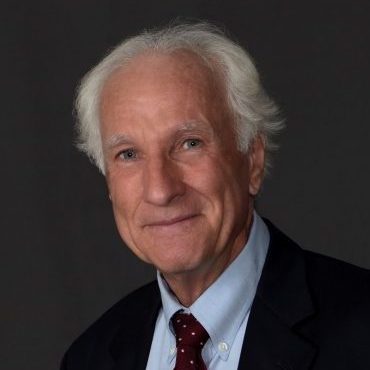
 0
0 “Congress and the administration should reject proposals that would pull control of federally funded inventions back into Washington and away from the researchers and companies that bring them to market.”
 Imagine a law which costs taxpayers nothing and creates no bureaucracy, all while providing critical incentives for turning billions of dollars of previously untapped government funded research into new products, companies and jobs which help drive American competitiveness. Imagine that this law is a recognized gold standard which our rivals are adopting. Now imagine that some voices are calling for us to abandon that model even though its documented impact has hit unprecedented levels.
All of the statements above are true, and the last should be troubling.
What we’re talking about is the Bayh-Dole Act of 1980, which The Economist Technology Quarterly called: “Possibly the most inspired piece of legislation to be enacted in America over the past half century.” Recently, some have suggested Bayh-Dole is passe and federally funded R&D should be managed like a government run venture fund. That’s a profoundly bad idea for many reasons. But first let’s consider a few numbers.
A Big Impact
The Bayh-Dole Coalition, which I lead, just issued a report on the impact of the law. Between 1996 and 2025, it contributed up to $3.3 trillion to U.S. gross economic output. The report is an update of a previous study made five years ago which found a $1.9 trillion impact. In only five years, that number has almost doubled.
Unlike many economic impact studies which overestimate the numbers, these figures are conservative. They are based on the annual AUTM licensing survey of its academic institution members, not all of whom participate. Additionally, Bayh-Dole allows private sector contractors, particularly small businesses, to own and manage inventions they make with federal support. That impact is not included, nor is the impact of licensing inventions made by our federal laboratories.
For the first time, the new study looks at the impact of the law on every region and state. Before 1980, few federally funded inventions were commercialized when Washington managed the system. As a result, university inventions often didn’t benefit their home states. That’s no longer the case. Take North Carolina for example. It’s gone from relying on textiles and tobacco farming into an innovation leader drawing on resources like Research Triangle Park which leverages its formidable universities. In the last 25 years, more than 800 academic spinoff companies have formed and more than 700 new products based on Bayh-Dole inventions made in North Carolina have reached the market.
Unfortunately, because Bayh-Dole largely works out of sight and out of mind, that leads to misunderstandings of how the federal R&D system operates.
The government funds grants and contracts for two fundamental reasons: to expand the scope of human knowledge and to meet agency needs. The agencies decide within these perimeters what they want to fund and how much to pay to meet those needs. Those performing the work give the government what it pays for. But in the course of this work, inventions are often made and that’s where Bayh-Dole comes in.
Before 1980, these inventions were generally owned by Washington and made available to any and all. That destroyed any incentives of those making the inventions to manage them while undermining interest in private sector developers as the significant investments of time and money needed to turn such inventions into products couldn’t be protected from copiers. As a result, these discoveries wasted away on the shelves.
Bayh-Dole is the catalyst putting this neglected resource to good use. It provides the incentives and authorities for these inventions to be effectively managed. Most importantly, it provides the incentives for our private sector to invest in their development. They assume this risk, not the government. And when products reach the market, new companies are formed and jobs created. These activities generate taxes to the government.
To argue as the critics do, that the government doesn’t get a fair return from this system is wrong. It risks nothing but makes a substantial return. And unlike institutions receiving licensing royalties, the government keeps on reaping these benefits after the patent has expired as long as sales continue and companies remain in business.
From Google to Cell Phone Cameras
Bayh-Dole spurred breakthroughs in cancer treatments, created the nicotine patch, FluMist, clean water technologies and firefighting drones, to name just a few. Millions around the world are better off because of this law.
Decentralized management of inventions is a critical factor in this success. Without the involvement of the inventors and their institutions, breakthroughs are hard to spot. Consider two examples.
The National Science Foundation gave a grant to Stanford University in the early days of the internet and two students came up with a new search engine, which the university patented. However, there already were similar technologies, so no company was interested. Finally, the students asked if they could start their own company and Stanford agreed. That launched Google.
NASA funded research at Caltech’s Jet Propulsion Laboratory for a lightweight camera for space exploration. One was found and given to the agency but because of Bayh-Dole, the university was free to pursue other applications, but no one wanted a license. Finally, the inventor said he’d like to start a company and Caltech agreed. The business was launched in his home with his wife as the business manager. They had a crazy idea—what if cell phones could take pictures? There was no apparent market for such a product, but they refused to quit. Finally, the dam broke and a revolution in photography began.
Similar stories emerged from underlying research in Nobel Prize-winning technologies in mRNA and immunotherapy. The dedication and passion of entrepreneurs on and off campus is the secret sauce of Bayh-Dole. But that recipe spoils under government micro-management.
There are plenty of problems for our national leaders to address but “fixing” Bayh-Dole by returning power to the Washington bureaucracy isn’t one of them. As The Economist article concludes: “A goose that lays such golden eggs needs nurturing, protecting and even cloning, not plucking for the pot.”
A High Burden for Change
Congress and the administration should reject proposals that would pull control of federally funded inventions back into Washington and away from the researchers and companies that bring them to market. Policymakers who want to strengthen the system should instead back the university technology transfer offices, startups, and small businesses that make Bayh-Dole work, and resist adding government equity stakes or new financial claims on licensing. After 46 years of proven results, the burden of proof belongs to those who would change a law that works.
And that’s a high burden, indeed.
Image Source: Deposit Photos
Image ID: 103903476
Image Author: ronniechua
![[Advertisement]](https://ipwatchdog.com/wp-content/uploads/2026/10/BlackBox-IP-Oct-20-2026-sidebar-700x500-1.jpg)
![[Advertisement]](https://ipwatchdog.com/wp-content/uploads/2026/10/Questel-Oct-22-2026-sidebar-700x500-1.jpg)
![[Advertisement]](https://ipwatchdog.com/wp-content/uploads/2026/09/Life-Sciences-2026-sidebar-early-bird-ends-Oct-25-700x500-1.jpg)
![[Advertisement]](https://ipwatchdog.com/wp-content/uploads/2026/09/WE-BUY-PATENTS-SIM-IP-Ad-1-revised-on-Sep-28-2026-700x500-1.jpg)
![[Advertisement]](https://ipwatchdog.com/wp-content/uploads/2024/09/Patent-Prosecution-Training-sidebar-700x500-2025-03-27.jpg)





![[Advertisement]](https://ipwatchdog.com/wp-content/uploads/2021/12/WEBINAR-336-x-280-px.png)
![[Advertisement]](https://ipwatchdog.com/wp-content/uploads/2021/12/Ad-4-The-Invent-Patent-System™.png)






Join the Discussion
No comments yet. Add my comment.
Add Comment