


 4
4 “Ranking Member Hank Johnson called Issa’s concerns ‘partisan’ and based on ‘political ideology over merit.’”
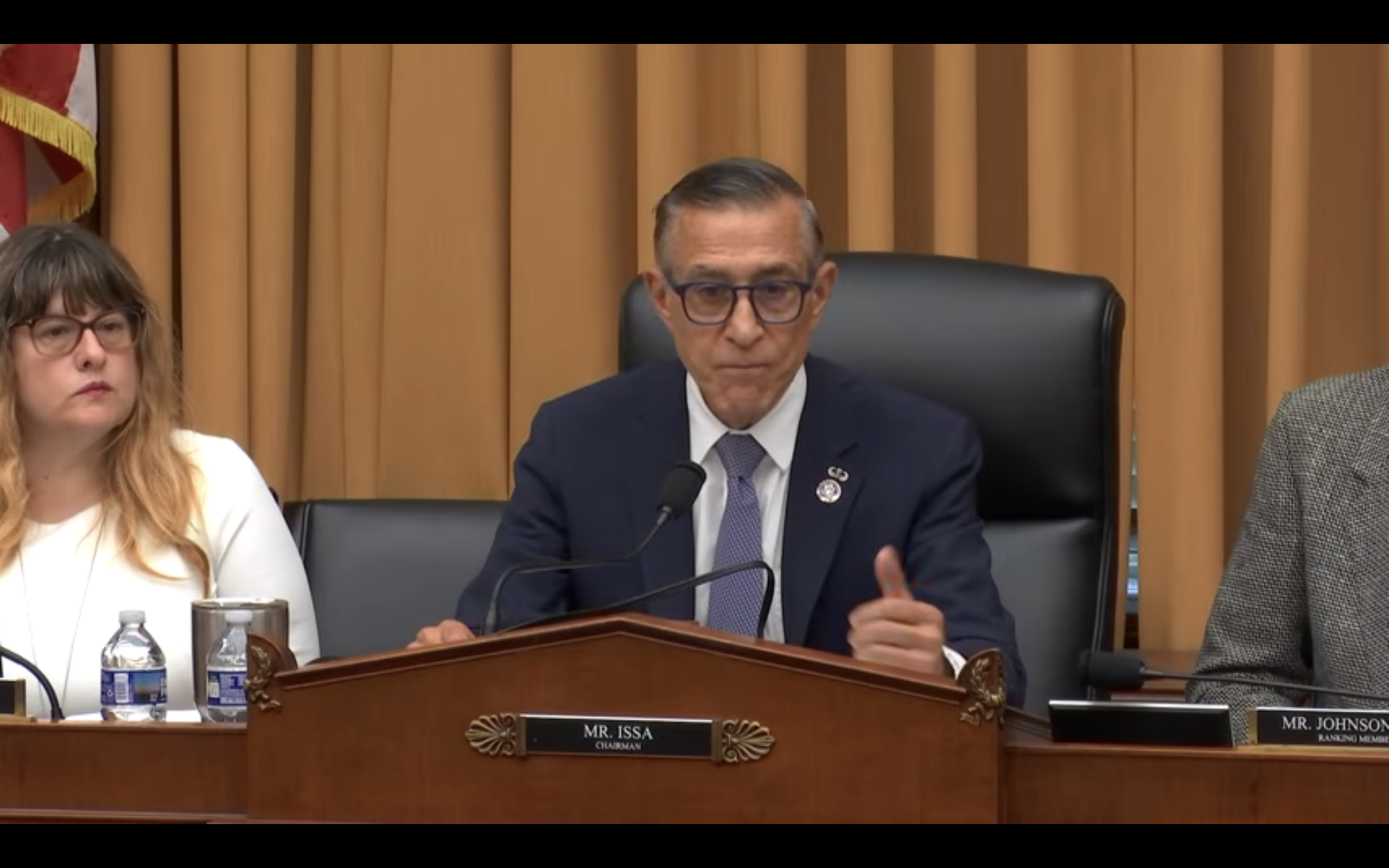 The House Judiciary Committee’s Subcommittee on Courts, Intellectual Property, Artificial Intelligence, and the Internet held an oversight hearing today to consider its role in renewing the U.S. Patent and Trademark Office’s (USPTO’s) fee setting authority. Throughout the hearing, Subcommittee Chairman Darrel Issa (R-CA) expressed skepticism about USPTO Director John Squires’ recent changes to discretionary denial practice at the Patent Trial and Appeal Board (PTAB) and wondered whether renewal of such authority under the America Invents Act (AIA) should be conditioned on reforms to the agency’s policy.
While the four witnesses who testified generally agreed that fee-setting authority should be renewed, they differed on whether such authority should be contingent on policy changes. All of the witnesses, however, urged the Subcommittee to ensure that the Patent Public Advisory Committee (PPAC) be fully reconstituted and revived to help the Office with its fee-setting and policymaking decisions.
Commerce Secretary Howard Lutnick completely disbanded the PPAC in March 2025 and only appointed three new members that September. Another member was named earlier this year, but that still leaves the Committee with only four of the nine required voting members.
In his opening statement, Issa first noted that Congress last night approved a short-term extension of fee-setting authority through December 12, giving lawmakers additional time to consider reauthorization. It was originally set to expire September 16.
But he argued that the USPTO’s recent expansion of discretionary denials in IPR proceedings has resulted in “undercutting the…core purpose” of the AIA. The PTAB was intended to provide an efficient mechanism for testing patent validity and reducing pressure on federal courts, he said, not to deny review repeatedly without reaching the merits.
Issa also referenced reports that ex parte reexaminations (EPRs) have declined, making it even harder to challenge patents. This begs the question whether the Office even needs fee-setting authority in light of the self-imposed reduction in the number of proceedings and associated revenue. “Are they not flush with cash under the existing system?” Issa asked.
He suggested Congress could decline a longer extension and resume directly authorizing fees unless the USPTO demonstrates that it is fully implementing the AIA.
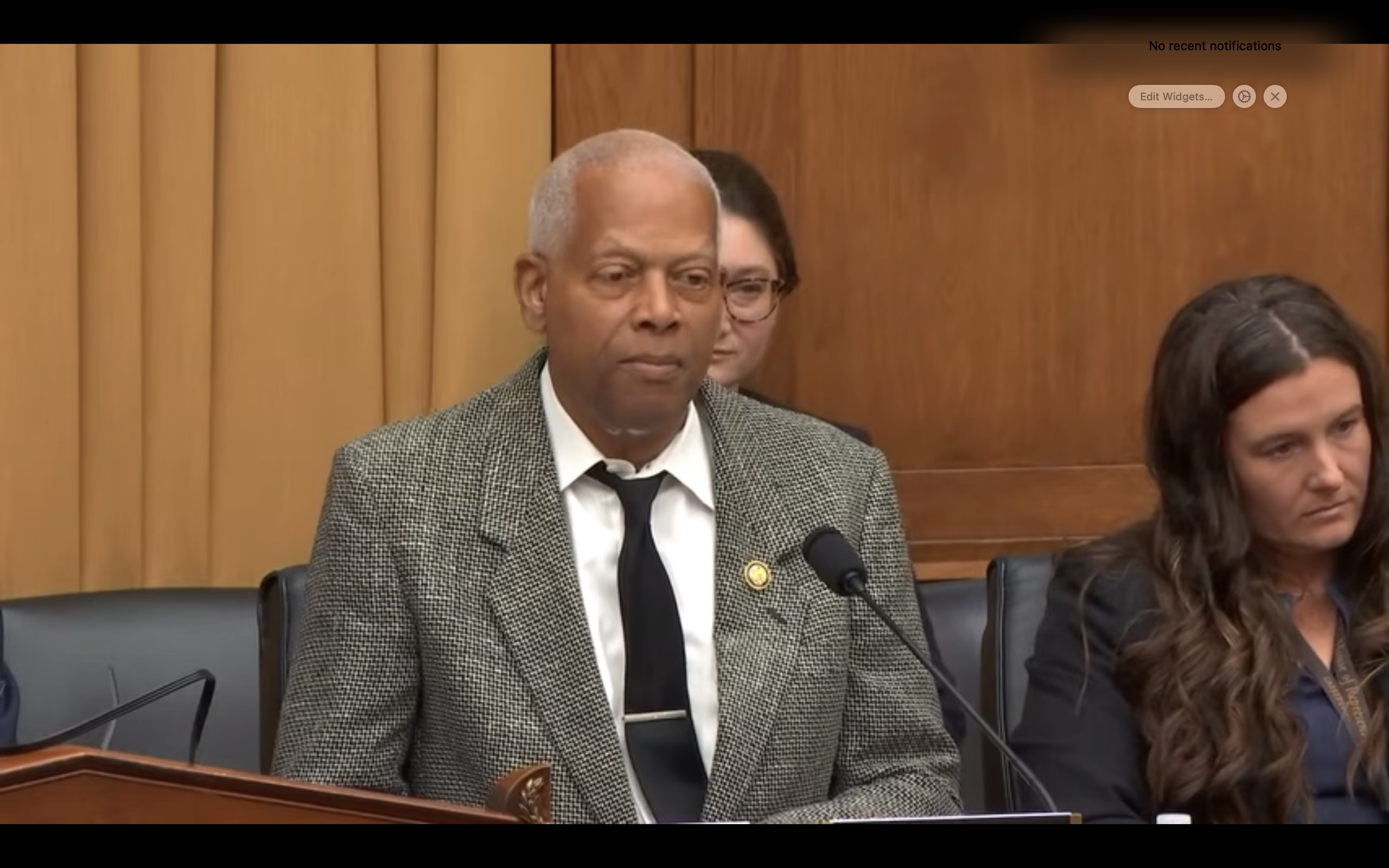 Ranking Member Hank Johnson (D-GA) disagreed with Issa, calling his concerns “partisan” and based on “political ideology over merit.” Johnson said he supports reauthorization and said individual PTAB policies should be considered separately. However, he criticized the USPTO for not having restored the PPAC, whose members review proposed fees and provide public oversight. He criticized the Trump administration for removing the previous members and taking months to begin appointing replacements.
Although Johnson said Congress should eventually consider proposals such as the PREVAIL Act, he argued that adding PTAB reforms now would make a successful, traditionally bipartisan program unnecessarily controversial.
Bipartisan Agreement on Renewal, with Caveats
The witnesses who testified today included Teresa Rea, former USPTO Acting Director and now a Principal at Rea Consulting; Morgan Reed, President of the Association for Competitive Technology (ACT); Melissa Wasserman, Associate Dean and Professor, University of Texas School of Law; and former USPTO Director and now C4IP Board Member and Partner at Cravath Swaine & Moore, David Kappos.
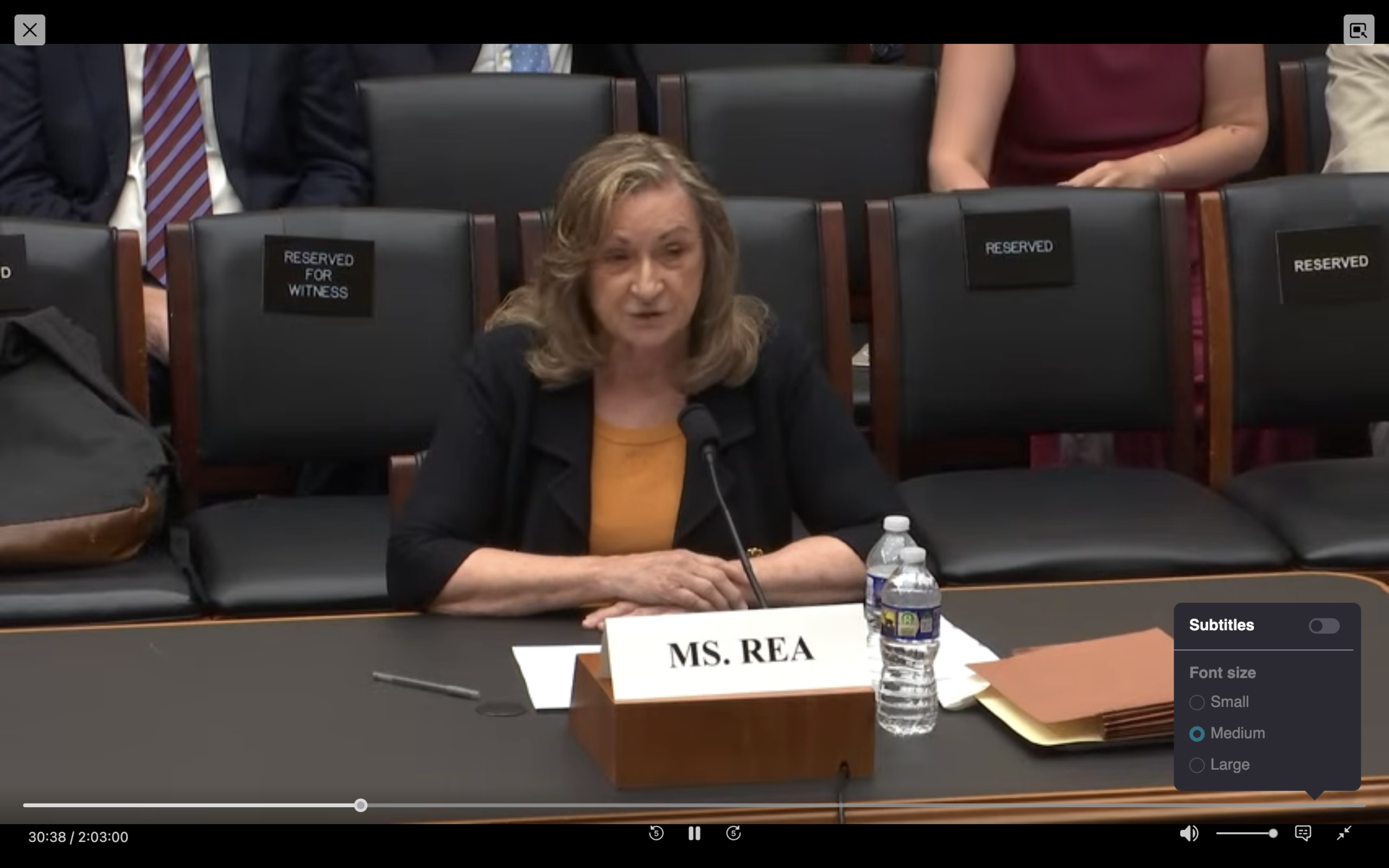 Rea said the legal landscape has shifted since Congress granted the agency fee-setting power in the America Invents Act. At the time, courts deferred to agency interpretations of ambiguous statutes. The Supreme Court’s decision in Loper Bright Enterprises v. Raimondo ended that framework, she said, leaving fee decisions more dependent on the statutory language and the guardrails Congress provides. Rea recommended clarifying “aggregate costs,” considering limits on increases beyond inflation, regular congressional reports and review by fully staffed patent and trademark advisory committees, and requiring reasoned written decisions.
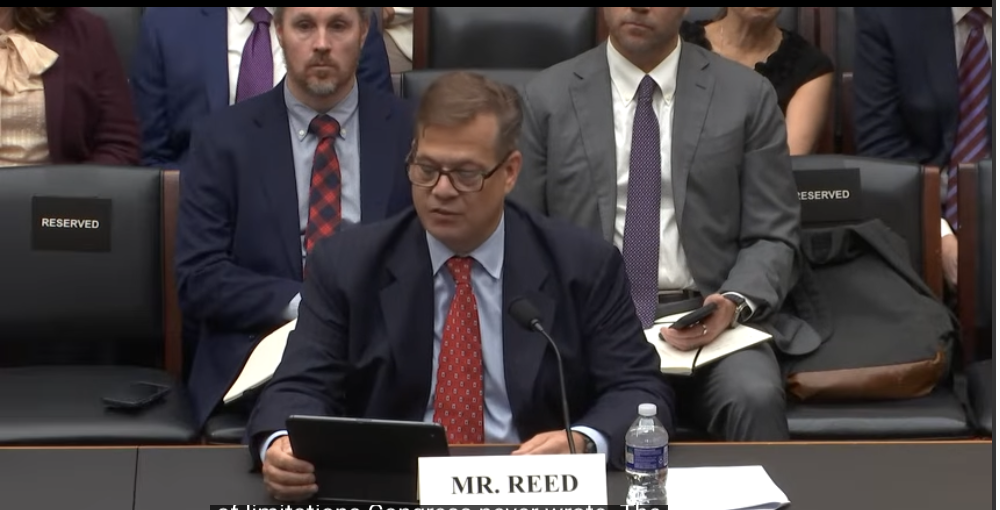 Reed echoed the need for more “reasoned decisions,” a reference to the “summary notices” Squires began issuing upon taking over discretionary denial decisions. Reed said such practices have reduced transparency at the Office. He said he supports renewal of fee-setting authority only with conditions. As a representative of small and midsize technology companies, Reed argued that the USPTO has “broken trust” in the AIA by expanding discretionary denials. Those practices, he said, can leave smaller businesses unable to challenge questionable patents before PTAB judges. He warned that generative AI could compound the problem by making it cheaper and faster to draft large numbers of patent applications. Congress should impose a genuine sunset, restore a functioning PPAC and establish clear limits on discretionary denial, Reed said. The lack of a functioning PPAC is “particularly troubling” because it has “coincided with some of the most consequential changes to patent policy since enactment of the AIA,” he added.
Professor Wasserman focused on the incentives embedded in the agency’s fee structure. Because upfront application fees cover only about half of examination costs, the office relies heavily on issue and maintenance fees collected after patents are granted. That model promotes access, she said, but could create financial pressure favoring grants during revenue shortfalls. Wasserman backed renewal with a sunset, a fully functioning advisory committee and consideration of collecting more examination costs before allowance while retaining discounts for small and micro entities. She also urged continued scrutiny of the changes to IPR institution at the PTAB.
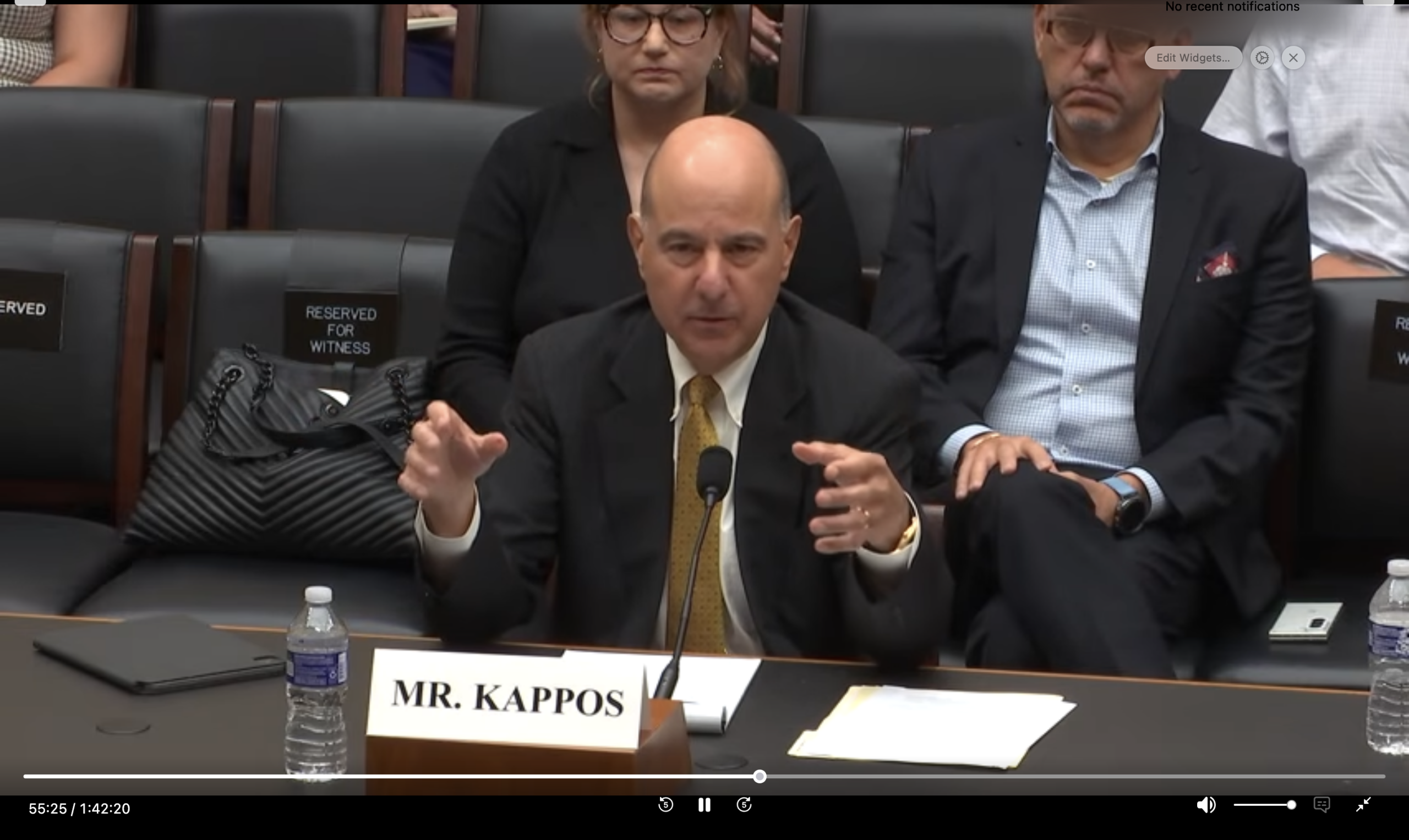 Finally, Kappos, who was perhaps questioned by the Subcommittee most, made the strongest case for long-term renewal not conditioned on policy changes. Based on his experience as Director prior to the AIA, when the Office did not have automatic fee-setting authority, he explained that the entirely fee-funded agency needs flexibility to maintain reserves, modernize technology and sustain examiner hiring through downturns and funding lapses. Existing procedural checks already make fee changes “highly deliberative,” Kappos argued—for example, the most recent fee rule took 21 months from initial advisory committee notice to its effective date, he said. Kappos ultimately recommended a seven- or eight-year extension and urged the Subcommittee to address other patent-policy disputes separately.
Issa, Kappos Butt Heads
The Q&A was dominated by Issa, with substantive questioning from Representatives Thomas Massie (R-KY), Zoe Lofgren (D-CA), Johnson and others. In one heated exchange, Issa pressed Kappos over whether PTAB proceedings were actually intended to operate concurrently with patent infringement litigation in federal court.
Issa argued that parallel proceedings are inherent in the system because accused infringers—not patent owners—typically petition the PTAB to review challenged claims. By that point, he said, a patent holder has ordinarily asserted infringement or initiated an Article III case, even if the claims and conduct remain undefined.
Citing his experience as a patent litigant, Issa said infringement accusations are often broadly framed, leaving accused parties to spend hundreds of thousands or millions of dollars before a court clarifies the scope of the dispute. PTAB review, he suggested, can provide specificity and resolve validity questions before the district court proceeds.
Kappos rejected Issa’s characterization of the proceedings as intentionally concurrent, reminding him that “it was in this very room where we had discussions leading up to the AIA, multiple statements in the record by people, by members who were on the scene at the time, saying the PTAB is absolutely intended as an alternative to district court litigation.”
Kappos said disputes frequently begin when a patent owner approaches an alleged infringer to discuss a license or request that the conduct stop, prompting the accused party to seek PTAB review. He pointed to the legislative history of the AIA, saying lawmakers repeatedly described the PTAB as an alternative to district court litigation.
Issa agreed, but questioned whether that isn’t what already happens when district courts stay infringement suits pending PTAB review, thereby eliminating duplication and allowing the administrative proceeding to simplify—or dispose of—the case. Kappos said practices vary among courts, with stays granted in some cases but denied in others.
Issa emphasized that PTAB decisions can spare federal judges from resolving technically complex or weak cases. When claims survive review, he said, the parties often settle; when claims are canceled, appellate review remains available at the Federal Circuit. In either circumstance, Issa argued, PTAB review can more directly narrow the issues and reduce the burdens of district court litigation.
The U.S. Chamber of Commerce and The Council for Innovation Promotion (C4IP) both submitted statements to the Subcommittee urging renewal, with C4IP specifically calling for a “long term”, like Kappos.
![[Advertisement]](https://ipwatchdog.com/wp-content/uploads/2026/10/IP-Copilot-Oct-13-2026-sidebar-700x500-1.jpg)
![[Advertisement]](https://ipwatchdog.com/wp-content/uploads/2026/10/Junior-Oct-15-2026-sidebar-700x500-1.jpg)
![[Advertisement]](https://ipwatchdog.com/wp-content/uploads/2026/10/BlackBox-IP-Oct-20-2026-sidebar-700x500-1.jpg)
![[Advertisement]](https://ipwatchdog.com/wp-content/uploads/2026/09/WE-BUY-PATENTS-SIM-IP-Ad-1-revised-on-Sep-28-2026-700x500-1.jpg)
![[Advertisement]](https://ipwatchdog.com/wp-content/uploads/2026/09/Life-Sciences-2026-sidebar-early-bird-date-corrected-700x500-1.jpg)
![[Advertisement]](https://ipwatchdog.com/wp-content/uploads/2024/09/Patent-Prosecution-Training-sidebar-700x500-2025-03-27.jpg)





![[Advertisement]](https://ipwatchdog.com/wp-content/uploads/2021/12/WEBINAR-336-x-280-px.png)
![[Advertisement]](https://ipwatchdog.com/wp-content/uploads/2021/12/Ad-4-The-Invent-Patent-System™.png)




Join the Discussion
4 comments so far. Add my comment.
Erich Spangenberg
September 7, 2026 06:41 amIssa … what a waste of carbon … he will not be missed
Pro Say
September 4, 2026 06:00 pm. . . and there that anti-patent (“while I made millions with mine!”) Issa goes again . . .
Know how you can tell Issa is lying? Yea; that’s right.
His lips are moving.
Randy Landreneau
September 3, 2026 11:39 amWitness Reed made the very misleading statement that the number of PTAB petitions is extremely low relative to the number of patents issued. The vast majority of patents have no or little value and will never face infringement. Very few patents have enough value to be targets of infringement by large entities. The number of PTAB petitions of the small universe of highly valuable patents is actually very high and anyone who makes the argument Reed made should be written off as disingenuous.
learned indifference
September 3, 2026 10:04 amof course since congress has never agreed not to appropriate the fees collected from the patent office to use for other government budgets – Issa by arguing to stall fee setting authority is arguing to take money out of his own hands…..but hey tbh, its hard to care about these idiots….
Add Comment