


 0
0 “Each of these two design choices is an obvious combination of prior-art elements.” – Federal Circuit
 The U.S. Court of Appeals for the Federal Circuit (CAFC) issued a decision today in 10x Genomics, Inc. v. Parse Biosciences, Inc., affirming three Patent Trial and Appeal Board (PTAB) final written decisions that found all challenged claims of three 10x Genomics patents unpatentable as obvious. Circuit Judge Cunningham wrote for the court, joined by Circuit Judges Taranto and Bryson, and rejected each of the four challenges that 10x Genomics raised on appeal.
Parse Biosciences filed petitions for inter partes review (IPR) against U.S. Patent Nos. 10,155,981, 10,240,197, and 10,697,013, which are all owned by 10x Genomics and directed to methods for analyzing nucleic acids from single cells. The ‘197 patent is a continuation of the ‘981 patent, while the ‘013 patent belongs to the same patent family, and all three patents share a specification. The claims generally cover attaching tag sequences to sample polynucleotides so that sequencing results can later be linked back to the originating cell and the specific molecule sampled, with certain claims further requiring that the tagging occur through a ligation reaction.
The Board determined in three separate final written decisions, issued between September 2024 and February 2025, that all claims of the ’981 patent, along with claims 1-12 and 20-26 of the ’197 patent and claims 1-12 and 19-28 of the ’013 patent, are unpatentable as obvious over the combination of a published international patent application referred to as Linnarsson and a scientific journal article referred to as McCloskey. The remaining claims of the ‘197 and ‘013 patents were found unpatentable over Linnarsson, McCloskey, and a related published patent application referred to as McCloskey II. 10x Genomics appealed the decision to the CAFC, which exercised jurisdiction under Title 28 of the United States Code, Section 1295(a)(4)(A).
10x Genomics first argued that the Board committed reversible error in the ‘013 patent proceeding by failing to determine whether a person of ordinary skill in the art would have been motivated to combine Linnarsson and McCloskey. Instead, the Board addressed only whether there was motivation to modify that combination through ligation. The Federal Circuit disagreed, explaining that 10x Genomics had not raised that particular motivation-to-combine argument before the Board and that the Board therefore did not err in confining its analysis to the arguments actually presented. Since the Board had engaged with Parse Biosciences’ proposed rationale and reached conclusions consistent with its findings in the related ‘981 and ‘197 proceedings, the court held that 10x Genomics failed to establish reversible error.
Additionally, 10x Genomics challenged the Board’s determination that a skilled artisan would have been motivated to combine Linnarsson and McCloskey to address amplification bias, defined in the record as “a process by which extra or multiple copies of a particular polynucleotide are formed.” 110x Genomics contended that McCloskey’s barcoding scheme lacked sufficient capacity to uniquely tag substantially all messenger RNA molecules present in a Linnarsson-derived sample. Substantial evidence supported the Board’s conclusion that McCloskey is not confined to seven-nucleotide barcodes, the Federal Circuit found, noting that McCloskey itself describes how barcode length can be adjusted to expand the number of distinguishable sequences.
The court rejected the argument that reducing amplification bias requires tagging every molecule in a cell. It pointed to 10x Genomics’ concession that the claims do not require tagging all mRNA molecules, as well as expert testimony supporting the amplification-bias rationale. Linnarsson is not limited to mammalian cells, the court added, since the reference expressly contemplates single celled organisms such as bacteria or yeast. Since the Board had found the amplification-bias rationale independently sufficient to support the proposed combination, the Federal Circuit did not reach 10x Genomics’ separate arguments concerning the design-choice rationale.
Moreover, 10x Genomics argued that the Board erred in finding that the Linnarsson and McCloskey combination discloses the correlate limitations of the ‘981 patent, contending that McCloskey’s tagging method tracks batches of molecules rather than individual cells. The Federal Circuit disagreed, explaining that Parse Biosciences’ petition relied on Linnarsson, not McCloskey, to disclose the cell-specific tag sequence. Linnarsson’s tag correlates a polynucleotide to its source cell, the court found, and on that basis held that Linnarsson alone satisfies the relevant limitation.
10x Genomics further argued that the Board erred in finding that introducing a second tag sequence through ligation was an obvious design choice that improves flexibility. Substantial evidence supported that finding, the Federal Circuit held, citing the patents’ own specifications acknowledging ligation as a conventional tagging technique and expert testimony identifying ligation as one of only two available methods for introducing a second tag. The court referenced its prior decision in ACCO Brands Corp. v. Fellowes, Inc., which held that when a skilled artisan is left with two design choices, “[e]ach of these two design choices is an obvious combination of prior-art elements.” The record also supported the Board’s finding regarding the flexibility rationale, the court noted, since the petitions and accompanying expert testimony explained that ligation would allow a second tag sequence to be added later in the process.
The Federal Circuit explained that it reviews underlying factual findings, including whether a skilled artisan would have been motivated to combine prior art references, for substantial evidence, meaning “such relevant evidence as a reasonable mind might accept as adequate to support a conclusion.”
Ultimately, the Federal Circuit affirmed the Board’s final written decisions, upholding the unpatentability determinations covering the challenged claims of all three single cell sequencing patents.
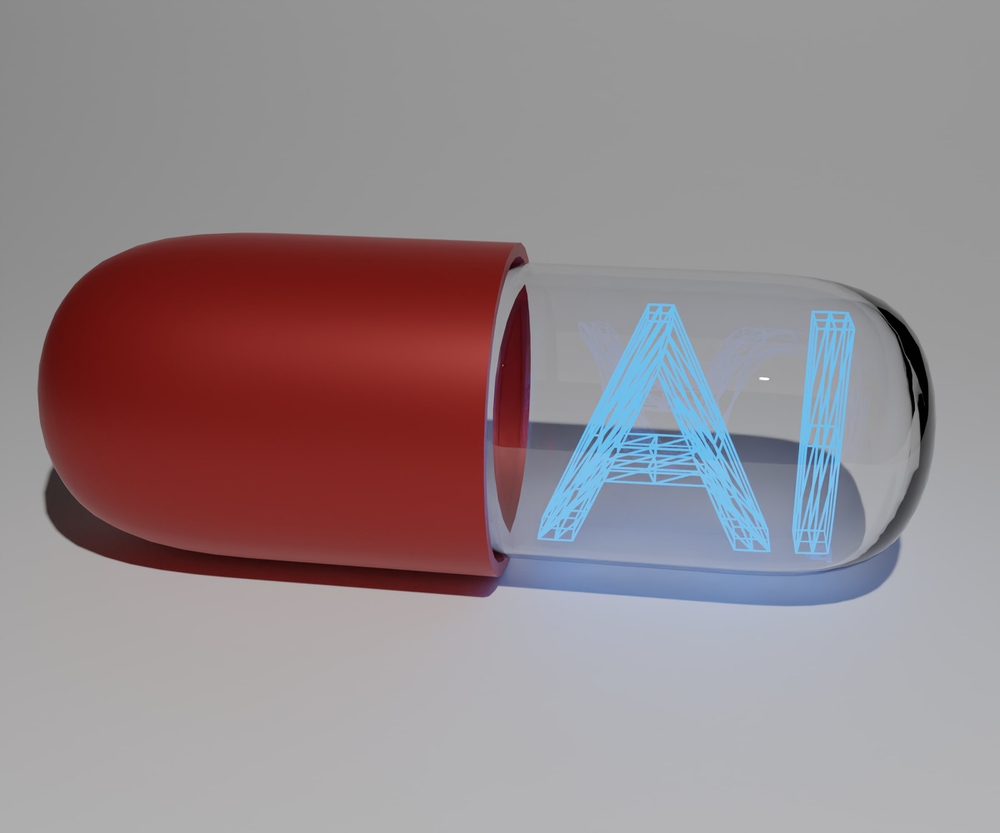
Image Source: Depoosit Photos
Image ID: 70164509
Author: billperry
![[Advertisement]](https://ipwatchdog.com/wp-content/uploads/2026/10/Questel-Oct-22-2026-sidebar-700x500-1.jpg)
![[Advertisement]](https://ipwatchdog.com/wp-content/uploads/2026/10/ClaimHit-Oct-28-2026-sidebar-700x500-1.jpg)
![[Advertisement]](https://ipwatchdog.com/wp-content/uploads/2026/10/Patsnap-Oct-29-2026-sidebar-700x500-1.jpg)
![[Advertisement]](https://ipwatchdog.com/wp-content/uploads/2026/09/Life-Sciences-2026-sidebar-early-bird-ends-Oct-25-700x500-1.jpg)
![[Advertisement]](https://ipwatchdog.com/wp-content/uploads/2026/09/WE-BUY-PATENTS-SIM-IP-Ad-1-revised-on-Sep-28-2026-700x500-1.jpg)
![[Advertisement]](https://ipwatchdog.com/wp-content/uploads/2024/09/Patent-Prosecution-Training-sidebar-700x500-2025-03-27.jpg)



![[Advertisement]](https://ipwatchdog.com/wp-content/uploads/2021/12/WEBINAR-336-x-280-px.png)
![[Advertisement]](https://ipwatchdog.com/wp-content/uploads/2021/12/Ad-4-The-Invent-Patent-System™.png)





Join the Discussion
No comments yet. Add my comment.
Add Comment