


 0
0 “The court found that construing the claim according to its own narrower language did not read a preferred embodiment into the claim.’”
 The U.S. Court of Appeals for the Federal Circuit (CAFC) issued a decision today in Biofer S.p.A. v. Vifor (International) AG affirming a judgment of non-infringement by the U.S. District Court for the Eastern District of New York in favor of Swiss Pharmaceutical company, Vifor (International) AG. The dispute centered on the construction of a claimed pH range recited in a patent covering a process for producing iron-sugar complexes used to treat iron deficiency.
Biofer S.p.A. filed a lawsuit against Vifor (International) AG in April 2022, alleging infringement of U.S. Patent No. 8,759,320. The patent discloses a manufacturing process for producing iron-sugar complexes with physical and chemical stability, low toxicity, and bioavailability suitable for administration to patients. According to the specification, prior art manufacturing processes tended to produce complexes that were unstable or toxic.
The patent describes a four-step manufacturing process consisting of activation of a sugar, complexation of the activated sugar with an iron compound, purification of the complex, and stabilization. Claim 1, the only claim at issue on appeal, is directed to the activation step, in which a sugar reacts with bromine to oxidize an aldehyde end group selectively. The claim recites that this reaction occurs “at a pH between 7.0 and 9.0.”
In March 2024, the district court issued a Markman order construing that phrase. Judge Ann Donnelly characterized the dispute as whether the claim covers only a process occurring entirely within the recited pH range, or a process in which the pH merely falls within that range at some point, even briefly. Relying on the specification’s instruction that pH must be controlled throughout the activation reaction, the district court construed the term to mean “pH is maintained in the interval separating 7.0 and 9.0.” Biofer moved to clarify that order, which the district court denied, stating that the order spoke for itself and left nothing to clarify.
During discovery, testing showed that Vifor’s manufacturing process stayed within the 7.0 to 9.0 pH range for approximately 90 percent of the oxidation reaction. Since that result fell short of the district court’s construction, Biofer stipulated that Vifor’s process does not infringe, while preserving its intent to appeal the claim construction. The district court entered judgment of non-infringement in favor of Vifor in August 2024, and Biofer timely appealed.
The opinion began with the language of claim 1 itself, finding that the phrase reciting the pH range modifies the sugar-reacting step as a whole rather than an undefined portion of it. The court concluded that “the claimed pH range thus defines the solution’s environment for the duration of the oxidation step.”
Moreover, the court pointed to language instructing that the pH value must be “controlled and maintained” throughout the activation reaction, along with three examples in the specification that each describe maintaining the pH between 7.0 and 9.0 during oxidation. Under precedent holding that a patent’s consistent characterization of a claim term supports construing the term accordingly, the court found that the specification’s repeated references to maintaining pH informed the meaning of the claim language.
During prosecution, Biofer submitted a declaration from the inventor, Dr. Egidio Marchi, describing experiments in which maintaining pH between 7.8 and 8.2 achieved selective oxidation without increasing depolymerization of the sugar, while maintaining pH between 9.8 and 10.2 caused a depolymerization attack on the sugar. Biofer relied on that declaration during prosecution to argue that operating outside the claimed range failed to prevent destructive attack on the sugar, and the claims were allowed on that basis.
The Federal Circuit rejected Biofer’s argument that the district court’s construction improperly imported a preferred embodiment into the claim. Since the specification discloses a broader pH range of 5.0 to 12.0 alongside the narrower range of 7.0 to 9.0 recited in claim 1, the court found that construing the claim according to its own narrower language did not read a preferred embodiment into the claim.
Biofer’s counsel argued at oral argument that the correct construction should permit brief excursions outside the claimed range, so long as the process still achieved the recited “specific oxidation.” The Federal Circuit found that Biofer had not raised this argument before the district court and had instead argued the converse position there, that the pH needs to only fall within the range for a moment. The court cited Conoco, Inc. v. Energy & Environmental International, L.C., holding that “a party may not introduce new claim construction arguments on appeal or alter the scope of the claim construction positions it took below,” and treated the brief excursions argument as forfeited.
After affirming the district court’s construction, the Federal Circuit noted Biofer’s concession that Vifor does not infringe any asserted claim of the ‘320 patent under that construction. The court declined to reach Biofer’s separate challenge to the district court’s construction of a different claim term concerning stoichiometric quantities of hypochlorite, since that term was not implicated by the parties’ stipulation or the resulting judgment. The court cited AlterWAN, Inc. v. Amazon.com Inc., and declined to review a claim construction dispute not reflected in the judgment on appeal. Ultimately, the Federal Circuit affirmed the district court’s judgment of non-infringement of the ‘320 patent.
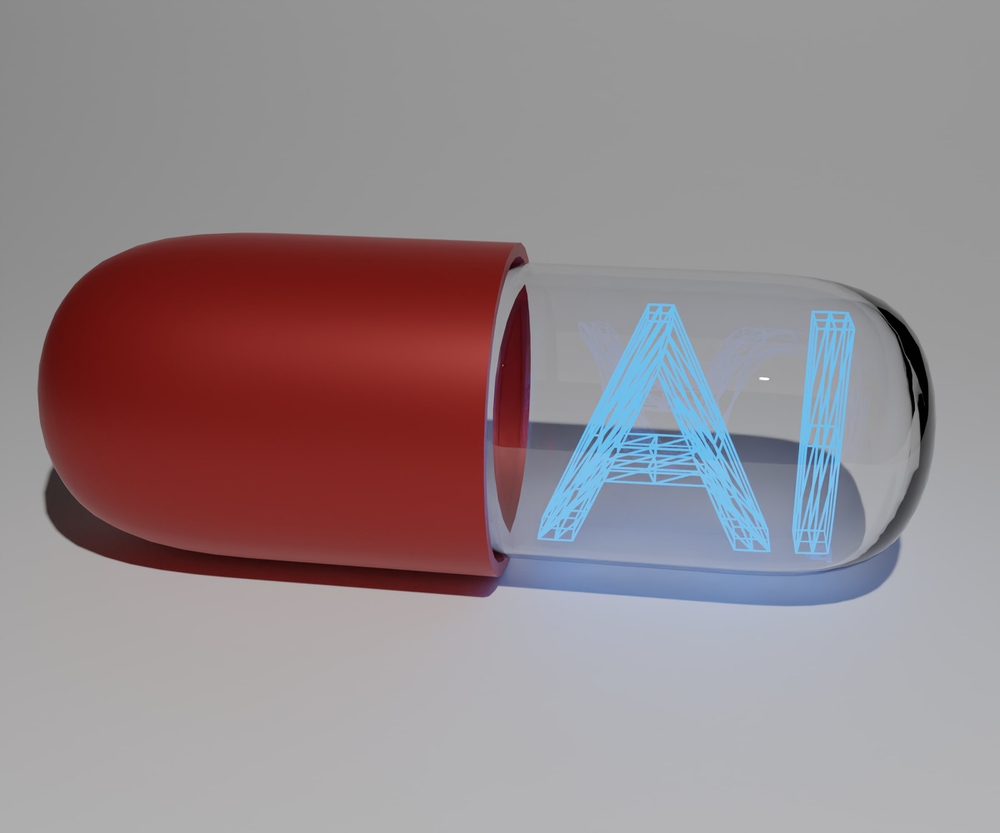
Image Source: Deposit Photos
Image ID:103763568
Copyright:bigfatnapoleon
![[Advertisement]](https://ipwatchdog.com/wp-content/uploads/2026/10/Questel-Oct-22-2026-sidebar-700x500-1.jpg)
![[Advertisement]](https://ipwatchdog.com/wp-content/uploads/2026/10/ClaimHit-Oct-28-2026-sidebar-700x500-1.jpg)
![[Advertisement]](https://ipwatchdog.com/wp-content/uploads/2026/10/Patsnap-Oct-29-2026-sidebar-700x500-1.jpg)
![[Advertisement]](https://ipwatchdog.com/wp-content/uploads/2026/09/Life-Sciences-2026-sidebar-early-bird-ends-Oct-25-700x500-1.jpg)
![[Advertisement]](https://ipwatchdog.com/wp-content/uploads/2026/09/WE-BUY-PATENTS-SIM-IP-Ad-1-revised-on-Sep-28-2026-700x500-1.jpg)
![[Advertisement]](https://ipwatchdog.com/wp-content/uploads/2024/09/Patent-Prosecution-Training-sidebar-700x500-2025-03-27.jpg)



![[Advertisement]](https://ipwatchdog.com/wp-content/uploads/2021/12/WEBINAR-336-x-280-px.png)
![[Advertisement]](https://ipwatchdog.com/wp-content/uploads/2021/12/Ad-4-The-Invent-Patent-System™.png)





Join the Discussion
No comments yet. Add my comment.
Add Comment