


 0
0 “The CAFC said its own case law teaches that where there are mixed rulings ‘of a violation finding… and a no-violation finding…, the notices of appeal for the different findings have distinct appeal windows.’”
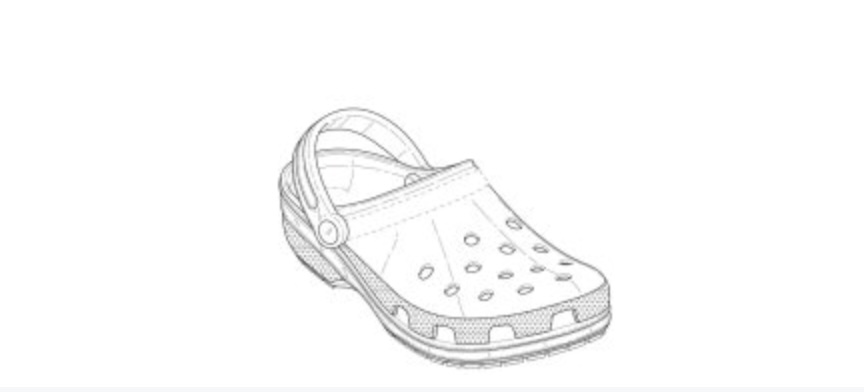 In a precedential ruling authored by Judge Stoll, the U.S. Court of Appeals for the Federal Circuit (CAFC) said on Thursday that International Trade Commission (ITC) decisions that contain mixed findings of violations and no violations have distinct appeal windows as to the notices of appeal for the different findings.
Crocs initiated an ITC investigation against a number of respondents it accused of importing into the United States footwear that infringed or diluted its U.S. Trademark Nos. 5,149,328 and 5,273,875. Crocs requested a general exclusion order (GEO) or a limited exclusion order (LEO). There were three active respondents and four defaulting respondents. The Commission ultimately found that Crocs had failed to show a likelihood of confusion, infringement, or dilution of the 3D Marks as to the active respondents and that those respondents were therefore not in violation of Section 337. As to the defaulting respondents, the ITC issued a LEO against them. Crocs appealed both the Commission’s final determination as to the active respondents and its decision to issue a LEO instead of a GEO against the defaulting respondents. It filed its notice of appeal on December 22, 2023.
The ITC argued that Crocs’ appeal against the active respondents was time-barred and that it did not abuse its discretion in issuing the LEO instead of the GEO. While Crocs countered that its appeal of the final determination as to the active respondents was timely because the 60-day Presidential review period ended November 14, 2023, the CAFC said its own case law teaches that where there are mixed rulings “of a violation finding (subject to a presidential review period prior to the 60-day appeal window starting) and a no-violation finding (not subject to a presidential review period and so final for the purposes of starting the 60-day appeal window at the time it issues), the notices of appeal for the different findings have distinct appeal windows.”
Since the no violation finding as to the active respondents was a final decision not subject to presidential review, the 60-day period for appeal ended on November 13, 2023, said the opinion.
The court cited Allied Corp. v. United States International Trade Commission, 782 F.2d 982 (Fed. Cir. 1986) and Broadcom Corp. v. International Trade Commission, 542 F.3d 894 (Fed. Cir. 2008) as controlling. In Allied, the CAFC dismissed Allied’s appeal as untimely where there were two orders issued with mixed findings and Allied waited for the presidential review period to expire before appealing. And in Broadcom, the CAFC relied on Allied to reject Qualcomm’s contention that Broadcom’s appeal of a no-violation finding was premature because the presidential review period had not become final when Broadcom appealed. The CAFC’s Broadcom opinion held that “once the Commission adopted the administrative law judge’s noninfringement determination, there was no further opportunity for review of that decision other than by way of review in this court. Broadcom therefore did not prematurely file its petition for review once the Commission issued its order.”
The court further rejected Crocs’ argument that the ITC’s decision to issue its findings in one writing rather than separate orders that it must be treated as a single final determination that “cannot be parsed for the purposes of presidential review, and thus also cannot be parsed for the appeal window.” The CAFC said Crocs failed to cite any case law to support its argument and that the case it did cite, Young Engineers, Inc. v. United States International Trade Commission, 721 F.2d 1305 (Fed. Cir. 1983), was irrelevant because it did not involve a no violation finding.
Crocs also tried to argue that the statute was not jurisdictional and that equitable tolling therefore could apply, but the CAFC said Crocs had forfeited its right to make that argument because it “failed to include any argument or evidence on tolling in its opening brief.”
Turning to Crocs’ objection to the LEO rather than a GEO, which it said the Commission provided no justification for, the CAFC said the language of the statute supported the Commission’s decision and that it provided a sufficient basis for issuing the LEO.
The CAFC thus dismissed Crocs’ appeal as to the finding of no violation for the active respondents and affirmed the ITC’s decision as to the LEO for the defaulting respondents.
![[Advertisement]](https://ipwatchdog.com/wp-content/uploads/2026/10/Questel-Oct-22-2026-sidebar-700x500-1.jpg)
![[Advertisement]](https://ipwatchdog.com/wp-content/uploads/2026/10/ClaimHit-Oct-28-2026-sidebar-700x500-1.jpg)
![[Advertisement]](https://ipwatchdog.com/wp-content/uploads/2026/10/Patsnap-Oct-29-2026-sidebar-700x500-1.jpg)
![[Advertisement]](https://ipwatchdog.com/wp-content/uploads/2026/09/Life-Sciences-2026-sidebar-early-bird-ends-Oct-25-700x500-1.jpg)
![[Advertisement]](https://ipwatchdog.com/wp-content/uploads/2026/09/WE-BUY-PATENTS-SIM-IP-Ad-1-revised-on-Sep-28-2026-700x500-1.jpg)
![[Advertisement]](https://ipwatchdog.com/wp-content/uploads/2024/09/Patent-Prosecution-Training-sidebar-700x500-2025-03-27.jpg)






![[Advertisement]](https://ipwatchdog.com/wp-content/uploads/2021/12/WEBINAR-336-x-280-px.png)
![[Advertisement]](https://ipwatchdog.com/wp-content/uploads/2021/12/Ad-4-The-Invent-Patent-System™.png)






Join the Discussion
No comments yet.