


 0
0 “There appears to be little difference between an infringing display via web browser, which was entitled to safe harbor in Davis, and an infringing display via email.”
 The U.S. District Court for the Northern District of California on Tuesday granted summary judgment in favor of Pinterest, Inc. in a copyright infringement suit brought by the estate of a professional photographer, finding that the social media platform is protected by the Digital Millennium Copyright Act’s (DMCA) safe harbor provision.
Maureen Harrington, representing the estate of photographer Blaine Harrington III, brought the class action lawsuit against Pinterest, alleging that the company directly infringed on copyrighted photographs by displaying them in notifications to users outside of its platform. The case centered on whether Pinterest’s email, in-app, and mobile push notifications containing copyrighted images fell outside the scope of the DMCA’s safe harbor protections.
This case follows a similar lawsuit filed by another professional photographer, Harold Davis, against Pinterest. In the Davis case, the court held that Pinterest’s display of user-uploaded works near advertisements on its platform was protected by the DMCA safe harbor, and that Davis had failed to adequately plead that Pinterest had the necessary knowledge of infringement for a contributory infringement claim to stand.
The court in the Harrington case began its analysis by examining whether Pinterest’s actions constituted “storage at the direction of a user” under Section 512(c) of the DMCA. The court noted that while the Ninth Circuit had not previously addressed the specific question of whether notifications fell under this provision, it had held that activities “narrowly directed towards enhancing the accessibility of [] posts” are eligible for safe harbor protection. The court found that Pinterest’s notifications, which contain hyperlinks to content on its platform, are a form of “access-facilitating” process.
Moreover, the court explained that “there appears to be little difference between an infringing display via web browser, which was entitled to safe harbor in Davis, and an infringing display via email.” In both instances, Pinterest’s service provides a hyperlink that, when clicked, requests the image from Pinterest’s servers and displays it. The court reasoned that because both a hyperlink in an email and a hyperlink on a browser link back to images on Pinterest’s service, there is no clear reason why the first form of display would arise “by reason of the storage at the direction of a user” while the second would not.
Harrington argued that because the alleged infringement did not occur on Pinterest’s website, it was not “enhancing accessibility” and therefore not protected. The court, however, found this argument unpersuasive as the Ninth Circuit did not intend to restrict the safe harbor to only instances of infringing display on a service provider’s website. Instead, the court found that Pinterest’s algorithmic display of Pins, even in notifications, takes the second path to “storage” as defined in previous cases.
The court also addressed Harrington’s assertion that there were genuine disputes of material fact that should preclude summary judgment. Harrington contended that Pinterest’s notifications contain advertisements, but the court found this fact to be immaterial. The court noted that “courts have not withheld safe harbor protection simply because service providers advertise on their platforms alongside user-uploaded content.” Harrington also claimed that Pinterest’s notifications display images using means other than hyperlinks, but the court found this claim to be unsupported by the evidence.
Furthermore, the court considered whether Pinterest had actual or “red flag” knowledge of the infringement. The court noted that the copyright owner bears the burden of showing such knowledge. Pinterest argued that there was no evidence in the record to show the requisite knowledge, and Harrington offered no evidence or argument in response. The court found that the only relevant evidence suggested that Pinterest had no actual knowledge of the infringement because Harrington had never sent a takedown notice or other communication identifying the infringing material.
The court analyzed whether Pinterest received a “financial benefit directly attributable to the infringing activity” and had the “right and ability to control such activity.” The ruling clarified that the service provider has the burden to prove it did not receive a financial benefit and did not have the right and ability to control the infringing activity. It found that Pinterest’s control over its algorithms and advertisements did not “constitute[] the kind of control that is necessary to lose safe harbor protection.” The court found the decision in Davis persuasive on this point, where the court found that the connection between Pinterest’s algorithms and advertisements is insufficient to show a “right and ability to control” the allegedly infringing display.
Regarding financial benefit, the court found no evidence that Pinterest received a financial benefit directly attributable to the infringing activity. The court explained that a “directly attributable financial benefit requires that ‘some revenue [] be distinctly attributable to the infringing material at issue.’” The court rejected the argument that a general increase in platform viewership from an allegedly infringing display is sufficient. No evidence was found that Pinterest marketed itself to advertisers as containing infringing material or that its platform contains “vast” amounts of infringing material.
Ultimately, the court concluded that Pinterest had met its burden to show that it is entitled to safe harbor protection under the DMCA and granted Pinterest’s motion for summary judgment.
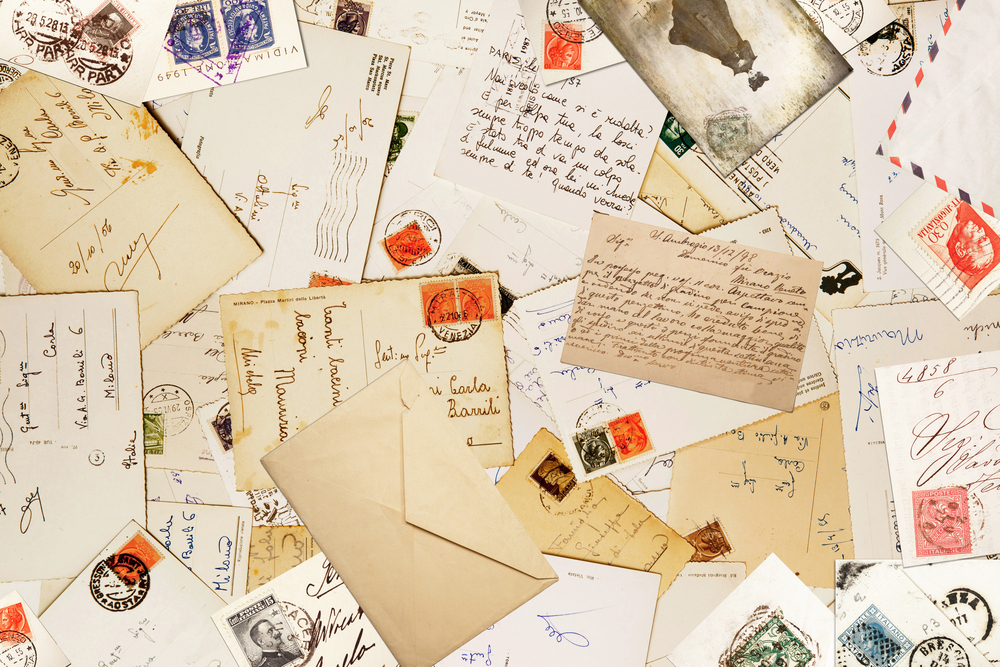
Image Source: Deposit Photos
Photography ID:28749817
Copyright:actionbleem
![[Advertisement]](https://ipwatchdog.com/wp-content/uploads/2026/10/IP-Copilot-Oct-13-2026-sidebar-700x500-1.jpg)
![[Advertisement]](https://ipwatchdog.com/wp-content/uploads/2026/10/Junior-Oct-15-2026-sidebar-700x500-1.jpg)
![[Advertisement]](https://ipwatchdog.com/wp-content/uploads/2026/10/BlackBox-IP-Oct-20-2026-sidebar-700x500-1.jpg)
![[Advertisement]](https://ipwatchdog.com/wp-content/uploads/2026/09/WE-BUY-PATENTS-SIM-IP-Ad-1-revised-on-Sep-28-2026-700x500-1.jpg)
![[Advertisement]](https://ipwatchdog.com/wp-content/uploads/2026/09/Life-Sciences-2026-sidebar-early-bird-date-corrected-700x500-1.jpg)
![[Advertisement]](https://ipwatchdog.com/wp-content/uploads/2024/09/Patent-Prosecution-Training-sidebar-700x500-2025-03-27.jpg)





![[Advertisement]](https://ipwatchdog.com/wp-content/uploads/2021/12/WEBINAR-336-x-280-px.png)
![[Advertisement]](https://ipwatchdog.com/wp-content/uploads/2021/12/Ad-4-The-Invent-Patent-System™.png)





Join the Discussion
No comments yet.