
![[IPWatchdog Logo]](https://ipwatchdog.com/wp-content/themes/IPWatchdog%20-%202023/assets/images/temp/logo-small@2x.png)

 4
4 “There are new sheriffs in town, and the USPTO is being remade under their watch.”
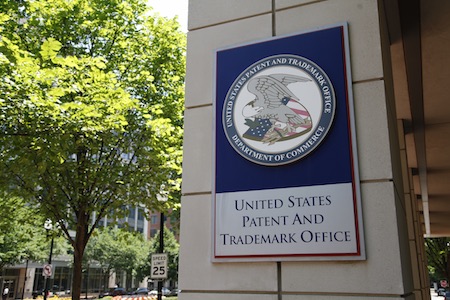 The year 2025 was one of profound change at the U.S. Patent and Trademark Office (USPTO). The magnitude and rate at which changes were implemented is unprecedented. The size and role of the Patent Trial and Appeal Board (PTAB) in America Invents Act (AIA) proceedings like inter partes reviews (IPRs) was completely overhauled.
Acting USPTO Director Coke Stewart started the ball rolling at the beginning of the year and Director John Squires, once confirmed in September, accelerated the pace.
The Office issued a flurry of guidance memos, revamping everything from how the PTAB operates to how patent eligibility is evaluated. The USPTO workforce was under attack, starting with DOGE and its “fork in the road” memo that has become a parable for how not to fix government. The number of Administrative Patent Judges (APJs) was reduced from about 230 at the end of the Biden administration to about 180 APJs at present.
There’s a lot to cover, so let’s get to it.
New Sheriffs in Town
There are new sheriffs in town, and the USPTO is being remade under their watch. Secretary of Commerce Howard Lutnick was confirmed in February. Secretary Lutnick, former CEO of Cantor Fitzgerald, strongly supports the patent system. In March, Coke Morgan Stewart was sworn in as Deputy Director and became Acting Director. Deputy Director Stewart believes that strong patent rights are critical for new enterprises to be able to penetrate markets and survive.
In September, Acting Director Stewart spoke about the “crisis situation” with the large unexamined application backlog. She stated that “[t]he pendulum needs to be brought back to the middle” when it comes to IPRs.
On March 26, Acting Director Stewart issued the “Interim Processes for PTAB Workload Management” (“Interim Processes”) memo that changed how decisions on the institution of IPR trials are made. Now, the Director, not PTAB panels, would be making decisions on discretionary denial.
The Interim Processes memo was the vehicle for the Director to reclaim half of institution decision-making authority from the PTAB. The memo listed various factors to be considered, such as the “settled expectations” of the patent owner, how long the patent had been in force, and whether the validity of the patent had been previously addressed.
In September, Director John Squires was confirmed by the Senate. During the confirmation process, he emphasized the need for better original examination of patent applications—that patents should be “born strong.” He also felt that challenges should occur earlier in the process, such as by third party submissions. He also indicated that the data on the AIA process was “skewed” with too many IPRs being filed.
Director Squires went right to work. On October 17, he issued the “Open Letter From America’s Innovation Agency” (“Open Letter”) that expressed concern about the very high IPR invalidation rate. Director Squires indicated that going forward he would be deciding institution of IPRs, both on discretionary factors and on the merits. For the first time, the Director—not the PTAB— would be making the full decision on institution.
Director Squires and Deputy Director Stewart went on to make other changes to practice at the USPTO, discussed below.
Effects of the New Institution Process
The effects of the Interim Processes and Open Letter memos were immediate and significant.
The institution rate for IPRs, about 68% in 2024, dropped to less than 40%. As of November, the rate of granting discretionary denial was over 60%. This is a near reversal of the institution rate from just a year ago. The institution statistics are updated on a regular basis at the excellent Bunsow De Mory “Dig Deeper” website.
From June to September, Acting Director Stewart issued decisions that more often than not granted discretionary denial. In the early iRhythm v. Welch Allyn decision (IPR2025-00363 (Director June 6, 2025)), the petition was denied based on the patent owner’s “settled expectations” from the patent being in force for over 13 years.
These decisions developed several factors to be considered in deciding petitions. If the patent was in force for six or more years, there was a presumption of settled expectations that the patent could not be challenged. If the expected date for a final written decision (FWD) was after the date set for trial, the petition was often denied to avoid the “significant duplication of effort” and “risk of inconsistent decisions” between the PTAB and district court.
On the other hand, there could be settled expectations in favor of the petitioner, such as where related claims of the patent had been found unpatentable in previous IPRs or other prior challenges. See Posco v. Arcelormittal, IPR2025-00370, -00371 (Director June 25, 2025); Tesla v. Intellectual Ventures II, IPR2025-00217 (Director June 13, 2025).
In October, Director Squires began issuing summary “Notice of Decisions on Institution” that announced whether petitions were instituted or not, without providing further analysis.
Other Changes in Practice at the PTAB
In July, then Chief Administrative Patent Judge (APJ) Scott Boalick issued a memo requiring the PTAB to address all grounds in its FWDs. In September, Acting Director Stewart issued a memo requiring the PTAB to provide detailed explanation any time a decision deviated from a prior decision on the patent in district court or the PTAB.
A Notice of Proposed Rulemaking (NPRM) was published on October 17 proposing new regulations that would prohibit a new IPR if there was a prior adjudication finding the patent to be valid. The proposed regulations would restrict IPR trials when there is a parallel proceeding in district court.
The comments on that NPRM are instructive. The NPRM explains that “even extremely strong patents depend on a presumption of validity for their survival” and that serial IPRs can lead to strong, valid patents being unfairly canceled. The new rules are needed to help “protect quiet title” for strong patents. The press release accompanying the NPRM stated that “repeated challenges do not benefit the patent system.”
In October, Director Squires issued a memo imposing a strict requirement that petitioners must identify all real parties in interest (RPIs) in the original petition. The Director de-designated the SharkNinja v. iRobot, IPR2020-00734, (PTAB Oct. 6, 2020) decision that had loose requirements for identifying RPIs. Then Director Squires designated as precedential the decision in Corning Optical v. PPC Broadband, IPR2014-00440, (PTAB Aug. 18, 2015) that imposed a strict requirement that all RPIs must be identified in the original petition.
The new policy on naming RPIs is part of the larger effort to apply stricter scrutiny to AIA petitions. There seems to be a preference to have fewer IPRs. Instead, the focus is improving the original examination and using ex parte reexamination (EPR) as the preferred “second look” correction mechanism.
Indeed, numerous APJs who worked on inter partes AIA proceedings have been shifted to work on ex parte proceedings. This includes appeals from original examination and the review of decisions by the Central Reexamination Unit (CRU) for EPRs. This change in priorities was highlighted by the reassignment of Chief Judge Scott Boalick and Vice Chief Judge Mike Tierney from the PTAB to the CRU in September.
This reallocation of resources between the PTAB and CRU makes some sense. The number of EPR proceedings increased over 125% from 187 in 2018 to 425 in 2024. The number of EPR proceedings can be expected to increase further with fewer IPR petitions being granted. Here’s a data point signaling what we can expect in the future: The number of EPR requests filed in Q3 of 2025 was an all-time high. (See Unified Patents: October 9, 2025 Patent Dispute Report: Q3 2025 in Review).
Changes in Original Examination
Director Squires expressed the need for improved examination (i.e., patents that are “born strong”) and concern about what he termed “the dumpster fire” backlog of unexamined patent applications that he inherited. (See AIPLA remarks, 10/31/25).
After a number of employees were forced out by DOGE in early 2025, the USPTO is now attempting to shore up its workforce. In June, the UPSTO received an exception from the hiring freeze to hire new patent examiners. Director Squires recently reaffirmed the goal of hiring 1,100 new examiners.
In mid-2025, the number of unexamined applications was reported to be 830,020 applications. As of December, it is reported to be down to 788,650 applications.
The Patent Statute (35 U.S.C. § 154) sets a goal of 14 months from time of filing to the first office action (“time-to-first-action”). In 2025, the average time-to-first-action was about 22.5 months.
The new administration is trying to reduce the time-to-first-action through a combination of initiatives in addition to hiring new examiners. The Office is implementing an AI-assisted Automated Search Pilot (ASAP!) program. The Office is implementing a “Streamlined Claim Set Pilot Program” where applicants filing a small claim set can receive out of turn examination. The Track One program (Prioritized Examination) is still available so that—for a fee ranging from $1,806 to $4,515—an applicant should see the time-to-first-action reduced from about 22 months to less than three months.
Speaking of fees, like everything else, they have gone up. In January 2025, the prior administration increased fees about 7.5% across the board. Particularly onerous fees were imposed on continuation applications. A surcharge of $2,700 is imposed on any continuation application filed 6-9 years after the original priority date. A surcharge of $4,000 is imposed on any continuation application filed more than nine years after the priority date.
The number of patents issued in 2025 decreased somewhat, apparently the result of the backlog of applications at the Office.
Artificial Intelligence
No review is complete without a discussion of the impact of AI.
First, Director Squires has signaled a more expansive view of permissible statutory subject matter, specifically calling out AI, crypto, and medical diagnostics as important new technologies deserving patent protection. On September 23, he issued the precedential decision in Ex parte Guillaume Desjardins, finding that claims directed to an AI training machine were permissible subject matter under the elusive Alice test. In Desjardins, Director Squires warned that “[c]ategorically excluding AI innovations from patent protection in the United States jeopardizes America’s leadership in this critical emerging technology.”
There has been considerable discussion about inventions created with the assistance of an AI system. At present, the guidance is that so long has a person has made a “substantial contribution” to the invention, that person can be listed as an inventor. The AI machine, of course, is not human and cannot be listed as an inventor.
Guidance on AI published under Director Vidal in 2024 was rescinded in November 2025. New “Examination Guidance” was published in the Federal Register on November 28, 2025. AI is characterized as being an “instrument” or “tool” used by human inventors. The guidance explains that the standard for determining inventorship applies to all inventions, regardless of whether an AI system is used as a tool in the invention process.
The USPTO is employing AI as a search tool. In August, the Office announced that its AI search tool SimSearch was ready for expanded use by examiners. The ASAP! program was announced in October. This permits selected applicants to receive an AI-generated preliminary search report known as an Automated Search Results Notice (ASRN).
AI continues to present interesting questions for the patent application process. For example, is there a duty to disclose if AI was used in conceiving or making the invention? Probably. But no formal rule has been promulgated on that point.
What about websites like All Prior Art (link) that create AI-generated papers? Are they printed publications under Section 102? Are they entitled to the normal presumption of enablement that is accorded to non-patent articles? See In re Antor Media Corp. (Fed. Cir. 2012). These are open questions that will be addressed in the years to come.
AI is increasingly being used as a tool by legal professionals. It is being used to search for prior art, help draft patent applications, and help draft responses to office actions. Some attorneys are using it to draft briefs submitted in court. There are risks with these applications of AI, and we have all read about attorneys being reprimanded for filing briefs with hallucinated case citations.
AI will continue to be transformative for the invention-making process, the drafting of applications, and patent prosecution more broadly. Attorneys will increasingly rely on AI to help generate work product filed with the USPTO and in the courts. It remains to be seen how much AI will reduce the size of the legal profession and how it will reshape the roles of legal professionals.
Pending Legislation
There are several bills pending on the Hill that, if enacted, would affect the operation of the PTAB as well as the examining corps.
The Promoting and Respecting Economically Vital American Innovation Leadership Act (“PREVAIL”) (link), would impose significant restrictions on the use of IPRs to challenge patents at the PTAB. PREVAIL has not seen significant movement in 2025. The rollback of IPRs by the current administration may have reduced momentum for PREVAIL.
The Patent Eligibility Restoration Act (“PERA”) seeks to overrule the Alice/Mayo decisions on patent eligibility and remove judicially-created exemptions from patent-eligibility. The Alice decision has created great uncertainty for patents and been a drag on U.S. patent rights compared to Europe and China, for example. If enacted, PERA would completely overhaul how Section 101 would be applied in original patent examination.
Unfortunately, the latest incarnation of PERA (link) has accumulated some baggage. The bill eliminates judicial exceptions to patent eligibility. But then it creates new exclusions including any process that is “social” or “cultural” or “artistic.” It even references exclusions for inventions involving “dance moves.” These head-scratching mark-ups to the bill could easily lead to the kind of confusion on subject matter eligibility that the bill is supposed to alleviate.
Federal Circuit Cases Affecting the USPTO
Various parties filed petitions for mandamus challenging the new procedures for the IPR institution process. The new procedures were challenged as being improperly retroactive, violative of constitutional rights to Due Process, and so on. One suit specifically targeted the “settled expectations” doctrine developed by Deputy Director Stewart. The Federal Circuit has denied these challenges.
The Federal Circuit has focused on two guardrails that limit challenges to institution decisions: (1) the Director has wide discretion on whether to institution under § 314(a), and (2) decisions to institute are “final and non-appealable” under § 314(d). See In re Cambridge Industries USA Inc., (Fed. Cir. Dec. 9, 2025); In re Motorola Solutions, Inc., (Fed. Cir. Nov. 6, 2025); In re Sandisk Technologies, Inc., (Fed. Cir. Dec. 9, 2025). The Federal Circuit has emphasized that petitioners do not have a constitutionally-protected “right” to an IPR.
In Ingenico v. IOENGINE (Fed. Cir. 2025), the Federal Circuit took teeth out of the petitioner estoppel provision of the AIA in finding that Section 315(e)(2) does not preclude a party from relitigating in district court validity theories using “system prior art” or “product prior art” even if overlaps with the prior art patents or printed publications that were the basis of the IPR.
The Federal Circuit built on Ingenico with the recent decision in In re Gesture (Fed. Cir. 2025) addressing Section 315(e)(1) estoppel, which provides that a petitioner suffering an adverse IPR decision “may not request or maintain a proceeding” such as an ex parte reexamination (EPR). Gesture held that estoppel would not apply to an ongoing EPR based on its reasoning that it is “maintained” by the PTO, not the petitioner or petitioner’s RPI who initiated the EPR.
Closing Thoughts
The year 2025 was a very eventful one for the USPTO. We can expect that the Director will continue to implement new initiatives to improve the quality and timeliness of the patent process in 2026.
![[Advertisement]](https://ipwatchdog.com/wp-content/uploads/2026/02/Junior-AI-Feb-10-2026-sidebar-CLE-700x500-1.jpg)
![[Advertisement]](https://ipwatchdog.com/wp-content/uploads/2026/02/Anaqua-Feb-12-2026-sidebar-700x500-1.jpg)
![[Advertisement]](https://ipwatchdog.com/wp-content/uploads/2025/12/LIVE-2026-sidebar-regular-price-700x500-1.jpg)




![[Advertisement]](https://ipwatchdog.com/wp-content/uploads/2021/12/WEBINAR-336-x-280-px.png)
![[Advertisement]](https://ipwatchdog.com/wp-content/uploads/2021/12/Ad-4-The-Invent-Patent-System™.png)





Join the Discussion
4 comments so far. Add my comment.
PTO-Indentured
December 22, 2025 08:38 amYES Anon! That could relegate American inventors / innovators inventions to no more than ‘gizmos and gadgets’.
Anon
December 22, 2025 08:27 ammike,
It’s worse than that.
https://www.congress.gov/bill/119th-congress/senate-bill/1546/text
The Trojan Horse remains (why this is not eliminated is frankly beyond me)
Sec.2, 5, (D)(vi):
“A process that is substantially economic, financial, business, social, cultural, or artistic.“
Julie Burke
December 21, 2025 08:12 pmFor more on this topic, here’s link to a Patent Panorama article from November 2024 title “Seismic Shifts at the USPTO: Navigating Patent Practice in a New Era.”
https://patentpanorama.com/blogs/seismic-shifts-at-the-uspto-navigating-patent-practice-in-a-new-era
mike
December 21, 2025 04:36 pmGreat article Stephen. This statement, however, is false: “[PERA] eliminates judicial exceptions to patent eligibility.” PERA seeks to abrogate previous cases that created judicial exceptions, but it contains no proposed statute that restricts the courts or the executive branch from doing it again.
Add Comment