
![[IPWatchdog Logo]](https://ipwatchdog.com/wp-content/themes/IPWatchdog%20-%202023/assets/images/temp/logo-small@2x.png)
 11
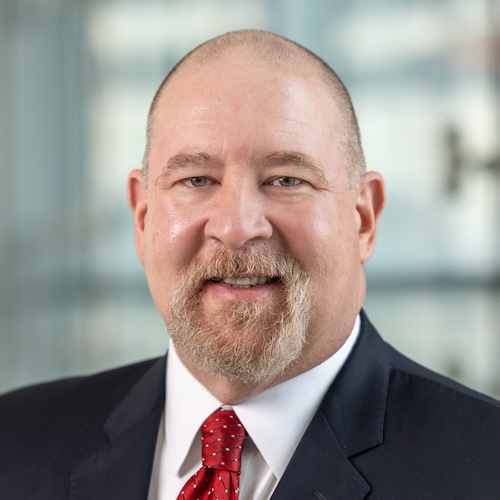
11 Coke Morgan Stewart has been sworn in as the new Deputy Undersecretary of Commerce for Intellectual Property and Deputy Director of the United States Patent and Trademark Office (USPTO). Stewart will immediately begin serving as Acting Director of the USPTO.

Coke Morgan Stewart, Acting Director of the USPTO.
At 12:01pm on Monday, January 20, 2025, a moment after President Donald J. Trump took the oath of office to start his second term as President, Coke Morgan Stewart was sworn in as the new Deputy Undersecretary of Commerce for Intellectual Property and Deputy Director of the United States Patent and Trademark Office (USPTO). The ceremony took place in Washington, DC, at the United States Department of Commerce.
The position of Deputy Director is not a Senate confirmable position, which allows the Trump Administration to place Stewart into the agency on day one. Because she has been named as Deputy Undersecretary and Deputy Director, Stewart will immediately begin serving as Acting Undersecretary and Acting Director of the USPTO and will assume the role of Deputy upon Senate confirmation of whoever President Trump ultimately selects to be the next Undersecretary and Director.
As yet, there has been no word on who President Trump will nominate to be the next Undersecretary of Commerce for Intellectual Property and Director of the USPTO, although it is widely believed inside the beltway that the person previous viewed as the frontrunner for that position, Intel’s Head of IP Policy, Vishal Amin, is no longer a candidate. Interviews for the position continue.
Stewart is known to be a strong believer in the U.S. patent system and patent rights in general. She is widely expected to be an ally to all innovators, but particularly to startups, small and medium size enterprises and highly IP-intensive research and development companies that survive only because of the rights conferred by a U.S. patent. In fact, she is believed to share a similar philosophy on patents with Howard Lutnick, President Trump’s nominee to be the next Secretary of Commerce. Lutnick, himself a prolific inventor who has made many millions of dollars with his patented inventions, seems by all accounts to be very strongly pro-patent.
Stewart is no stranger to the USPTO, and those who have spoken with IPWatchdog have indicated that while at the Office she was well liked and highly respected by those inside and outside the agency. While at the USPTO previously, Stewart served in various senior management roles over more than a decade, ranging from Senior Advisor to Acting Deputy Solicitor to Acting Chief of Staff and ultimately after the conclusion of the first Trump term functionally serving as Deputy Director, with her title then officially having been “Performing the Functions and Duties of Deputy Undersecretary of Commerce for Intellectual Property and Deputy Director of the USPTO.”
In 2021, Stewart left the USPTO to become Deputy Attorney General for Virginia, responsible for the areas of healthcare, education, and social services, a role she held for nearly two years. After stepping down as Deputy Attorney General she joined O’Melveny & Myers LLP, a global law firm with 18 offices and more than 800 lawyers. While at O’Melveny, Stewart, who is a seasoned intellectual property and appellate litigator, primarily practiced representing both patent holders and accused infringers in complex patent matters, including through jury trials in the Eastern District of Texas and the Eastern District of Virginia. A true appellate specialist in the patent space, Stewart has also handled more than 60 Federal Circuit appeals to her name.
As is customary with all agencies, political appointees submit a letter of resignation ahead of a change in Administration, which is typically dated to take effect at 12:00pm on inauguration day. Thus, this ensures a smooth transition between the outgoing Acting Director and Deputy, Derrick Brent, who has been running the agency since former Director Kathi Vidal resigned in December, and Stewart.
![[Advertisement]](https://ipwatchdog.com/wp-content/uploads/2026/09/Lighthouse-IP-Sep-15-2026-sidebar-700x500-1.jpg)
![[Advertisement]](https://ipwatchdog.com/wp-content/uploads/2026/09/Clerq-RPX-Sep-16-2026-sidebar-700x500-1.jpg)
![[Advertisement]](https://ipwatchdog.com/wp-content/uploads/2026/09/Patently-Sep-17-2026-sidebar-700x500-1.jpg)
![[Advertisement]](https://ipwatchdog.com/wp-content/uploads/2026/06/Womens-IP-Forum-2026-sidebar-regular-price-700x500-rev1.jpg)
![[Advertisement]](https://ipwatchdog.com/wp-content/uploads/2026/08/OneTransform_700x500_v1-REVISED.jpg)
![[Advertisement]](https://ipwatchdog.com/wp-content/uploads/2024/09/Patent-Prosecution-Training-sidebar-700x500-2025-03-27.jpg)




![[Advertisement]](https://ipwatchdog.com/wp-content/uploads/2021/12/WEBINAR-336-x-280-px.png)
![[Advertisement]](https://ipwatchdog.com/wp-content/uploads/2021/12/Ad-4-The-Invent-Patent-System™.png)



Join the Discussion
11 comments so far.
Pro Say
January 22, 2025 07:06 pmCurious:
“The USPTO is issuing plenty of patents. That isn’t a big problem.”
Tell that to all the inventors (big and small) unable to obtain patents for today’s leading-edge technologies. This inability to obtain protection for such inventions is indeed a BIG problem . . . except of course for China — who get’s such innovations (presuming they’ve been published) for free.
“Iancu was generally heralded as a very good commissioner. However, did things get better in the Courts because of him?”
No, things didn’t get better “in” the courts because of him. However, his changes to the PTAB (think Fintiv), reduced the number of PTAB cases which went to the Death Squad CAFC.
In addition, his strong advocacy of strong patent rights carried material weight in Congress. Including by helping to stop bad patent bills which would have made things even worse for inventors.
“I see little difference between where we were before Iancu and Vidal and after.”
Again; why who the director is is not just about what s/he can do about the courts (don’t ignore the stark differences between the Inacu and Vidal args the PTO made to the CAFC in cases the PTO was a party to or involved in), but the tone and direction the director sets for the 10,000+ employees of the patent office; including some 8,000+ examiners.
“Impacting what? Congress? No. The Courts? No. Who or what is this voice impacting?”
You really, truly can’t see the differences — the material differences — between an Inacu and a Vidal (i.e., her attempted innovation-crippling continuation changes, continuation 6/9 yr priority fee increases, anti-patent PTAB director decisions, weakening of Fintiv, and refusal to enforce Sotera stipulations) or Lee?
Really?
Josh Malone
January 22, 2025 06:42 pmThe Director has broad authority to deny IPRs. All she needs to do is ensure that only valid patents are issued while denying the vast majority of IPRs to safeguard the “economy [and/or] the integrity of the patent system”. Do that, and inventors will call off the boycott.
Curious
January 22, 2025 03:40 pmWhile it’s true that a Director isn’t “the courts,” what the Director SAYS and DOES about how the courts rule makes a big difference on what happens (and doesn’t happen) to both patent applications and issued patents; and therefore to innovation as well.
The USPTO is issuing plenty of patents. That isn’t a big problem. The USPTO has nothing to say how the Courts are treating those issued patents. That’s the problem, and that’s why a new director changes little.
Iancu was generally heralded as a very good commissioner. However, did things get better in the Courts because of him? The answer is a simple no.
Night and day, my friend. Night and day.
I see little difference between where we were before Iancu and Vidal and after. If you have a valuable patent, it’ll get struck down at the Federal Circuit.
In addition, the voice of the Director — the leader of America’s innovation machine — is one of the most important, most impactful voices in the entire patent / IP realm.
Impacting what? Congress? No. The Courts? No. Who or what is this voice impacting?
Pro Say
January 21, 2025 05:11 pm“A new director isn’t going to change any of that.”
Whoa! Guess we’ll just have to agree to disagree on this one, Curious.
While it’s true that a Director isn’t “the courts,” what the Director SAYS and DOES about how the courts rule makes a big difference on what happens (and doesn’t happen) to both patent applications and issued patents; and therefore to innovation as well.
One has only to compare the actions, ATTEMPTED actions, and non-actions (i.e. leave things alone) between Iancu and Vidal.
Night and day, my friend. Night and day.
In addition, the voice of the Director — the leader of America’s innovation machine — is one of the most important, most impactful voices in the entire patent / IP realm.
So, yea — it makes a big difference who the Director is.
A very big difference indeed.
Randy Landreneau
January 21, 2025 04:47 pmTo those who say the new USPTO Director can’t make much of a difference, I disagree. The Director has significant authority over the PTAB. Why is it so easy to invalidate a patent at the PTAB, with over 80% of the patents reviewed fully or partially invalidated? Because most are invalidated on “obviousness,” which is totally subjective. The PTAB “judges” can look at prior art that is the same or substantially similar to what the expert Patent Examiner saw and simply claim that the invention is “obvious” and invalid. But if an invention is made of parts that were previously known, perhaps for decades, and nobody combined them into a successful invention until the inventor, and the invention is extremely profitable, how can this be considered obvious? Commercial success is a “secondary factor” to be taken into account by PTAB “judges,” but rarely is.
A USPTO Director could make a rule that a commercially successful invention could not be challenged at the PTAB on obviousness. He or she could then retire half or more of the PTAB judges, since they wouldn’t be needed, and put into place a procedure for ensuring that only patents that appear to be actual mistakes by the USPTO be allowed to be brought to the PTAB, rather than any patent that an infringer would like to eliminate. Most patent infringement fights would take place in real courts with real judges and juries and the system would be much fairer to inventors and patent-based startups. The incentive for real innovation would be greatly increased and American innovation would rise substantially.
Curious
January 21, 2025 03:13 pmAnd as far as a new PTO Director, Steve Forbes knows of what he speaks:
?? The article is fact-lite and cheerleading-heavy. Who heads the USPTO has little impact on innovation. The USPTO granted approximately 324,000 patents in 2024. However, if challenged, I suspect the vast majority of them would be invalidated in a IPR proceeding before the PTAB or in Federal District Court.
The Courts are the ones that are impeding innovation. And the USPTO has its hands tied with regard to examining patents by Federal Circuit precedent. A new director isn’t going to change any of that.
Pro Say
January 21, 2025 02:26 pmA big congratulations, Coke.
In your words and actions, please continue to encourage and support we who are least able to compete against Big Tech and China — America’s 1,000’s of beleaguered independent and small company inventors.
As you know, we need all the help we can get.
And as far as a new PTO Director, Steve Forbes knows of what he speaks:
https://www.forbes.com/sites/steveforbes/2024/12/15/an-appointment-that-could-spark-a-new-era-of-innovation/
Jeff
January 21, 2025 12:39 pmHere’s hoping that the new director will investigate, or as Congress to investigate, the suspicious contracts for the terrible new software systems the USPTO rushed to impose upon us. A $2 billion dollar contract was involved. Have you ever even heard of the firm that got it, and can anyone articulate why they were the right ones for the job?
MD Hoyle
January 21, 2025 10:23 amGene,
You are completely wrong. Coke cannot be sworn in “legally.” I know what the PTO thinks that their “Order of Succession” allows to appoint Coke as “Acting.” However, this is Unconstitutional. Only the President can issue an “Acting order.” To date, (I checked the White House website) no such order has come from the President.
If you don’t believe me, check Arthrex 2 before the Fed. Circuit when Chief Judge Moore asked, “what does it take to become Acting?” This was in regard to then “Performing the Functions and Duties of” Hirshfeld. The USPTO attorney said a “letter from the President.” That’s all? She replied.
So what does this all mean? The USPTO ran a scheme 3 times using the fake moniker “Performing the Functions and Duties of” which is not only illegal, the PTAB Judges have zero authority when there is no Director, Deputy Director, or Acting Director. So all cases issued, and reviewed by the PTAB during this time are void ab initio. This is a direct violation of the Appointments Clause and The Vacancy Act.
So here we go again with the PTO Shenanigans violating the laws of the land.
Stephen Schreiner
January 20, 2025 07:33 pmThat is really good news for patent holders. Let’s hope it continues when he appoints the new director.
max Drei
January 20, 2025 12:55 pmWhat’s not to like? Looks good doesn’t it? Ticks all the right boxes, doesn’t she?
I ask from Europe, out of curiosity, OK, but as a patent attorney.