
![[IPWatchdog Logo]](https://ipwatchdog.com/wp-content/themes/IPWatchdog%20-%202023/assets/images/temp/logo-small@2x.png)

 1
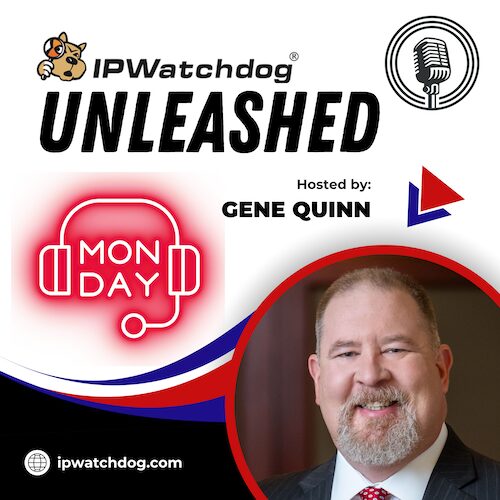
1 This week on IPWatchdog Unleashed, we tried something different. On Friday, October 10, we hosted an impromptu webinar with the intention of using that conversation as our next podcast. While this is not always feasible because we do often have PowerPoint slides when we host webinars, this webinar was simply a conversation about a very important recent decision of the Unified Patent Court (UPC) without any slides. The case we discuss is Philips v. Belkin, where, after the conclusion of all appeals, the UPC issued the first ever final permanent injunction in a case involving standard essential patents (SEPs). So, our conversation this week is about the impact and ramifications of the UPC’s final decision in Philips v. Belkin.
We discussed the UPC’s final decision with an in-house attorney from Philips and the litigation team at Bardehle Pagenberg in Germany that represented Philips in this important win. By originally having this conversation as a webinar with a live audience, I was able to incorporate questions from the audience, which you’ll hear periodically throughout the podcast.
Our first guest was Tillman Müeller, who is a partner and attorney with Bardehle Pagenberg, where he specializes in patent infringement proceedings and nullity proceedings before national courts. He also has a very active docket representing clients before the UPC, and he has a particular emphasis on representing patent pools and SEP owners.
Next. is Arie Tol, who is principal licensing counsel at Philips Intellectual Property & Standards. Arie has almost 30 years of experience and has lately focused on licensing out standard essential patents on behalf of Philips.
Finally, we are joined by Tobias Wuttke, who is also a partner and attorney at law with Bardehle Pagenberg. Tobias has been recognized as one of Germany’s leading patent litigators and he, too, has a very active docket at the UPC. Tobias advises blue chip companies acting on a global level, innovative SMEs and startups, and his clients come from the telecommunications, medical technology, automotive and life sciences sectors.
A Momentous Development
As our conversation unfolded, we discussed the intricacies of the UPC system and its potential advantages for patent owners. Tillman and Tobias discussed how the UPC offers a unified legal forum for enforcing patents across multiple European jurisdictions, which can be a significant leverage point for patent holders. They also explained that the UPC’s decisions, while primarily binding within its member countries, can influence global patent strategies by setting precedents that other jurisdictions might consider, as well as creating leverage in what are practically global licensing negotiations.
For example, infringers who have lost at the UPC and are facing an injunction across the 18 member states often find it necessary to come to the table and accept a worldwide license rather than risk being excluded from major portions of Europe. This is due to the fact that in these types of disputes the resolution will not be for the parties to enter into a license in Germany, a different license in the United States and other separate licenses in China, the UK and/or Brazil. SEPs in particular are licensed on a global basis, with licenses applying to the worldwide patent portfolio owned by the innovator. So, winning a final decision with a permanent injunction can and ordinarily does force closure on the negotiation and licensing of patent rights beyond the specific geography where the final decision and injunction were granted. And, given the relative speed of the UPC—this case was finished with a final appellate verdict in approximately two-years—the UPC can be expected to become even more popular with patent owners moving forward.
Broad Implications and Strategic Considerations
 Arie and Tillman highlighted the strategic flexibility that patent owners now have, given the UPC’s broad jurisdiction and relatively fast-paced proceedings. They outlined the importance of this system for SEPs and the encouragement it provides for high-quality patent enforcement. The UPC’s framework allows patent owners to strategically choose their litigation battles, potentially pursuing cases in national courts, the UPC or in both national courts and the UPC, depending on the circumstances.
Perhaps it will come as a surprise to some, particularly Americans, but according to Tillman and Tobias, a final decision of the UPC can and does have enforcement power over activities infringers engage in outside of UPC member states. For example, if the UPC has proper jurisdiction and venue over a company located in a UPC member state the infringement decision and resulting permanent injunction (if issued) would be binding on that company regardless of where infringing activity occurred. So, for example, if Company X were found to be infringing at the UPC and an injunction issued then Company X would be liable for infringement and prohibited pursuant to the permanent injunction even with respect to activities that occurred in the United Kingdom, which is not a member state of the UPC.
U.S. practitioners and patent owners should carefully listen with great interest to our conversation about what might be properly referred to as the extraterritorial enforcement of UPC judgments and injunctions.
Final Thoughts
As the webinar wrapped up, Tilman, Arie and Tobias all underscored the UPC’s growing influence. Tobias noted the court’s effective handling of cases and the high quality of decisions being delivered, which have not sparked notable controversy or disagreement for the soundness of the decision. Of course, reasonable professionals may view the legal issues differently, but the point made by Tobias was that no one has seriously criticized the decisions of the UPC as being out of the bounds of what is generally acceptable or said another way the decisions do not defy explanation and have been reasonable across the board. Arie echoed this sentiment, expressing that the UPC represents a balanced and predictable forum for both patent owners and defendants, where costs and timelines remain reasonable compared to other jurisdictions. Tilman concluded with optimism, remarking on the court’s accessibility and potential as a powerful tool for leveraging patent strategies in Europe.
All agreed that with a consumer base comparable to the United States, the UPC presents a substantial opportunity for patent owners looking to protect and enforce their intellectual assets effectively.
More IPWatchdog Unleashed
You can listen to the entire podcast episode by downloading it wherever you normally access podcasts or by visiting IPWatchdog Unleashed on Buzzsprout. You can also watch IPWatchdog Unleashed conversations on the IPWatchdog YouTube channel. For more IPWatchdog Unleashed, see our growing archive of previous episodes.
![[Advertisement]](https://ipwatchdog.com/wp-content/uploads/2026/06/Womens-IP-Forum-2026-sidebar-super-early-bird-ends-July-15-700x500-1.jpg)
![[Advertisement]](https://ipwatchdog.com/wp-content/uploads/2026/07/Juristat-Varsity-Ad-2026-IPW-ad-FreeTrial_1.png)



![[Advertisement]](https://ipwatchdog.com/wp-content/uploads/2021/12/WEBINAR-336-x-280-px.png)
![[Advertisement]](https://ipwatchdog.com/wp-content/uploads/2021/12/Ad-4-The-Invent-Patent-System™.png)





Join the Discussion
One comment so far.
Roy Fuscone
October 17, 2025 07:42 amI would like to ask Mr Quinn how to resolve that the USPTO granted a patent to a UK company, but the FAA published guidance to airlines that they may use methods reserved under the patent.
Conflicting position at two agencies of the US Government, and to the detriment of the company.