
![[IPWatchdog Logo]](https://ipwatchdog.com/wp-content/themes/IPWatchdog%20-%202023/assets/images/temp/logo-small@2x.png)

 0
0 “[C]ancellation bears on what can be covered under the doctrine of equivalents… because a relevant artisan would understand the close basic-physics relationship of the cancelled and retained claims.” – Federal Circuit
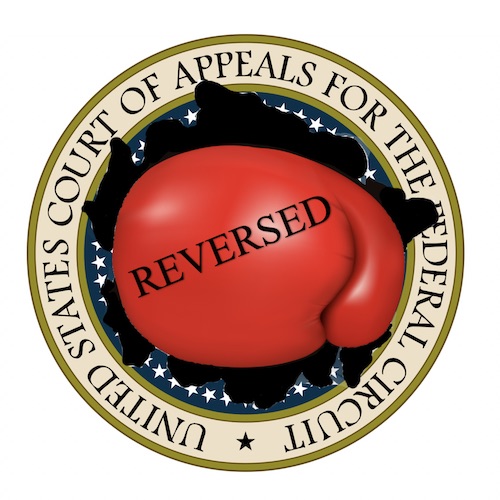 On Friday, July 18, the U.S. Court of Appeals for the Federal Circuit issued a precedential decision in Colibri Heart Valve LLC v. Medtronic CoreValve, LLC reversing the Central District of California’s denial of Medtronic’s request for judgment as a matter of law (JMOL) that Colibri’s patent infringement theory should be barred by prosecution history estoppel. Holding that the cancellation of claims during prosecution can have the same narrowing effect as amending claims before the U.S. Patent and Trademark Office (USPTO), the Federal Circuit found that Colibri was estopped from proving infringement under the doctrine of equivalents.
Colibri sued Medtronic in May 2020 alleging that Medtronic’s Evolut line of replacement heart valves infringed upon claims of U.S. Patent No. 8900294, Method of Controlled Release of a Percutaneous Replacement Heart Valve. The method of making a replacement heart valve claimed by the ‘294 patent includes a mechanism by which incorrectly positioned stents can be recaptured and repositioned, a feature included in Medtronic’s valves. Pursuing induced infringement under 35 U.S.C. § 271(b), Colibri argued that Evolut heart valves, which are deployed by retracting an outer sheath, were equivalent to the ‘294 patent’s claims to deploying the stent by pushing it away from the outer sheath.
After claim construction, Medtronic moved for summary judgment of noninfringement, arguing that Colibri’s equivalency theory should be barred due to claims of the ‘294 patent that were cancelled during prosecution. While claim 1 of the ‘294 patent, previously claim 34 of the original patent application, included the partial stent deployment by pushing limitation, independent claim 39 disclosing a partial stent deployment by retraction step was cancelled during prosecution of the ‘294 patent. The district court denied Medtronic’s summary judgment motion following a special master’s recommendation that original claims 34 and 39 were independent and therefore separate and distinct. These arguments were renewed on JMOL, which was denied by the court following a jury verdict awarding $106 million to Colibri for Medtronic’s infringement.
‘Simple Physics’ Underscores Close Relationship Between Cancelled, Retained Claims
At the outset of its decision, the Federal Circuit dismissed Colibri’s argument that Medtronic had waived its prosecution history estoppel defense at the district court. Although Medtronic’s pre-trial statement listing this affirmative defense as abandoned was “poorly worded,” the statement “can reasonably be understood to be saying only what it was not pursuing at trial” as Medtronic’s estoppel defense was already nixed at summary judgment. Further, not only did Medtronic properly renew its estoppel defense with Federal Rule of Civil Procedure 50(a) and 50(b) motions for JMOL, but Colibri also failed to raise waiver when responding to Medtronic’s FRCP 50(a) motion.
Moving on to the merits of Medtronic’s estoppel argument, the Federal Circuit agreed with the appellant that the district court erred on two related points: finding Colibri’s asserted equivalent separate and distinct from the subject matter of cancelled claim 39; and finding that cancellation of claim 39 was not a narrowing amendment. Although the district court found that Colibri’s claimed equivalent, which involved pushing the stent while retracting the sheath, differed from the mere retraction recited in cancelled claim 39, Colibri’s own focus on “simple physics” requiring opposing forces of pushing and retraction established that a person of ordinary skill would understand that the retraction of cancelled claim 39 necessarily resulted in a pushing force deploying the stent.
The Federal Circuit also sided with Medtronic’s view that the cancellation of claim 39 was a narrowing amendment giving rise to prosecution history estoppel. “That cancellation bears on what can be covered under the doctrine of equivalents by claim 1 because a relevant artisan would understand the close basic-physics relationship of the cancelled and retained claims,” the appellate court found. The district court’s reasoning otherwise, including the independent nature of the cancelled claim and the lack of amendments to claim 1’s pushing deployment limitation, were formalities that cannot be determinative to the exclusion of substantive relationships understood by relevant artisans.
Formalistic Approach to Narrowing Inquiry Not Authorized by Federal Circuit Case Law
Although the U.S. Supreme Court’s 2002 decision on prosecution history estoppel in Festo Corp. v. Shoketsu Kinzoku Kogyo Kabushiki involved claims amended during prosecution, the Federal Circuit found its holding authorized the interpretation of claims by reference to cancelled claims. Festo’s holding largely relied on the Court’s 1940 ruling in Scriber-Schroth Co. v. Cleveland Trust, in which the Court rejected a patentee’s argument that claims should be construed to include features previously disclosed by cancelled claims.
Formalistic approaches to the narrowing inquiry have been rejected by the Federal Circuit before. In Honeywell International v. Hamilton Sundstrand (2004), Honeywell asserted infringement under the doctrine of equivalents based on dependent patent claims that were rewritten as independent claims after being rejected for obviousness during prosecution. The Federal Circuit found that, although the claimed subject matter had not changed, that did not preclude the application of prosecution history estoppel if those revisions had a narrowing result on the scope of the patent claim. Following this reason in the present case, the appellate court determined that prosecution history estoppel considers the relationship between claims instead of individual claims in isolation.
Finally, the Federal Circuit noted that Honeywell cited favorably to the Second Circuit’s 1940 decision in Keith vs. Charles E. Hires Co. in which, like the present appeal, the cancellation of one independent claim after an examiner rejection narrowed the subject matter of another independent claim asserted in the case. The Second Circuit’s ruling also rejected the premise that claims must be amended, not cancelled, for estoppel to apply.
Because the Federal Circuit reversed the district court’s denial of JMOL on prosecution history estoppel, the remaining parts of Medtronic’s appeal regarding invalidity, noninfringement and damages were mooted.
Image Source: Deposit Photos
Image ID: 10042948
Author: almoond
![[Advertisement]](https://ipwatchdog.com/wp-content/uploads/2026/09/ClaimHit-Oct-1-2026-sidebar-700x500-1.jpg)
![[Advertisement]](https://ipwatchdog.com/wp-content/uploads/2026/09/MarqVision-Oct-6-2026-sidebar-700x500-1.jpg)
![[Advertisement]](https://ipwatchdog.com/wp-content/uploads/2026/09/Life-Sciences-2026-sidebar-early-bird-date-corrected-700x500-1.jpg)
![[Advertisement]](https://ipwatchdog.com/wp-content/uploads/2026/09/WE-BUY-PATENTS-SIM-IP-Ad-1-revised-on-Sep-28-2026-700x500-1.jpg)
![[Advertisement]](https://ipwatchdog.com/wp-content/uploads/2024/09/Patent-Prosecution-Training-sidebar-700x500-2025-03-27.jpg)








![[Advertisement]](https://ipwatchdog.com/wp-content/uploads/2021/12/WEBINAR-336-x-280-px.png)
![[Advertisement]](https://ipwatchdog.com/wp-content/uploads/2021/12/Ad-4-The-Invent-Patent-System™.png)





Join the Discussion
No comments yet.