


 0
0 “Hikma said in its SCOTUS petition that the CAFC’s decision ‘effectively nullifies a statutory mechanism for expediting access to generic drugs and breaks sharply with precedent on inducement.’”
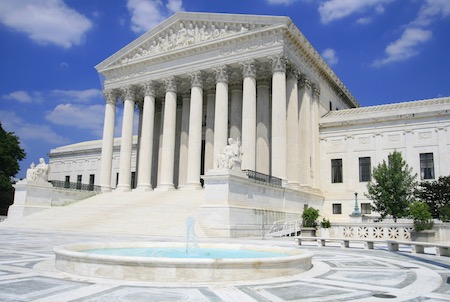 The U.S. Supreme Court today invited the Solicitor General of the United States to weigh in on whether the U.S. Court of Appeals for the Federal Circuit (CAFC) was correct in reversing a district court’s grant of Hikma Pharmaceuticals’ motion to dismiss Amarin Pharma, Inc.’s complaint against it for induced infringement last June.
The district court said Amarin failed to plead inducement based on either Hikma’s skinny label or its public press release/ statements. On review, the CAFC said the case had reached it “at its most nascent stage… where we are tasked with reviewing allegations, not findings, for plausibility, not probability,” and thus, none of its prior cases in the space were dispositive, said the opinion. Then, turning to the facts of the case, the CAFC said that Amarin’s allegations concerning Hikma’s label, in combination with Hikma’s public statements and marketing materials, “at least plausibly state a claim for induced infringement.”
Hikma petitioned the High Court in February of this year, presenting two questions:
- When a generic drug label fully carves out a patented use, are allegations that the generic drugmaker calls its product a “generic version” and cites public information about the branded drug (e.g., sales) enough to plead induced infringement of the patented use?
- Does a complaint state a claim for induced infringement of a patented method if it does not allege any instruction or other statement by the defendant that encourages, or even mentions, the patented use?
The petition argues that the Federal Circuit’s decision puts generic drugmakers at risk by exposing them to “potential damages for inducing infringement of patents on ‘any of the [brand’s] approved uses’—even when, as here, the generic drug is labeled only for an unpatented use.”
Amarin claimed Hikma induced infringement of its “icosapent ethyl” product, an ethyl ester of an omega-3 fatty acid commonly found in fish oils and marketed as Vascepa. Vascepa was approved by the Food and Drug Administration (FDA) in 2012 for the treatment of severe hypertriglyceridemia (“the SH indication”). Then, in 2019, it was approved by the FDA for a second indication, as “a treatment to reduce cardiovascular risk (i.e., myocardial infarction, stroke, coronary revascularization, and unstable angina requiring hospitalization) in patients having blood triglyceride levels of at least 150 mg/dL (‘the CV indication’)”. Hikma was granted an abbreviated new drug application (ANDA) in 2020 for a “skinny label” that did not include the CV indication.
While the CAFC noted that “it is undisputed that the ‘Indications & Usage’ section of Hikma’s label does not provide an implied or express instruction to prescribe the drug for the CV indication,” Amarin nonetheless argued that other portions of the label would be read by physicians to indicate that the drug could be prescribed for CV risk. Hikma also removed a CV Limitation of Use from its label despite not being approved for the CV indication as well as its warning of potential side effects for patients with cardiovascular disease, which could also be interpreted by physicians to mean it could be used for off-label CV indication.
The CAFC gave credit to Hikma’s argument that this silence on the CV indication cannot plausibly support the elements of active inducement, explaining that, if considered alone, the court might agree with the district court and Hikma that the label does not encourage infringing use as a matter of law. However, it was in combination with certain public statements and marketing materials that the court considered the label, and those statements further convinced the CAFC that there was a plausible claim for induced infringement.
Specifically, Hikma’s press releases prior to November 2020 “consistently referred to Hikma’s product as a ‘generic equivalent to Vascepa®,’ ‘generic Vascepa®,’ or ‘Hikma’s generic version of Vascepa®,’” without indicating that it was “AB-rated,” or therapeutically equivalent only for the indications on the label. The press releases also referred to Vascepa as indicated “in part” for the SH indication. Amarin argued these statements suggested Vascepa was indicated for more than one use and that its Hikma’s product was a generic version of Vascepa. Amarin also said that Hikma referred to sales figures for Vascepa “that Hikma knew were largely attributable to the off-label CV indication.”
But Hikma said in its SCOTUS petition that the CAFC’s decision “effectively nullifies a statutory mechanism for expediting access to generic drugs and breaks sharply with precedent on inducement” because Hikma complied with section viii of the Hatch-Waxman Act by fully carving out of its generic drug label the allegedly patented uses of Vascepa. The petition explained:
“Amarin’s patents require using the active ingredient, icosapent, for ‘reducing risk of cardiovascular death’ or (when taken with a second drug) ‘reducing occurrence of a cardiovascular event.’… Amarin alleges these patents cover one of Vascepa’s two approved uses: reducing cardiovascular (‘CV’) risk in specific populations. Hikma’s generic product, however, is labeled only for the other, off-patent use: treating severe hypertriglyceridemia (‘SH’).”
Two amicus briefs have been filed in support of the petition so far; one by 30 Scholars of Law, Economics, and Medicine and one by the Association for Accessible Medicines.
An invitation to the Solicitor General often indicates the Court is considering granting the petition.
Image rights acquired through AdobeStock.
![[Advertisement]](https://ipwatchdog.com/wp-content/uploads/2026/10/ClaimHit-Oct-28-2026-sidebar-700x500-1.jpg)
![[Advertisement]](https://ipwatchdog.com/wp-content/uploads/2026/10/Patsnap-Oct-29-2026-sidebar-700x500-1.jpg)
![[Advertisement]](https://ipwatchdog.com/wp-content/uploads/2026/09/Life-Sciences-2026-sidebar-early-bird-ends-Oct-25-700x500-1.jpg)
![[Advertisement]](https://ipwatchdog.com/wp-content/uploads/2024/09/Patent-Prosecution-Training-sidebar-700x500-2025-03-27.jpg)



![[Advertisement]](https://ipwatchdog.com/wp-content/uploads/2021/12/WEBINAR-336-x-280-px.png)
![[Advertisement]](https://ipwatchdog.com/wp-content/uploads/2021/12/Ad-4-The-Invent-Patent-System™.png)




Join the Discussion
No comments yet.