
![[IPWatchdog Logo]](https://ipwatchdog.com/wp-content/themes/IPWatchdog%20-%202023/assets/images/temp/logo-small@2x.png)

 0
0 “Director Vidal… ‘directly mutinied against the basic premise of Noerr-Pennington… go[ing] off on a Gish gallop of irrelevancies and previously unknown exceptions.’” – OpenSky Responsive Brief
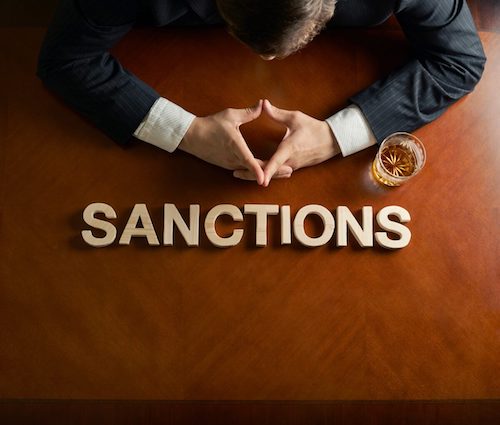 Last week, patent validity challenger OpenSky Industries filed a nonconfidential principal and responsive brief with the U.S. Court of Appeals for the Federal Circuit appealing former U.S. Patent and Trademark Office Director (USPTO) Kathi Vidal’s sanctions entered during inter partes review (IPR) proceedings at the Patent Trial and Appeal Board (PTAB). OpenSky challenges Vidal’s entry of sanctions under administrative and constitutional law, arguing that Director Vidal “ran roughshod” over the Administrative Procedures Act (APA) after succumbing to political pressure to impose fines on OpenSky.
Although much of the patent community criticized the settlement proposal from OpenSky, which involved a “construct” by which VLSI would pay OpenSky to prevent OpenSky’s expert witness from testifying in the IPR, OpenSky notes that this counter-offer came in response to VLSI’s own settlement proposal. OpenSky contends that “it was always [our] intention to document every facet of the agreement in a written settlement agreement” filed pursuant to 35 U.S.C. § 317. Instead, OpenSky argues that VLSI violated a non-disclosure agreement (NDA) covering the settlement negotiations by submitting the emails as an exhibit in parallel IPR proceedings, kickstarting a politicized investigation culminating with Director Vidal’s sanctions order last January that OpenSky must pay VLSI’s attorney’s fees for all post-institution activities.
Meritorious Nature of OpenSky Petition Evades Liability Under Noerr-Pennington
On appeal to the Federal Circuit, OpenSky argues that Director Vidal’s sanctions exceed agency authority and should be set aside because attorney’s fees are not explicitly authorized by 35 U.S.C. § 316, which governs the conduct of IPR proceedings. Such explicit terms are required by the default American Rule under which each party pays its own such fees.
This conclusion is reinforced by the U.S. Supreme Court’s reasoning in Peters v. NantKwest (2019), which found that statutory provisions under which applicants challenging USPTO actions must pay “[a]ll the expenses of the proceeding” did not specify attorney’s fees with the kind of clarity needed to evade the American Rule. Similarly, Section 316’s reference to “sanctions” does not specify attorney’s fees with the clarity of other provisions of U.S. Code, which authorize awards of “compensation of counsel” or “value of the attorney’s time.”
The legislative history of the America Invents Act (AIA) also does not support the entry of attorney’s fees as sanctions, OpenSky argues. Relevant references to sanctions in the AIA’s legislative history were left out of final committee reports on the bill. Further, the AIA includes no enforcement mechanisms for awarding attorney’s fees such as exist under other laws like the Equal Access to Justice Act and the Commodity Exchange Act. OpenSky contends that any regulations or case holdings cited by Director Vidal in her sanctions decisions similarly does not confer authority to award attorney’s fees.
Worse, Director Vidal’s sanctions arguably violate First Amendment free speech protections for legal filings under the Noerr-Pennington doctrine, which shields petitioning from liability unless it consists of “sham litigation.” OpenSky argues that its petition in the appealed IPR proceedings has been found meritorious on five separate occasions, undercutting any suggestion that the IPR was objectively baseless. Director Vidal’s own opinions leading to the entry of sanctions “directly mutinied against the basic premise of Noerr-Pennington… go[ing] off on a Gish gallop of irrelevancies and previously unknown exceptions.” OpenSky faults Vidal for citing dictum from the Supreme Court’s 2002 decision in BE & K Construction v. NLRB, which actually held that lawsuits filed with bad intent are still immunized if objectively reasonable.
Temporal Periods Provide No Causal Connection Required for Compensatory Damages
OpenSky also challenges Director Vidal’s entry of sanctions under Supreme Court precedent governing non-punitive fees. Under that precedent, sanctions awarded for misconduct can only cover expenses incurred for the alleged misconduct. Director Vidal’s sanctions award is a much broader whole-case award that requires the presence of a fee shifting statute, such as the statute for exceptional patent cases codified at 35 U.S.C. § 285.
Although 37 CFR § 42.12(b)(6), cited by Director Vidal as part of her regulatory authority to sanction OpenSky, allows for “[a]n order providing for compensatory damages, including attorney’s fees,” the compensatory nature of those sanctions require that the agency cogently explain a rational connection between the facts and the choice made. Director Vidal awarded sanctions for OpenSky’s conduct during five different time periods, including settlement negotiations and attorney’s fees, but this time-based definition arguably runs afoul of the Supreme Court’s holding in Goodyear Tire v. Haeger (2017), which held that the use of temporal requirements instead of causal connections did not properly support a sanctions award. OpenSky argues that Director Vidal identified no specific instances of misconduct for those five time periods and that certain periods, such as the Director review process, involve appellate-style review that is non-compensable.
Finally, OpenSky raises abuse-of-process arguments under both the APA and constitutional due process. The appellant notes that interrogatories like those served by Director Vidal on OpenSky are not authorized by regulations governing discovery in IPR proceedings. Therefore Director Vidal did not have authority to enter sanctions for OpenSky’s purported violation of the discovery order. OpenSky also contends that the Director similarly lacked authority to request a privilege log to identify documents for in camera review.
Sanctions must be supported by substantial evidence, but OpenSky contends that Director Vidal made adverse inferences without explaining significant contradictory evidence, such as concluding that OpenSky initiated settlement negotiations when VLSI never disputed that it actually initiated negotiations. OpenSky also argues that Director Vidal’s abuse of process findings did not establish required elements of the tort, including formal court process and an improper collateral purpose. By shifting the grounds for sanctions from filing the IPR petition and the “construct” settlement email to a broad “totality of conduct” standard, Director Vidal deprived OpenSky of notice and a meaningful opportunity to be heard. OpenSky argues that this constitutes arbitrary and capricious decisionmaking in violation of the APA, and that reversal, not remand, is the only proper remedy.
Image Source: Deposit Photos
Image ID:55946639
Copyright:exopixel
![[Advertisement]](https://ipwatchdog.com/wp-content/uploads/2026/06/Womens-IP-Forum-2026-sidebar-super-early-bird-ends-July-24-700x500-1.jpg)
![[Advertisement]](https://ipwatchdog.com/wp-content/uploads/2026/07/DeepIP-Jul-28-2026-sidebar-700x500-1.jpg)
![[Advertisement]](https://ipwatchdog.com/wp-content/uploads/2026/07/Ankar-AI-Jul-30-2026-sidebar-700x500-1.jpg)
![[Advertisement]](https://ipwatchdog.com/wp-content/uploads/2026/07/ClearstoneIP-Varsity-Ad-2026-Ad-1.jpg)
![[Advertisement]](https://ipwatchdog.com/wp-content/uploads/2026/07/Juristat-Varsity-Ad-2026-IPW-ad-FreeTrial_1-UPDATED-on-Jul-15-2026.png)



![[Advertisement]](https://ipwatchdog.com/wp-content/uploads/2021/12/WEBINAR-336-x-280-px.png)
![[Advertisement]](https://ipwatchdog.com/wp-content/uploads/2021/12/Ad-4-The-Invent-Patent-System™.png)





Join the Discussion
No comments yet.