
![[IPWatchdog Logo]](https://ipwatchdog.com/wp-content/themes/IPWatchdog%20-%202023/assets/images/temp/logo-small@2x.png)

 3
3 “[C]ourts today must recognize the increasingly routine nature of AI tools across many fields. The sophisticated capabilities that AI provides to ordinary practitioners cannot be dismissed simply because they arise from complex or seemingly unpredictable technology.”
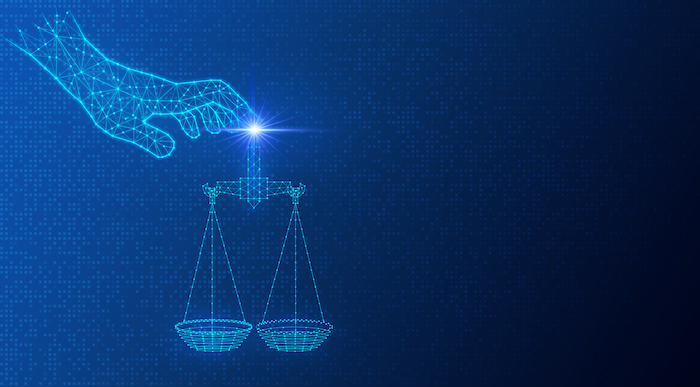 Imagine a pharmaceutical researcher in 2015 searching for new drug candidates to treat a rare disease. Through traditional methods, they might screen a few thousand compounds over several months, carefully evaluating each candidate’s potential based on known chemical properties and biological mechanisms. Fast forward to 2025: using modern AI tools, that same researcher can screen millions of compounds in days, with the AI system predicting binding affinities, potential side effects, and even suggesting novel molecular structures that human chemists might never have conceived. This dramatic expansion of capabilities raises a crucial question for patent law: Has the widespread adoption of AI tools fundamentally changed what constitutes “ordinary skill” in drug discovery?
This question resonates across the innovation landscape, as AI tools become standard equipment in research and development, revolutionizing how inventors approach problems and effectively raising the baseline capabilities of skilled practitioners. Patent law must adapt to this new reality, particularly in its concept of a “person having ordinary skill in the art” (PHOSITA) – the cornerstone of patent law’s nonobviousness requirement.
The Transformed Landscape: How AI is Redefining Ordinary Skill Across Technical Fields
The impact of artificial intelligence on invention represents a fundamental transformation in how inventors conceive of and develop innovations. To understand why patent law must adapt its nonobviousness analysis, let’s examine how AI tools have reshaped what skilled practitioners can routinely accomplish in two key fields.
In drug discovery and pharmaceutical research, developing a new drug candidate traditionally required months or years of painstaking work. Research teams would screen a few thousand compounds through iterative testing, relying heavily on researchers’ intuition and expertise to guide candidate selection. Today’s AI systems can evaluate millions of compounds in days, using sophisticated models trained on vast databases of chemical structures, biological pathways, and clinical outcomes. These tools don’t just accelerate the screening process – they actively suggest novel molecular structures that human chemists might never have conceived. What once represented exceptional pharmaceutical innovation has in many cases become routine capability through widely available AI-powered workflows.
Similarly dramatic transformation is visible in electronic design automation (EDA). Circuit design traditionally required engineers to manually optimize numerous parameters while balancing competing constraints like power consumption, performance, and manufacturing requirements – a process that could take months for complex systems. Modern AI-powered EDA tools can automatically explore design spaces far too vast for human engineers to evaluate comprehensively, routinely discovering novel optimizations that human engineers might have overlooked. Tasks that once showcased exceptional engineering skill have become standard capabilities enabled by widely available AI tools.
These changes force us to reconsider what constitutes “ordinary skill” in these fields. When AI tools enable practitioners to routinely accomplish what would have been considered exceptional achievements just years ago, patent law must adjust its nonobviousness analysis accordingly. Just as computer-aided design tools transformed technical drafting into a routine capability, AI tools are becoming standard equipment across fields, fundamentally altering what practitioners can accomplish in their daily work.
This transformed landscape demands evolution in how we evaluate nonobviousness. The key question is not whether AI tools make innovation easier, but how patent law should account for these enhanced capabilities when determining what constitutes an obvious advance. As we will explore next, existing legal frameworks are well-suited to accommodate this change, provided we thoughtfully consider how AI capabilities affect the level of ordinary skill in each technical field.
The Legal Framework: How AI Fits Within Established Patent Law Principles
The legal foundation for considering AI capabilities in nonobviousness determinations already exists within patent law’s established frameworks. The cornerstone comes from Environmental Designs, Ltd. v. Union Oil Co., 713 F. 2d 693 (Fed. Cir. 1983), where the Federal Circuit outlined several key factors that remain influential today: (1) educational level of the inventor; (2) type of problems encountered in the art; (3) prior art solutions to those problems; (4) rapidity with which inventions are made; (5) sophistication of the technology; and (6) educational level of active workers in the field.
The Environmental Designs factors naturally accommodate the consideration of AI tools in determining the level of ordinary skill. For example, in connection with “the type of problems encountered in the art,” the availability of, and widespread knowledge of how to use, an AI system that can screen millions of drug candidates or optimize thousands of circuit parameters transforms the nature of problem-solving in these fields. Similarly, when examining “prior art solutions to those problems,” we must recognize that AI tools have become part of the standard toolkit, just as sophisticated testing equipment and advanced manufacturing processes have long been considered in assessing ordinary skill.
The “sophistication of the technology” and “rapidity of innovation” factors further support considering the impact of AI capabilities on the ability of PHOSITA to solve problems. AI tools have dramatically increased both technological sophistication – enabling practitioners to work with vast datasets and complex solution spaces more quickly, easily, and inexpensively than was possible before such tools were in widespread use. Together, these factors suggest that the baseline capabilities expected of skilled practitioners must evolve to reflect these new technological realities.
These factors also include “the educational level of active workers in the field” – a factor that naturally extends to proficiency with AI tools, just as it has long encompassed familiarity with other sophisticated research tools. Today’s skilled practitioners must understand not only their technical field but also how to effectively employ AI tools within it.
The Supreme Court’s decision in KSR International Co. v. Teleflex Inc., 550 U.S. 398 (2007) reinforces this approach. KSR emphasized that the PHOSITA is not an automaton but a person of “ordinary creativity” capable of fitting known pieces together in new ways. This flexible, common-sense approach readily accommodates considering how AI tools effectively augment human creativity and problem-solving capabilities, while maintaining focus on the human judgment involved in recognizing promising combinations or applications of AI-generated results.
The Federal Circuit’s subsequent decision in In re Kubin, 561 F.3d 1351 (Fed. Cir. 2009), further reinforces this pragmatic focus on practitioners’ actual capabilities. Although addressing biotechnology rather than AI, Kubin articulated principles directly relevant to how courts should treat AI capabilities in obviousness analyses. The court emphasized that it “cannot, in the face of KSR, cling to formalistic rules for obviousness, customize its legal tests for specific scientific fields in ways that deem entire classes of prior art teachings irrelevant, or discount the significant abilities of artisans of ordinary skill in an advanced area of art.” Just as Kubin acknowledged the “well-known and reliable nature” of certain biotechnology techniques, courts today must recognize the increasingly routine nature of AI tools across many fields. The sophisticated capabilities that AI provides to ordinary practitioners cannot be dismissed simply because they arise from complex or seemingly unpredictable technology.
This evolution in judicial thinking is reflected in recent U.S. Patent and Trademark Office(USPTO) initiatives that demonstrate recognition of AI’s impact on ordinary skill. The April 2024 “Request for Comments on the Impact of the Proliferation of Artificial Intelligence on Prior Art, the Knowledge of a Person Having Ordinary Skill in the Art, and Determinations of Patentability Made in View of the Foregoing,” 89 FR 34217 (Apr. 30, 2024), explicitly asks how “the availability of AI as a tool affect[s] the level of skill of a PHOSITA as AI becomes more prevalent,” while specifically referencing the Environmental Designs factors. The USPTO’s July 2024 public listening session further reinforces this alignment between existing legal frameworks and the need to consider AI capabilities.
Importantly, this integration of AI considerations into PHOSITA analysis doesn’t require new legal frameworks. Instead, it represents a natural application of well-established principles to evolving technological capabilities. Just as courts have long considered how access to sophisticated tools affects the level of ordinary skill, they can and should consider how AI capabilities influence what skilled practitioners can routinely accomplish. This evolutionary approach provides continuity with existing legal frameworks while maintaining the fundamental principle that the level of ordinary skill should reflect the actual capabilities of practitioners in the field.
Implementation Challenges and Solutions: A Practical Guide
The integration of AI capabilities into patent law’s nonobviousness analysis raises three key practical challenges that practitioners must navigate. While these challenges may appear daunting, they can be effectively addressed within existing legal frameworks.
The most significant concern is that considering AI capabilities might set an impossibly high bar for nonobviousness. Critics worry that if we factor in AI’s vast computational power and pattern-recognition capabilities, almost any innovation might seem “obvious.” This concern misunderstands the fundamental nature of the analysis – we are evaluating human skill augmented by AI, not AI capabilities alone. For example, in pharmaceutical research, while an AI system might routinely screen millions of compounds, the inventor’s insight in recognizing unexpected patterns in the results, combining multiple AI tools in novel ways, or identifying promising candidate compounds for further investigation still represents nonobvious innovation. Just as courts have long considered how inventors use sophisticated laboratory equipment without assuming every measurement is obvious, we must focus on how human inventors creatively employ AI tools in their work.
A second major challenge involves determining what AI tools were available and how they were typically used at the relevant time. This challenge fits within patent law’s existing frameworks for evaluating technical evidence – courts routinely assess complex technical questions about the state of various arts and the capabilities of available tools.
Practitioners should maintain comprehensive records about AI tool usage in their fields, such as technical documentation of commercially available AI platforms, published papers discussing standard AI methodologies, and industry surveys showing adoption rates. When responding to obviousness rejections, they can challenge unsupported assumptions about AI capabilities by requiring evidence that specific capabilities were actually available and routinely used at the relevant time.
The third challenge concerns variations in access to AI tools and expertise across different inventors and organizations. Critics worry that considering AI capabilities might unfairly disadvantage smaller inventors or those with limited resources. Patent law has long addressed similar variations in access to research tools by focusing on what is reasonably available to ordinary practitioners in the field, not on cutting-edge capabilities available only to elite institutions. When preparing patent applications or responding to office actions, practitioners should focus on documenting widely available AI tools and their typical uses, rather than exceptional or proprietary capabilities.
These challenges underscore the sufficiency of existing PHOSITA analysis frameworks. By working within these established approaches while carefully documenting AI’s role in innovation, practitioners can help ensure the patent system continues to promote genuine innovation in an AI-enhanced world.
Looking Forward: Integrating AI into Patent Law’s Evolution
The integration of AI considerations into patent law’s nonobviousness analysis represents an immediate challenge that courts, the USPTO, and practitioners are actively working to address. The USPTO’s 2024 initiatives, particularly its April Request for Comments addressing AI’s impact on PHOSITA analysis, demonstrate growing recognition that the patent system must thoughtfully adapt to this technological change.
This evolution mirrors how patent law has historically adapted to transformative technologies. Just as the system evolved to address the innovations of the Industrial Revolution and later the digital age, it must now accommodate the reality of AI-augmented invention. Early indicators suggest the patent system will likely take an evolutionary rather than revolutionary approach. The Federal Circuit has not yet issued any opinions that directly address this issue, despite the widespread use of AI in the inventive process, thereby indicating a conservative approach for now. The USPTO, as indicated above, has sought comment on this topic but has not yet issued any guidelines or changed any of its policies. Other major patent offices have begun developing examination guidelines that consider AI’s role in assessing inventive step. Furthermore, the European Patent Office, for instance, has hinted, in comments to the USPTO, that the knowledge and use of AI by PHOSITA might impact the level of skill of PHOSITA. All of these indicate active interest coupled by cautious and incremental steps forward by patent offices.
The path forward requires careful balance – recognizing AI’s transformative impact while preserving patent law’s fundamental principles and ensuring accessibility to all inventors. This means developing frameworks flexible enough to adapt as AI capabilities evolve, while maintaining focus on human creativity and judgment in the inventive process.
The Dual Impact: AI as Both Challenge and Tool for Inventors
While my focus has been on how AI capabilities affect the legal determination of PHOSITA’s skill level, it’s worth briefly noting AI’s dual role in the inventive process. The same AI tools that raise the bar for nonobviousness by enhancing PHOSITA’s capabilities also provide inventors with powerful aids for making genuinely nonobvious advances.
Consider an analogy to high-performance athletics: Just as modern training methods and equipment have raised baseline athletic performance across many sports, they have simultaneously enabled elite athletes to achieve previously impossible feats. Similarly, while AI tools may raise what constitutes “ordinary skill” in a field, inventors can leverage these same tools to make advances that transcend routine applications. An inventor might, for example, combine multiple AI systems in unprecedented ways or use AI to explore solution spaces that would be inaccessible through conventional approaches.
This dynamic reinforces rather than undermines my central thesis about incorporating AI considerations into PHOSITA analysis. The fact that inventors can use AI to make genuinely nonobvious advances, even as AI raises the baseline skill level against which those advances are measured, demonstrates that AI’s impact on patent law need not diminish the patent system’s fundamental role in promoting innovation.
Embracing AI While Preserving Patent Law’s Core Principles
The impact of artificial intelligence on innovation is not a future possibility but a present reality that patent law must address. As we have demonstrated, considering AI capabilities when evaluating the level of ordinary skill represents a natural evolution of patent law’s nonobviousness doctrine. The Environmental Designs factors and KSR‘s flexible approach provide the foundation for this evolution, allowing us to consider AI capabilities as part of the ordinary skillset of practitioners in relevant fields without requiring new legal frameworks.
For practitioners, this evolution creates both challenges and opportunities. While AI tools may raise the baseline level of skill attributed to PHOSITA, practitioners can strengthen their nonobviousness arguments through strategic documentation and argumentation. By thoroughly documenting the state of AI capabilities in their field, practitioners establish a clear boundary between what AI-augmented practitioners can routinely accomplish and what represents genuine innovation. This documentation serves a dual purpose: it acknowledges the enhanced capabilities that AI brings to PHOSITA while simultaneously creating a well-defined baseline against which practitioners can demonstrate how their clients’ inventions transcend routine AI-enabled work.
Similarly, when practitioners explicitly distinguish their clients’ innovations from routine AI applications, they highlight the creative human insights and novel combinations that make the invention nonobvious. For example, a practitioner might demonstrate how their client recognized unexpected patterns in AI-generated results, combined multiple AI tools in unprecedented ways, or identified promising research directions that standard AI approaches would not have pursued. These distinctions become powerful evidence of nonobviousness, even in an environment where AI has raised PHOSITA’s baseline capabilities.
This approach ensures that the patent system continues to fulfill its constitutional purpose of promoting innovation while adapting to technological change. Rather than viewing AI’s impact on PHOSITA as merely raising the bar for nonobviousness, practitioners should recognize it as an opportunity to develop more sophisticated and compelling arguments for their clients’ inventions. By embracing this evolution while maintaining focus on human creativity and judgment, practitioners can help shape a patent system that appropriately balances technological advancement with the enduring principles of patent law.
Image Source: Deposit Photos
Author: ArtemisDiana
Image ID: 671366002
![[Advertisement]](https://ipwatchdog.com/wp-content/uploads/2026/07/IP-Author-Aug-6-2026-sidebar-700x500-1.jpg)
![[Advertisement]](https://ipwatchdog.com/wp-content/uploads/2026/07/Juristat-Aug-11-2026-sidebar-700x500-1.jpg)
![[Advertisement]](https://ipwatchdog.com/wp-content/uploads/2026/07/Womens-IP-Forum-2026-sidebar-register-early-bird-now-700x500-1.jpg)
![[Advertisement]](https://ipwatchdog.com/wp-content/uploads/2026/07/ClearstoneIP-Varsity-Ad-2026-Ad-2.jpg)
![[Advertisement]](https://ipwatchdog.com/wp-content/uploads/2026/07/Juristat-Varsity-Ad-2026-IPW-ad-Solo_2.png)
![[Advertisement]](https://ipwatchdog.com/wp-content/uploads/2024/09/Patent-Prosecution-Training-sidebar-700x500-2025-03-27.jpg)






![[Advertisement]](https://ipwatchdog.com/wp-content/uploads/2021/12/WEBINAR-336-x-280-px.png)
![[Advertisement]](https://ipwatchdog.com/wp-content/uploads/2021/12/Ad-4-The-Invent-Patent-System™.png)





Join the Discussion
3 comments so far.
Peter Kramer
January 9, 2025 05:40 amWhen the price of competitive AI tools within a field of endeavor excludes independent inventors, only the big boys will be in the game since anything a mere unassisted human invents will be obvious.
Anon
January 8, 2025 05:38 pmReminds me of my now old Hobson choice dialogue.
Either AI can invent or it cannot.
Actual invent – to distinguish from being recognized as a legal inventor (a la the Simian really was a photographer and has the photograph to prove it).
Lab Jedor
January 8, 2025 11:11 amGo for it! Yes, let AI do obviousness determination. (aside from a need to continuously update the training data). BUT…. Only if it is also a legal standard for non-obviousness.
That is, no Examiner/PTAB/CFAC/SCOTUS tricks in reasoning in hindsight, wherein someone with little to no skill in the art or with great fantasy decides what a PHOSITA would have/could have/should have reasoned to arrive at the claims by combining references, despite a well trained AI being unable to do so.