
![[IPWatchdog Logo]](https://ipwatchdog.com/wp-content/themes/IPWatchdog%20-%202023/assets/images/temp/logo-small@2x.png)

 0
0 “[T]he existence of another plausible conclusion [on prior art] does not compel us to determine the Board’s decision is unsupported by substantial evidence.” – CAFC
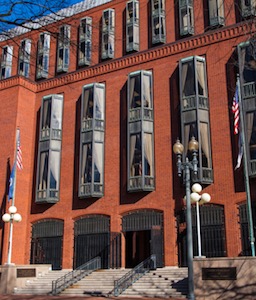 The U.S. Court of Appeals for the Federal Circuit on Monday, December 2, issued a ruling in Koninklijke KPN N.V. v. Vidal affirming the Patent Trial and Appeal Board’s (PTAB) invalidation of several patent claims to technologies for managing access to telecommunications networks. In so ruling, the Federal Circuit held that KPN’s plausible alternative understanding of a prior art reference did not require a finding that the PTAB’s obviousness ruling was unsupported by substantial evidence.
After suing several tech companies for patent infringement in the District of Delaware, Dutch telecom firm KPN faced a petition for inter partes review (IPR) filed at the PTAB by HTC, Lenovo and LG Electronics. The IPR leading to the present appeal challenged claims of U.S. Patent No. 9014667, Telecommunications Network and Method for Time-Based Network Access. The petitioners, who withdrew from KPN’s appeal to the Federal Circuit, alleged the obviousness of the ‘667 patent’s claims covering a network’s receiving an “access request” from a terminal having a “unique identifier” and identifying a “deny access time interval” during which network access to the terminal is denied.
‘Good Till’ Times Disclosed by Obhan Satisfy Timestamp of Access Request Limitation
U.S. Patent and Trademark Office (USPTO) Director Kathi Vidal intervened for the petitioners in KPN’s appeal, relying on briefs submitted by HTC. On appeal, KPN challenged the PTAB’s conclusions with relation to two prior art references: U.S. Patent No. 6275695 (“Obhan”); and U.S. Patent Application No. 20080220740 (“Shatzkamer”). Obhan discloses the division of terminals into subscribers, the division of wireless communication systems into corridors, and the use of an Admission Control Block (ACB) to store good till times and minimum terminal class designations for each corridor. Shatzkamer teaches the use of an international mobile subscriber identity (IMSI) to identify and monitor terminals, and adding terminals to a blacklist if it is determined that network access should be denied.
In its final written decision, the PTAB determined that all challenged claims of the ‘667 patent were obvious based on combinations of prior art including both Obhan and Shatzkamer. Relevant to KPN’s appeal, the PTAB determined that Obhan’s modified ACB stores time slot information representing times during which terminal access is denied. Further, while Obhan does not disclose unique identifiers for terminals, the PTAB found that a person of ordinary skill in the art would be motivated to incorporate Shatzkamer’s IMSI feature to increase granularity, providing more specific access control.
On appeal, KPN challenged the PTAB’s determination that Obhan discloses the access request limitations of the invalidated claims of the ‘667 patent, arguing that Obhan does not teach consulting the good till time listed in the ACB in determining whether to grant network access to a terminal. However, the Federal Circuit found that the ACB, which the system of Obhan may consult to determine access, includes the good till times as time stamps similar to the access requests of the ‘667 patent. While KPN offered a plausible alternative understanding of Obhan, “the existence of another plausible conclusion does not compel us to determine the Board’s decision is unsupported by substantial evidence,” said the court.
Motivation to Combine Supplied by IPR Petition, Not Raised Sua Sponte by Board
KPN also contended that the PTAB misconstrued a challenged claim, pointing to language from the Board’s final decision indicating that the claim requires denying an access request “if” that request is received during a time that access should be denied. KPN pointed out that the language of the invalidated claim denies access “responsive to” receiving an access request during the denial period. Noting that KPN advanced no meaningful explanation that such discrepancy was a difference without any distinction, the Federal Circuit found that there was no requisite showing of a material difference in the language creating harmful error in the PTAB’s final decision.
Attacking the PTAB’s findings regarding Obhan’s good till times, KPN argued on appeal that the good till time cannot represent an interval because intervals cannot be defined by a single value. Although KPN raised several arguments on the purpose of Obhan’s good till times during the PTAB proceedings, the Federal Circuit found that KPN had not argued below that the “deny access time interval” cannot be defined by a single value, thus this argument was forfeited.
Further, the Federal Circuit determined that KPN restated previous failed arguments regarding Obhan’s consultation of good till times to determine network access. Here, KPN argued that Obhan does not teach the “deny access time interval” limitation because users with insufficient access can choose a different corridor with a lower access threshold to gain immediate access. Even if a different corridor is used for network access, the good till time still informs access for terminals in each corridor, leading the Federal Circuit to find that KPN’s argument amounted to a disagreement over the PTAB’s reasonable conclusions on the scope of the prior art.
Finally, KPN contended that the PTAB relied on a motivation to combine prior art references that was not raised by a party during the IPR proceedings. However, at the PTAB, KPN’s counsel conceded that increased granularity leading to increased network security could provide a possible motivation to combine. This motivation to combine was supplied in the original IPR petition, therefore the PTAB properly relied on the petitioner’s argument and did not make a sua sponte determination on this issue.
![[Advertisement]](https://ipwatchdog.com/wp-content/uploads/2026/03/NLPatent-Apr-2-2026-sidebar-700x500-1.jpg)
![[Advertisement]](https://ipwatchdog.com/wp-content/uploads/2026/02/Junior-Apr-7-2026-sidebar-700x500-1.jpg)







![[Advertisement]](https://ipwatchdog.com/wp-content/uploads/2021/12/WEBINAR-336-x-280-px.png)
![[Advertisement]](https://ipwatchdog.com/wp-content/uploads/2021/12/Ad-4-The-Invent-Patent-System™.png)






Join the Discussion
No comments yet.