
![[IPWatchdog Logo]](https://ipwatchdog.com/wp-content/themes/IPWatchdog%20-%202023/assets/images/temp/logo-small@2x.png)

 0
0 “In effect, what the Negotiation Program does is marginally reduce the maximum value of a drug patent.” – P4AD amicus brief
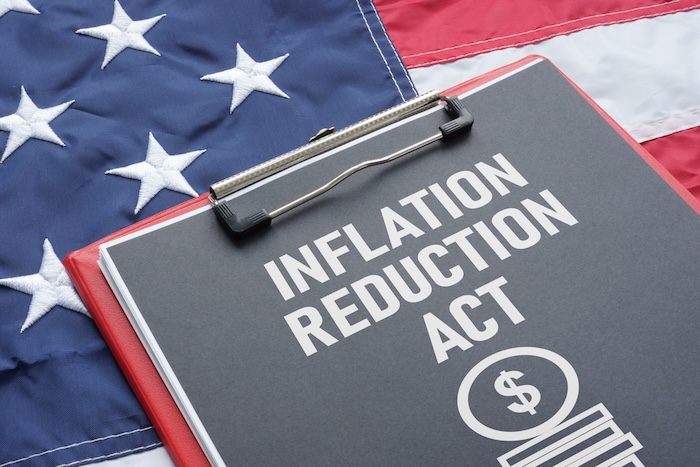 Last week, Patients for Affordable Drugs (“P4AD”) became the latest amicus to file a brief with the U.S. Court of Appeals for the Third Circuit in Bristol Myers Squibb Co. v. Becerra et al. The case, which was lodged by the pharmaceutical giant Bristol Myers Squibb (“BMS”) and consolidated with several other pharmaceutical challenges, alleges that the Inflation Reduction Act (IRA) compels drug manufacturers to provide Medicare with “access” to their leading medicines at steep discounts, effectuating to an unconstitutional taking in violation of the Fifth Amendment. The argument stems from BMS’s appeal after a district court granted summary judgment in favor of the government in April.
Challenges to the Act
The IRA, enacted in 2022, was designed as a way to reduce the federal budget deficit while simultaneously lowering prescription drug prices for eligible patients. While some parties celebrated this, drug manufacturers quickly discovered they were at the mercy of the program when setting their prices.
“The whole point of the Program is to obtain medicines for Medicare beneficiaries without the need for the government to pay fair market value,” BMS wrote in its opening brief. In addition to the Fifth Amendment challenge, BMS claimed that the IRA violates its First Amendment rights by forcing medicine manufacturers, through its Negotiation Program, to express the government’s political messages. By imposing monetary fines to companies that don’t comply, BMS argued the IRA was using coercive tactics while ignoring the constitutional rights of the manufacturers.
Despite its short life, the IRA has already been subject to criticism, including a constitutional challenge by the U.S. Chamber of Commerce (covered in a separate article) and scrutiny from those within the pharmaceutical industry.
The government, in its brief, rebutted these assertions by claiming the IRA “adjusts the terms of the government’s offer to purchase drugs for beneficiaries, but it does not physically appropriate any manufacturer’s drugs or otherwise compel their surrender,” and thus, the government did not engage in a physical taking. Additionally, the government argued there was no violation of the manufacturers’ First Amendment rights, as participation in the Negotiation Program, like their participation in Medicare and Medicaid, was voluntary.
P4AD Brief
P4AD argued in its brief that the IRA is a “historic reform and a monumental victory for the millions of Americans who depend on Medicare for their essential medications.” It called the constitutional challenges a “coordinated industry attack,” and adamantly pointed to the inconsistencies in the pre-IRA healthcare system.
When Medicare was introduced, it set or negotiated the prices for every medical good or service it covered except for prescription drugs. For 20 years, this meant the federal government was forbidden from bargaining for lower prices for Medicare recipients and instead paid the market price for prescription drugs. P4AD argued that there was a deep-seated conflict that arose in the House – several members and staffers, after passing the original bill which contained the “non-interference” clause, would then go on to work in the pharmaceutical industry themselves, raising eyebrows and drawing criticism.
The brief also took pains to implicate patents in drug pricing problems, citing articles such as Ryan Cooper’s “How Big Pharma Rigged the Patent System, The American Prospect”, to support its argument that “[c]ompanies have historically used several tactics to extend exclusivity periods past the expiration of their initial patents, including ‘filing dozens or even hundreds of patents on the same drug,’ making small changes and then applying for a patent extension, or paying would-be generic competitors to stay out of the marketplace.”
The brief claimed that the IRA program will promote innovation by encouraging companies to make new products rather than hold on to the old ones in this fashion, and said that patents make the drug companies monopolists, who as a rule “do not charge ‘fair market prices.’” The brief explained:
“In effect, what the Negotiation Program does is marginally reduce the maximum value of a drug patent: Whereas pharmaceutical companies could previously charge monopoly prices for their drug’s entire exclusivity period, now the drug might be selected for the Negotiation Program and thus might see its price reduced at the end of its patent Period.”
Aside from the economic impact on taxpayers, P4AD also examined the IRA’s potential impact on patients. It highlighted several stories of people who relied upon prescription drugs to manage a variety of conditions, and presented an alarming statistic:
“A 2022 study found that more than one in five Medicare beneficiaries aged 65 or older did not adhere to their medications as prescribed because doing so would have been too expensive. … More than half of all respondents in the study used one of several cost-coping strategies, with nearly one in ten reporting that they made the impossible choice to go without basic life essentials, such as food and/or housing, to pay for their medication.”
P4AD also criticized opposing amicus briefs. The Alliance for Aging Research, in its amicus brief, claimed that the Negotiation Program “directly and potentially harmfully impacts patients, particularly older patients,” if a manufacturer chooses to withdraw all its drugs from Medicare instead of participating in the Negotiation Program. But P4AD rebutted, arguing that “Medicare reached agreements for all ten drugs selected for negotiations, at prices that range from 38 to 79 percent discounts off of list prices.”
Pharmaceutical industry organization the Biotechnology Innovation Organization (BIO) filed an amicus brief earlier this year calling the IRA “coercion” and arguing that “[t]he illusory ‘option’ for manufacturers to avoid the Program by abandoning more than half the market for the rest of their portfolio is not something a biopharmaceutical manufacturer could ever ch[o]ose to do—at least not if it wants to continue bringing new, life-saving biopharmaceutical medicines to market.”
For now, the IRA remains in place. BMS’s reply brief is due October 2, and oral arguments are set for October 28.
Image Source: Deposit Photos
Author: andrewde
Image ID: 605221234
![[Advertisement]](https://ipwatchdog.com/wp-content/uploads/2026/06/Junior-Jun-18-2026-sidebar-700x500-1.jpg)
![[Advertisement]](https://ipwatchdog.com/wp-content/uploads/2026/06/Patent-Bots-Jun-25-2026-sidebar-700x500-1.jpg)





![[Advertisement]](https://ipwatchdog.com/wp-content/uploads/2021/12/WEBINAR-336-x-280-px.png)
![[Advertisement]](https://ipwatchdog.com/wp-content/uploads/2021/12/Ad-4-The-Invent-Patent-System™.png)





Join the Discussion
No comments yet.