


 0
0 “It is clear from the face of the first amended complaint and the Youtube clips of the [Kimmel] segments … that the defendants copied the videos for the transformative purposes of criticism and commentary.” – Judge Cote
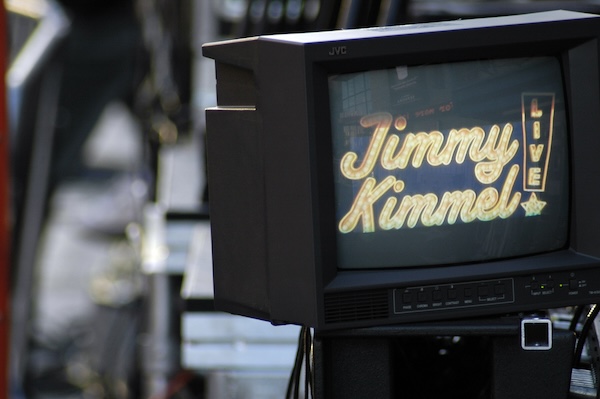 On Monday, the U.S. District Court for the Southern District of New York granted a motion to dismiss a copyright infringement suit involving a popular late-night talk show. The lawsuit, filed by former U.S. House of Representatives member George Santos, alleged that Jimmy Kimmel, the executive producer and host of Jimmy Kimmel Live!, infringed upon copyrighted material when using multiple Cameo videos made by Santos. Santos named Kimmel as a Defendant, as well as ABC, the network which runs the show, and Disney, ABC’s parent company.
In December 2023, Santos was indicted on federal charges of wire fraud in connection with a fraudulent political scheme, money laundering, and theft of public funds. As a result, he was expelled from Congress. Within a few days, Santos created an account on www.cameo.com, a website that allows users to request personalized video messages from a variety of celebrities and public figures.
Subsequently, Kimmel created Cameo accounts using fake names and submitted several requests to Santos, each presenting a variety of different prompts. Santos created 14 videos in response, leading Kimmel to introduce a new segment on his show entitled “Will Santos Say It?” The segment ran twice, and the program was uploaded to Youtube.
In obtaining the videos, the Defendants were subject to Cameo’s personal use license restrictions, granting them a license “solely for [their] own personal, non-commercial, and non-promotional purposes…” and allowing Defendants to use, distribute, reproduce, and publicly display the video on all platforms.
Santos registered each video with the Register of Copyrights and filed the lawsuit, alleging copyright infringement, fraudulent inducement, and breach of contract.
The Defendants moved to dismiss, arguing that their inclusion of the videos constituted fair use, an affirmative defense.
Fair Use as an Affirmative Defense
In her opinion, Judge Denise Cote first considered whether the fair use doctrine protected the Defendants’ use of the works. Section 107 of the Copyright Act provided four factors that, when applied, could demonstrate fair use:
1) The purpose and character of the use, including whether such use is of a commercial nature or is for nonprofit educational purposes; 2) the nature of the copyrighted work; 3) the amount and substantiality of the portion used in relation to the copyrighted work as a whole; and 4) the effect of the use upon the potential market for or value of the copyrighted work.
The first prong – the purpose and character of the use – looked at the work as a whole to determine the Defendants’ intent. Santos argued that the Defendants’ use was not transformative and was solicited in bad faith with the intent to deceive. But the district court noted that whether a work is transformative is not dependent on the subjective intent of the user. Further, the district court agreed with the Defendants’ argument that the use was protected as a form of commentary or criticism:
“It is clear from the face of the first amended complaint (“FAC”) and the Youtube clips of the [Kimmel] segments incorporated by reference into the FAC that the defendants copied the Videos for the transformative purposes of criticism and commentary.”
The second prong – the nature of the copyrighted work – was neutral. The prong applied a two-part test to determine its applicability: 1) whether the work is expressive/creative or more factual, and 2) whether the work is published or unpublished. The district court first agreed with Santos that there was a level of creativity involved with the production of the videos – the Cameo creators typically decide on the lighting and in some cases personalize the original message. But the court found that per the Cameo terms of service, Santos had published the videos by uploading them, offering a lower threshold of protection against the fair use defense.
The third prong – the amount and substantiality of the portion used – was neutral as well. Each video was played in its entirety on the show, but the use was transformative enough that it didn’t affect the fair use defense.
Finally, the fourth prong – the effect on the market – weighed in favor of the Defendants. By transforming the videos into a form of commentary, the only harm against the Plaintiff was the “biting criticism” instead of a “usurpation of the market.”
Since the evidence demonstrated that fair use was “clearly established,” the motion to dismiss the copyright claim was granted.
Fraudulent Inducement and Breach of Contract
The court lastly addressed the fraudulent inducement and breach of contract claims. The fraudulent inducement claim was quickly dismissed as the complaint failed to allege any injury – there was no out-of-pocket economic loss caused by the Defendant creating fake profiles to solicit the videos, so Santos could not recover.
Lastly, Santos’ breach of contract claim was dismissed. Santos argued that he and the Defendants entered into valid contracts for personal licenses of all the videos, but the court ultimately determined that the Copyright Act preempted the claim. Since the claim centered around the use of Santos’ works stemming from a deceitful act (the fake accounts), it was effectively indistinguishable from the original copyright claim, which had already been dismissed. Thus, both the motions to dismiss were granted.
Image Source: Deposit Photos
Author: wirestock_creators
Image ID: 579449206
![[Advertisement]](https://ipwatchdog.com/wp-content/uploads/2026/10/BlackBox-IP-Oct-20-2026-sidebar-700x500-1.jpg)
![[Advertisement]](https://ipwatchdog.com/wp-content/uploads/2026/10/Questel-Oct-22-2026-sidebar-700x500-1.jpg)
![[Advertisement]](https://ipwatchdog.com/wp-content/uploads/2026/09/Life-Sciences-2026-sidebar-early-bird-ends-Oct-25-700x500-1.jpg)
![[Advertisement]](https://ipwatchdog.com/wp-content/uploads/2026/09/WE-BUY-PATENTS-SIM-IP-Ad-1-revised-on-Sep-28-2026-700x500-1.jpg)
![[Advertisement]](https://ipwatchdog.com/wp-content/uploads/2024/09/Patent-Prosecution-Training-sidebar-700x500-2025-03-27.jpg)





![[Advertisement]](https://ipwatchdog.com/wp-content/uploads/2021/12/WEBINAR-336-x-280-px.png)
![[Advertisement]](https://ipwatchdog.com/wp-content/uploads/2021/12/Ad-4-The-Invent-Patent-System™.png)






Join the Discussion
No comments yet.