
![[IPWatchdog Logo]](https://ipwatchdog.com/wp-content/themes/IPWatchdog%20-%202023/assets/images/temp/logo-small@2x.png)
Posts Tagged: "intellectual property"
Innovation Alliance Urges Biden Administration to Support Patent Rights
On January 11, Brian Pomper, Executive Director of the Innovation Alliance, sent a letter to President-elect Biden and Vice President-elect Harris urging support for strong patent rights and outlining Innovation Alliance’s recommendations with respect to the U.S. patent system and the U.S. Patent and Trademark Office (USPTO). The letter emphasized the importance of a strong patent system that incentivizes technological advancement in order to effectively compete with China and explained that the current system is in distress and strong leadership is needed.
From Agent to Examiner and Back Again: Practical Lessons Learned from Inside the USPTO
As a Patent Agent, the work product coming out of the U.S. Patent and Trademark Office (USPTO) seemed random to me. This article shares what I learned as a USPTO Patent Examiner that lifted the veil and shed light on that randomness. As a Patent Examiner I learned a powerful lesson: the approach that a Patent Examiner takes in interpreting claim language is learned by “on the job” training while working with USPTO trainers and other experienced USPTO examiners. The USPTO does not give new Patent Examiners detailed training on how to interpret claim language. Understanding the unique lens through which each examiner is viewing the application and prior art is critical to working effectively with Patent Examiners. Some Examiners interpret very broadly and allow fewer applications, while other examiners interpret more narrowly and allow more applications.
Other Barks & Bites for Friday, January 15: Copyright Office Issues Final Rule on Unmatched Musical Works Under MMA, $1 Billion Copyright Verdict Against Cox Communications Upheld, USPTO Publishes Report on China IP Filings
This week in Other Barks & Bites: the USPTO issues a report on the impacts of non-market forces encouraging larger numbers of bad-faith patent and trademark applications from China; IBM tops the list of U.S. patent recipients for the 28th-straight year; Judge Gilstrap issues a “late” stay in a patent case after the USPTO grants ex parte reexamination requests from Cisco; the Copyright Office issues a final rule on digital music providers obligations on royalty reporting to qualify for limited liability under the Music Modernization Act; China’s IP administration reports that copyright industries contribute more than 7% of the nation’s GDP; Judge O’Grady denies post-trial motions filed by Cox Communications, affirming a $1 billion verdict against the cable provider for copyright infringement; and TSMC announces plans to invest up to $28 billion in capital expenditures during 2021 to improve its advanced chipmaking capabilities.
USPTO Report Puts Chinese Innovation Growth in Context
On January 13, the United States Patent and Trademark Office (USPTO) published a new report on the impact of patent and trademark filing trends in China. The report, titled Trademarks and Patents in China: The Impact of Non-Market Factors on Filing Trends and IP Systems, discusses how the high rate of Chinese patent and trademark filings may well be influenced by government subsidies and other non-market factors, rather than inventiveness and organic economic activity within China.
Patent Filings Roundup: Board Says ‘Nein’ to German Company’s IPR; A PTAB Footnote to the Fortress/Intel Fight
Per the usual slow January, it was a light week at both the Patent Trial and Appeal Board (PTAB) and in the district courts. At the PTAB, parties filed just 16 petitions—three post grant reviews (PGRs) (including a Regeneron filing) and 13 inter partes reviews (IPRs), which, if memory serves, is the lowest of the past 12 months. In district court, just 34 filings played out, with the noted absence (seemingly weekly at this point) of any new WSOU suits. And, as mentioned previously, there’s still no evidence that Uniloc is moving to correct their filings before the USPTO to include the necessary party, Fortress, as their exclusive licensee.
Minaj-Chapman Copyright Settlement is a Warning to Artists
Last week, documents were filed confirming that singer-songwriter Tracy Chapman accepted Onika Tanya Maraj’s (who performs rap under the stage name Nicki Minaj) Rule 68 Offer of Judgment, dated December 17, 2020, in the amount of $450,000, inclusive of all costs and attorney fees. In September 2020, the U.S. District Court of the Central District of California granted partial summary judgment in favor of Minaj, resolving a copyright infringement dispute originally filed in 2018 by Chapman over Minaj’s unauthorized use of Chapman’s 1988 single, “Baby Can I Hold You.” While the district court’s partial summary judgment ruling for Minaj said that Minaj had established a fair use defense to Chapman’s copyright infringement claims, it also said Chapman’s distribution claim should be tried and resolved by a jury, so the case moved forward.
IFI Claims Reports: Patent Activity Increases Despite Pandemic, IBM Again Dominates Granted U.S. Patents, Samsung Leads Global 250
On January 12, patent database provider IFI Claims published its Top 50 U.S. patent grant recipient list for 2020, as well as its Global 250 list of top owners of active patent assets worldwide. The Top 50 list includes many of the usual suspects among top patent filing organizations, including IBM, which takes the top spot among all firms receiving U.S. patents for the 28th year in a row. Perhaps the most surprising finding from the study is that patent application filing activity increased slightly during 2020 despite the massive disruptions to daily life caused by the COVID-19 pandemic.
Drawing Software Patent Drafting Guidance in 2021 from an Unlikely Source: the Federal Circuit
Since the Supreme Court’s Alice decision in 2014, inventors have faced extra hurdles trying to protect their software-related inventions with patents. A chief obstacle has been satisfying the two-part test for eligibility under Section 101 set forth in Alice and Mayo. To meet this test, claimed subject matter must not be directed to a judicial exception, such as an abstract idea, (Step One), and if it is, must add “significantly more” to provide an inventive concept (Step Two)…. Theodore Rand reported in IPWatchdog last week, a disturbing but not surprising trend. Rand found that, in 2020, 81% of software-related patents on appeal for subject matter eligibility in decided precedential cases (22 of 27) were found invalid. But in three cases, software-related patents were found drawn to eligible subject matter for patent purposes. Id. In each of the three cases, the appeals court pointed to aspects of the patent specifications themselves. Looking more closely at the representative claims and court’s comments with respect to the corresponding patent specification is illuminating. In particular, the court looked to the specifications for evidence of performance improvements over conventional systems, description of a technical problem/solution, and technological advantages.
Skidmore-Mead Can Solve the Patent Eligibility Dilemma
Judge Kimberly Moore, in a comprehensive and insightful opinion dissenting from the denial of the petition for rehearing en banc in Athena Diagnostics, Inc. v. Mayo Collaborative Servs., 927 F.3d 1333 (2019), emphasized that the lack of clarity in Section 101 jurisprudence is one of the most critical issues in patent law. Sensing no interest by her colleagues in crafting an opinion with sufficient common denominators to provide instructions to trial judges on how to navigate the cross-currents created by Federal Circuit decisions post-Mayo/Alice, Judge Moore advised litigants: “Your only hope lies with the Supreme Court or Congress.” Id. at 1363. Not now. Several months after Athena, the USPTO took the initiative to issue a guidance document “October 2019 Update: Subject Matter Eligibility,” in response to requests by numerous stakeholders for more clarity and predictability. Consequently, in light of well-established Supreme Court precedent in administrative law, there is every reason for the Federal Circuit to now adopt the analysis of these Guidelines in future Section 101 cases.
Ericsson Wins Anti-Interference Injunction Against Samsung in Texas FRAND Case
Judge Rodney Gilstrap of the U.S. District Court for the Eastern District of Texas yesterday issued an order enjoining Samsung Electronics from taking any action to interfere with Ericsson’s U.S. FRAND (“fair, reasonable, and non-discriminatory” terms) lawsuit against Samsung in his court. Samsung had filed a lawsuit on December 7, 2020 in the Wuhan Intermediate People’s Court of China but did not provide notice to Ericsson of the action. “Unaware of the Chinese Action,” according to Judge Gilstrap’s order, Ericsson filed a complaint against Samsung on December 11, 2020 in the Texas court, alleging that Samsung breached its obligation to license its Standard Essential Patents (SEPs) on FRAND terms, and “notified Samsung of its Complaint in this Court that same day.” Samsung subsequently asked the Wuhan court to issue an “anti-suit injunction” (ASI) to prevent it from seeking relief relating to the SEPs at issue anywhere else in the world. The Wuhan Court issued the ASI on December 25 for the “duration of the Chinese Action and until a future judgment in that Action becomes effective.” The Wuhan Court gave Ericsson notice of the ASI after it had issued on December 25. Ericsson thus asked the Texas Court for an emergency temporary restraining order (TRO) on December 28, which the court granted.
PTAB Will Use Nautilus Approach to Indefiniteness for Post-Grant Proceedings
Last week, the United States Patent and Trademark Office (USPTO) issued binding indefiniteness guidance in a memorandum from Director Andrei Iancu that addresses confusion about which indefiniteness standard applies in post-grant proceedings: the standard set forth in In re Packard, 751 F.3d 1307 (Fed. Cir. 2014) or in Nautilus, Inc. v. Biosig Instruments, Inc., 572 U.S. 898 (2014). Specifically, the memorandum confirms that the standard in Nautilus is the correct approach for analyzing indefiniteness in America Invents Act (AIA) post-grant proceedings.
Supreme Court Will Review Doctrine of Assignor Estoppel
On Friday, the U.S. Supreme Court granted a petition for certiorari filed by Minerva Surgical, Inc. asking the Court to clarify questions around the doctrine of assignor estoppel. Specifically, the petition presents the question “whether a defendant in a patent infringement action who assigned the patent, or is in privity with an assignor of the patent, may have a defense of invalidity heard on the merits.”
This Week in Washington IP: Resetting America’s Research Priorities, Section 230 Under Biden and Exploring the FCC’s Actions on 5G Spectrum
This week in Washington IP news, committees in both the Senate and the House of Representatives are quiet after a week of national turmoil, and as we get closer to the inauguration of Joe Biden to serve as the next President. Among D.C. area policy institutes, New America holds an event on the fate of Section 230 of the Communications Decency Act under future President Joe Biden, the Center for Strategic & International Studies hosts a discussion with former Lockheed Martin CEO Norman Augustine on resetting America’s research priorities, while the American Enterprise Institute hosts a pair of events with members of the Federal Communications Commission, including Commissioner Brendan Carr and Chairman Ajit Pai, to discuss the FCC’s actions on 5G mobile spectrum policy. The U.S. Patent and Trademark Office also hosts a few training sessions on trademark fundamentals, basics of intellectual property and patent application filings through the agency’s Patent Center.
Federal Circuit Affirms TTAB Dismissal of QuikTrip’s Opposition to Convenience Store Mark
On January 8, the United States Court of Appeals for the Federal Circuit (CAFC) affirmed a decision of the United States Patent and Trademark Office, Trademark Trial and Appeal Board (TTAB) dismissing QuikTrip West, Inc.’s (QuikTrip) opposition to Weigel Stores, Inc.’s (Weigel) registration of the mark W WEIGEL’S KITCHEN NOW OPEN on the ground that there was not likelihood of confusion with QuikTrip’s registered design mark, QT KITCHENS (QuikTrip West, Inc. v. Weigel Stores, Inc.).
Alice in 2020: Slashing Software Patents and Searching for Functional Language at the Federal Circuit (Part II)
In Part I of this article, I explained that the CAFC invalidated almost every software patent on appeal for eligibility in 2020 and recapped the first 13 such cases of the year. Despite the many software eligibility cases decided last year, there is still some uncertainty about what passes muster under the Alice two-step framework. Below is a recap of the remaining 14 cases considered by the CAFC in 2020 with respect to software patent eligibility.
Varsity Sponsors
![[Advertisement]](https://ipwatchdog.com/wp-content/uploads/2026/03/NLPatent-Apr-2-2026-sidebar-700x500-1.jpg)
![[Advertisement]](https://ipwatchdog.com/wp-content/uploads/2026/02/Junior-Apr-7-2026-sidebar-700x500-1.jpg)

Latest IPW Posts
How to Draft AI Patents That Survive the Next Guidance Cycle, and the One After That
April 1, 2026 @ 07:15 amTesla Partially Succeeds at CAFC with Ruling Finding Some EV Charging Claims Obvious
March 31, 2026 @ 04:28 pmCAFC Upholds Ineligibility of Targeted Ad Claims in Win for TikTok
March 31, 2026 @ 01:14 pmWIPO in Focus: Beyond Treaties, Toward a Market-Driven IP System | IPWatchdog Unleashed
March 31, 2026 @ 11:00 amAmicus, Sanofi Urge USPTO Appeals Panel to Uphold Ex Parte Baurin’s Approach to ODP Analysis
March 30, 2026 @ 04:48 pm
Latest Podcasts
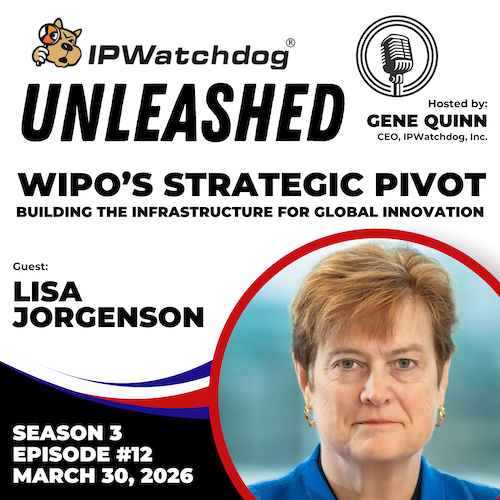


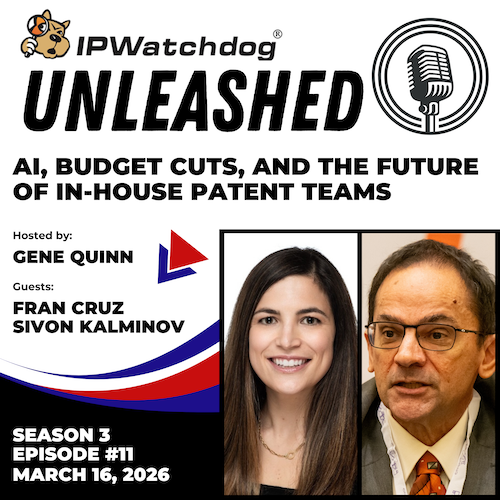

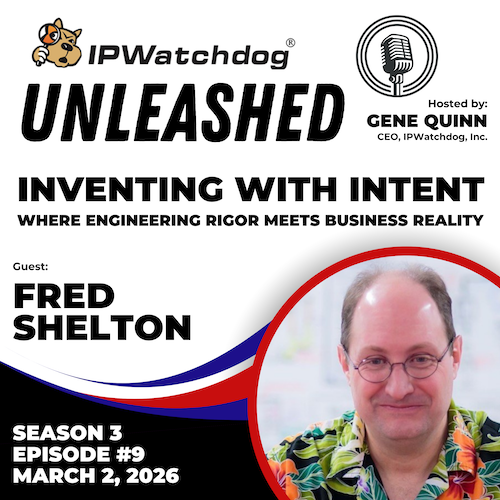
IPWatchdog Events
Webinar: Unlocking New Capabilities – The Real ROI of AI in Patent Practice
April 2 @ 12:00 pm - 1:00 pm EDTCLE Webinar: All in the Prompt – Crafting AI Prompts for Precision Outputs
April 7 @ 12:00 pm - 1:00 pm EDTPatent Masters™ 2026 – Portfolios, Licensing and Enforcement
June 8 @ 8:00 am - June 10 @ 5:00 pm EDT
Industry Events
24th Annual Rocky Mountain Intellectual Property & Technology Law Institute
May 28 @ 8:30 am - May 29 @ 4:30 pm MDTFrom IPWatchdog
![[Advertisement]](https://ipwatchdog.com/wp-content/uploads/2021/12/WEBINAR-336-x-280-px.png)
![[Advertisement]](https://ipwatchdog.com/wp-content/uploads/2021/12/Ad-4-The-Invent-Patent-System™.png)