![[IPWatchdog Logo]](https://ipwatchdog.com/wp-content/themes/IPWatchdog%20-%202023/assets/images/temp/logo-small@2x.png)
Posts in IP News
Earth Day turns political with focus on climate change
To celebrate Earth Day we will profile green technologies and environmentally friendly innovations, like we always have. We will not, however, buy into the political rhetoric or hysterical claims pedaled by environmentalists as dogmatic fact. The truth is the predictions of environmentalists and climate scientists have never been accurate. Mainstream scientific publications are finally starting to recognize that for most of the last generation there is no evidence of global warming, the predictions made by environmentalists have been wrong and their factual claims to support their political agenda are false. For example, did you know that sea ice in Antarctic has been increasing, not decreasing?
Bristol-Myers, AstraZeneca and AmGen maintain strong new drug pipelines
There’s been a lot of positive activity in recent months for Bristol-Myers Squibb of New York City. In early March, the U.S. Food and Drug Administration approved the use of BMS’s immunotherapy drug Opvido for the treatment of lung cancer. The approval came ahead of schedule after a clinical trial of the drug was ended due to a significant improval in survival rates. In the early days of April, the company announced a partnership with Dutch-based pharmaceutical developer uniQure that will see BMS pay uniQure $254 million for the successful development of a genetic therapy for congestive heart failure. Also in early April, BMS finalized the acquisition of Flexus Biosciences, a California firm focused on developing anti-cancer therapeutics.
Polaroid v. Kodak, Still the Champ
Of course, the substantial victories won by Bard and Apple do not match Polaroid’s in another very significant way. Polaroid was successful in securing an injunction against further infringement by Kodak that forced the goliath of the photography industry to withdraw all of its instant cameras and film from store shelves across the country. The courts imposed this punishment even though more than thirteen million Americans owned Kodak instant cameras that were immediately rendered useless by the decision.
Comprehensive Study of Patent Trial and Appeal Board Decisions
the study determined that 73.5% of the challenged claims did not survive review in IPR proceedings that reached a final decision on the merits. The report also shows that, in final decisions from the PTAB, 37.5% of the claims initially challenged were found unpatentable under 35 U.S.C. § 102 (anticipation), while 57.6% of the claims were found unpatentable under 35 U.S.C. § 103 (obviousness). (Some claims were found unpatentable under both grounds.) In a recent study of patent decisions in district court cases, the district courts invalidated claims under Section 102 at a rate of 31.1% and under Section 103 at a rate of 27.8%.
Merck, Pfizer and Eli Lilly patenting to stay ahead of patent cliff
The early months of 2015 have been interesting ones for the pharmaceutical industry, an incredibly valuable industry sector that comes under our focus from time to time here at IPWatchdog. The first quarter of this calendar year has seen a number of mergers and acquisitions which are showing us that the patent market for pharmaceuticals is quite active right now.…
Petition Dismissal is Appropriate for Improper Use of PTAB Resources
Congress created AIA trial proceeding to combat trolls, not create an altogether new class of them. Since the initial filings of Hayman, the STRONG ACT has been introduced in the Senate and includes a provision that would require standing for IPR petitioners (presumably to thwart such filings). However, companies not only employ IPR as an alternative to ongoing litigation but as a due diligence tool to avoid such situations in the first instance. Innovators looking to develop a new product line, or new area of business should have the freedom to clear the landscape of improvidently granted patents via the PTAB without having to wait for a lawsuit, or threat of one. Such knee-jerk legislative fixes will have unintended, and unfortunate consequences.
The Day that Changed the World: April 10, 1790
To patent folks April 10, 1790 is the day that the earth shook, the heavens opened, and history was forever altered. 225 years ago, on April 10, 1790, President George Washington signed the first version of the U.S. patent act. It was the third Act of Congress. Madison, through a series of letters back and forth between Jefferson, who was in France helping Ben Franklin secure French support for the nascent US revolution, persuaded Jefferson that a limited monopoly on an inventor’s own creations was a good idea.
Chinese support of indigenous innovation is problematic for foreign IP owners
The definition of indigenous innovation is “enhancing original innovation through co-innovation and re-innovation based on the assimilation of imported technologies.” Those familiar with China’s joint venture rules for foreign businesses, which require them to transfer some patent licensing powers to Chinese companies in order to enter their market, are wary of statements like this that essentially support a siphoning of foreign intellectual property.
Patent Abuse or Genius? Is Kyle Bass Abusing the Patent System?
Time and time again throughout the legislative history post grant proceedings were explained as being a faster, low-cost alternative to litigating validity disputes in Federal District Court. That being the case, it would seem extremely odd that any petitioner could bring a post grant challenge to a patent when that petitioner would not have standing to sue to invalidate the patent in Federal District Court. However, the statute does say that a person other than the patent owner can file a petition to institute an inter partes review.
Google Innovation Goes Beyond Search to Robotics, Wearables, Cars and More
Google’s self-driving car development has advanced so far beyond what our country’s laws are currently able to regulate that the technology has hit some legal stumbling blocks. As a result, Google has been focusing recently Google First Quarter 2015 Text Clusteron inventing pedestrian safety systems to be incorporated with its self-driving car, even receiving a patent for an airbag that would protect pedestrians in a collision. The company even has its focus on surgical robotics, recently announcing a partnership with Johnson & Johnson to develop surgical robots that would assist human surgeons.
USPTO Issues Patent No. 9,000,000 on Windshield Washer Replacement System
Earlier today the United States Patent and Trademark Office issued U.S. Patent No. 9,000,000. The invention that was awarded this historic patent is a system and method of collecting and conditioning rainwater and other moisture from a windshield of a vehicle and utilizing the collected fluid to replenish the fluids in the windshield washer reservoir. Undeterred by my inaccurate prediction on when the USPTO would issue Patent No. 9,000,000. I predict that the Patent Office will issue Patent No. 10,000,000 on November 28, 2017.
IP Strategies for Changing Times
The vast majority of the assets developed and owned by technology companies are intangible assets, i.e. they reside in their internal information and employees’ brain (Intellectual Capital or “IC”) and the output thereof (Intellectual Property or “IP”). It is estimated that in excess of 85% of the valuation of the NASDAQ Index companies (and of the new global wealth being created) lies in intangible assets. With smaller technology companies, this percentage is sometimes close to 100%. Nowadays, most technology based companies eventually fail or succeed in large part because of the way they handle their intellectual capital assets and convert those into strategic intellectual property assets.
Recent Acquisitions Suggest Patent Market is Alive
There seems to be a popular belief that the market for patents is dead, but if you look at recent transactions through Q1 of 2015, there are at least some signs that the patent marketplace is becoming more active. There have been a number of high profile acquisitions in the pharmaceutical space over the last four months, and last week Sony acquired OnLive’s patent portfolio. Earlier today Akamai Technologies, Inc. announced that acquired Octoshape, which will give Akamai access to Octoshape technologies that optimize the quality of video streams for over-the-top content and to enable Internet Protocol television solutions.
Retroactive changes to patent eligibility law suggest patents are not a property right
Changing the rules of the game is fundamentally unfair, which would be obvious to everyone if we were talking about football, soccer or playing a board game. Somehow common sense is abandoned when dealing with patents. Changing patent laws in midstream seems particularly un-American, both because it disturbs vested property rights and because it is quintessentially anti-inventor. If we want to maximize a property rights regime it must be certain, stable and predictable. Patents are no exception.
Rovi, AT&T and Microsoft have largest video on-demand patent portfolios
The navigation and guidance technologies protected by Rovi’s IP holdings have been incorporated into a wide array of electronics such as set-top boxes, digital video recorders, tablets and other mobile devices. As a result, the company is engaged in a range of licensing and litigation activities relative to its patent holdings. The corporation has brought suit against Netflix in recent years for alleged infringement of patents held by Rovi which protect interactive program guide (IPG) technologies. Recently, Rovi renewed a product and patent licensing agreement for many of those same IPG technologies with major Japanese electronics manufacturer Sharp.
Varsity Sponsors
![[Advertisement]](https://ipwatchdog.com/wp-content/uploads/2026/03/NLPatent-Apr-2-2026-sidebar-700x500-1.jpg)
![[Advertisement]](https://ipwatchdog.com/wp-content/uploads/2026/02/Junior-Apr-7-2026-sidebar-700x500-1.jpg)

Latest IPW Posts
Mainstream Media Attention for Judge Newman Suspension Grows as Saga Continues
April 1, 2026 @ 11:15 amHow to Draft AI Patents That Survive the Next Guidance Cycle, and the One After That
April 1, 2026 @ 07:15 amTesla Partially Succeeds at CAFC with Ruling Finding Some EV Charging Claims Obvious
March 31, 2026 @ 04:28 pmCAFC Upholds Ineligibility of Targeted Ad Claims in Win for TikTok
March 31, 2026 @ 01:14 pmWIPO in Focus: Beyond Treaties, Toward a Market-Driven IP System | IPWatchdog Unleashed
March 31, 2026 @ 11:00 am
Latest Podcasts



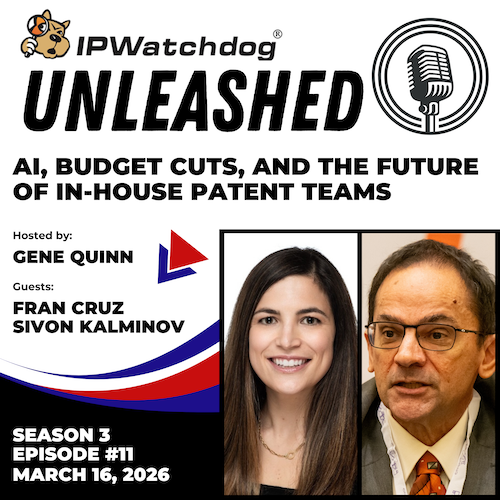

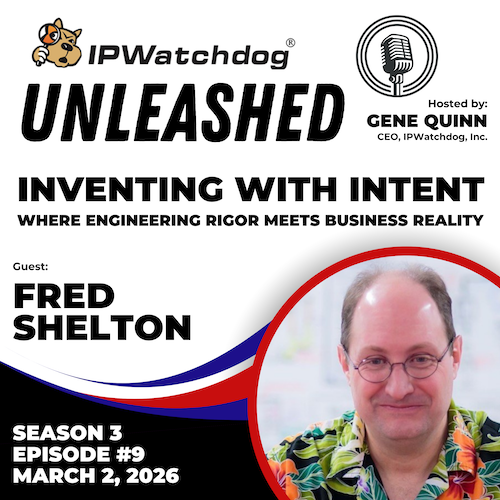
IPWatchdog Events
Webinar: Unlocking New Capabilities – The Real ROI of AI in Patent Practice
April 2 @ 12:00 pm - 1:00 pm EDTCLE Webinar: All in the Prompt – Crafting AI Prompts for Precision Outputs
April 7 @ 12:00 pm - 1:00 pm EDTPatent Masters™ 2026 – Portfolios, Licensing and Enforcement
June 8 @ 8:00 am - June 10 @ 5:00 pm EDT
Industry Events
24th Annual Rocky Mountain Intellectual Property & Technology Law Institute
May 28 @ 8:30 am - May 29 @ 4:30 pm MDTFrom IPWatchdog
![[Advertisement]](https://ipwatchdog.com/wp-content/uploads/2021/12/WEBINAR-336-x-280-px.png)
![[Advertisement]](https://ipwatchdog.com/wp-content/uploads/2021/12/Ad-4-The-Invent-Patent-System™.png)