
![[IPWatchdog Logo]](https://ipwatchdog.com/wp-content/themes/IPWatchdog%20-%202023/assets/images/temp/logo-small@2x.png)
Posts in Government
USPTO Publishes Long-Awaited Proposed Rule on PTAB Changes
The U.S. Patent and Trademark Office (USPTO) today announced a Notice of Proposed Rulemaking (NPRM) that will be officially published in the Federal Register tomorrow and that addresses a subset of issues from the controversial April 2023 Advance Notice of Proposed Rulemaking (ANPRM). USPTO Director Kathi Vidal received criticism following the ANPRM, most notably from Congress. In a House IP Subcommittee meeting held last year, members of the Subcommittee expressed confusion about the ANPRM and suggested Vidal may have been exceeding her authority with some of the proposals.
Patent Filings Roundup: Slow Week in PTAB and District Court, Ideahub Subsidiary Challenges Instituted; Patent Armory Continues the Offensive
It was a slow week for new patent filings at the Patent Trial and Appeal Board (PTAB) and in the district courts. This week saw only 18 new filings at the PTAB—one of which was a Post Grant Review, while the remaining were inter partes reviews (IPRs). Texas Instruments, Inc. continued challenging Greenthread LLC patents, filing four IPRs against four patents (bringing the total number of IPRs Texas Instruments has filed up to seven). Amazon filed two IPRs against one Nokia Technologies Oy [associated with Nokia Corporation] patents; Apple filed five IPRs against three Resonant Systems Inc. (d/b/a RevelHMI) patents; and Micron filed two IPRs against two Yangtze memory Technologies Company Ltd.
FTC Sets Meeting to Vote on Final Noncompete Rule
Federal Trade Commission (FTC) Chair Lina Khan announced yesterday that there will be a Special Open Commission Meeting held on April 23 to vote on whether to issue a final version of the January 2023 proposed rule that would ban employers from using noncompete clauses for their employees. “The proposed final rule being considered would generally prevent most employers from using noncompete clauses,” said the Open Commission Meeting’s event description. “As the Notice of Proposed Rulemaking explained, noncompetes are a widespread and often exploitative practice that suppresses wages, hampers innovation, and blocks entrepreneurs from starting new businesses.”
Commerce Department Opens $54 Million Funding Opportunity to Small Business R&D in Semiconductor Metrology
On April 16, the U.S. Department of Commerce announced that the Biden Administration had issued a notice of funding opportunity (NOFO) earmarking $54 million in funds available under the CHIPS and Science Act to fund advances in measurement technologies critical to semiconductor production. These funds, administered via grant through the Small Business Innovation Research (SBIR) program, are expected to improve U.S. leadership in computer chip manufacturing by mitigating production defects and increasing production yields.
USPTO Proposes Making Director Review Process Official
The U.S. Patent and Trademark Office (USPTO) announced today that it will be publishing a Notice of Proposed Rulemaking (NPRM) tomorrow aimed at formalizing the rules governing Director Review of Patent Trial and Appeal Board (PTAB) decisions under the America Invents Act (AIA). In July 2021, the USPTO announced that it would be implementing an interim rule at the agency in response to the U.S. Supreme Court’s late June 2021 decision in Arthrex v. Smith & Nephew. In the Arthrex ruling, the Court found that the constitutional Appointments Clause violation created by the process for appointing administrative patent judges (APJs) to the PTAB was best cured by review of APJ decisions by the USPTO Director. The interim rule began the process of determining how that review process would play out during the day-to-day operations of the PTAB.
Thaler, Copyright Office Fight Over Human-Authorship Requirement for AI-Created Artwork Continues
On April 10, Dr. Stephen Thaler filed a reply brief at the U.S. Court of Appeals for the D.C. Circuit, continuing the artificial intelligence (AI) technologist’s legal challenge to the U.S. Copyright Office’s refusal to register copyright to an artwork generated by Thaler’s Creativity Machine. The reply brief argues that there is no human authorship requirement under the U.S. Copyright Act preventing Thaler from claiming copyright in the AI-generated work, and that standard principles of property law enables ownership of the work to vest in Thaler, who created the AI system at issue in the case.
Schiff Introduces Bill to Mandate Disclosure of Copyrighted Content Used to Train GAI Models
On April 9, Representative Adam Schiff (D-CA) introduced the Generative AI Copyright Disclosure Act of 2024 into the U.S. House of Representatives. The bill, which would require generative artificial intelligence (AI) platforms to disclose their use of copyrighted works in training AI models with retroactive effect, comes after months of growing concerns by the global creative community over the misappropriation of original works of authorship by companies collecting such content without prior authorization.
Bayh-Dole Coalition: Activist Groups’ Bid for Medicare to Make Generic Xtandi is a ‘Desperate Ploy’
On April 9, Knowledge Ecology International (KEI), the Union for Affordable Cancer Treatment (UACT) and Universities Allied for Essential Medicines (UAEM) sent a letter to Chiquita Brooks-LaSure, Administrator for the Centers for Medicare and Medicaid Services, requesting that CMS use alleged statutory authority to allow companies to make and sell generic versions of the blockbuster prostate cancer drug, Xtandi®. The letter comes two months after the Department of Health and Human Services (HHS) denied an appeal of a decision not to march in on the drug under 35 USC §203.
USIJ and Medical Device Group Urge Movement on PERA and PREVAIL
The Medical Device Manufacturers Association (MDMA) and the Alliance of U.S. Startups and Inventors for Jobs (USIJ) sent a letter today to the leadership of the Senate Judiciary Committee and the Judiciary Committee’s Subcommittee on Intellectual Property to express their support for both the Promoting and Respecting Economically Vital American Innovation Leadership Act (PREVAIL Act) and the Patent Eligibility Restoration Act (PERA). Both PREVAIL and PERA were introduced on June 22, 2023. The PREVAIL Act aims to reform Patent Trial and Appeal Board (PTAB) practices while PERA would eliminate all judicially-created exceptions to U.S. patent eligibility law.
USPTO AI Guidance Highlights Risks for Practitioners and Public
The U.S. Patent and Trademark Office (USPTO) today announced guidance for practitioners and the public regarding the use of artificial intelligence (AI) in the preparation of filings for submission to the Office. The guidance comes two months after the Office issued a guidance memorandum for the Trademark and Patent Trial and Appeal Boards (TTAB and PTAB) on the misuse of AI tools before the Boards that clarified the application of existing rules to AI submissions.
What RFK, Jr.’s VP Pick Could Mean for IP
Independent Presidential candidate Robert F. Kennedy, Jr’s Vice-Presidential running mate, Nicole Shanahan, a mercurial patent analyst, intellectual property lawyer and incidentally rich entrepreneur, is in the position to influence declining patent reliability and increasing copyright abuse. But will she? This column is not intended to opine on Shanahan’s merits as an independent Vice-Presidential candidate, but to attempt to understand her motivation for running and its potential impact on IP rights, creators and assignees.
What’s Next After Brazil’s Enactment of the Nagoya Protocol
In a significant milestone for the preservation of biodiversity, Decree 11,865/2023, published in the Official Gazette on 12/28/2023, enacted the Nagoya Protocol in Brazil. The protocol, providing for access to genetic resources and the fair sharing of benefits arising from their use, is part of the renowned Convention on Biological Diversity (CBD). The Nagoya Protocol, in force since October 12, 2014, relates to the international commitment of 140 countries, including Brazil, to implement the objective of the CBD on the fair and equitable sharing of benefits from the use of genetic resources and the traditional knowledge associated with them (TK).
Vidal Vacates Board’s Denial of IPR Institution on Auto Part Patent
U.S. Patent and Trademark Office (USPTO) Director Kathi Vidal vacated and remanded a decision of the Patent Trial and Appeal Board (PTAB) on Friday that had denied institution of an inter partes review (IPR) requested by auto parts manufacturer, Mahle Behr Charleston, Inc. U.S. Patent No. RE47,494 E is owned by inventor Frank Amidio Catalano and covers “a device to prevent corrosion [in motor vehicle radiators] caused by electrolysis.” Mahle Behr requested IPR of the patent, arguing that a prior art reference called Godefroy anticipates and renders obvious certain claims.
Return to Assertion Value Series: The 1% Patent
“Many believe the root cause of the patent system’s dysfunction is that the U.S. Patent and Trademark Office [USPTO] is issuing too many invalid patents that unnecessarily drain consumer welfare, stunt productive research, and unreasonably extract rents from innovators.” That quote from Professors Michael Frakes and Melissa F. Wasserman echoes a common complaint in patent policy conversations. The USPTO is widely perceived as issuing too many bad patents.
A Case Study on the ‘Crime-Fraud’ Exception to Attorney-Client Privilege
The protection of privilege in communications between clients and lawyers is a very important one under U.S. law. The basic rule is that when a client seeks legal advice from a lawyer, the communication between the client and the lawyer is confidential and cannot be discovered during litigation. An important purpose of this rule is to encourage clients to communicate fully and freely with lawyers in the process of seeking legal help. The lawyers here include both external lawyers and in-house lawyers.
Varsity Sponsors
![[Advertisement]](https://ipwatchdog.com/wp-content/uploads/2026/03/NLPatent-Apr-2-2026-sidebar-700x500-1.jpg)
![[Advertisement]](https://ipwatchdog.com/wp-content/uploads/2026/02/Junior-Apr-7-2026-sidebar-700x500-1.jpg)

Latest IPW Posts
The USPTO is Trying—But the Most Abusive Practices to Kill Patents Are Still in Play
April 1, 2026 @ 05:58 pmUSPTO Solves U.S. Patent Eligibility Problems
April 1, 2026 @ 01:19 pmMainstream Media Attention for Judge Newman Suspension Grows as Saga Continues
April 1, 2026 @ 11:15 amHow to Draft AI Patents That Survive the Next Guidance Cycle, and the One After That
April 1, 2026 @ 07:15 amTesla Partially Succeeds at CAFC with Ruling Finding Some EV Charging Claims Obvious
March 31, 2026 @ 04:28 pm
Latest Podcasts
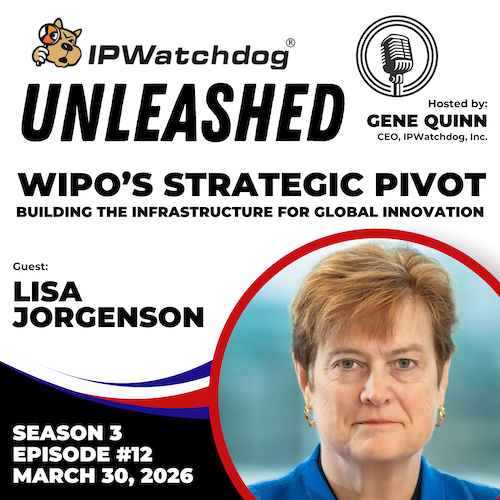

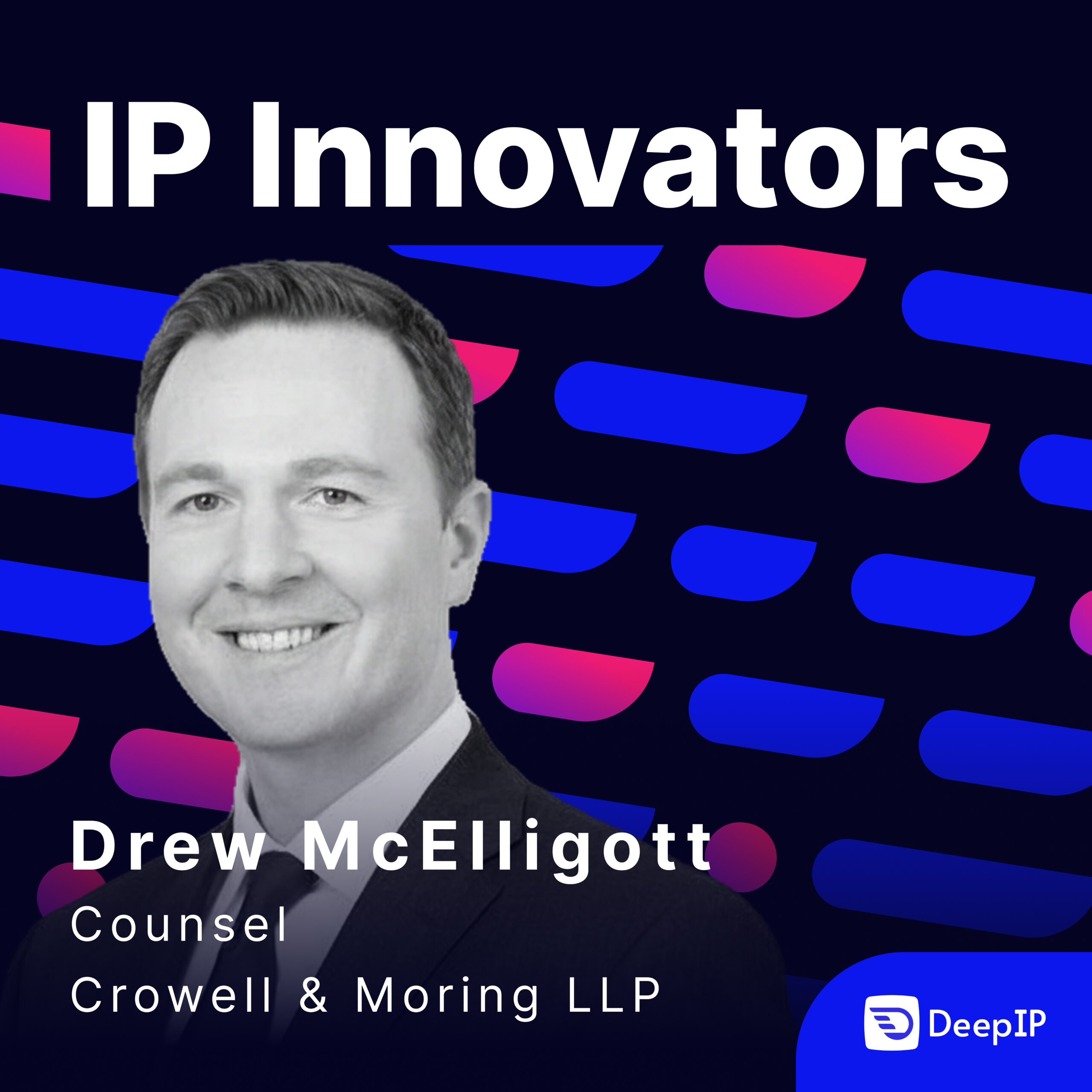
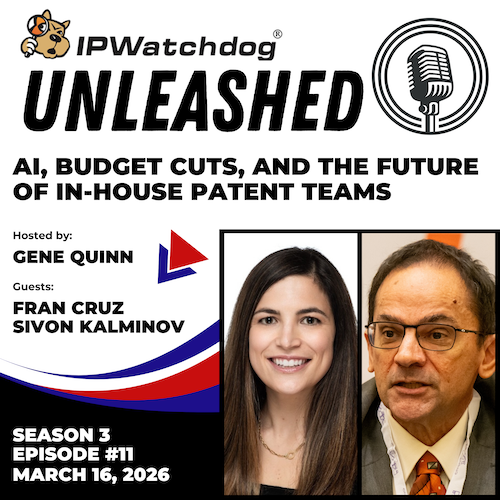

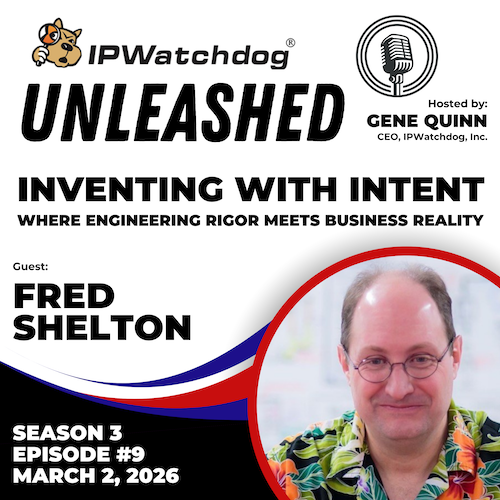
IPWatchdog Events
Webinar: Unlocking New Capabilities – The Real ROI of AI in Patent Practice
April 2 @ 12:00 pm - 1:00 pm EDTCLE Webinar: All in the Prompt – Crafting AI Prompts for Precision Outputs
April 7 @ 12:00 pm - 1:00 pm EDTWebinar: From Patent Tools to AI Agents – The Next Evolution of Patent Practice
April 14 @ 12:00 pm - 1:00 pm EDT
Industry Events
24th Annual Rocky Mountain Intellectual Property & Technology Law Institute
May 28 @ 8:30 am - May 29 @ 4:30 pm MDTFrom IPWatchdog
![[Advertisement]](https://ipwatchdog.com/wp-content/uploads/2021/12/WEBINAR-336-x-280-px.png)
![[Advertisement]](https://ipwatchdog.com/wp-content/uploads/2021/12/Ad-4-The-Invent-Patent-System™.png)