
![[IPWatchdog Logo]](https://ipwatchdog.com/wp-content/themes/IPWatchdog%20-%202023/assets/images/temp/logo-small@2x.png)
Posts in IPWatchdog Articles
Former USPTO Officials Urge Vidal to Immediately Withdraw NPRM on Terminal Disclaimers
On May 28, a group of five former Directors, Deputy Directors and Patent Commissioners at the U.S. Patent and Trademark Office (USPTO) sent a letter addressed to current USPTO Director Kathi Vidal in opposition to a rule package on terminal disclaimer practice proposed earlier this month. This group of highly-ranking former government officials join a growing chorus of voices who are concerned by the apparent overreach of the nation’s patent granting agency into substantive rulemaking that would create enforceability issues for companies making use of terminal disclaimers to obtain patent rights.
Winning Strategies at the Federal Circuit
Knowing your way around the U.S. Court of Appeals for the Federal Circuit (CAFC)—the specialized appellate court that has exclusive jurisdiction over patent cases—is essential to success in patent appeals. Founded in 1982, the Federal Circuit is the thirteenth federal court of appeals, and has nationwide jurisdiction over many types of cases, including international trade, government contracts, patents, trademarks, certain monetary claims against the United States government, federal personnel, and veterans’ benefits, among others.
Export Control Issues in U.S. Patent Prosecution
Under U.S. law, filing a patent application in a country other than the United States is considered to be an “export” of the invention that is described in the patent application. Therefore, the export control laws of the United States apply to patent prosecution. All U.S. patent applications except for plant applications are screened for possible national security concerns by the Licensing & Review branch of the U.S. Patent and Trademark Office (USPTO), which determines whether foreign filing will be permitted and whether the patent application must be placed under a secrecy order. 35 U.S.C. 181-186; 37 CFR Part 5.
Latest Bid to Review Rule 36 Practice Shot Down by SCOTUS
Following the denial of another petition for certiorari in March, Jodi A. Schwendimann today lost her bid for review at the U.S. Supreme Court on the question of whether it is permissible for the U.S. Court of Appeals for the Federal Circuit (CAFC) to issue a Rule 36 affirmance of claims as being anticipated when, according to the petition, two different venues issued inconsistent claim constructions and it isn’t clear which the CAFC has deemed correct.
The Path to Worldwide Patent Rights
For better or for worse, there is no such thing as a worldwide patent. Generally speaking, patent rights need to be obtained in individual countries, although there are notable global filing strategies that can be used to effectively lock in the possibility of obtaining patent protection across the globe or region. But there is no way around it—obtaining worldwide patent protection is expensive. In fact, obtaining worldwide patent rights is typically cost prohibitive.
Recent Boards of Appeal Decisions on Added Matter: Holding up the Standard
The European Patent Office’s (EPO) Boards of Appeal have displayed a stringent approach towards added subject matter in recent decisions, particularly in comparison to other jurisdictions. This stringency is rooted in the provisions of Article 123(2) of the European Patent Convention (EPC), which prohibits amendments that extend beyond the content of the original patent application. The primary objective is to maintain the correlation between the granted patent’s scope of protection and the technical disclosure initially provided in the application.
Winning Strategies at the PTAB, Part II: Common Pitfalls That Patent Owners Should Avoid
Part I of this article discussed how the Patent Trial and Appeal Board (PTAB) is a very different tribunal from district courts. It is a venue where fact and issues of law are decided by technical specialists, who are also highly trained in patent law, instead of lay judges and juries. It also discussed the formidable challenge presented to patent owners by the PTAB, where inter partes review (IPR) institution rates are about 67% and final written decisions find all challenged claims unpatentable up to 70% of the time. Part II will discuss strategies that give patent owners a better chance at successfully navigating the IPR process.
Are Patents Monopolies or Not? Part II: Residual Bias and Misnomers
Despite the basic principles that a patent does not presume market power and does establish plenary legality within its issued scope, as we learned in Part I of this two-part series, the Federal Trade Commission can and has used threats of antitrust inquiries to coerce patent owners to voluntarily forego some activities within the scope of a patent’s right to exclude.
Other Barks & Bites for Friday, May 24: ChatGPT Pulls AI Voice That Sounded Like Scarlett Johansson; Report Finds Copyright Industry Resilient After COVID-19 Economic Dip; Google Fails to Revive Patent in Front of CAFC
This week in Other Barks & Bites: the U.S. Patent and Trademark Office (USPTO) celebrates patent practitioners who have offered significant pro bono work; ChatGPT pulls AI voice after actor Scarlett Johansson expresses “shock” at similarity to her voice; the Copyright Office releases a report that finds copyright-related industries were resilient after the economic impact of COVID-19.
Federal Circuit Says Minority Ownership Interest Isn’t Enough for Standing to Seek Trademark Cancellation
The U.S. Court of Appeals for the Federal Circuit (CAFC) on Thursday, May 23, affirmed a Trademark Trial and Appeal Board (TTAB) decision that found a party with only a minority ownership interest in the owner of allegedly infringed marks did not have standing to seek cancellation of the marks. The decision was precedential and authored by Judge Lourie.
Rader’s Ruminations: Let’s Settle It – Are Patents Monopolies or Not? Part I
The simple answer is “no”; a patent protecting a new and nonobvious invention is not an antitrust monopoly. The reason is also quite simple; an antitrust monopoly requires the unlawful capture or maintenance of market power by withdrawing products or services from the public domain, thus injuring competition in market transactions. See, e.g., Standard Oil v. U.S., 221 U.S. 1 (1910). In general terms, an antitrust monopoly requires: (1) market power (sufficient control of a market to set prices or restrain competition, but not market dominance achieved with a superior product or business acumen); (2) restricting the public domain to injure competition; and (3) illegal anticompetitive conduct to achieve these market distortions. A patent, standing alone, does not meet any of these requirements.
Impact of Full Federal Circuit’s Design Patent Decision is Far from Obvious
Applications for design patents have surged in recent years, with the U.S. Patent and Trademark Office (USPTO) reporting a 20% increase in applications over the last five years. Design patents have become an important tool in brands’ intellectual property portfolios – and for good reason: where trade dress protection can take years (and significant resources) to acquire, with the right planning and timing, design patents are easy to obtain and offer strong protections for brands.
C4IP Urges Senate Judiciary to Ignore Common Myths About Drug Patents
On May 20, the Council for Innovation Promotion (C4IP) sent a letter addressed to the U.S. Senate Committee on the Judiciary one day before the committee held a hearing on competition and consumer pricing in the prescription drug market. C4IP’s letter pushes back against common myths about the impact of patents on drug prices, some of which were the focus of debate during the Judiciary Committee hearing this week, to better inform Congressional efforts on expanding access to medicines for American consumers.
Israeli Patent Attorneys Urge Vidal to Reassign Reddit Examiner’s Application
Representatives of intellectual property provisional organizations in Israel, including the Israel Patent Attorneys Association and the Israeli AIPPI, recently wrote to U.S. Patent and Trademark Office (USPTO) Director Kathi Vidal to voice concerns relating to the anonymous examiner who several weeks ago took to Reddit to discuss examining the patent application of an unidentified Israeli defense contractor. Reddit User Snoo_86350 posted to a patent examiner Reddit group explaining that they had been assigned to an application owned by an Israeli military company and that they had mixed feelings about allowing the application after “watching news about Columbia campus protests” and being unable to stop “thinking of Gaza Strip where about 2 million Palestinians live, can’t escape and bombarded.” (sic)
CAFC Vacates Win for Nokia on Standing Issue
The U.S. Court of Appeals for the Federal Circuit (CAFC) on Tuesday, May 21, issued a precedential decision vacating and remanding a district court’s finding that Core Optical Technologies didn’t have standing to sue Nokia due to the language of a contract between the inventor and his employer. Judge Mayer dissented. Core Optical alleged infringement of U.S. Patent No. 6,782,211 by Nokia Corp., ADVA Optical Networking SE, and Cisco Systems, Inc. (Nokia). Nokia moved for summary judgment arguing that Core Optical lacked standing to sue because the inventor named on the patent, Dr. Mark Core, had already assigned the invention to his employer, TRW, Inc., where he worked at the time of the invention.
Varsity Sponsors
![[Advertisement]](https://ipwatchdog.com/wp-content/uploads/2026/03/NLPatent-Apr-2-2026-sidebar-700x500-1.jpg)
![[Advertisement]](https://ipwatchdog.com/wp-content/uploads/2026/02/Junior-Apr-7-2026-sidebar-700x500-1.jpg)

Latest IPW Posts
The USPTO is Trying—But the Most Abusive Practices to Kill Patents Are Still in Play
April 1, 2026 @ 05:58 pmAs ‘Pro Codes Act’ is Reintroduced, Opponents Warn of Threats to Standards Development System
April 1, 2026 @ 02:15 pmUSPTO Solves U.S. Patent Eligibility Problems
April 1, 2026 @ 01:19 pmMainstream Media Attention for Judge Newman Suspension Grows as Saga Continues
April 1, 2026 @ 11:15 amHow to Draft AI Patents That Survive the Next Guidance Cycle, and the One After That
April 1, 2026 @ 07:15 am
Latest Podcasts
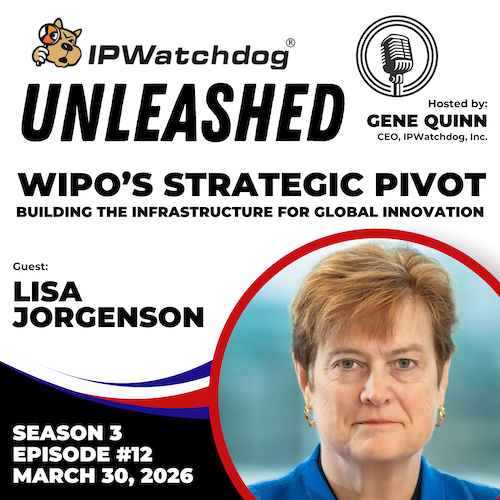

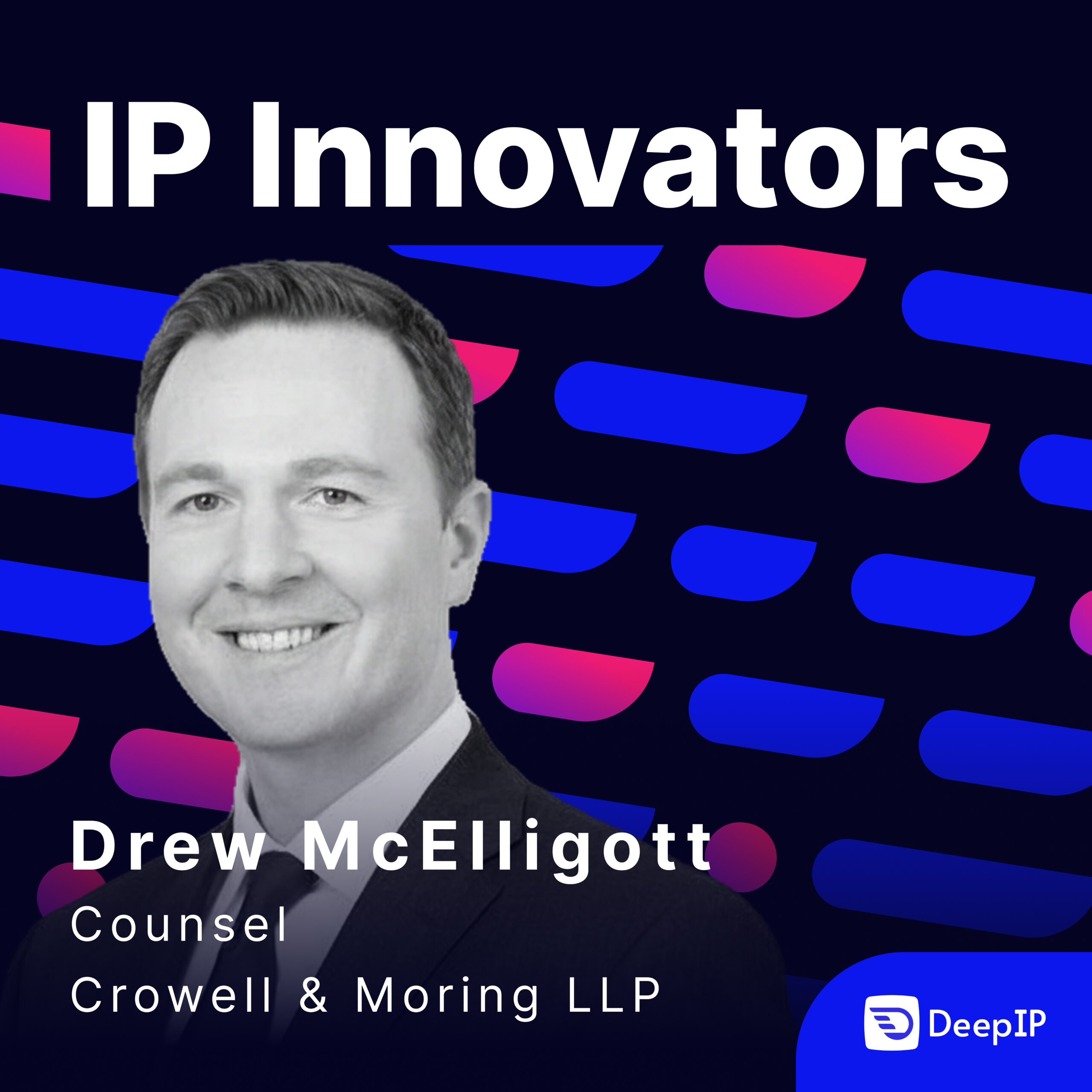
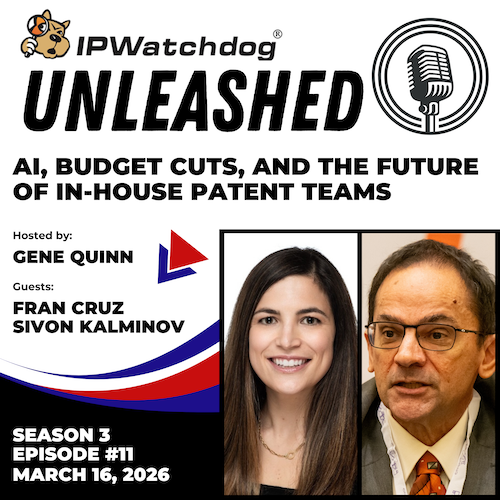

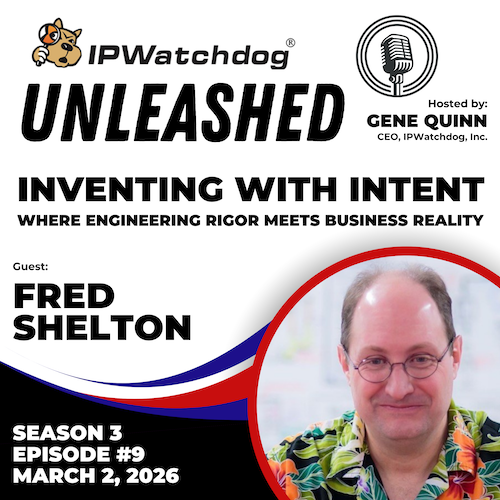
IPWatchdog Events
Webinar: Unlocking New Capabilities – The Real ROI of AI in Patent Practice
April 2 @ 12:00 pm - 1:00 pm EDTCLE Webinar: All in the Prompt – Crafting AI Prompts for Precision Outputs
April 7 @ 12:00 pm - 1:00 pm EDTWebinar: From Patent Tools to AI Agents – The Next Evolution of Patent Practice
April 14 @ 12:00 pm - 1:00 pm EDT
Industry Events
24th Annual Rocky Mountain Intellectual Property & Technology Law Institute
May 28 @ 8:30 am - May 29 @ 4:30 pm MDTFrom IPWatchdog
![[Advertisement]](https://ipwatchdog.com/wp-content/uploads/2021/12/WEBINAR-336-x-280-px.png)
![[Advertisement]](https://ipwatchdog.com/wp-content/uploads/2021/12/Ad-4-The-Invent-Patent-System™.png)