
![[IPWatchdog Logo]](https://ipwatchdog.com/wp-content/themes/IPWatchdog%20-%202023/assets/images/temp/logo-small@2x.png)

 0
0 “The Federal Circuit opinion stated that ‘n-heptane, either alone or in combination with any other component, is not equivalent to the claimed dissolving agent.’”
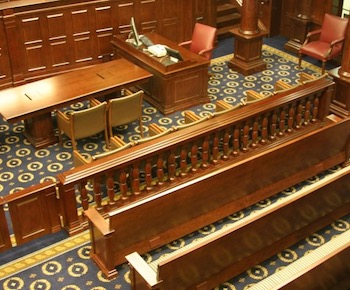 The U.S. Court of Appeals for the Federal Circuit (CAFC) issued a decision Tuesday affirming a judgment of non-infringement entered by the U.S. District Court for the Southern District of Florida in a dispute concerning generic versions of the topical pain patch ZTlido. The panel of Judges Reyna, Mayer, and Hughes, ruling per curiam, upheld the district court’s construction of the term “dissolving agent” and its determination that Aveva Drug Delivery Systems’ proposed generic product did not infringe under the doctrine of equivalents.
Scilex Pharmaceuticals Inc. holds an exclusive license to U.S. Patent Nos. 9,283,174, 9,931,403, and 9,925,264, with Itochu Chemical Frontier Corp. and Oishi Koseido Co., Ltd. serving as assignees. The patents cover non-aqueous lidocaine patch compositions and methods of using them. Representative claim 1 of the ‘174 patent recites a non-aqueous patch containing between 0.5 and 7 mass percent lidocaine along with a dissolving agent consisting of an organic acid and a polyalcohol. The dependent claim 4 narrows that dissolving agent to a combination of isostearic acid and dipropylene glycol.
In May 2022, Aveva notified Scilex that it had submitted an Abbreviated New Drug Application (ANDA) to the U.S. Food and Drug Administration seeking approval to market a generic version of ZTlido, Scilex’s branded lidocaine patch indicated for post-herpetic neuralgia pain relief. Scilex, Itochu, and Oishi filed a lawsuit against Aveva, alleging that its proposed formulation infringed claim 4 of each asserted patent under the doctrine of equivalents. At trial, Scilex conceded that Aveva’s product did not literally infringe, narrowing the dispute to equivalence.
According to Scilex’s theory of infringement, the isostearic acid and oleyl alcohol used in Aveva’s formulation functioned the same way, and achieved the same result, as the claimed two-component dissolving agent. Scilex argued that the asserted claims say nothing about how the lidocaine is dissolved during manufacture or the order in which the components are combined. It contended that a “dissolving agent” is simply a substance that maintains lidocaine in a dissolved state within the finished patch, regardless of whether it also performed the dissolving function itself.
Following a four-day bench trial, Judge William P. Dimitrouleas rejected that reading. The district court determined that a person of ordinary skill in the art would understand the claimed dissolving agent to serve two functions, which are dissolving the lidocaine and preventing its crystallization. Based on that construction, the court found that Aveva’s use of a single solvent, n-heptane, did not satisfy the limitation under the doctrine of equivalents. The district court further held that prosecution history estoppel and claim vitiation independently barred Scilex from asserting equivalence between the two-component claimed agent and Aveva’s formulation.
On appeal, the CAFC stated it did not find Scilex’s argument persuasive. Examining the claim language, the court reasoned that since the patch combines a solid active ingredient with a component labeled a “dissolving agent,” a skilled artisan would presume that component functions to dissolve the lidocaine. The court then turned to the specification, which describes prior art patches as suffering from poor skin permeability because the lidocaine remained undissolved and crystalline. It also states that the invention combines lidocaine and the dissolving agent to produce a patch in which the lidocaine is completely dissolved. The court also pointed to language stating that the claimed proportion of dissolving agent allows lidocaine to be “stably mixed in a dissolved state.” The Federal Circuit observed that all six working examples in the shared specification describe using the organic acid and polyalcohol combination to dissolve solid lidocaine before it is mixed with adhesives. The court stated that this consistent pattern bolstered the conclusion that the dissolving agent must dissolve the lidocaine, rather than prevent crystallization in the finished product.
During examination, the applicant, Oishi, distinguished the claims from a prior art reference known as Hanma by representing, on at least three occasions, that in the claimed invention “lidocaine is dissolved in an organic acid and a polyalcohol.” Scilex argued on appeal that the prosecution history distinguished Hanma because it involved a chemical reaction between lidocaine and an organic acid, rather than the order in which the components were combined. It further argued that the statements did not amount to a clear and unmistakable disclaimer.
The CAFC acknowledged that the statements may not rise to the level of a disclaimer but noted that, under its precedent, an applicant’s repeated and consistent remarks during prosecution can still inform claim construction by showing how the inventor understood the invention. On that basis, the court found the prosecution history provided further support for reading “dissolving agent” as requiring the dissolving function.
Ultimately, the Federal Circuit affirmed the district court’s construction and agreed that Scilex could not establish infringement. Aveva’s formulation dissolves lidocaine using only n-heptane, which the district court found was not equivalent to the claimed two-component dissolving agent, either alone or in combination with other ingredients. The opinion stated that “n-heptane, either alone or in combination with any other component, is not equivalent to the claimed ‘dissolving agent.’” Since the claim construction ruling resolved the appeal, the CAFC found it unnecessary to reach the district court’s alternative holdings on claim vitiation and prosecution history disclaimer, stating it had considered Scilex’s remaining arguments but did not find them persuasive.
![[Advertisement]](https://ipwatchdog.com/wp-content/uploads/2026/09/Patently-Sep-22-2026-sidebar-700x500-1.jpg)
![[Advertisement]](https://ipwatchdog.com/wp-content/uploads/2026/06/Womens-IP-Forum-2026-sidebar-regular-price-700x500-rev1.jpg)
![[Advertisement]](https://ipwatchdog.com/wp-content/uploads/2026/08/OneTransform_700x500_v1-REVISED.jpg)
![[Advertisement]](https://ipwatchdog.com/wp-content/uploads/2024/09/Patent-Prosecution-Training-sidebar-700x500-2025-03-27.jpg)




![[Advertisement]](https://ipwatchdog.com/wp-content/uploads/2021/12/WEBINAR-336-x-280-px.png)
![[Advertisement]](https://ipwatchdog.com/wp-content/uploads/2021/12/Ad-4-The-Invent-Patent-System™.png)



Join the Discussion
No comments yet. Add my comment.
Add Comment