
![[IPWatchdog Logo]](https://ipwatchdog.com/wp-content/themes/IPWatchdog%20-%202023/assets/images/temp/logo-small@2x.png)

 0
0 “According to the CAFC, [the expert] testimony could not reasonably support a finding of no anticipation since Song’s teachings extend beyond chewing gum applications and expressly cover a broad range of drugs dispersed within fibers exposed to a solvent.”
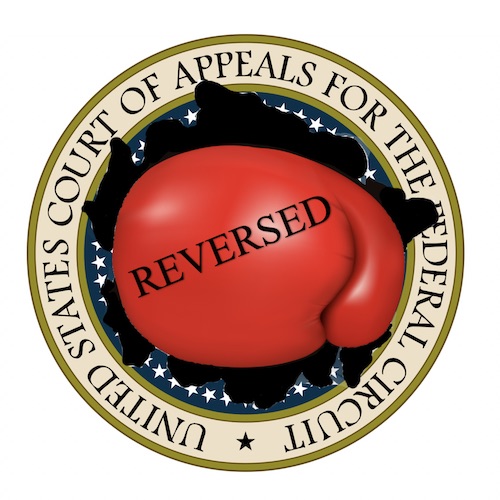 The U.S. Court of Appeals for the Federal Circuit (CAFC) issued a precedential decision today reversing a jury verdict from the U.S. District Court for the District of Delaware that had found Boston Scientific Corporation (BSC) liable for infringing a patent owned by the Board of Regents of the University of Texas System (UT) covering drug-releasing biodegradable polymer fibers. The Federal Circuit concluded that BSC was entitled to judgment as a matter of law (JMOL) on both invalidity and non-infringement.
UT owns U.S. Patent No. 6,596,296, which is directed to a composition containing a biodegradable polymer fiber composed of two immiscible phases, with one phase comprising the polymer itself and the other containing a dispersed therapeutic agent. In 2017, UT filed a lawsuit against BSC, alleging that the company’s drug-eluting coronary stent systems infringed several claims of the patent through their manufacture, use, sale, offer for sale, and importation.
After the district court completed claim construction proceedings, a jury found that BSC willfully infringed the asserted claims. It also determined that the claims were not anticipated by the prior art and awarded UT reasonable royalty damages. The district court later set aside the willfulness finding but otherwise upheld the verdict, entering judgment for UT in June 2024. BSC appealed the liability verdict, and UT cross-appealed the district court’s rejection of the willfulness finding.
Under Third Circuit law, the Federal Circuit reviewed the denial of JMOL de novo and found that BSC had established anticipation by clear and convincing evidence based on prior art U.S. Patent No. 5,364,627, referred to throughout the opinion as Song. Song discloses a delivery system enabling gradual release of an active agent, such as a drug or chewing gum flavorant, from a fiber.
The district court had denied BSC’s JMOL motion partly based on testimony from UT’s expert distinguishing the manner of biodegradation in Song from that described in the ‘296 patent. According to the Federal Circuit, this testimony could not reasonably support a finding of no anticipation since Song’s teachings extend beyond chewing gum applications and expressly cover a broad range of drugs dispersed within fibers exposed to a solvent. The CAFC found that reading both “the ’296 patent and Song for what they actually say, ‘no reasonable fact-finder could reach a conclusion other than’ that Song teaches the claimed biodegradable polymer fiber required by claim 1 of the ‘296 patent.”
The Federal Circuit likewise concluded that Song discloses the claim’s two required phases, the polymer portion of the fiber and the discrete drug-containing regions dispersed throughout it. Song expressly states that its active agent “does not necessarily have to be in a contiguous phase,” which the court found teaches the claimed discrete, noncontiguous drug regions under the plain meaning of those terms. The panel rejected UT’s argument that its expert’s testimony regarding the mechanism of chewing-related release created a factual dispute, explaining that the testimony addressed how the drug is released rather than its location within the fiber, which is an aspect not required by the district court’s construction of “second phase.” The Federal Circuit also noted that Song’s disclosure that the active agent and wall material “must be immiscible with each other” was undisputed on appeal.
The CAFC further concluded that dependent claims 11 and 17, which add elements written in Markush form, were anticipated because Song expressly discloses at least one alternative within each claimed group, including drugs as a therapeutic agent and polyglycolic acid as a biodegradable polymer.
As for claim 26, which requires that the therapeutic agent be released “at varying rates over time,” the Federal Circuit found the trial record uncontradicted. BSC’s expert testified that a relevant artisan would understand nearly all drug delivery systems to exhibit varying release rates over time, and UT offered no contrary evidence. Song’s own figures, depicting openings of differing sizes along the fiber, further supported that conclusion. The court noted that UT’s counsel conceded at oral argument that no affirmative evidence was presented to counter the testimony of BSC’s expert on this point. The Federal Circuit also rejected UT’s contention, raised at oral argument, that Song’s disclosure of “limiting” the dissolution rate implied uniformity, explaining that a cap on release “in no way implies or suggests uniformity under the maximum.”
Beyond the anticipation ruling, the Federal Circuit addressed BSC’s non-infringement argument, since the district court’s construction of “fiber” required “a thread-like structure of any length or shape.” UT’s infringement theory rested on the coating applied to the outer surface of the stent’s metal frame rather than the frame itself. The Federal Circuit found that a section of that coating, cut from the frame for demonstrative purposes at trial, could not reasonably be characterized as thread-like. The court observed that the coating “needs a substrate” and was never intended to retain its shape independent of the frame, and that UT had not shown the detached coating to be essentially one-dimensional rather than visibly two-dimensional.
The CAFC further noted that UT’s expert relied entirely on the macroscopic shape of the removed coating section instead of any molecular-level analysis. It also observed that UT had successfully opposed a construction of “fiber” tied to molecular orientation. Accordingly, the court concluded that no reasonable jury could find the claimed “fiber” limitation satisfied by the accused stent’s coating.
Since the Federal Circuit found BSC entitled to JMOL on both invalidity and non-infringement, the court reversed the district court’s judgment in favor of UT and declined to reach BSC’s remaining challenges to the conduct of the trial or UT’s cross-appeal regarding willfulness. The costs were awarded to BSC.
Image Source: Deposit Photos
Image ID: 10042948
Author almoond
![[Advertisement]](https://ipwatchdog.com/wp-content/uploads/2026/07/DeepIP-Jul-28-2026-sidebar-700x500-1.jpg)
![[Advertisement]](https://ipwatchdog.com/wp-content/uploads/2026/07/Ankar-AI-Jul-30-2026-sidebar-700x500-1.jpg)
![[Advertisement]](https://ipwatchdog.com/wp-content/uploads/2026/07/Juristat-Varsity-Ad-2026-IPW-ad-Solo_1.png)
![[Advertisement]](https://ipwatchdog.com/wp-content/uploads/2026/07/ClearstoneIP-Varsity-Ad-2026-Ad-3.jpg)
![[Advertisement]](https://ipwatchdog.com/wp-content/uploads/2026/07/Womens-IP-Forum-2026-sidebar-register-early-bird-now-700x500-1.jpg)



![[Advertisement]](https://ipwatchdog.com/wp-content/uploads/2021/12/WEBINAR-336-x-280-px.png)
![[Advertisement]](https://ipwatchdog.com/wp-content/uploads/2021/12/Ad-4-The-Invent-Patent-System™.png)




Join the Discussion
No comments yet. Add my comment.
Add Comment