
![[IPWatchdog Logo]](https://ipwatchdog.com/wp-content/themes/IPWatchdog%20-%202023/assets/images/temp/logo-small@2x.png)

 0
0 “In requiring that Apple show that a large-vocabulary model—rather than a smaller abbreviated model—would have fit on the integrated circuit in the prior art, the Board committed legal error.” – CAFC
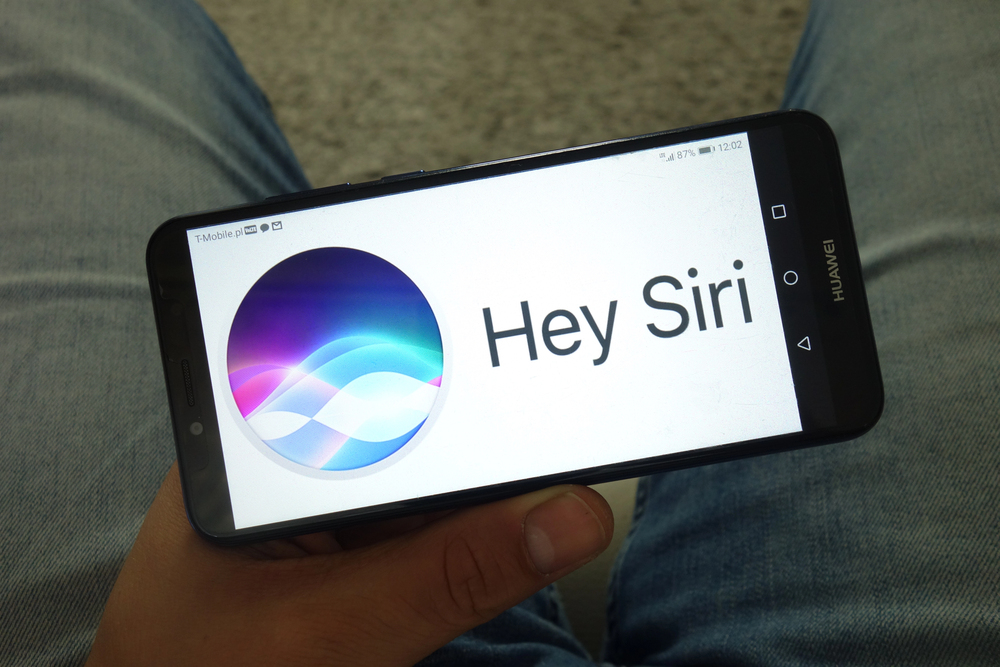 The U.S. Court of Appeals for the Federal Circuit (CAFC) on Tuesday vacated and remanded a decision for a patent owner against Apple, concluding that the Patent Trial and Appeal Board (PTAB) made several errors in finding the claims of the speech recognition patent at issue were not shown to be unpatentable.
Zentian Ltd. owns U.S. Patent No. 10,839,789, which is titled “Speech recognition circuit and method.” Apple petitioned for inter partes review (IPR) of multiple claims of the patent, arguing in relevant part that “claim 1 was obvious over prior art reference U.S. Patent No. 5,819,222 (“Smyth”) or the combination of Smyth and U.S. Patent No. 6,832,194 (“Mozer”) and that claim 29 was obvious over Smyth, Mozer, and several other references.”
The dispute centered on the “acoustic model memory” and “integrated circuit” limitations of claims 1 and 29. Both claims 1 and 29 require “a single integrated circuit.” Claim 1 requires that the integrated circuit contain both the claimed acoustic model memory and the claimed “calculating apparatus” (i.e., the processor that calculates distances between feature vectors and the states of the acoustic model).”
While Apple argued that Smyth or the combination of Smyth and Mozer “disclosed the acoustic model memory on an integrated circuit with a calculating apparatus,” the PTAB ultimately determined that Apple had failed to show the claims unpatentable, largely due to the fact that the Board implicitly construed the claimed acoustic model memory “to require holding a large-vocabulary model.” The Board found Apple had failed to show Smyth alone disclosed the claimed acoustic model memory on an integrated circuit because the claimed processor, (the Motorola DSP56000 or similar device), “only had 1,500 bytes of available memory, which was insufficient to hold Smyth’s state memory, even accepting Apple’s expert’s assertion that a typical large-vocabulary model would be around 4,700 bytes.”
Apple attempted to argue that the claims do not require a large-vocabulary model and that an abbreviated model would have been smaller, but the Board said there was insufficient evidence to show as much and that Apple’s argument was untimely as not raised “in the Petition or in the Reply.”
On appeal, the CAFC focused its analysis on Claim 1, as Zentian agreed that the decision as to claim 29 would have to be set aside if the decision as to claim 1 was set aside. Apple argued the Board erred in its analysis of claim 1 and that each of the remaining claims is unpatentable as obvious.
The CAFC first noted that the Board had determined “the limitation that allegedly distinguishes claim 1 from the prior art is that it stores the acoustic model on chip, that is, in an integrated circuit with the processor,” whereas the prior art stored the acoustic model via off-chip memory. Apple’s petition argued it would have been obvious to use on-chip memory to store the model, and the Board ultimately found that “amongst the commercially available circuits presented by Apple, none had an on-chip memory large enough to accommodate a large-vocabulary acoustic model.” But the CAFC agreed with Apple that the Board committed legal error here when it “erroneously required the use of a large-vocabulary model when a smaller model would have fit on an integrated chip at the time of the invention.” The CAFC wrote:
“The claim language only requires that the acoustic model ‘defin[e] a plurality of acoustic states,’ which would include an abbreviated model that contains fewer states than what would be needed to model an entire language…. In requiring that Apple show that a large-vocabulary model—rather than a smaller abbreviated model—would have fit on the integrated circuit in the prior art, the Board committed legal error.”
However, “[t]he question remains whether the on-chip memory disclosed in Smyth and Mozer would be sufficient to store an abbreviated acoustic model,” added the court.
The Board also legally erred in determining that Apple had not made the argument that “the abbreviated model of a digits recognizer would fit on the Motorola DSP56000 chip disclosed in Smyth,” because it raised it in its reply to Zentian, said the opinion. The Board also erroneously required a large-vocabulary model for the combination of Smyth and Mozer and failed to address whether Mozer’s disclosed 4,000-byte memory could hold an abbreviated digits recognizer model, which it must do on remand.
The CAFC also rejected Zentian’s argument that the Board’s decision could be upheld because Apple failed to show that “the ordinarily skilled artisan could personally fabricate a new circuit implementing the combination of a memory and processor,” which the Board had determined to be a requirement. The opinion explained that, “[w]hile the petition argued that a skilled artisan would have found it obvious to apply ‘Mozer’s teachings to fabricate a calculating apparatus and acoustic model memory on a single integrated circuit,’ the petition did not argue that a skilled artisan would be capable of fabricating the circuit without assistance.” The CAFC thus concluded that “[t]he Board’s reading of the claims was erroneous and incorporated an unclaimed requirement into its analysis.”
The PTAB’s decision was therefore vacated and remanded for further proceedings.
Image Source: Deposit Photos
Author: Piter2121
Image ID: 279338792
![[Advertisement]](https://ipwatchdog.com/wp-content/uploads/2026/09/Life-Sciences-2026-sidebar-super-early-bird-ends-Sep-7-700x500-2.jpg)
![[Advertisement]](https://ipwatchdog.com/wp-content/uploads/2026/09/IP-Copilot-Sep-8-2026-sidebar-700x500-1.jpg)
![[Advertisement]](https://ipwatchdog.com/wp-content/uploads/2026/09/Ankar-AI-Sep-10-2026-sidebar-700x500-1.jpg)
![[Advertisement]](https://ipwatchdog.com/wp-content/uploads/2026/06/Womens-IP-Forum-2026-sidebar-regular-price-700x500-rev1.jpg)
![[Advertisement]](https://ipwatchdog.com/wp-content/uploads/2026/07/Juristat-Varsity-Ad-2026-IPW-ad-Solo_1.png)
![[Advertisement]](https://ipwatchdog.com/wp-content/uploads/2026/08/OneTransform_700x500_v1-REVISED.jpg)
![[Advertisement]](https://ipwatchdog.com/wp-content/uploads/2024/09/Patent-Prosecution-Training-sidebar-700x500-2025-03-27.jpg)






![[Advertisement]](https://ipwatchdog.com/wp-content/uploads/2021/12/WEBINAR-336-x-280-px.png)
![[Advertisement]](https://ipwatchdog.com/wp-content/uploads/2021/12/Ad-4-The-Invent-Patent-System™.png)




Join the Discussion
No comments yet. Add my comment.
Add Comment