
![[IPWatchdog Logo]](https://ipwatchdog.com/wp-content/themes/IPWatchdog%20-%202023/assets/images/temp/logo-small@2x.png)

 0
0 “The USPTO has let the regime invoke its own misconduct as an excuse for nonuse, rather than treating that misconduct as the disqualifying fact it should be.”
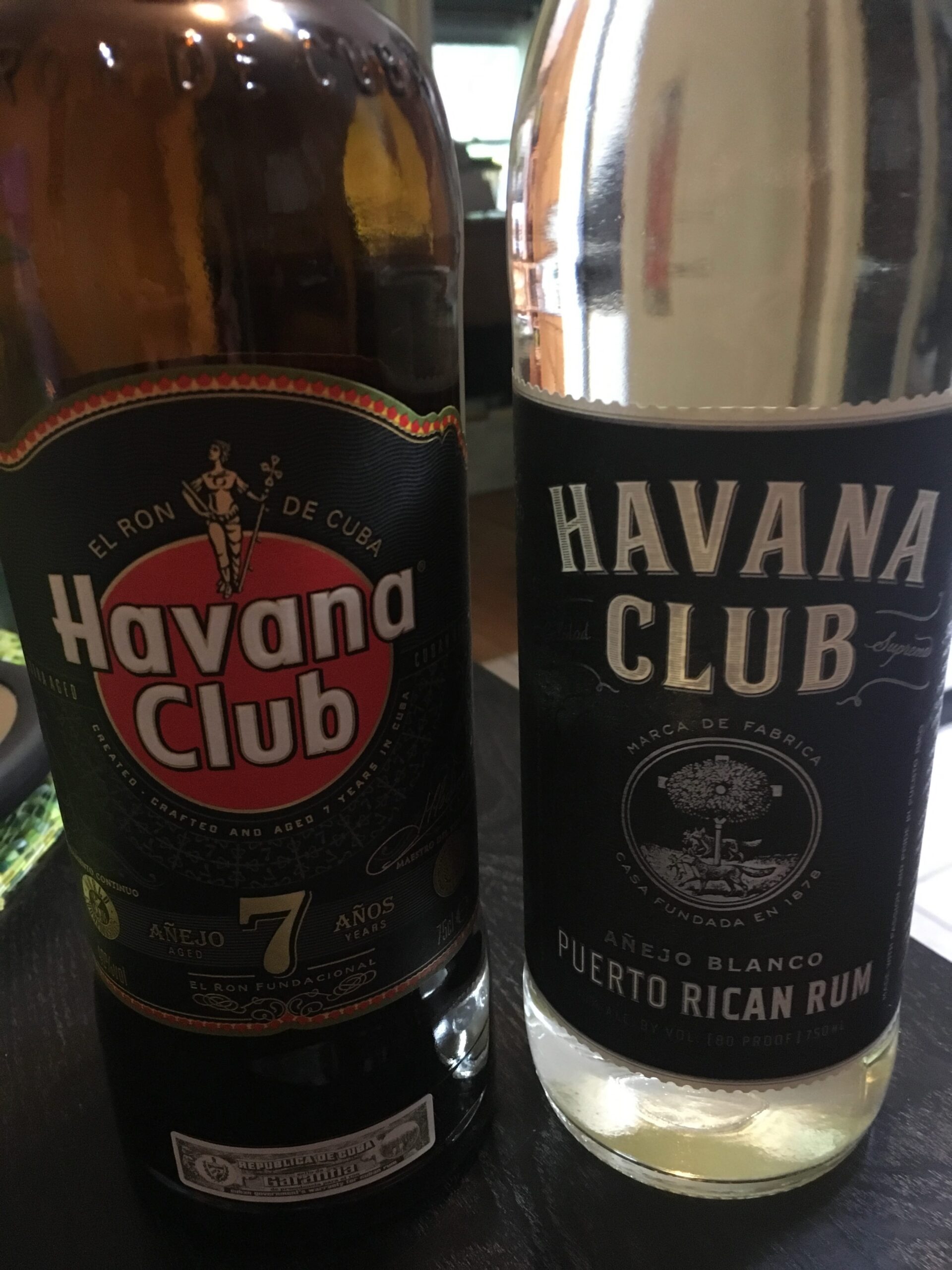 On December 31, 1959, Calixto Lopez led armed men into the Arechabala family’s rum distillery in Cárdenas, Cuba. The family had made rum there since 1878, building Havana Club into a brand whose English name reflected its success in the U.S. market. According to testimony Ramón Arechabala gave the Senate Judiciary Committee in 2004, Lopez pointed a machine gun at him and announced he was taking over as “Pepe,” the nickname of the company’s president and Ramón’s uncle. The family’s rum business now belonged to the Cuban government.
Ramón was jailed and told to leave Cuba or stay locked up. When he fled with his wife and infant son, guards allowed only the clothes on their backs, confiscating even the baby’s diaper bag because it looked expensive. What they couldn’t take was one thing Ramón carried out in his memory: a recipe for Havana Club rum he had memorized rather than let the Cuban government seize it.
A Brand Battle is Born
Ramón arrived in America with nothing and spent years trying to make Havana Club rum again on his own, but never had the capital. His cousin Javier, the family’s lawyer, was jailed in Cuba on trumped-up charges, leaving no one to manage the family’s affairs. By 1974, with no rum to sell, the family couldn’t prove it was still using the trademark in the U.S., and their U.S. registration lapsed for good. In 1993, Pernod-Ricard, the French conglomerate now allied with Cuba, quietly offered to buy the family’s remaining rights. Ramón instead turned to Bacardi, itself once a Cuban rum company seized by the same regime, and in 1995 sold what remained of the family’s rights, including the recipe, to the company. Pernod-Ricard and the Cuban government say the family had abandoned the U.S. trademark after Cuba “assumed managerial control” of the Arechabalas’ company; Bacardi and the family have called that account fraudulent.
That dispute set the tone for a legal fight that has now run three decades, with Bacardi selling American-made Havana Club rum in the United States while the Cuban state company Cubaexport’s competing trademark sat on the federal register. In a recent decision, the Fourth Circuit sided with the U.S. Patent and Trademark Office (USPTO) and Cuba, ruling the agency did nothing wrong letting Cubaexport treat a payment that was ten years late as if it had arrived on time.
Here is how that happened. Cubaexport registered the trademark for Havana Club in 1976 under the old 20-year term, so its first renewal wasn’t due until 1996, secured under a standing embargo exception covering trademark transactions. In 1998, Congress closed that exception for trademarks tied to confiscated Cuban property, requiring individual Treasury approval instead. That’s why 2005 went differently: Cubaexport needed specific permission just to pay its fee, and Treasury said no. The USPTO notified Cubaexport its registration would lapse. A decade later, Treasury reversed course and issued a license retroactively authorizing that decade-old payment. The USPTO immediately revived the registration, treating the decade-old payment as though it had never happened.
Bacardi called that reversal a decision that let a foreign government illegally claim title to American property, warning Congress that “intellectual property law is undermined, not strengthened, when states recognize rights in confiscated marks.” Congress had tightened the law in 1998 for exactly this reason, to stop trademarks like this from renewing automatically. A license issued a decade later, treated as though it always applied, recreates the very approval Congress eliminated. A missed payment is a technicality; a legal bar on selling the product at all is not. The embargo, a near-total U.S. ban on trade with Cuba imposed in the early 1960s and still in force, forecloses commerce entirely, not just a fee. Cuban rum bearing this trademark is not legally sellable here. A trademark whose product can never lawfully enter U.S. commerce has no legitimate claim to the federal register.
Unlawful Use Should Not Be Excused
This isn’t a novel legal theory. The USPTO applies exactly this logic elsewhere: courts and the Trademark Trial and Appeal Board (TTAB) have long read the Lanham Act’s “use in commerce” requirement to mean lawful use, and on that basis the TTAB has spent years refusing marijuana trademarks, however legal the product is under state law, because federal law still prohibits its sale. The same standard should be applied here. A trademark shouldn’t earn a place on the federal register while the underlying product remains barred from U.S. commerce by law. The USPTO Director should have clear authority, and an affirmative obligation, to reject any registration or renewal on that basis, regardless of any license that later authorizes payment of a fee.
There’s a second loophole, and the USPTO doesn’t need Congress to close it. The Lanham Act itself lets an owner skip proof of use by showing “special circumstances” that excuse the nonuse, a showing the USPTO calls “excusable nonuse.” Congress never specified what circumstances qualify. That’s left to the agency, and it’s the USPTO’s own guidance, the Trademark Manual of Examining Procedure (TMEP), not the statute, that names a trade embargo as an accepted excuse, grouped with fires and factory retooling.
Unlike almost every other example on that list, retooling, illness, negotiations with distributors, use in a foreign country, each backed by a cited Commissioner or TTAB decision, the trade embargo entry cites no supporting case at all. That grouping made sense for interruptions measured in months, unexpected and temporary. It makes none for an embargo now past six decades old, imposed on a trademark reportedly confiscated through violence.
This registration’s own file confirms the same excuse recurring for decades: sworn declarations of excusable nonuse citing the embargo in 1982, 1996, 2005, and again in 2016, the most recent one promising the trademark would be used “as soon as practicable after the embargo is lifted.” Thirty-four years of the same promise underscores the problem: courts and the USPTO have read this exception to cover temporary interruptions, not perpetual ones, and this is neither.
Treating this embargo like a blameless accident that time will cure is absurd for a trademark the Cuban government holds only because, according to Ramón’s testimony, the regime pointed a machine gun at him and took it. This isn’t bad luck a victim is patiently waiting out; it’s a thief citing the consequences of its own theft as a permanent excuse. Yet the USPTO has let the regime invoke its own misconduct as an excuse for nonuse, rather than treating that misconduct as the disqualifying fact it should be.
The Office Must End This Practice
The USPTO Director should stop this. TMEP 1613.11 explains the whole point of Section 8 is to clear “deadwood,” registrations that no longer reflect real use, off the federal register. But a trade embargo isn’t like a fire or a factory retooling, a temporary problem that leaves the underlying product perfectly legal once the interruption passes. An embargo makes the product itself illegal to sell in the U.S. Even taking TMEP’s own language at face value, “willing and able to continue use of the mark in commerce” cannot describe a product Congress has made it a federal offense to import and sell. This registration is the deadwood the rule was written to clear, and it’s still blocking Bacardi from registering the mark it actually sells rum under. The registration should be cancelled and embargoed products should never be eligible for the federal register.
Congress has shown it understands the issue. In December 2024, President Biden signed the No Stolen Trademarks Honored in America Act with unanimous bipartisan support, meant to stop federal agencies from protecting brand names built on confiscated foreign property. That law came eight years too late to undo the USPTO’s 2016 renewal, but it captured the right instinct. The Supreme Court reinforced that instinct in May, ruling 8-1 that property Cuba confiscated remains permanently tainted no matter how many years pass. The principle isn’t unique to confiscated Cuban property: the same logic, that a wrongful taking doesn’t launder itself through the passage of time, is why the HEAR Act lets families pursue Nazi-looted art decades after the theft.
Havana Club’s next renewal application is due July 27, 2026, the end of the statutory six-month grace period following the trademark’s January 27 expiration. The No Stolen Trademarks Honored in America Act now bars the USPTO from granting it. Bacardi has already said as much publicly, stating the new law “has now forbidden the PTO from granting Cuba’s renewal application for the stolen trademark.” Whether the USPTO follows that law is a question only time will tell, but it shouldn’t have to wait that long. The USPTO Director should remove the trade embargo entry from TMEP 1613.11 altogether, an example with no supporting case law, no cap on how long it can be claimed, and, in this registration, a thirty-four-year record of being abused exactly as one would expect an unsupported loophole to be used.
The USPTO should stop recognizing trademark rights built on confiscated property. Twenty-two years ago, Ramón Arechabala told the Senate Judiciary Committee the United States was different from the country that took everything his family had. Here, he said, “private property cannot be taken away at the whim of a foreign tyrant. This is why I am so proud to live in America.”
![[Advertisement]](https://ipwatchdog.com/wp-content/uploads/2026/08/Tradespace-Sep-1-2026-sidebar-700x500-1.jpg)
![[Advertisement]](https://ipwatchdog.com/wp-content/uploads/2026/08/IP.com-Sep-3-2026-sidebar-700x500-1.jpg)
![[Advertisement]](https://ipwatchdog.com/wp-content/uploads/2026/07/Womens-IP-Forum-2026-sidebar-register-early-bird-now-700x500-1.jpg)
![[Advertisement]](https://ipwatchdog.com/wp-content/uploads/2026/07/Juristat-Varsity-Ad-2026-IPW-ad-Solo_2.png)
![[Advertisement]](https://ipwatchdog.com/wp-content/uploads/2026/08/OneTransform_700x500_v1-REVISED.jpg)
![[Advertisement]](https://ipwatchdog.com/wp-content/uploads/2024/09/Patent-Prosecution-Training-sidebar-700x500-2025-03-27.jpg)







![[Advertisement]](https://ipwatchdog.com/wp-content/uploads/2021/12/WEBINAR-336-x-280-px.png)
![[Advertisement]](https://ipwatchdog.com/wp-content/uploads/2021/12/Ad-4-The-Invent-Patent-System™.png)







Join the Discussion
No comments yet. Add my comment.
Add Comment