


 0
0 “RiseandShine argued that fixing the apparent circuit split was critical to prevent forum shopping by parties who prefer to avoid juries.”
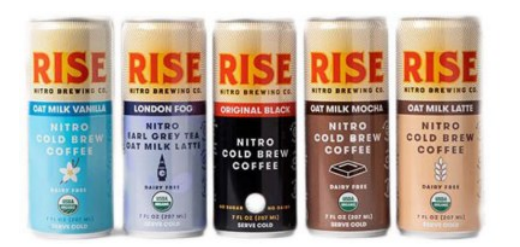 Today, the U.S. Supreme Court granted a petition for writ of certiorari filed by nitro cold brew coffee company RiseandShine Corporation, doing business as RISE Brewing, challenging the U.S. Court of Appeals for the Second Circuit’s application of the likelihood of confusion test in RiseandShine’s trademark infringement case against PepsiCo’s “Mtn DEW Rise Energy” energy drinks. Going against the U.S. Solicitor General’s calls to deny cert even though the Second Circuit erred in treating a trademark’s inherent strength as a question of law, the Supreme Court will answer whether this sub-factor of the consumer confusion analysis presents questions of fact that should be submitted to a jury.
RiseandShine filed its trademark infringement suit alleging that PepsiCo’s new energy drink brand, launched after PepsiCo executives considered RiseandShine as an acquisition target, had caused reverse consumer confusion due to the use of all-uppercase “RISE” on cans. RiseandShine, raising a reverse consumer confusion theory, had alleged actual confusion evidenced by consumers placing orders for its own “RISE” cold brew coffees but receiving Pepsi’s product instead.
While the Southern New York jury awarded a preliminary injunction to RiseandShine, the Second Circuit reversed that ruling in July 2022. The appellate court found that the district court erred in its assessment of the inherent strength of RiseandShine’s “RISE” mark, which should have been lower in the suggestiveness spectrum because of the natural association of “RISE” and coffee, as well as the use of “RISE” on other types of caffeinated beverages. On remand, the district court entered summary judgment for PepsiCo and the Second Circuit affirmed that ruling in a December 2024 summary order. Although acknowledging that other Second Circuit rulings acknowledge factual questions creating a tension with the disposition of trademark strength as a matter of law, the appellate court ruled “in no uncertain terms that ‘[a] mark[‘s] inherent strength is a legal question.’”
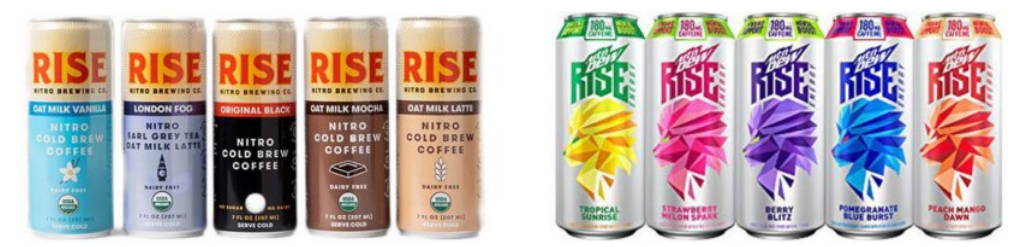
RiseandShine: Questions from Perspective of Ordinary Consumer Should Be Submitted to Jury
RiseandShine filed its cert petition last March asking the Supreme Court whether trademark strength is a question of fact for analyses of consumer confusion under 15 U.S.C. § 1114. According to RiseandShine’s petition, every other circuit court except for the Second Circuit treats a trademark’s inherent strength on the spectrum of distinctiveness as a question of fact. Pointing to the Second Circuit’s acknowledgement of “the tension on this issue” in its 2024 summary order, RiseandShine notes that the Second Circuit itself treated trademark strength as a factual question until recent case law recasting it as a question of law.
Treating questions about consumer perception as questions of law flouts Supreme Court precedent stemming from a pair of trademark rulings, according to RiseandShine. In 2015, the Supreme Court ruled in Hana Financial v. Hana Bank that tacking doctrine, which asks in part whether a revised trademark creates the same commercial impression as the original mark, is a determination to be made by the jury because the inquiry occurs from the perspective of an ordinary consumer. Then in U.S. Patent and Trademark Office v. Booking.com (2020), the Supreme Court held that the generic nature of “generic.com” trademarks is a question of fact turning on consumer perception.
RiseandShine contrasts this with the Second Circuit’s development of trademark strength as a legal question, stemming from dicta in its 2003 ruling in Patsy’s Brand that was reiterated as a footnote in 2020’s Tiffany & Co. v. Costco, which then “snowballed from there” into the present case. While trademark infringement cases based on theories of reverse infringement are relatively rare, RiseandShine argued that fixing the apparent circuit split was critical to prevent forum shopping by parties who prefer to avoid juries.
U.S. Solicitor General: No Further Review Warranted Despite Second Circuit’s Error
This May, the U.S. Solicitor General filed a brief expressing the federal government’s views that, although the Second Circuit erred in concluding that a trademark’s inherent strength was a pure question of law, further review was unwarranted despite the apparent circuit split. Noting that the inherent-strength inquiry was simply one component of many within the overall assessment of a trademark’s strength, mischaracterization of that one inquiry was unlikely to affect the ultimate question of whether the record supported RiseandShine’s claims at the summary judgment phase.
Reiterating RiseandShine’s arguments stemming from Hana Financial and Booking.com, the Solicitor General added that, on mixed questions of law and fact, the Supreme Court’s 2018 ruling in U.S. Bank National Association v. Village at Lakeridge established that juries should be given wide latitude to decide more fact-intensive mixed questions. Although the inherent-strength inquiry has a legal component making the term unfamiliar to jurors, the inquiry’s focus on the ordinary consumer’s perspective involves case-specific factual issues such that jury determinations should be given deference by an appellate court.
Despite RiseandShine correctly identifying a circuit split due to the Second Circuit’s legal error, no compelling reasons justified further review according to the Solicitor General. Not only was the Second Circuit’s own approach unclear on the characterization of the inherent-strength inquiry within the context of the case’s summary judgment phase, the ultimate question of whether a reasonable jury could find a likelihood of consumer confusion was based on several other factors, including similarity of the marks, that could be dispositive to the case and weren’t appealed by RiseandShine. Reviewing the Second Circuit’s determination of the standard of appellate review for a trademark’s inherent strength, a sub-factor isolated from the larger multi-factor likelihood of confusion analysis, would not meaningfully clarify the proper analytic approach and stands in tension with Court practices to “review[] judgments, not statements in opinions.” (Black v. Cutter Laboratories, 1956)
Also opposing the Court’s review was respondent PepsiCo, who argued in its respondent’s brief filed last July that RiseandShine had not identified a circuit split warranting review. PepsiCo underscored that the ruling appealed by RiseandShine was an unpublished summary order without precedential effect and that the Second Circuit panel issuing the July 2022 reversal agreed that a mark’s classification was a factual matter, but that additional legal elements were involved in analyzing a mark’s strength. PepsiCo also filed supplemental briefing this June highlighting additional reasons militating against Court review including RiseandShine’s undisputed failure to argue the merits of trademark strength as a question of law or fact at the Second Circuit, and complexities stemming from the Court’s resolution of significant threshold questions on likelihood of confusion frameworks that vary across circuit courts.
![[Advertisement]](https://ipwatchdog.com/wp-content/uploads/2026/10/Junior-Oct-15-2026-sidebar-700x500-1.jpg)
![[Advertisement]](https://ipwatchdog.com/wp-content/uploads/2026/10/BlackBox-IP-Oct-20-2026-sidebar-700x500-1.jpg)
![[Advertisement]](https://ipwatchdog.com/wp-content/uploads/2026/10/Questel-Oct-22-2026-sidebar-700x500-1.jpg)
![[Advertisement]](https://ipwatchdog.com/wp-content/uploads/2026/09/WE-BUY-PATENTS-SIM-IP-Ad-1-revised-on-Sep-28-2026-700x500-1.jpg)
![[Advertisement]](https://ipwatchdog.com/wp-content/uploads/2026/09/Life-Sciences-2026-sidebar-early-bird-date-corrected-700x500-1.jpg)
![[Advertisement]](https://ipwatchdog.com/wp-content/uploads/2024/09/Patent-Prosecution-Training-sidebar-700x500-2025-03-27.jpg)




![[Advertisement]](https://ipwatchdog.com/wp-content/uploads/2021/12/WEBINAR-336-x-280-px.png)
![[Advertisement]](https://ipwatchdog.com/wp-content/uploads/2021/12/Ad-4-The-Invent-Patent-System™.png)






Join the Discussion
No comments yet.