
![[IPWatchdog Logo]](https://ipwatchdog.com/wp-content/themes/IPWatchdog%20-%202023/assets/images/temp/logo-small@2x.png)

 2
2 “We aren’t at the mercy of hard cases that make bad law. I see this assemblage as the beginning of a new era, and I urge us all to think creatively.” – Judge Pauline Newman at IPWatchdog Patent Masters 2026
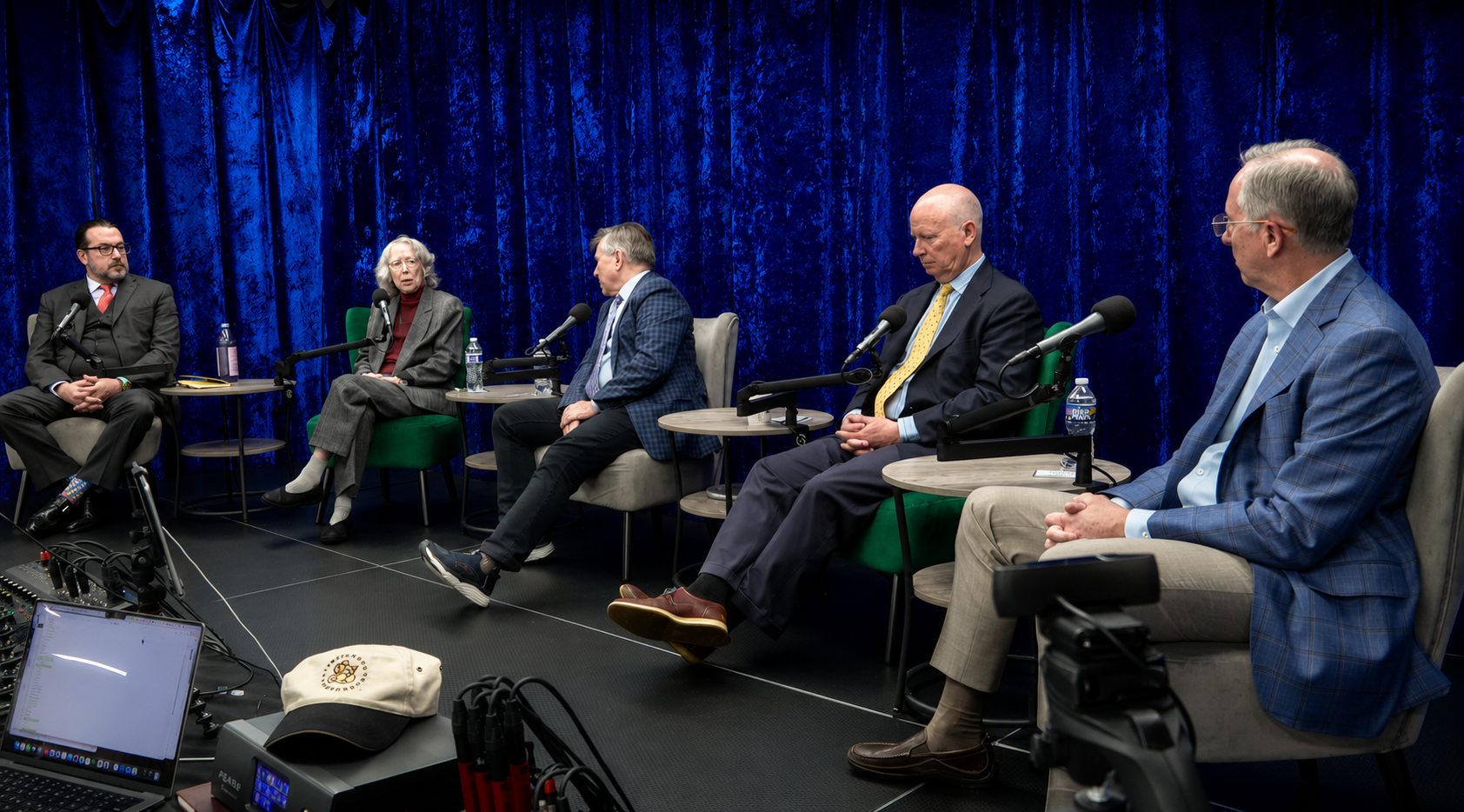
From left: Scott McKeown, Judge Pauline Newman, Judge Randall Rader, John White and Colin Sandercock.
IPWatchdog’s 2026 Patent Masters Program kicked off Monday with discussions on the state of the international patent landscape and the role of artificial intelligence (AI) in creating efficiency gains in patent prosecution and portfolio building, before moving into conversations on Tuesday and Wednesday about monetization, ex parte appeal strategies and how to shape the future of the U.S patent system, among other topics.
Wednesday’s panel titled “Building the Next Patent System: A Blueprint for U.S. Innovation” featured U.S. Court of Appeals for the Federal Circuit (CAFC) Judge Pauline Newman and retired CAFC Chief Judge Randall Rader, as well as industry and private practice panelists who weighed in on how and what to focus on with respect to the next cycle of patent reform efforts.
Judge Newman recalled how, during the presidential administration of Jimmy Carter, discussions around key patent legislation like the Hatch-Waxman Act and Bayh-Dole Act began to take place, and the creation of the CAFC was put in motion. “I spent the first half of my career coping with the law we had,” said Newman, who began her career as a patent attorney in 1954. “I see this group as the beginning of our inception of the foundations of what’s needed to think about the future.”
Newman added that what’s most needed is a return to stability of the law, and said that we are presently in the beginning of a cycle that will end in the next major set of patent reforms.

Judge Pauline Newman
“The great revelation to me is that change can be made,” Newman said. “We aren’t at the mercy of hard cases that make bad law. I see this assemblage as the beginning of a new era, and I urge us all to think creatively.”

Judge Randall Rader
Judge Rader commented that one way toward greater predictability is to harness new technologies like AI in the pursuit of creating certainty in decision making. “I’d like us to start thinking of moving to an AI system of patent examination,” said Rader, which would entail AI making the first call on patentability and prior art searches, with a senior examiner making the final call and writing off on final issuance. This would make things more predictable, “and you could do it in a tenth of the time we do it now,”Rader said.
Panelists John White of Harness IP and Scott McKeown of Wolf Greenfield both said the focus going forward should be patent eligibility reform, despite the seeming failure of the most recent bill attempting to address that issue. With most insiders giving up hope that any movement will be made on the Patent Eligibility Restoration Act (PERA) this congress, and with key patent-interested members of congress such as Thom Tillis (R-NC), Darrell Issa (R-CA), Marsha Blackburn (R-TN) and Dick Durbin (D-IL) leaving for retirement or other office runs, the likelihood of PERA or other pending patent bills solving existing problems is slim.
Colin Sandercock of Cue Biopharma, Inc. said this inability to get legislation passed on a topic most agree needs reform is indicative of larger problems in the system and requires changing mindsets from the ground up. “If you propose legislation viewed by big tech as adverse to their interests you’re going to have a very hard time getting it through congress,” Sandercock said, adding that he would bring together various stakeholders with organizations like IPWatchdog, the Intellectual Property Owners Association (IPO), and AIPLA to help create a consensus on how to move forward.
But IPWatchdog CEO and Founder Gene Quinn noted this standstill may be the perfect time to start the conversation about how to move forward. With activity unlikely in the near future, “we have 4-6 years to figure this out and put together a package that makes sense long term,” Quinn remarked.
The program ended with a roundtable discussion among all attendees about next steps for engaging patent stakeholders in a focused project to come together on feasible changes that will increase predictability and certainty across the board.
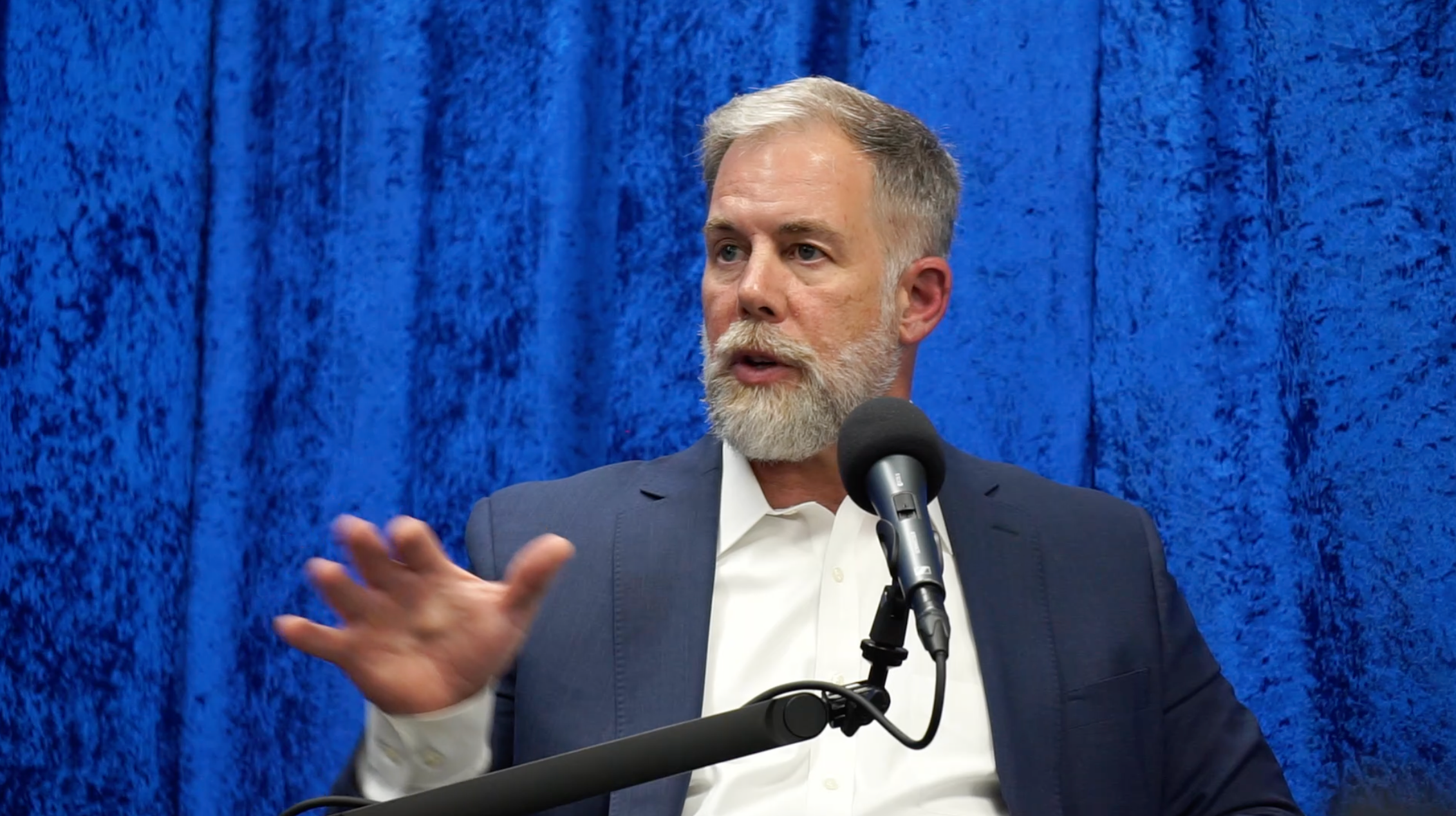
Patrick Kilbride
Throughout the program, panelists also provided strategies on navigating the patent system as it currently exists, and several panels discussed how AI tools are affecting practice. In a panel titled “The AI Pricing Illusion: Commodity Patents vs. Strategic Assets,” moderator Patrick Kilbride of Kilbride Public Affairs asked panelists whether AI was becoming the “great equalizer” many envisioned it might be, but most of the panelists said it is not there yet in the patent space.
Ratib Ali of Competition Dynamics said that AI will “push the patent space into a two-tiered world,” one in which AI use actually helps the quality of the patent, and another in which new vulnerabilities are introduced to the process.
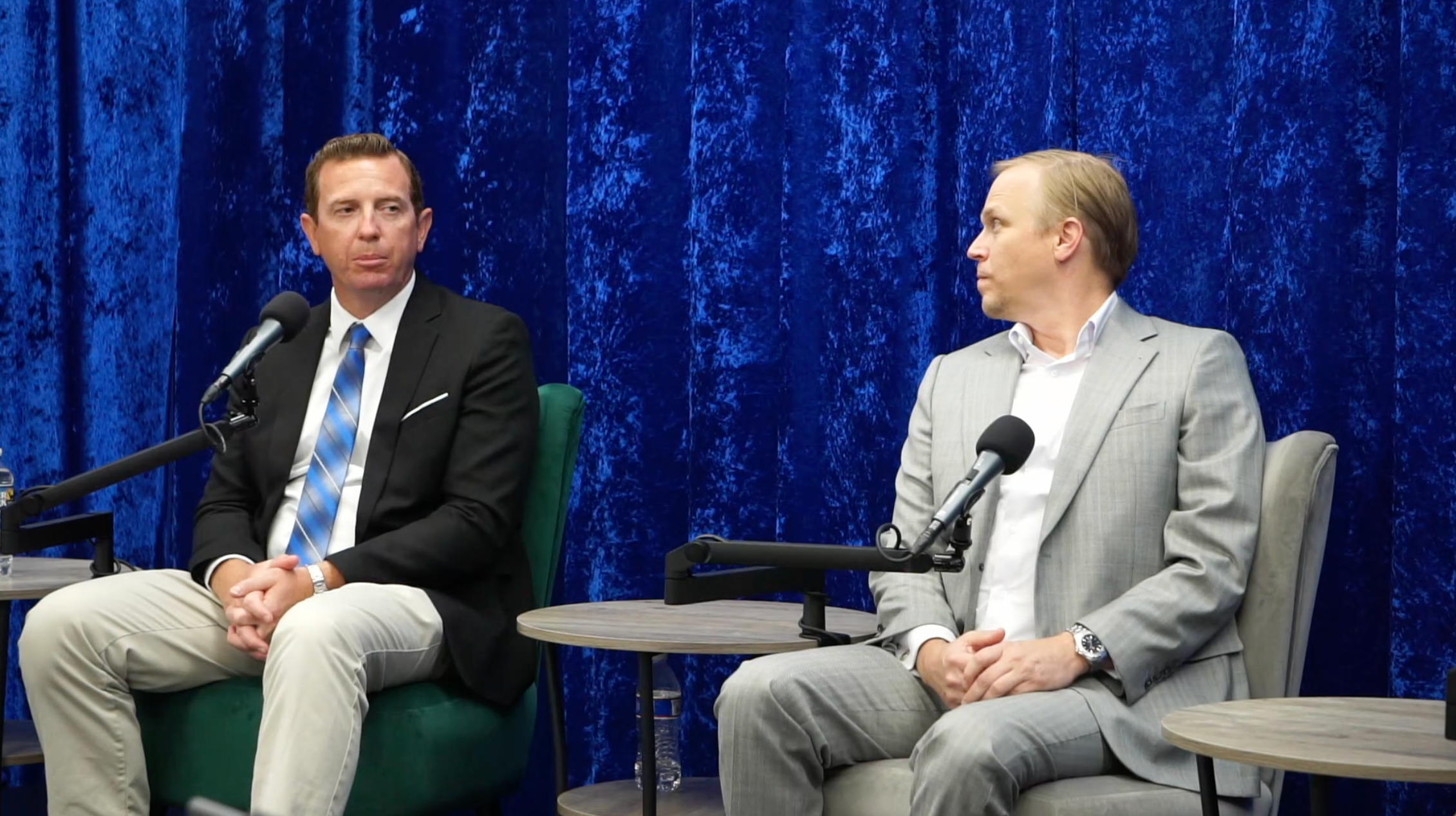
John Rogitz (left) and Ross Flynt
When it comes to specialized AI tools for the patent space, John Rogitz of Rogitz & Associates said he doesn’t see the price rationalization for such models yet. “I test the specialized tools all the time and I don’t see them at the point where I want to pay for them,” Rogitz said. While he said that AI tools can serve as commodities that lead to more robust disclosures, for instance, which will in turn increase patent quality, reliance on them is not an option: “It’s a race to the bottom. I’m just not interested in it. You’re hiring us for our expertise as attorneys, not for some tool we have that’s going to be obsolete soon.”
To join the discussion, check out IPWatchdog’s upcoming events and register to be part of our next live program.
![[Advertisement]](https://ipwatchdog.com/wp-content/uploads/2026/06/Womens-IP-Forum-2026-sidebar-regular-price-700x500-rev1.jpg)
![[Advertisement]](https://ipwatchdog.com/wp-content/uploads/2026/09/WE-BUY-PATENTS-SIM-IP-Ad-1-700x500-1.jpeg)
![[Advertisement]](https://ipwatchdog.com/wp-content/uploads/2026/08/OneTransform_700x500_v1-REVISED.jpg)
![[Advertisement]](https://ipwatchdog.com/wp-content/uploads/2024/09/Patent-Prosecution-Training-sidebar-700x500-2025-03-27.jpg)





![[Advertisement]](https://ipwatchdog.com/wp-content/uploads/2021/12/WEBINAR-336-x-280-px.png)
![[Advertisement]](https://ipwatchdog.com/wp-content/uploads/2021/12/Ad-4-The-Invent-Patent-System™.png)


Join the Discussion
2 comments so far.
Model 101
June 11, 2026 07:37 amThe biggest problem is solved by saying goodbye to Senators Issa and Durbin from the Senate Those two hurt the patent system.
Great Americans but wrong on patents.
Goodbye Senators.
Thanks for your service.
Model 101
June 10, 2026 06:39 pmDiscovery happens.
No facts or fact finder.
No trial.
The infringer tells a pack of lies.
The Federal Appeals Court kills the patent.
The Supreme Court does not hear the inventors petition.
The patent teaches competitors how to do it.
This is the patent system without reform.