
![[IPWatchdog Logo]](https://ipwatchdog.com/wp-content/themes/IPWatchdog%20-%202023/assets/images/temp/logo-small@2x.png)

 8
8 “The law isn’t settling down, it continues to be hopelessly confused.” – David Kappos
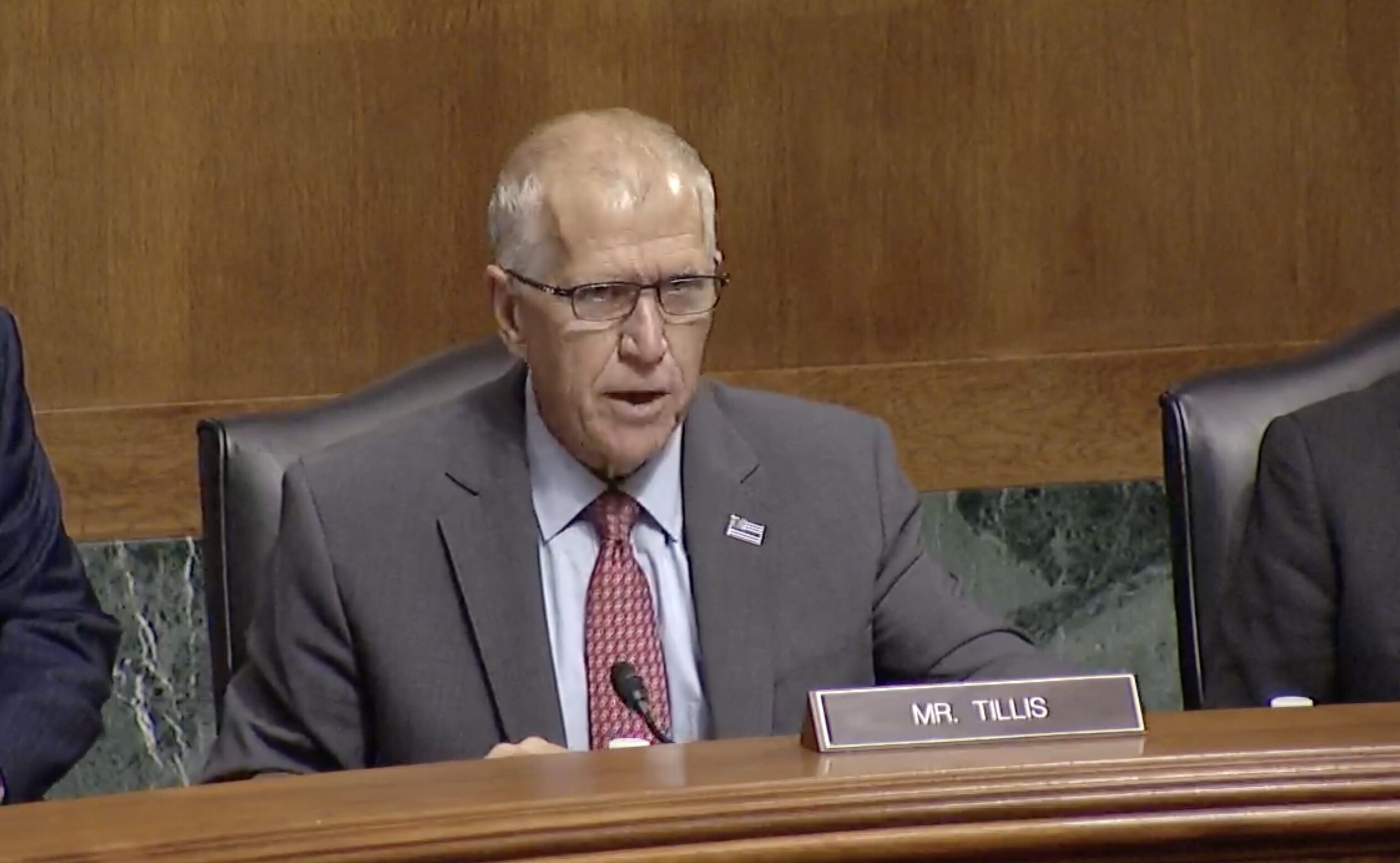 Eight witnesses across two panels testified today during a hearing of the Senate Subcommittee on Intellectual Property to discuss perspectives on the latest version of the Patent Eligibility Restoration Act (PERA), which its key sponsor, Senator Thom Tillis (R-NC) expressed urgency about passing before he retires from congress in 452 days.
Titled, “The Patent Eligibility Restoration Act – Restoring Clarity, Certainty, and Predictability to the U.S. Patent System,” the hearing’s first panel included three pro-PERA witnesses and one who was against passage. Two former U.S. Patent and Trademark Office (USPTO) Directors, Andrei Iancu and David Kappos, along with Mark Cohen of the University of Akron Law School, weighed in for PERA, while Mike Lemon of the National Retail Federation warned that passing the bill will return the retail industry to the days of “patent trolls” abusively targeting retailers with low-quality patents.
PERA 2025 Recap
PERA 2025 would reset the law of patent eligibility in the United States to where it was before the U.S. Supreme Court’s rulings in Mayo Collaborative Services v. Prometheus Labs., Inc., 566 U.S. 66 (2012) and Alice Corp. v. CLS Bank Int’l, 573 U.S. 208 (2014). Earlier versions of PERA would have also directly overruled the Supreme Court decision in Assoc. for Molecular Pathology v. Myriad Genetics, 569 U.S. 576 (2013), which held that isolated DNA is not patent eligible. However, PERA 2025 is slightly different than the bill introduced in 2023, at least relating to human genes. PERA 2025 still says that unmodified human genes as they exist in the human body are not patent eligible, but prior versions of the bill said that isolation of genes was considered a modification. PERA 2025, however, leaves out the word “isolated” and says that “a human gene shall not be considered to be unmodified if that human gene is purified, enriched, or otherwise altered by human activity; or otherwise employed in a useful invention or discovery.”
However, PERA 2025 still dismantles current judicial exceptions to eligibility by explicitly stating that eligibility for any useful process, machine, manufacture or composition of matter is “subject only to the exclusions in sub-section (b) and to the further conditions and requirements of this title.” The four exclusions contained in sub-section (b) are limited to:
- A mathematical formula that is not part of a claimed invention.
- A process that is substantially economic, financial, business, social, cultural or artistic, even though at least 1 step in the process refers to a machine or manufacture.
- A mental process performed solely in the human mind, or which occurs in nature wholly independent of any human activity.
- An unmodified human gene, as the gene exists in the human body.
- An unmodified natural material, as the material exists in nature.
While isolation of human genes does not appear to be enough to qualify as modification for purposes of conferring patent eligibility, PERA 2025 would specifically consider isolation of a “natural material” to be sufficient. Specifically, the bill says that a natural material would be considered modified and patent eligible if it is “isolated, purified, enriched, or otherwise altered by human activity; or otherwise employed in a useful invention or discovery.”
A new Section 4(b) also states that “pre- or post-solution activity by a computer (or other machine or manufacture) in claim language shall not be sufficient to confer patent eligibility on the claim if that computer (or other machine or manufacture) is not necessary to practically perform the invention.”
Thus, claims that merely add a computer as window dressing to the invention will be insufficient to confer patent eligibility.
Business Method Concerns
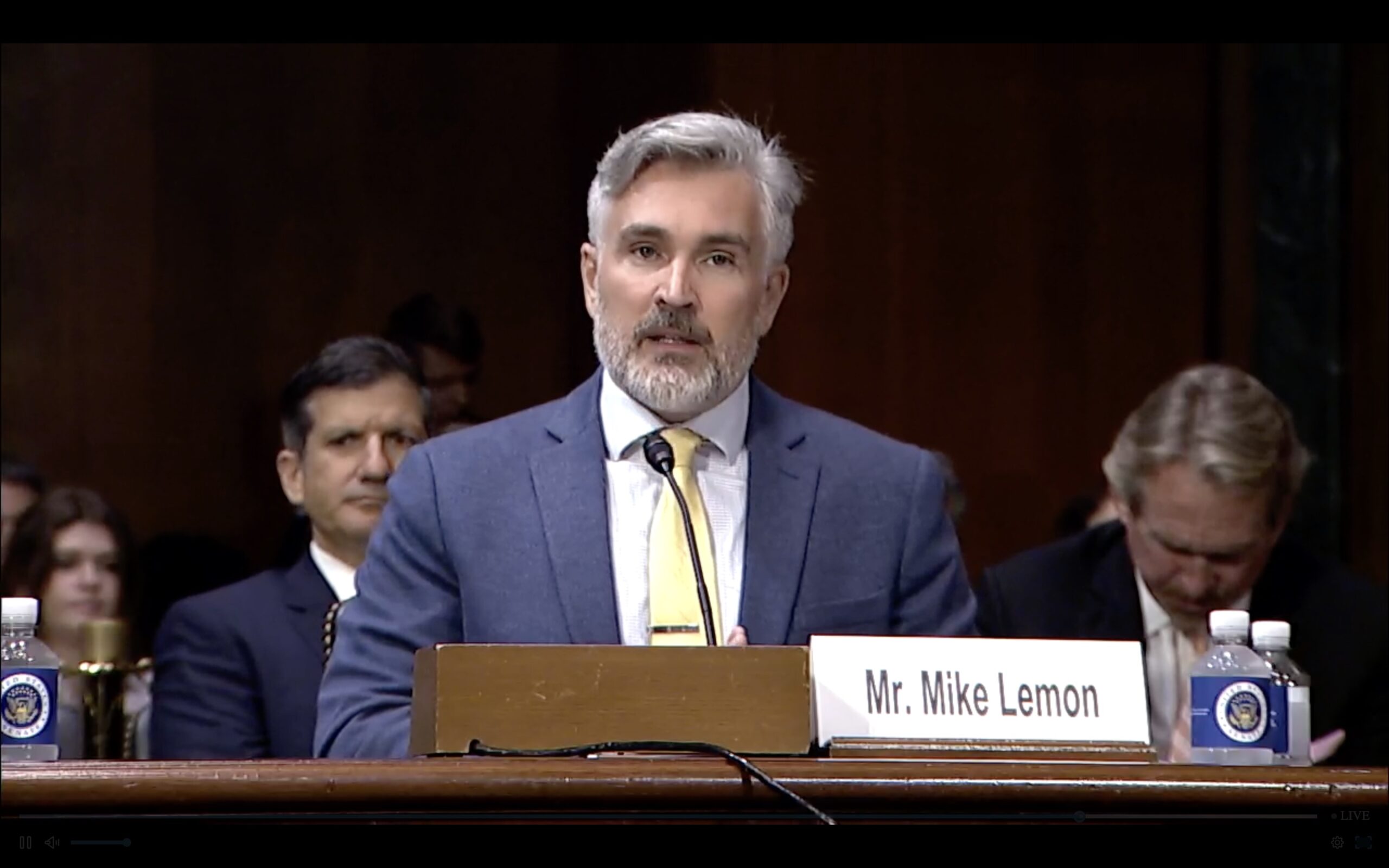 Lemon took issue with the idea that PERA would continue to exclude business methods, however, arguing that the bill would return the patent system fully to the pre-Alice world. “On the practical impact side…I haven’t spoken to a single company in any of the sectors repped by [United for Patent Reform] that agrees with the interpretation that this will keep business method patents out,” Lemon said. “The bill does provide specific exclusion for rote language, but what happens when you craft it in a way that doesn’t use rote language and instead just applies technical jargon around the process they’re describing? That’s what Alice said; you cannot put technical jargon around an abstract idea and make it patent eligible.”
But Kappos disagreed with Lemon’s opening statement that asserted the current law has actually resolved the confusion that existed prior to Alice, pointing to recent, conflicting U.S. Court of Appeals for the Federal Circuit (CAFC) opinions in cases such as Yu v Apple and Contour IP Holdings:
“The case law’s not working fine at all,” said Kappos. “Two cases, both about identical concepts—use of dual sensors in cameras in order to improve acuity of photography—the first one, Yu v. Apple, goes to one panel of the Federal Circuit that finds the claims to be abstract and ineligible; the second one, Contour Holdings, goes to a different panel…that finds the claims to be technological and perfectly eligible. So, the law isn’t settling down, it continues to be hopelessly confused.”
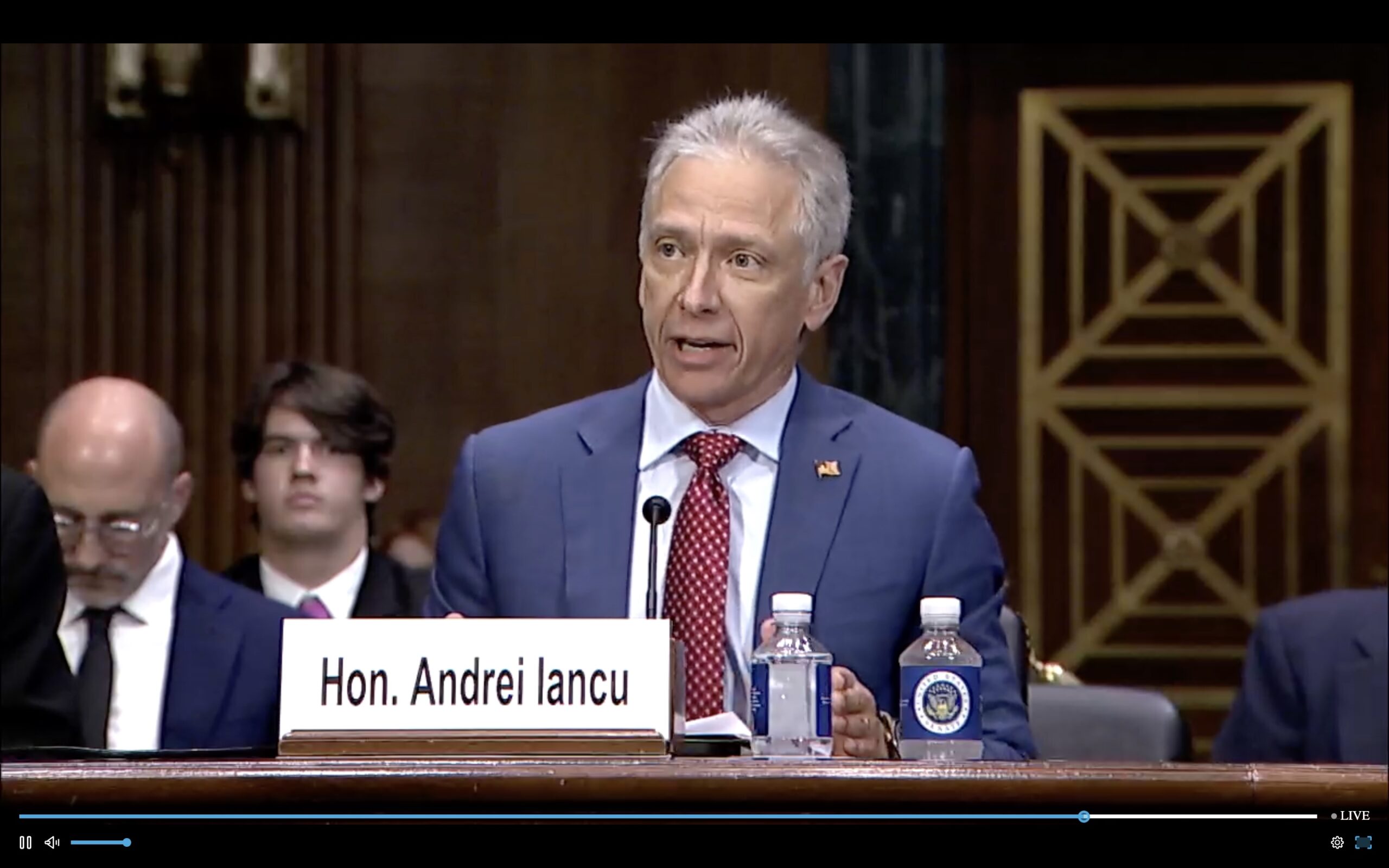 Iancu agreed, and further agreed with Lemon that “we don’t want vague patents,” but said the other statutes, like Sections 102, 103 and 112, should address such claims while Section 101 remains a coarse filter. “The problem we have had over the past several years is that courts have conflated these various statutory schemes,” Iancu said.
However, Lemon dismissed the notion that this would help with the business method problem and refuted the point made by Iancu and other panelists that other sections of the Patent Act should “do the heavy lifting” when it comes to patentability and invalidating patents. According to Lemon, they weren’t doing that before the America Invents Act (AIA) and Alice and they would not do it this time either, were PERA to pass.
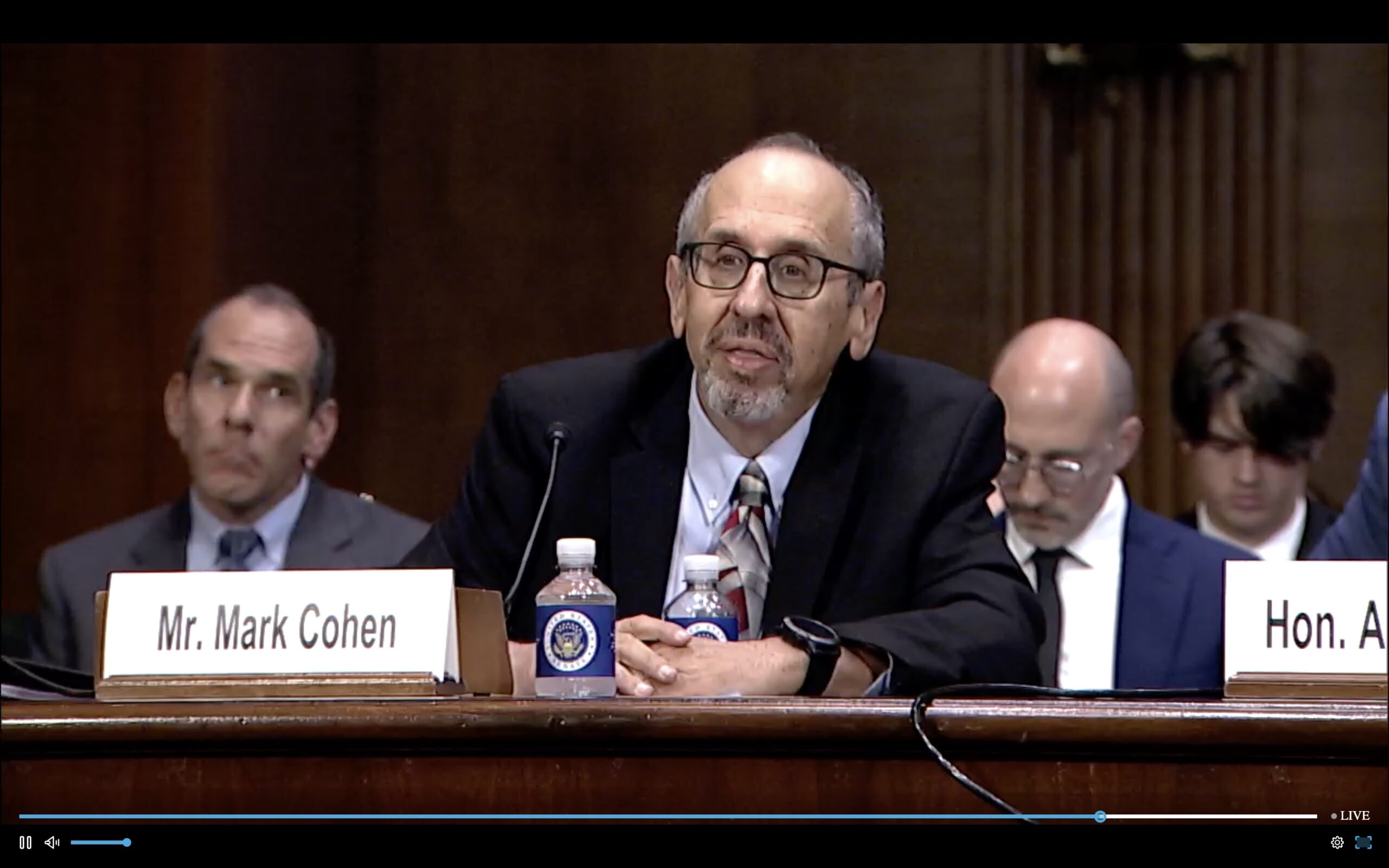 Cohen’s key concern was with the United States ceding its competitive edge to China, which has amended its patent law four times since it was first introduced in 1984 and has “continuously adapted it to new technological challenges,” he noted. China also “aggressively curates” its case law and has become increasingly less transparent over the years, “so it’s hard to tell how Americans fare before the courts in China,” Cohen said. But chiefly, “China believes in IP,” while many in the United States and Congress do not, and China has “taken steps to aggressively improve their system in their own interests.”
Senator Chris Coons (D-DE) asked Iancu how he and Kappos came to agree on the issue of eligibility coming from two very different presidential administrations and parties. Iancu replied that patent law is one of the last—or maybe the only—areas of the law that is still nonpartisan or bipartisan and not driven by partisan politics. “We’ve both, I believe, seen the same things,” Iancu said, adding that, as a litigator, he also regularly witnesses the problems that the unpredictability causes both parties:
“When lawyers have a difficult time telling their clients with reasonable certainty what the likely outcome is more likely than not to be, that increases the likelihood of litigation, it lengthens the likely span of a lawsuit, and makes it more difficult to reach a settlement,” [particularly] “given that for every Section 101 decision out there there’s an equal and opposite Section 101 decision.”
Diagnosing the Diagnostics Problem
The second panel also included three pro-PERA witnesses and one opponent of the bill. Richard Blaylock of Pillsbury Winthrop Shaw & Pittman said that PERA threatens U.S. leadership in personalized medicine innovation, while Steven Caltrider of the Dana-Farber Cancer Institute, Sue Peschin of the Alliance for Aging Research and Corey Salsberg of Novartis spoke in favor of PERA.
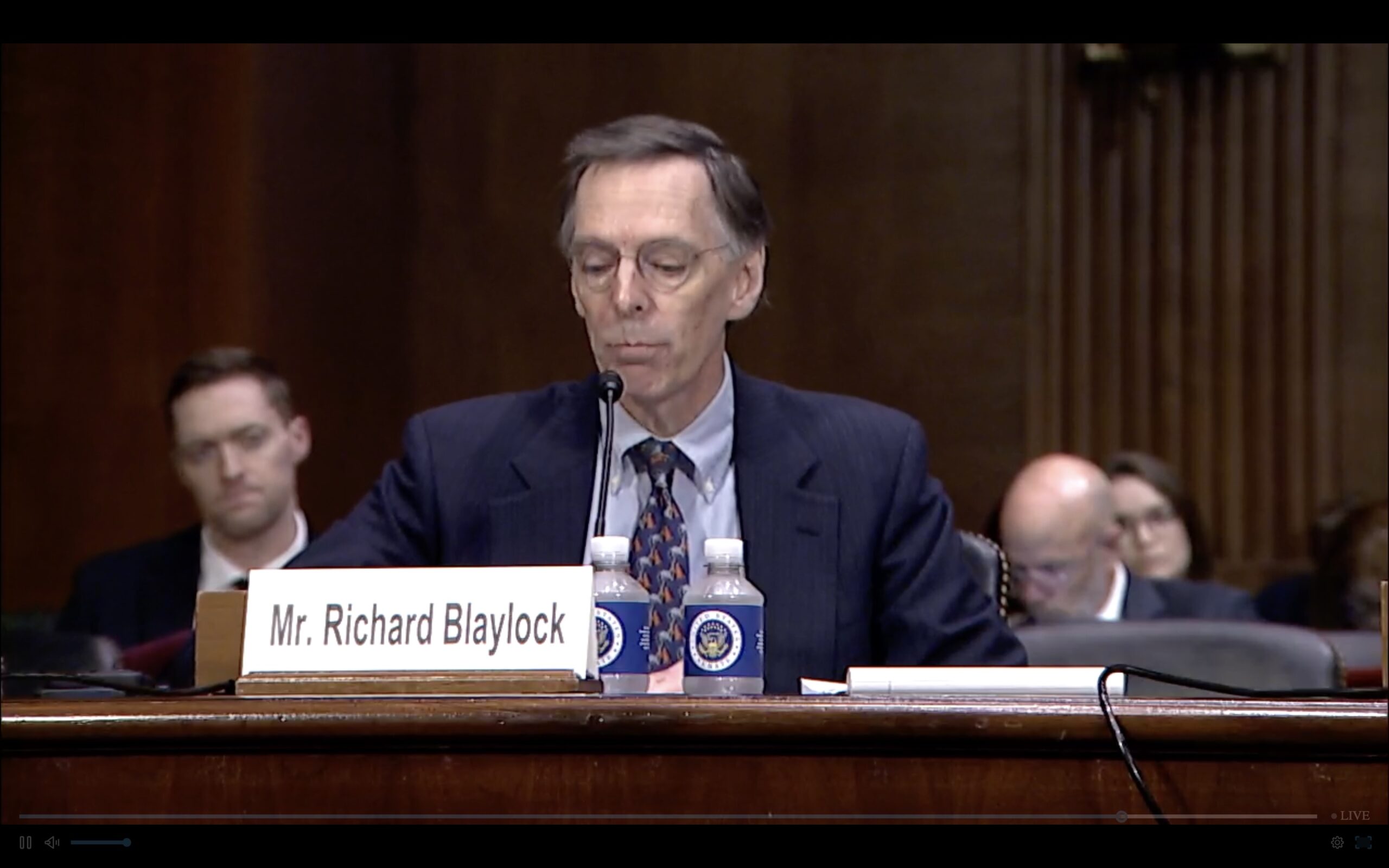 Blaylock argued that PERA will allow for the patenting of biomarkers that would be detrimental to the industry and that the revised language regarding human genes in the latest version of the bill fails to address the concerns because additional exclusions in the bill hollows it out. Blaylock also rejected the suggestion that diagnostics are not currently patentable in the United States, which the first panel touched on, calling the suggestion “categorically false.”
Caltrider, however, called the situation “a crisis” and said that PERA will not be a barrier to patient access. “The ultimate barrier to patient access is a medicine or a diagnostic never being discovered, developed or commercialized,” he said. “The fact innovators are adapting as best they can does not mean the crisis is solved.”
Peschin had a similar view of the diagnostics landscape and said that diagnostics are being left on the shelves. She and others pointed to the fact that all of the CAFC judges have asked congress to step in and solve the problem.
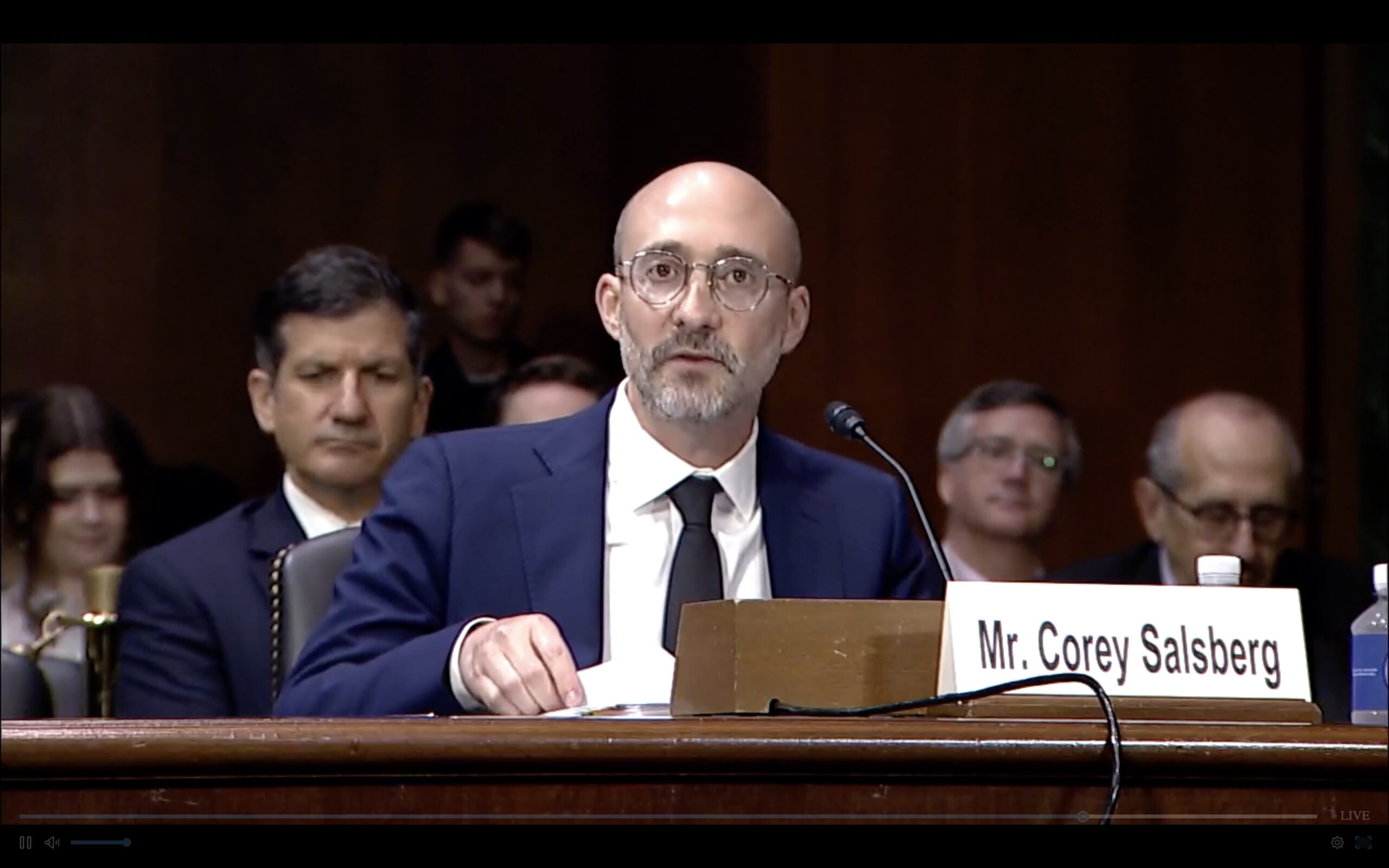 Salsberg was particularly worried about a case just argued at the Federal Circuit in which a panel is considering an appeal from a district court decision concerning patents on genetically engineered host cells in which the court found the patents to be patent ineligible products of nature. Salsberg said the case has “dire consequences” for the industry and that the implications “should worry everyone.”
Senator Mazie Hirono (D-HI) asked whether the new language on gene patents in the bill makes Blaylock feel any better about it, but he replied that he would still “delete the entire draft” because the current law is superior, though he did agree to address the language with the committee going forward. Essentially, Blaylock said that the bill leaves all of the genomes to future pathogens, for example, open to being patented and that the language allowing a natural material to be considered modified and patent eligible if it is “isolated, purified, enriched, or otherwise altered by human activity; or otherwise employed in a useful invention or discovery,” makes the exclusion on unmodified genes moot.
Tillis concluded the hearing by promising he intends to do everything he can to move the bill forward and to get a markup, and that those who are still concerned should provide feedback.
The Council for Innovation Promotion (C4IP), for which both Kappos and Iancu serve as Co-Chairs of the Board, sent a letter to congress on the PERA hearing, urging continued forward motion on the bill.
![[Advertisement]](https://ipwatchdog.com/wp-content/uploads/2026/06/Womens-IP-Forum-2026-sidebar-super-early-bird-ends-July-24-700x500-1.jpg)
![[Advertisement]](https://ipwatchdog.com/wp-content/uploads/2026/07/Juristat-Varsity-Ad-2026-IPW-ad-Solo_2.png)
![[Advertisement]](https://ipwatchdog.com/wp-content/uploads/2026/07/DeepIP-Jul-28-2026-sidebar-700x500-1.jpg)
![[Advertisement]](https://ipwatchdog.com/wp-content/uploads/2026/07/Ankar-AI-Jul-30-2026-sidebar-700x500-1.jpg)



![[Advertisement]](https://ipwatchdog.com/wp-content/uploads/2021/12/WEBINAR-336-x-280-px.png)
![[Advertisement]](https://ipwatchdog.com/wp-content/uploads/2021/12/Ad-4-The-Invent-Patent-System™.png)



Join the Discussion
8 comments so far.
Matt
October 11, 2025 08:16 pm1785 primary definitions of “Inventor” and “discovery.”
“Inventor: A finder out of something new”
“Discovery (n): The act of finding anything hidden”
Somehow the “anything” in the definition of discovery keeps getting chipped away. PERA will be the proverbial sledgehammer for the discovery of processes (at a time when our country needs critical incentive and investment in finding out of new processes!
Anonymous
October 10, 2025 05:14 pmNo one can define “substantially economic, financial, business, social, cultural, or artistic” (“SEF-BSCA”). Inventors don’t want courts to try to subjectively define SEF-BSCA either. It seems void for vagueness since literally every word is indefinite. But Kappos testified this vagueness is a good feature of the patent system, not a bad one. (1:08:45 of the hearing, https://youtu.be/-VRJcBVrC2A?si=tLU2QOHFLlCqPRVr&t=4124) A judge 10 years from now will be the one who decides whether a patent prosecuted today under PERA is valid.
At best, PERA is enacted and Squires issues guidance to narrowly interpret what is SEF-BSCA. At worst, the Federal Circuit continues to say they’re not bound by that and invalidates way too much saying everything is SEF-BSCA.
Congress is inviting another decades-long morass, not enacting clear law.
“I claim the practical application of a process for X, wherein said process is a non-substantially economic, financial, business, social, cultural, or artistic process for X, comprising the steps . . .”
Anon
October 10, 2025 10:24 amAs Stephen Schreiner, Pro Say and others (including myself) point out, the current language of the bill remains problematic and cannot be passed as is.
Better, clean and direct language is very much possible and warranted.
We cannot work hard to obtain passage of a bill that only ends up back before the Supreme Court to decide what the law means.
I fully ‘get’ that Tillis is more interested in passing something and seeks buy-in across the board (including his own well-heeled Efficient Infringer backers), but on this topic we simply cannot and must not allow such Trojan Horses merely to get a bill passed.
Do better Congress.
Model 101
October 9, 2025 05:53 pmMy favorite part of the hearings was when Hirono’s mic dropped.
A nice lady and good heart but ?
PERA is a no brainer if you’re filing an AI patent.
Just saying!
Pro Say
October 9, 2025 03:49 pmWhile China continues to clean our patent-protected-innovations clock . . . this riddled-with-problems PERA bill would simply replace one (the current) eligibility morass for another.
Repackaged innovation-killing eligibility c.r.a.p. is still innovation-killing eligibility c.r.a.p.
Since he’s pushing so hard for PERA, it’s only right that Tillis be the one who pulls the handle to flush it down the toilet.
My fellow independent inventors, small company innovators, and all others who want America to return to it’s former glory, please once again join me in calling and writing your state Senators to demand they NOT support PERA.
Stephen Schreiner
October 9, 2025 03:24 pmThe language in the current draft is surprising. There is an exclusion for a “process that is substantially economic, financial, business, social, cultural, or artistic.” That could get messy.
Then there is the language that “steps undertaken by human beings in methods of doing business, performing dances moves, offering marriage proposals, and the like shall not be eligible for patent coverage.” Where in the world did that come from?
But then there is what appears to be a safe harbor that could override those exclusions: “any process that cannot be practically performed without the use of a machine (including a computer) or manufacture shall be eligible for patent coverage.”
We really, really need reform on Alice/Mayo. Just concerned that the language in this bill could lead to as much litigation on Section 101 as we have now, and that’s not good…
Seriously concerned
October 9, 2025 01:41 pmAnon:
Anon:
Could not agree more. In my substantial and over four decades of patent practice, the exclusion of business, economic, and financial processes makes no sense at all. If the process is useful, novel, unobvious, and enabled, why wouldn’t we want to incentivize and protect its disclosure, development, and promotion by a patent? The exclusion of such processes from patenting only protects entrenched market powers and those who want to copy the inventions of others at no cost. I see the lack of patenting of such processes doing enormous damage to U.S. innovation our economy every day. As the recent PTO Desjardins opinion shows, any useful, novel, unobvious, and enabled software system (“application”) should be patentable, and the risk of passing a law otherwise will do serious damage to U.S. leadership in fields of computing technology, such as AI as but one example.
Anon
October 9, 2025 09:42 amTo this day I cannot comprehend just how the notion of “business methods” evokes such an adamant “must not allow patents” emotional response.
Why in the world would we not want to promote the limited time progress in business methods? How would such innovations be detrimental?
Somebody, anybody, make it make sense.