
![[IPWatchdog Logo]](https://ipwatchdog.com/wp-content/themes/IPWatchdog%20-%202023/assets/images/temp/logo-small@2x.png)

 4
4 “[Hyatt’s] argument rests on longstanding precedents that SCA Hygiene did not address or purport to abrogate.” – Squires SCOTUS Brief
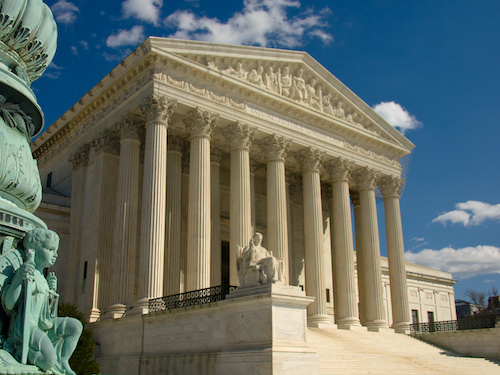 U.S. Patent and Trademark Office (USPTO) Director John Squires on Tuesday, May 26, filed a Brief in Opposition to Gilbert Hyatt’s petition for certiorari to the U.S. Supreme Court (SCOTUS), which asks the Court to review—and ultimately reject—the U.S. Court of Appeals for the Federal Circuit’s existing doctrine of prosecution laches.
Hyatt filed his petition on March 2, 2026. The specific question presented to the Justices is:
“Whether the PTO may invoke the equitable doctrine of ‘prosecution laches’ to deny a patent to an applicant who has complied with all the Patent Act’s timeliness provisions.”
According to IPWatchdog Founder and CEO Gene Quinn, who wrote about the petition earlier this year, the petition “is a direct challenge to a doctrine that has quietly but materially destabilized patent rights, introduced systemic unpredictability, and—if left unchecked—will continue to erode confidence in the U.S. patent system.”
But Squires’ brief filed yesterday argued that Hyatt’s patent applications, filed during the period known as the “GATT Bubble”—which refers to the short time before patent term was changed to run from the date of issuance to the date of filing, as per the Agreement on Trade-Related Aspects of Intellectual Property at the Uruguay Round of the General Agreement on Tariff and Trade (GATT)—are “highly unusual” and accused Hyatt of bulk-filing applications including “numerous duplicate” claims that are “extraordinarily lengthy and complex.” The brief claims these applications have posed “‘unique’ and ‘extreme’ challenges for the USPTO,” and that Hyatt’s prosecution conduct “created a perfect storm that overwhelmed the PTO” and “all but guaranteed indefinite prosecution delay.”
Squires argued Hyatt’s reliance on SCA Hygiene Products Aktiebolag v. First Quality Baby Products, LLC, 580 U.S. 328 (2017), and Petrella v. Metro-Goldwyn-Mayer, Inc., 572 U.S. 663 (2014) was misplaced because those cases are “inapposite” to Hyatt’s. While the High Court in those cases determined that “when Congress has enacted a statute of limitations that specifies the period for commencing a damages suit in court, laches ordinarily may not be used to bar suits filed within the limitations period,” the present case has to deal with prosecution delay, not delay in filing a suit in court. “That argument rests on longstanding precedents that SCA Hygiene did not address or purport to abrogate,” said the brief.
With respect to Hyatt’s argument that “[e]ven if prosecution laches were available as a defense in infringement litigation (notwithstanding SCA Hygiene), it still would not follow that the PTO could rely upon the doctrine itself to deny the issuance of a patent,” Squires’ brief said the Court should not consider this argument because Hyatt forfeited it when he did not make it in his appellate briefs. And with respect to the 1992 Board of Patent Appeals and Interferences decision cited by Hyatt in his petition to support his argument, “[t]o the extent [it] suggested that the USPTO could not deny a patent application based on prosecution laches, that decision has been superseded by intervening Federal Circuit authority,” said the brief.
Furthermore, the “limited and diminishing significance of the question presented” warrants denial, said the brief. Since the vast majority of pending patent applications today post-date the 1995 GATT change, and there is no evidence that the Federal Circuit has invoked prosecution laches to reject such applications, there is “consequently no sound basis for petitioner’s assertion…that the decision below threatens patent practice ‘going forward.’” Even within the small universe of pre-1995 applications, prosecution laches has generally been limited to “extreme outliers” like Hyatt, said the brief, “whose inequitable conduct was ‘extraordinary’ and ‘unique in its scope and nature.’”
But Quinn said the Federal Circuit’s prosecution laches doctrine has “metastasized” and that in Hyatt’s case specifically, the court “went even further, endorsing a sweeping, holistic inquiry into an applicant’s entire course of conduct and applying a presumption that prosecution delays exceeding six years are ‘unreasonable, inexcusable, and prejudicial.’”
This poses questions about other cases with a priority filing date six years or older, or patents that have been issued on applications that were pending more than six years, said Quinn.
“Are all of them unenforceable? If you follow the logic of the Federal Circuit, the answer is yes, which is egregious and astonishing. Who made the Federal Circuit a super legislature that can ignore the statute and create out of whole cloth a non-statutory requirement that literally overrules the explicit statutory language?”
![[Advertisement]](https://ipwatchdog.com/wp-content/uploads/2026/06/Junior-Jun-18-2026-sidebar-700x500-1.jpg)
![[Advertisement]](https://ipwatchdog.com/wp-content/uploads/2026/06/Patently-Jun-23-2026-sidebar-700x500-1.jpg)
![[Advertisement]](https://ipwatchdog.com/wp-content/uploads/2026/06/Patent-Bots-Jun-25-2026-sidebar-700x500-1.jpg)




![[Advertisement]](https://ipwatchdog.com/wp-content/uploads/2021/12/WEBINAR-336-x-280-px.png)
![[Advertisement]](https://ipwatchdog.com/wp-content/uploads/2021/12/Ad-4-The-Invent-Patent-System™.png)





Join the Discussion
4 comments so far. Add my comment.
Anon
May 29, 2026 10:05 amPro Say, when was the last time that THAT happened?
Pro Say
May 28, 2026 01:36 pm“yet again” referring to the times over the years when SCOTUS reversed various CAFC patent decisions.
Anon
May 28, 2026 09:34 am… “yet again” …
?
Pro Say
May 27, 2026 06:14 pmWhat Gene says.
The CAFC is utilizing an anecdotal case (Hyatt) to unconstitutionally usurp the authority of both Congress AND SCOTUS.
For the sake of American innovation, SCOTUS must — yet again — bring the CAFC to heel.
Add Comment