
![[IPWatchdog Logo]](https://ipwatchdog.com/wp-content/themes/IPWatchdog%20-%202023/assets/images/temp/logo-small@2x.png)

 0
0 “The court observed that Olson did not contest that the attorneys could have referenced her report by pointing to the docket entry or citing specific lines but rather objected to their wholesale copying and distribution of the entire document.”
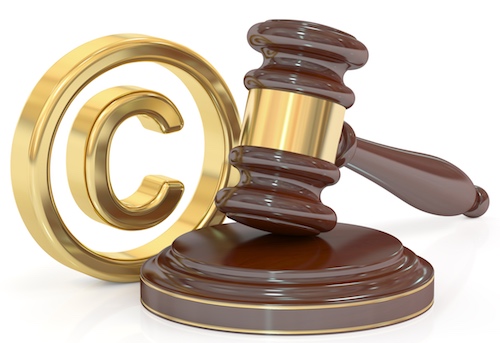 The U.S. District Court for the District of Columbia on Monday denied motions to dismiss three copyright infringement lawsuits brought by a jury consultant, Lindsay Olson, against criminal defense attorneys representing defendants charged in the attack on the U.S. Capitol on January 6, 2021, who downloaded her copyrighted report from a public docket and republished it in their own clients’ cases.
Olson alleged the attorneys infringed her copyrighted jury-attitude report by downloading it from a public court docket and attaching it to venue transfer motions for their clients. The defendants moved to dismiss the consolidated actions under Rule 12(b)(6) of the Federal Rules of Civil Procedure (FRCP), asserting defenses including statute of limitations, collateral estoppel, lack of copyrightability, public access rights, and fair use.
The dispute arises from a 27-page jury-attitude study, the April 2022 Report, which Olson prepared for defense counsel in an Oath Keepers trial. Olson received $30,000 from the commissioning attorneys, who concluded the local community was highly biased against the January 6, 2021, defendants. Those attorneys uploaded the report to the public docket as a venue transfer exhibit, which the court ultimately denied.
This decision follows related legal disputes Olson initiated across multiple federal jurisdictions, including the Southern District of New York, the Southern District of Florida, and the Central District of California. Olson previously pursued similar copyright claims in the District of Columbia against Proud Boys defense counsel John Daniel Hull of Hull McGuire PC and other attorneys who used her October 2022 Report without payment. While a jury awarded Olson $77,000 for breach of contract, it rejected her copyright infringement claims, leading the current defendants to argue her present claims were barred.
Judge Beryl A. Howell of the U.S. District Court for the District of Columbia denied the defendants’ motions to dismiss on all grounds. The court first addressed the statute of limitations, noting that whether the injury rule or the discovery rule applies to copyright claims remains an open question in the U.S. Supreme Court and the D.C. Circuit. Following other federal appellate courts, the court found the discovery rule persuasive but concluded that determining when Olson should have discovered the infringement is a factual question inappropriate for resolution at the pleading stage.
The court then rejected the collateral estoppel arguments raised by West and Woodward. It explained that the previous jury trial involved a separate, later report with a different copyright registration, and that the current defendants had no role in creating or commissioning the April 2022 Report. The court noted that, unlike the non-contracting attorneys in the Proud Boys litigation who merely benefited from a report filed on a consolidated docket, West, Woodward, and Garrity actively downloaded the April 2022 Report and republished it on public dockets in separate cases.
Garrity argued that Olson failed to allege a protected copyrightable right because the report consisted of unoriginal facts and functional compilations. The court disagreed, pointing to the Copyright Act, which states that a certificate of registration constitutes prima facie evidence of copyright validity under 17 U.S.C. § 410(c). Since Olson holds a valid registration for the April 2022 Report, the court found her allegations sufficient to survive a motion to dismiss.
The court then addressed the defendants’ contention that dismissal was warranted because of a constitutional right of the public to access and distribute documents filed on PACER. While acknowledging a general right to inspect public records, the court emphasized that the right is not absolute and does not extinguish property rights. Analogizing the situation to a copyrighted book placed on a public library shelf, which does not permit unbridled reproduction, the court held that placing a copyrighted work in an open court file does not destroy the owner’s property interests. The court observed that Olson did not contest that the attorneys could have referenced her report by pointing to the docket entry or citing specific lines, but rather objected to their wholesale copying and distribution of the entire document.
The court explained that under well-settled D.C. Circuit law, fair use is a mixed question of law and fact that normally requires an extensive review of the factual record generated during discovery. The court distinguished an out-of-circuit authority cited by the defendants involving a South Park television parody, characterizing it as an exceptional case where all necessary facts were available in the pleadings. Since key facts remain disputed, such as whether the attorneys’ copying was strictly for the purpose of educating the court or commercial in nature, the fair use defense cannot be resolved at this stage.
Furthermore, the court noted that because the defendants’ motions were denied, they have not prevailed under the Copyright Act. The court also declined to sanction the defendants, observing that “Plaintiff’s complaints bring novel copyright claims in a context where the copyrighted work at issue was used in an effort to protect fundamental individual rights,” and that the defendants’ motions raised colorable arguments.
Although Olson’s claims survived the motion to dismiss, the court noted that she may face significant hurdles in proving actual damages. In a footnote, the court observed that statutory damages are unlikely to be available because Olson did not register her report within three months of its first publication. The court also highlighted that proving the report’s fair market value to a jury will be challenging, given that the study was widely panned shortly after its publication and “universally rejected by every Judge on this Court” who considered the venue transfer motions.
Image source: Deposit Photos
Author: alexlmx
Image ID: 118290464
![[Advertisement]](https://ipwatchdog.com/wp-content/uploads/2026/10/IP-Copilot-Oct-13-2026-sidebar-700x500-1.jpg)
![[Advertisement]](https://ipwatchdog.com/wp-content/uploads/2026/10/Junior-Oct-15-2026-sidebar-700x500-1.jpg)
![[Advertisement]](https://ipwatchdog.com/wp-content/uploads/2026/10/BlackBox-IP-Oct-20-2026-sidebar-700x500-1.jpg)
![[Advertisement]](https://ipwatchdog.com/wp-content/uploads/2026/09/WE-BUY-PATENTS-SIM-IP-Ad-1-revised-on-Sep-28-2026-700x500-1.jpg)
![[Advertisement]](https://ipwatchdog.com/wp-content/uploads/2026/09/Life-Sciences-2026-sidebar-early-bird-date-corrected-700x500-1.jpg)
![[Advertisement]](https://ipwatchdog.com/wp-content/uploads/2024/09/Patent-Prosecution-Training-sidebar-700x500-2025-03-27.jpg)





![[Advertisement]](https://ipwatchdog.com/wp-content/uploads/2021/12/WEBINAR-336-x-280-px.png)
![[Advertisement]](https://ipwatchdog.com/wp-content/uploads/2021/12/Ad-4-The-Invent-Patent-System™.png)




Join the Discussion
No comments yet.