
![[IPWatchdog Logo]](https://ipwatchdog.com/wp-content/themes/IPWatchdog%20-%202023/assets/images/temp/logo-small@2x.png)

 0
0 Bites (noun): more meaty news to sink your teeth into.
Barks (noun): peripheral noise worth your attention.
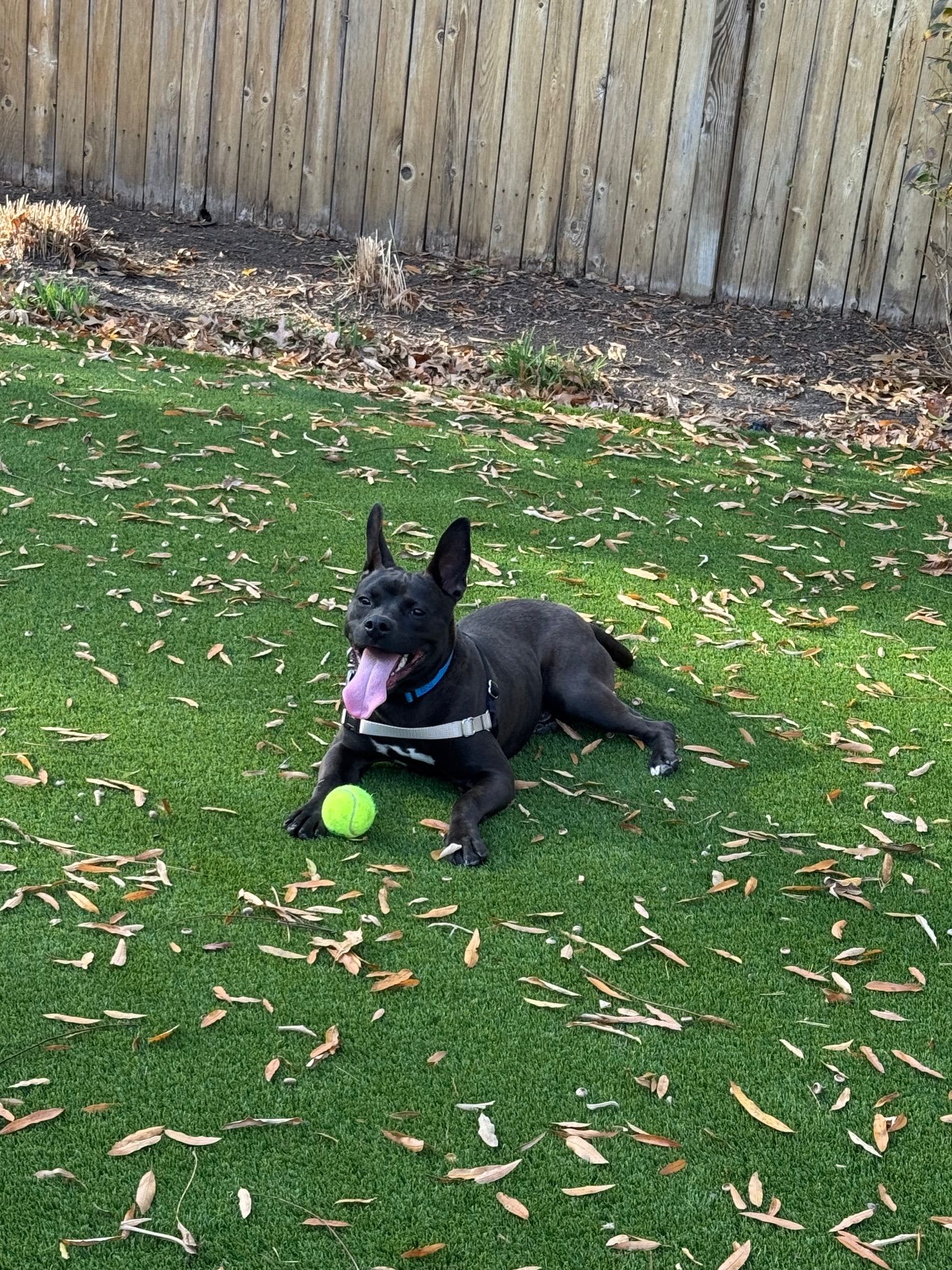
Want to have your doggie(s) featured in one of our future Barks & Bites Columns? Send your dogs photo(s) along with their name, breed (if you know it) and their age to dogwall@ipwatchdog.com. All photos will be added to the IPWatchdog Dog Wall at IPWatchdog Studios and will be added to the queue of images we select from each week.

Jim Carmichael’s Maltese:Shih Tzu Mix – Pepper – IMG_4855.jpg
This week in Other Barks & Bites: Hims & Hers releases a generic version of semaglutide after the expiration of Novo Nordisk’s relevant patent rights in Canada; U.S. Patent and Trademark Office (USPTO) Director John Squires tells the Federal Circuit that InComm cannot appeal an inter partes review proceeding resulting in patent invalidation but then terminated after a revised order; the European Commission announces a call for evidence on proposals to modernize the EU’s copyright framework; Nvidia posts a quarterly beat on earnings as it announces changes to its financial reporting for its artificial intelligence segments; the Federal Circuit vacates a district court’s post-trial ruling limiting a jury’s award of unjust enrichment damages in a trade secret case to $0; and
Bites
CAFC Vacates Improper Rejection of Unjust Enrichment Damages in Trade Secret Case – On Friday, May 22, the U.S. Court of Appeals for the Federal Circuit issued a precedential ruling in Versata Software, LLC v. Ford Motor Co. vacating the Eastern District of Michigan’s post-trial grant of judgment as a matter of law (JMOL) to Ford, which had reduced the jury’s award of $22.4 million to Versata for trade secret misappropriation to $0, after finding that the district court improperly ruled that unjust enrichment damages were not an available form of relief for claims under the Michigan Uniform Trade Secrets Act (MUTSA). The Federal Circuit also reversed the district court’s JMOL ruling with respect to the jury’s verdict on breach of contract damages after finding that the jury calculated damages with reasonable certainty based on licensing rates presented by Versata’s expert witness, and denied Ford’s appeal as to liability for trade secret misappropriation after rejecting the argument that the MUTSA requires specific knowledge of specific elements of combination trade secrets.
Director Squires Files Intervenor’s Brief Asking CAFC Not to Disturb InComm IPR Vacatur – On Wednesday, May 20, U.S. Patent and Trademark Office Director John Squires filed an intervenor’s brief at the U.S. Court of Appeals for the Federal Circuit (CAFC) arguing that the CAFC lacks jurisdiction to hear an appeal filed by inter partes review (IPR) petitioner Interactive Communications (InComm) challenging a revised order entered by Director Squires vacating a final written decision finding that claims challenged by InComm were invalid as obvious, and terminating the IPR proceedings. Director Squires’ brief argues that InComm’s appeal ultimately goes to the agency’s unreviewable discretion whether to institute IPR reviews codified at 35 U.S.C. § 314(d), and that InComm’s appeal does not target the IPR’s final written decision, which is generally the only ruling during IPR proceedings that can be appealed out of the Patent Trial and Appeal Board (PTAB).
Patient Advocate Groups Celebrate SCOTUS’ Denials of Pharma Challenges to IRA – On Tuesday, May 19, the U.S. Supreme Court issued an order list showing that the nation’s highest court had denied a series of five petitions for writ of certiorari filed by major pharmaceutical companies challenging the Drug Price Negotiation Program established by the Inflation Reduction Act (IRA), which gives authority to the Centers for Medicare & Medicaid Services (CMS) to set prices paid for drugs covered by Medicare Part B and Part D regardless of the company’s patent rights in those drugs. That same day, several patient advocacy groups including Patients for Affordable Drugs and Public Citizen released public statements in support of the Supreme Court’s cert denials and launched a mobile billboard in Washington, D.C highlighting the Court’s decision.
EPO-ECLAC Study Shows IP-Intensive Manufacturing Makes Up 13.6% of Latin American/Caribbean GDP – On Tuesday, May 19, the European Patent Office (EPO) and the United Nations Economic Commission for Latin America and the Caribbean (ECLAC) published a joint study into the impacts of intellectual property rights on growth and productivity in Latin America and the Caribbean, showing that manufacturing industries reliant on IP rights contribute 13.6% to the region’s gross domestic product (GDP), supporting a total of 1.6 million jobs. Despite this, the joint study also showed that about 15% of imports into Latin American and the Caribbean are patent-intensive compared to 9% of patent-intensive exports shipped from the region, representing a trade imbalance that is also reflected by the proportions of foreign patent applicants as compared to domestic patent applicants in the region.
Digital Trade Associations File Amicus Supporting Apple Rehearing Petition in Masimo Watch Case – On Monday, May 18, digital trade advocacy groups Computer & Communications Industry Association (CCIA), Software & Information Industry Association (SIIA) and ITC Modernization Alliance filed an amicus brief with the U.S. Court of Appeals for the Federal Circuit in support of Apple’s petition for rehearing of the CAFC’s ruling this March affirming the U.S. International Trade Commission’s (ITC) finding of a Section 337 violation based in part on the domestic industry requirement being met by a prototype practicing Masimo’s asserted patents. The advocacy groups, which represent members who often face Section 337 complaints at the ITC from patent assertion entities, told the Federal Circuit that the technical prong of the domestic industry requirement must be satisfied by an article in trade that actually practices the asserted claims, and that the exclusionary nature of the relief available through such proceedings should not be awarded to complainants whose activities do not result in the sale of a patent-protected article.
EU Launches Call for Evidence on Copyright Impacts From Generative AI Licensing – On Monday, May 18, the European Commission announced that it was launching a call for evidence soliciting feedback on potential measures that are meant to modernize the EU’s copyright framework as codified under the 2019 Directive on Copyright in the Digital Single Market to improve licensing practices in the copyright marketplace, accepting comments through June 25 while also supporting that call for evidence with an external stakeholder survey. The EU Commission seeks stakeholder views on challenges to licensing and rights enforcement posed by the advent of generative artificial intelligence (AI) as well as issues related to piracy of live sports broadcasts.
Barks
USPTO Begins Issuing RFIs to Test Impacts of Requiring Examination Based on PCT Work – On May 21, the U.S. Patent and Trademark Office began issuing requests for information (RFIs) under its recently established Patent Cooperation Treaty (PCT) Informed Examination Request (PIER) pilot program, which will assess the impacts of requiring patent applicants of unexamined national stage patent applications to request examination in view of applicable PCT international work phase products.
Hims Releases Generic Semaglutide Following Expiration of Canadian Patents to Semaglutide – On Thursday, May 21, California-based telehealth company Hims & Hers announced that it would be selling generic versions of the GLP-1 inhibitor semaglutide, a weight loss drug earning blockbuster revenues for Novo Nordisk in countries where Wegovy is patent-protected, on the Canadian market following the expiration of Novo Nordisk’s patent rights in that country.
Mendelson Estate Files Suit Targets Social Media Use of Peanuts Themes – On Wednesday, May 20, Lee Mendelson Film Productions, which has maintained the television and film music catalogs to Charles Schulz’s Peanuts since 1963, filed several lawsuits against private companies in U.S. district court and one against the U.S. Department of the Interior in the U.S. Court of Federal Claims alleging claims of copyright infringement caused by unauthorized uses of several famous themes from the Peanuts franchise through social media accounts.
Third Circuit Reverses WDPA in Schedule A Trademark Ruling Over Purposeful Availment – On Tuesday, May 19, the U.S. Court of Appeals for the Third Circuit issued a ruling in Wood v. Eiazuiks reversing the Western District of Pennsylvania’s dismissal of American artist Thomas Wood’s complaint, holding that the district court improperly assessed whether the Schedule A defendants had purposefully availed themselves of doing business in Pennsylvania by concluding that “simply being an online seller on Amazon isn’t enough” to plausibly plead personal jurisdiction over defendants.
Publishers Win Takedown in Anna’s Archive Case Seen as Move Against AI Training – On Tuesday, May 19, U.S. District Judge Jed Rakoff of the Southern District of New York entered a default judgment against the piracy website Anna’s Archive in a case brought by more than a dozen publishers, with news reports noting that the case is part of a strategy to prevent the training of generative AI models on copyrighted material available through piracy sites like Anna’s Archive.
USPTO’s Unexamined Design Patent Backlog Down 28% Over Past 18 Months – On Tuesday, May 19, the U.S. Patent and Trademark Office announced that, as of the day prior, design patent examiners at the agency have been able to process enough design patent applications that the inventory of such applications that are unexamined and awaiting first action by the office has dropped to 62,166 applications, a 28% reduction from the agency’s backlog of 86,453 unexamined design patent applications in January 2025.
EUIPO, INPI Herald First CIGI Registration in EU for Porcelaine de Limoges – On Monday, May 18, the European Union Intellectual Property Office (EUIPO) hosted a joint event with France’s national IP office and local producer groups to celebrate the registration of “Porcelaine de Limoges,” a porcelain product made in the French city of Limoges, as the first craft and industrial geographical indication (CIGI) protected across the European Union.
This Week on Wall Street
Nvidia Posts Revenue Beat, Breaks Out AI Cloud Revenue From Agentic AI Revenues – On Wednesday, May 20, American semiconductor developer Nvidia Corporation posted earnings for the first quarter of 2026 showing that the company had beaten analyst forecasts on quarterly revenue ($81.62 billion versus $79.18 billion expected), with the company changing its financial reporting, breaking out hyperscaler and AI cloud infrastructure into its Data Center segment and reporting agentic and physical AI sales in its Edge Computing segment.
Quarterly Earnings – The following firms identified among the IPO’s Top 300 Patent Recipients for 2024 are announcing quarterly earnings next week (2023 rank in parentheses):
- Monday: None
- Tuesday: Xiaomi, Inc. (92nd)
- Wednesday: HP Inc. (84th); Marvell Technology Group, Ltd. (198th); Salesforce.com, Inc. (102nd); Snowflake Inc. (t-220th)
- Thursday: Dell Technologies Inc. (15th); NetApp, Inc. (t-263rd)
- Friday: None
![[Advertisement]](https://ipwatchdog.com/wp-content/uploads/2026/06/IP-Copilot-Jun-30-2026-sidebar-700x500-1.jpg)
![[Advertisement]](https://ipwatchdog.com/wp-content/uploads/2026/06/Womens-IP-Forum-2026-sidebar-700x500-rev2.jpg)





![[Advertisement]](https://ipwatchdog.com/wp-content/uploads/2021/12/WEBINAR-336-x-280-px.png)
![[Advertisement]](https://ipwatchdog.com/wp-content/uploads/2021/12/Ad-4-The-Invent-Patent-System™.png)






Join the Discussion
No comments yet. Add my comment.
Add Comment