


 0
0 “The Federal Circuit [said] that the ITC permissibly treated the Masimo Watch as the domestic industry article and reasonably viewed the prototype units as physical articles practicing the asserted claims.”
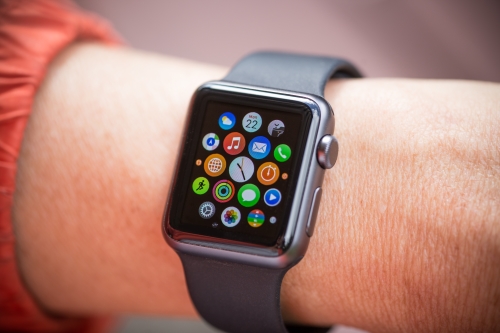 The U.S. Court of Appeals for the Federal Circuit (CAFC) issued a decision on Friday in Apple Inc. v. International Trade Commission, affirming a final determination that Apple violated Section 337 of the Tariff Act of 1930. The CAFC determined that the United States International Trade Commission (ITC) correctly concluded that Masimo Corporation and Cercacor Laboratories, Inc., proved that Apple violated Section 337 through the sale and import of certain Apple Watch models, ultimately “finding no error in the Commission’s domestic industry determination, its validity rulings, or its infringement findings.” The CAFC also held that the asserted patents were not unenforceable due to prosecution laches.
U.S. Patent Nos. 10,912,502 and 10,945,648 relate to wearable technology that measures physiological metrics using optical emitters and photodetection. The patents cover devices that use light-emitting diodes to emit light into tissue and photodetectors to measure the returned intensity of optical emissions to determine a physiological parameter. Masimo introduced its motion- and low-perfusion-tolerant technology in 1995 to address inaccurate readings from conventional noninvasive pulse oximeters, particularly in clinical settings.
In September 2020, Apple launched the Apple Watch Series 6, which included a feature that could estimate the wearer’s blood oxygenation level. In June 2021, Masimo filed a complaint with the ITC, alleging that the importation and sale of the Apple Watch Series 6 infringed several patents covering wearable blood oxygen measurement devices. An administrative law judge held a five-day hearing and issued an opinion finding a violation of Section 337. The ITC issued a final determination affirming the violation and issued a limited exclusion order barring the importation of the infringing products.
Writing for the CAFC, Judge Stark found that the ITC properly relied on the Masimo Watch as the domestic industry article. Apple argued that the ITC was required to limit its technical-prong analysis to specific physical models produced during discovery. The Federal Circuit disagreed, stating that the ITC permissibly treated the Masimo Watch as the domestic industry article and reasonably viewed the prototype units as physical articles practicing the asserted claims. The court noted that circumstantial evidence is acceptable and not second-class to direct evidence and that substantial evidence supported the finding that the prototypes were user-worn and measured blood oxygen levels at the time of the complaint.
Apple also argued that the ITC erred in crediting investments in prototypes that did not practice the asserted claims. The Federal Circuit rejected this argument, explaining that Section 337 allows for significant investments in aspects of production other than the patent-practicing article itself to count toward meeting the economic prong. The court clarified that investments in earlier-generation prototypes qualify when directed to significant components specifically tailored for use in the patent-practicing article. The court found substantial evidence that the investments in the earlier sensors were made as part of an iterative design process that led to specifically tailored technical features of the patent-practicing articles.
The Federal Circuit addressed the argument that the ITC based its infringement finding on incorrect constructions of the claim terms “over” or “above” and “openings” or “through holes.” The court noted that the plain and ordinary meaning of “over” and “above” relates to positions of the equipment’s components relative to other components, without any further restriction on the orientation of the device. The court also found that the terms “openings” and “through holes” encompass openings and holes that include material, rejecting the proposed construction that would have required them to be devoid of material.
Apple further argued that the asserted claims were invalid for lack of adequate written description. The Federal Circuit disagreed, finding that the specification expressly states that features of different embodiments can be combined. The court found substantial evidence supporting the finding that the matching-wavelength limitation was disclosed, noting that the specification allows the emitters to be identical. The court reasoned that if two sets of light-emitting diodes are the same, they must emit the same visible and near-infrared optical radiation at the same two respective wavelengths.
Regarding obviousness, Apple argued that the claims were invalid in light of a prior art patent disclosing devices containing electro-optical sensors. The Federal Circuit concluded that the prior art failed to disclose measuring blood oxygen saturation. The court noted that the inventor of the prior art testified that he never made a device that calculated blood oxygen. Moreover, it found substantial evidence that the prior art did not teach the claim limitation of measuring blood oxygen levels. It also emphasized that the prior art merely described functionality for measuring several different physiological parameters.
The Federal Circuit also concluded that prosecution laches did not render the asserted patents unenforceable. Apple argued that Masimo engaged in an unreasonable delay by waiting from 2008 to 2020 to file the applications that led to the asserted patent claims. The court noted that there was continuous prosecution activity and no evidence that prosecution activities were delayed for the purpose of drafting claims to cover the accused products. It also affirmed the finding that prosecution laches did not bar the enforcement of the asserted patents, concluding that laches should be applied only in egregious cases of misuse of the statutory patent system.
![[Advertisement]](https://ipwatchdog.com/wp-content/uploads/2026/10/IP-Copilot-Oct-13-2026-sidebar-700x500-1.jpg)
![[Advertisement]](https://ipwatchdog.com/wp-content/uploads/2026/10/Junior-Oct-15-2026-sidebar-700x500-1.jpg)
![[Advertisement]](https://ipwatchdog.com/wp-content/uploads/2026/10/BlackBox-IP-Oct-20-2026-sidebar-700x500-1.jpg)
![[Advertisement]](https://ipwatchdog.com/wp-content/uploads/2026/10/Questel-Oct-22-2026-sidebar-700x500-1.jpg)
![[Advertisement]](https://ipwatchdog.com/wp-content/uploads/2026/09/WE-BUY-PATENTS-SIM-IP-Ad-1-revised-on-Sep-28-2026-700x500-1.jpg)
![[Advertisement]](https://ipwatchdog.com/wp-content/uploads/2026/09/Life-Sciences-2026-sidebar-early-bird-date-corrected-700x500-1.jpg)
![[Advertisement]](https://ipwatchdog.com/wp-content/uploads/2024/09/Patent-Prosecution-Training-sidebar-700x500-2025-03-27.jpg)





![[Advertisement]](https://ipwatchdog.com/wp-content/uploads/2021/12/WEBINAR-336-x-280-px.png)
![[Advertisement]](https://ipwatchdog.com/wp-content/uploads/2021/12/Ad-4-The-Invent-Patent-System™.png)







Join the Discussion
No comments yet.