
![[IPWatchdog Logo]](https://ipwatchdog.com/wp-content/themes/IPWatchdog%20-%202023/assets/images/temp/logo-small@2x.png)

 0
0 “The collaboration between SpaceX and Cursor may not necessarily materialize into an acquisition, but if it does, it will likely be a type of acquisition that is competition-enhancing despite its elements of vertical and horizontal consolidation.”
 To compete in artificial intelligence (AI) markets, emerging companies must choose one of two routes: the capital-intensive route entails buying compute and datasets to build in-house foundation models and refining them into agents for specific use cases. Alternatively, emergents can license pre-trained models and lease compute to focus on developing applications for the end user, whether that is a solo software developer or an entire business domain.
Of course, not all emergents can meet the fundraising expectations to build their own infrastructure and thus overcome the entry barrier in the foundation model market. But because agentic applications are in effect task-based properties of a foundation model, giving up in-house capability creates dependencies with a third-party’s foundational capabilities. Naturally, most emergents do not want to cede control over these inputs to protect their competitive edge and the prospective value of their intellectual property.
But to build both models and applications is to diffuse innovation capability at the cost of product development. If an emergent focuses from the beginning only on developing a consumer-facing product, they spare resources pre-training their own in-house models and thus accelerate product development on the application side. At the same time, if the leading AI labs with frontier models have presence in applications with their own competing products, they enjoy a competitive advantage over their peers owing to their foundational capabilities.
This dynamic necessitates a type of collaboration that integrates the leading products of emergents with the capabilities of foundation model developers. This synergy occurs in circumstances where two firms enter an agreement to co-develop a product, and in turn internalize part of their prior adversarial relationship while external market conditions exert substantial competitive pressure on both.
Because business collaborations are conditional and often temporary, such alliances may be premised on inherently opportunistic behavior. If two firms that are co-developing a product know that their alliance will unravel at some point, forcing them to revert to a state of prior rivalry, they both have to anticipate when this happens to retain the first mover advantage to secure better market positioning. Having helped build each other’s products, the ensuing product overlap strengthens these antagonistic tendencies which creates internal friction that can result in the partnership’s rupture. The recent fallout between OpenAI and Apple is one such example. To avoid this outcome, the collaboration can, and sometimes must, turn permanent or cross into acquisition territory.
SpaceX Sets Its Sights on Cursor
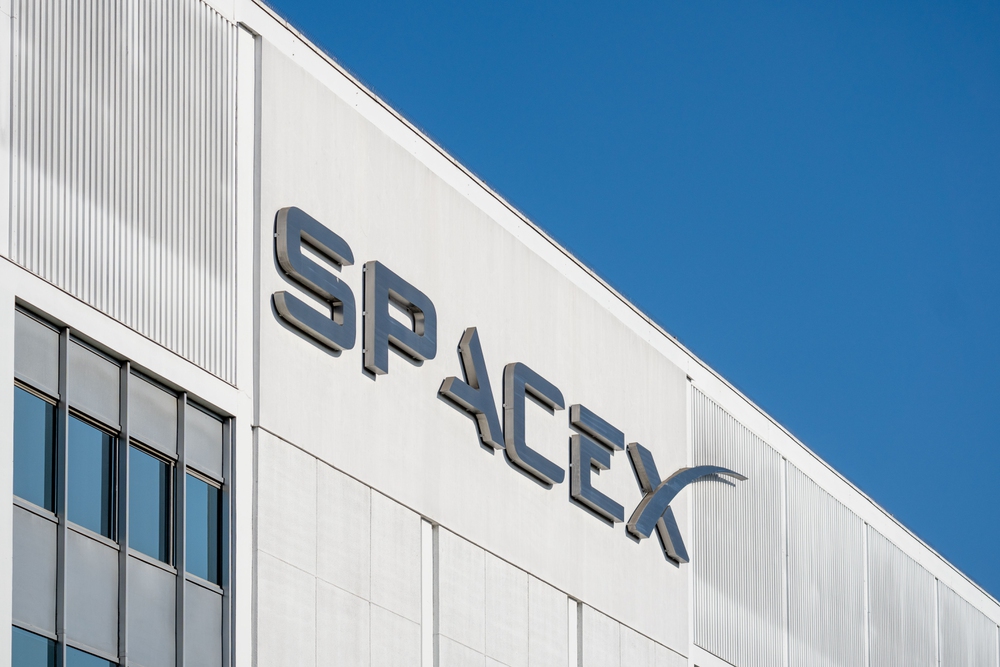
This is precisely the SpaceX-Cursor scenario: two companies with strengths in different layers of the AI stack agreeing to collaborate in developing coding agents and the models that power them, with the outcome of the collaboration ultimately being a $60 billion acquisition or a $10 billion breakup fee.
Cursor has a coding suite that is easy to navigate and can run either on its own post-trained model, Composer – which has strengths in quick execution, cost efficiency, and is based on Kimi, an open-source model released by Moonshot AI – or other proprietary models from leading AI labs through extensions. Cursor’s product has solid adoption among software developers and businesses.
SpaceX, the prospective acquirer, possesses the foundational resources and infrastructure. In this sense, the business purpose of its potential acquisition is primarily vertical. The value proposition to the merger parties lies in SpaceX’s foundational capabilities and its need for better product adoption, and Cursor’s engineering talent, robust user base, and its need for access to critical inputs to support, and potentially lead in, product development.
But the acquisition’s justification does not entirely reflect market positioning because, prior to being acquired by SpaceX, xAI had rolled out grok-code-fast-1, a competing product that, like Cursor, was designed as an AI-assisted software development service. Likewise, there is also some overlap between Composer and Grok. So, the prospective acquisition has in fact both horizontal and vertical components on the product and model side. However, such marginal overlap does not – by itself – justify a kind of heightened level of antitrust scrutiny that is used in instances of horizontal mergers. Cursor’s prospective acquisition by SpaceX should still be reviewed as vertical.
Learning From the Past
Historically, courts have treated vertical integration as generally less harmful compared to horizontal consolidation, though this view has been challenged in more recent years. In 2021, Nvidia’s attempted acquisition of Arm was blocked due to concerns that it would incentivize the combined entity to foreclose access to critical inputs to firms that were competing with Nvidia’s products in downstream markets and threatened Nvidia’s revenues. Perhaps as a consequence of that intervention, Nvidia opted to structure its recent acquisition of Groq in a way that circumvents merger review altogether.
Potential Outcomes
But the Nvidia-Arm theory of input foreclosure doesn’t quite fit the SpaceX-Cursor scenario. For one, on the product side, Cursor’s coding suite is not the only access point for developers using coding agents. On the model side, SpaceX and Cursor are both behind the frontier, outperformed by the leading AI labs. Furthermore, the outcome of the potential acquisition would not disincentivize SpaceX from selling compute to other model developers, as indicated in its recent partnership with Anthropic. There is also the risk that Cursor’s user base might incur substantial attrition by the time SpaceX exercises its right to acquire it. Last, antitrust analysis factors in any potential synergy even if it requires a predictive judgment.
Indeed, one possible outcome of the prospective acquisition may be the abandonment of Composer in favor of a larger and more improved model built from scratch, which may eventually replace Composer as Cursor’s main or exclusive base model. In this case, the harm of post-acquisition product discontinuation could be mitigated with a product that would have more consistent performance parity with frontier models developed by OpenAI and Anthropic and would be more competitive with other AI-assisted software development services such as Claude Code, GitHub Copilot, and Codex.
In sum, the collaboration between SpaceX and Cursor may not necessarily materialize into an acquisition, but if it does, it will likely be a type of acquisition that is competition-enhancing despite its elements of vertical and horizontal consolidation. Therefore, the risk of regulatory scrutiny will likely not be very significant because, as former Assistant Attorney General Gail Slater once wisely remarked, effective antitrust advocacy is premised on the understanding that antitrust is a scalpel and not a sledgehammer.
![[Advertisement]](https://ipwatchdog.com/wp-content/uploads/2026/09/Life-Sciences-2026-sidebar-super-early-bird-ends-Sep-7-700x500-2.jpg)
![[Advertisement]](https://ipwatchdog.com/wp-content/uploads/2026/09/IP-Copilot-Sep-8-2026-sidebar-700x500-1.jpg)
![[Advertisement]](https://ipwatchdog.com/wp-content/uploads/2026/09/Ankar-AI-Sep-10-2026-sidebar-700x500-1.jpg)
![[Advertisement]](https://ipwatchdog.com/wp-content/uploads/2026/06/Womens-IP-Forum-2026-sidebar-regular-price-700x500-rev1.jpg)
![[Advertisement]](https://ipwatchdog.com/wp-content/uploads/2026/07/Juristat-Varsity-Ad-2026-IPW-ad-Solo_1.png)
![[Advertisement]](https://ipwatchdog.com/wp-content/uploads/2026/08/OneTransform_700x500_v1-REVISED.jpg)
![[Advertisement]](https://ipwatchdog.com/wp-content/uploads/2024/09/Patent-Prosecution-Training-sidebar-700x500-2025-03-27.jpg)





![[Advertisement]](https://ipwatchdog.com/wp-content/uploads/2021/12/WEBINAR-336-x-280-px.png)
![[Advertisement]](https://ipwatchdog.com/wp-content/uploads/2021/12/Ad-4-The-Invent-Patent-System™.png)








Join the Discussion
No comments yet.