
![[IPWatchdog Logo]](https://ipwatchdog.com/wp-content/themes/IPWatchdog%20-%202023/assets/images/temp/logo-small@2x.png)

 0
0 “Without effective copyright protections, there is a grave risk that these organizations will no longer be able to produce the high-quality codes and standards that the public and lawmakers have come to rely on.” – Keith Kupferschmid, Copyright Alliance
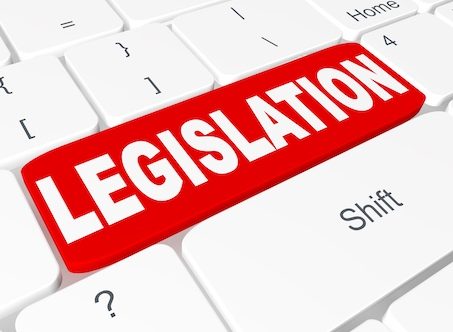 Opponents of the “Pro Codes Act” are speaking out this week following its recent reintroduction in the U.S. Senate. The Protecting and Enhancing Public Access to Codes (Pro Codes) Act of 2026, S. 4145, was reintroduced on March 19 by Senators Jon Cornyn, Chris Coons, Mazie Hirono, and Thom Tillis. According to the bill’s sponsors, the legislation “ensures safety standards do not lose copyright protection when they are incorporated into law by name so long as they are accessible for free on a publicly available website.”
The Pro Codes Act has been introduced in the House and Senate in several Congresses with no success. According to ASME, the legislation would require that any safety standards referenced in laws or regulations be posted online for free, a requirement that would “force SDOs to give up their copyrights and lose the revenue needed to support the standards-setting process.”
ASME Executive Director and Chief Executive Officer Tom Costabile released a statement on March 31 emphasizing that the legislation poses a risk of unraveling the longstanding system that has protected U.S. innovation, safety, and global leadership. By weakening the financial stability of standards development organizations and eroding established copyright protections, the bill could shift control over key standards to foreign adversaries and transfer costs now covered by the private sector onto taxpayers.
Costabile added that “rushing this measure forward again without addressing these fundamental flaws is not prudent governance, but rather a gamble with economic strength, national security, and public safety.” He urged Congress to revisit the proposal and pursue a more deliberate and balanced alternative.
Public Knowledge, along with 22 other organizations, continues to warn that limiting access to laws that regulate safety and fire standards could put everyday Americans at risk and increase the cost of accessing basic legal information. Meredith Rose, Senior Policy Counsel at Public Knowledge, called the bill “a naked attempt to put laws that impact every citizen behind a paywall.” Rose criticized the proposed model, stating that “the only way the public can access the law is by handing over their data in exchange for ‘access’ via non-searchable, siloed, data-harvesting, non-ADA-compliant reading rooms.”
Other organizations have also voiced strong opposition; for example, Re:Create Executive Director Brandon Butler stated that “the public has a right to freely access and reuse the law, without copyright restrictions.” Butler argued that “privatizing and commercializing laws would only create barriers to compliance, increasing the risk of violations and unsafe practices for Americans.” The Association of Research Libraries (ARL) noted that the Pro Codes Act “would reverse a foundational legal principle that once a standard or code is incorporated by reference into law, it enters the public domain,” a principle known as the government edicts doctrine.
Wayne T. Brough of the R Street Institute described the legislation as “a rebuke of court rulings, which have held that public access to the law is paramount.” Brough emphasized that the read-only portals intended to meet the bill’s public access requirements do not work with machine-readable systems or other technologies that could help lower the cost of legal compliance.
Despite the opposition, Copyright Alliance Chief Executive Officer Keith Kupferschmid issued a statement in support of the bipartisan bill, affirming that consensus-based health, safety, and security standards remain protected by copyright and retain that protection even when incorporated into law by reference, provided they are made publicly available online.
Kupferschmid emphasized that “codes and standards have always been protected by copyright.” He stated that “without effective copyright protections, there is a grave risk that these organizations will no longer be able to produce the high-quality codes and standards that the public and lawmakers have come to rely on.”
Jim Pauley, President and Chief Executive Officer of the National Fire Protection Association (NFPA), expressed gratitude to the senators for introducing the Pro Codes Act to safeguard the copyrights that are critical to maintaining the strength of that system. John Belcik, Chief Executive Officer at the International Code Council (ICC), noted that their standards development system “costs taxpayers nothing and has worked efficiently for over 125 years.”
Image Source: Deposit Photos
Author: Konstantinp
Image ID: 70846679
![[Advertisement]](https://ipwatchdog.com/wp-content/uploads/2026/03/NLPatent-Apr-2-2026-sidebar-700x500-1.jpg)
![[Advertisement]](https://ipwatchdog.com/wp-content/uploads/2026/02/Junior-Apr-7-2026-sidebar-700x500-1.jpg)





![[Advertisement]](https://ipwatchdog.com/wp-content/uploads/2021/12/WEBINAR-336-x-280-px.png)
![[Advertisement]](https://ipwatchdog.com/wp-content/uploads/2021/12/Ad-4-The-Invent-Patent-System™.png)



Join the Discussion
No comments yet. Add my comment.
Add Comment