


 2
2 “Protecting indigenous knowledge and seeking fair benefit-sharing are worthy global goals. But the patent system is not the mechanism for achieving them.”

WIPO offices
The World Intellectual Property Organization’s (WIPO’s) new Treaty on Intellectual Property, Genetic Resources and Associated Traditional Knowledge, adopted in May 2024, would impose additional disclosure obligations on patent applicants under the Patent Cooperation Treaty (PCT). Specifically, it would require disclosure of traditional knowledge and genetic resources even when those details have no bearing on patentability.
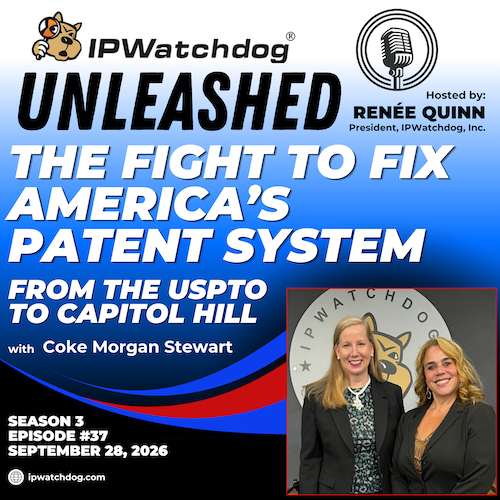
The United States has wisely declined to sign this Treaty—along with South Korea, Japan, and India. Last summer, then–Acting U.S. Patent and Trademark Office (USPTO) Director Coke Stewart reaffirmed that “for the PCT system to remain an effective tool for patent applicants, the system cannot add requirements such as the disclosure of traditional knowledge and genetic resources that do not relate to patentability of inventions.”
Patents as a Policy Proxy
Treaty proponents claim it will advance transparency and fairness for indigenous communities whose knowledge and genetic resources have been used commercially without acknowledgment or benefit. While these concerns may be valid, the patent system is not the right vehicle to address them.
Increasingly, patents have become proxies for achieving unrelated policy objectives—from reducing drug prices to constraining certain industries. The WIPO Treaty continues this trend by burdening the patent system with social and political aims that fall outside its purpose.
The likely outcome is weakened protection for biotechnology and pharmaceutical innovation, especially for discoveries derived from genetic resources or traditional knowledge. The result would be less research investment and slower progress in precisely those areas where humanity benefits most—healthcare, sustainability, and food security.
Undermining the Patent Bargain
The Treaty also threatens one of the most fundamental principles of intellectual property: the patent bargain. Patents grant inventors limited exclusive rights in exchange for public disclosure of their inventions. When patents expire, the knowledge enters the public domain, allowing others to build upon it.
This quid pro quo—temporary exclusivity in return for long-term public benefit—has defined patent systems for centuries. The first codified patent law, Venice’s 1474 Patent Statute, granted inventors a 10-year monopoly in exchange for disclosure. That same principle influenced England’s 1624 Statute of Monopolies and, ultimately, the U.S. Constitution, which empowers Congress “to promote the Progress of Science and useful Arts, by securing for limited Times to Authors and Inventors the exclusive Right to their respective Writings and Discoveries.”
As Thomas Jefferson—our first de facto patent administrator—recognized, patents represent a deliberate balance between rewarding ingenuity and advancing the public good through the dissemination of knowledge. Mandating additional disclosures unrelated to patentability distorts this balance, imposing new costs and uncertainties that chill innovation and deter investment. The result is a weaker, less predictable system—one less capable of supporting the transition of invention from the lab to the marketplace where society can benefit.
The Biopiracy Myth
Supporters have pointed to the “Neem Tree” case in India as an example of biopiracy, where patents were issued on applications derived from a plant known for centuries to repel insects. But such cases are failures in examination, not failures of the patent system. If traditional knowledge was not properly cited or acknowledged as prior art, that is an issue of patent quality, not justification for rewriting global rules.
Many patents in these cases protect genuine innovations—such as purification methods, delivery systems, or synthetic analogues—that make a compound safe, effective, and commercially viable. These are precisely the kinds of advancements the patent system was designed to encourage.
From Ancient Insight to Modern Innovation
Traditional knowledge has often guided science toward critical discoveries—but it is the rigorous process of scientific development that turns insight into usable innovation.
- Digitalis, from foxglove, evolved from English folk medicine into a cornerstone heart treatment.
- Willow bark inspired aspirin, used worldwide for pain and cardiovascular care.
- Cinchona bark, used for centuries in the Andes, led to quinine, the first antimalarial.
- Pacific yew bark, long used by Native Americans, produced paclitaxel (Taxol), a breakthrough cancer therapy.
These innovations honor traditional knowledge—they do not exploit it. They demonstrate how ancient understanding, coupled with modern science and the incentives of the patent system, can transform natural wisdom into life-saving medicine.
The Right Tool for the Right Goal
Protecting indigenous knowledge and seeking fair benefit-sharing are worthy global goals. But the patent system is not the mechanism for achieving them. Tailored solutions—such as contractual benefit-sharing arrangements, cultural heritage protections, or targeted international development programs—are far better suited to these purposes.
The strength of the patent system lies in its neutrality, predictability, and focus on innovation. When we load it with social or political objectives, we risk undermining the very system that drives technological progress.
The WIPO Treaty confuses moral aspiration with economic mechanism. Protecting indigenous heritage and promoting innovation are both important—but conflating the two serves neither.
![[Advertisement]](https://ipwatchdog.com/wp-content/uploads/2026/10/Junior-Oct-15-2026-sidebar-700x500-1.jpg)
![[Advertisement]](https://ipwatchdog.com/wp-content/uploads/2026/10/BlackBox-IP-Oct-20-2026-sidebar-700x500-1.jpg)
![[Advertisement]](https://ipwatchdog.com/wp-content/uploads/2026/10/Questel-Oct-22-2026-sidebar-700x500-1.jpg)
![[Advertisement]](https://ipwatchdog.com/wp-content/uploads/2026/09/WE-BUY-PATENTS-SIM-IP-Ad-1-revised-on-Sep-28-2026-700x500-1.jpg)
![[Advertisement]](https://ipwatchdog.com/wp-content/uploads/2026/09/Life-Sciences-2026-sidebar-early-bird-date-corrected-700x500-1.jpg)
![[Advertisement]](https://ipwatchdog.com/wp-content/uploads/2024/09/Patent-Prosecution-Training-sidebar-700x500-2025-03-27.jpg)





![[Advertisement]](https://ipwatchdog.com/wp-content/uploads/2021/12/WEBINAR-336-x-280-px.png)
![[Advertisement]](https://ipwatchdog.com/wp-content/uploads/2021/12/Ad-4-The-Invent-Patent-System™.png)






Join the Discussion
2 comments so far.
Anon
November 13, 2025 09:13 amKevin M,
To your point, why is phrasing that is ‘different’ than that which already exists in patent law being entertained?
The maxim of a legislative body so choosing different wording would indicate a different meaning is intended.
What is that different meaning, and how does that affect the substantive aspects of examination under various existing Sovereign examination systems?
Kevin M
November 12, 2025 10:05 amWhat on earth does “protecting indigenous knowledge” mean? By using the terminology of your opponent, you’re giving him an advantage.