
![[IPWatchdog Logo]](https://ipwatchdog.com/wp-content/themes/IPWatchdog%20-%202023/assets/images/temp/logo-small@2x.png)

 0
0 “[Under Decision G 2/24], relying on later intervention, particularly at the appeal stage, is risky; the appeal could vanish overnight if all the appellants withdraw.”
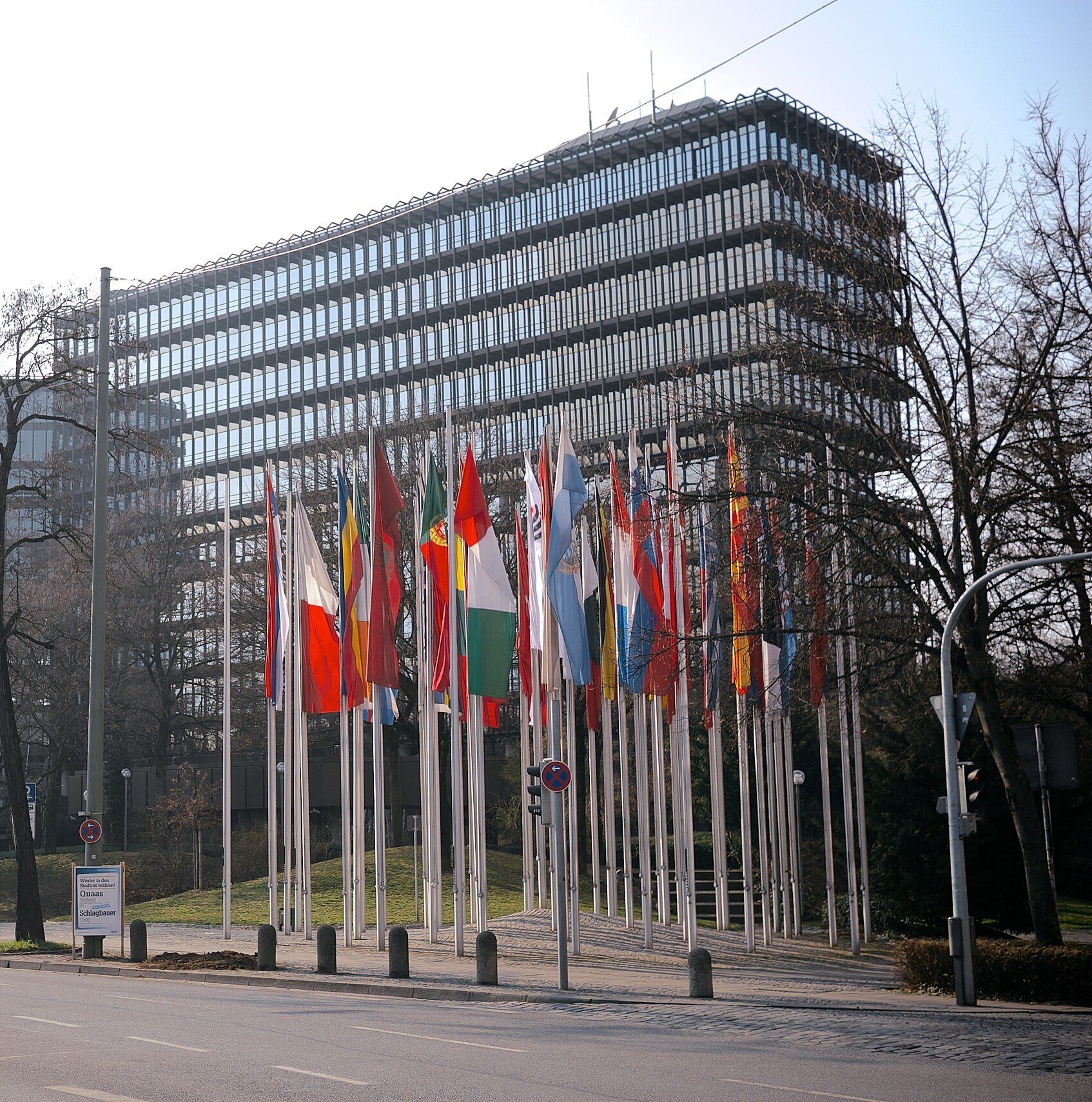
EPO, Munich. Source: Wikipedia
In September 2025, the Enlarged Board of Appeal (EBA), the highest judicial authority of the European Patent Office (EPO), issued its decision in G 2/24. The EBA addressed a procedural question: if a third party (an “intervener”) joins an ongoing appeal, can that party keep the case alive if all the original appellants withdraw?
The EBA’s answer was a no. In other words, interveners play only a supporting role in appeal proceedings. They may join an existing appeal, but they cannot take over once the main participants have left the stage.
Road to the EBA
The dispute that gave rise to G 2/24 stemmed from opposition and appeal proceedings involving European Patent No. 2941163, owned by Foreo Limited, covering a skin-cleansing device. The patent was originally challenged by Beurer GmbH, which filed a timely opposition under Article 99 EPC, alleging lack of novelty, lack of inventive step, and added subject-matter.
After the nine-month opposition period had expired, Foreo sent a warning letter to Geske GmbH & Co. KG, accusing it of potential patent infringement. Because the opposition window had closed, Geske could no longer file its own opposition. Instead, it attempted to join the existing opposition proceedings through intervention under Article 105 EPC, which allows an alleged infringer to participate if it has been sued for infringement or has brought a declaratory action for non-infringement.
However, the EPO Opposition Division rejected Geske’s intervention, deciding that a mere warning letter was insufficient. Under Article 105, an intervener must demonstrate that formal infringement proceedings have begun or that a declaratory-judgment action has actually been filed. The mere threat of litigation or even the anticipation of a lawsuit is not enough.
In an effort to cure this defect, Geske filed a declaratory-judgment action before the Düsseldorf Regional Court to establish its entitlement to intervene under Article 105(1)(b) EPC. But by the time Foreo was served with the court papers, the Opposition Division issued its decision maintaining the patent in amended form. Because the decision had already been handed down, Geske no longer had any standing at that stage and was not a party entitled to appeal.
Beurer, the original opponent, subsequently appealed the Opposition Division’s decision under Article 107 EPC, creating a new set of proceedings before the EPO Boards of Appeal. This development gave Geske a fresh opportunity to intervene. This time at the appeal stage. Yet before the appeal could be decided, Beurer withdrew its appeal (for unknown reason). Geske suddenly found itself as the only remaining active participant. The critical question was whether Geske, as a third-party intervener, could keep the appeal alive and continue challenging Foreo’s patent on its own.
The Decision
In decision G 2/24, the EBA confirmed and reinforced the position taken in its earlier rulings, G 3/04 (2005) and G 1/94 (1994). It held that an intervener does not become an “appellant” within the meaning of Article 107 EPC and therefore cannot continue appeal proceedings once all the original appeals have been withdrawn. Intervention in appeal is purely accessory. It depends entirely on the existence of ongoing proceedings initiated by a valid appeal.
The Board’s reasoning rested on the structure of the EPC itself. Articles 99, 105, and 107 EPC together form a closed procedural system defining who can participate in post-grant proceedings and on what terms. Only parties “adversely affected” by a decision at first instance may appeal under Article 107 EPC, and only when at least one admissible appeal is pending do appeal proceedings exist at all.
Thus, once the final appeal is withdrawn, there are no longer any proceedings in which an intervener can participate. The appeal process ends automatically for all parties, including any interveners. The Enlarged Board expressly rejected the notion that an intervener could “inherit” appellant status from a withdrawn opponent.
Why This Matters
To a casual observer, the issue may sound like procedural technicality but for companies involved in European patent disputes, the implications are significant. Intervention under Article 105 EPC offers an important safety net for alleged infringers who were not able to file an opposition in time. It allows them to participate in the ongoing challenge of a patent’s validity once they are formally drawn into an infringement dispute.
Yet, as G 2/24 makes clear, this safety net has limits. Interveners depend entirely on the existence of a live opposition or appeal. If all the original appellants withdraw, the intervener’s participation ends immediately. Appeals exist only at the instance of those directly affected by the first-instance (opposition) decision, and the EPO will not allow proceedings to continue indefinitely simply because another party wishes to join the debate later.
Strategic Lessons for Opponents and Interveners
Monitoring competitors’ patents and filing timely oppositions remain reliable and cost effective tools to protect freedom to operate. Relying on later intervention, particularly at the appeal stage, is risky; the appeal could vanish overnight if all the appellants withdraw.
Those who might face infringement allegations should act decisively once a patent is granted. If a warning letter arrives, the clock is already ticking. An admissible intervention under Article 105 EPC requires evidence that formal litigation either an infringement action or a declaratory action for non-infringement has been initiated and docketed by the responsible court. A warning letter or cease-and-desist notice alone will not suffice.
From a practical standpoint, alleged infringers who expect litigation should consider filing a declaratory-judgment action swiftly after receiving such a letter. This step preserves the right to intervene if opposition or appeal proceedings are still ongoing.
The timing of procedural steps can be decisive. Because an intervener joining during appeal proceedings cannot continue if all other appeals are withdrawn, companies seeking to protect their freedom to operate may consider intervening during the opposition. Intervening at that stage may confer full status as an opponent, including the independent right to appeal under Article 107 EPC. By contrast, intervention during appeal offers limited value, the intervener can submit arguments and evidence, but their standing evaporates if all appellants withdraw.
Strategic Lessons for Patent Proprietors
Patent owners should be cautious about how and when they send warning letters. Sending a warning during the opposition period or while opposition proceedings are still pending could enable alleged infringers to intervene under Article 105 EPC, giving them a seat at the table. To avoid this, patent proprietors might consider delaying formal warnings until the opposition period has expired or until any ongoing opposition proceedings have concluded.
If a third-party intervention does occur, particularly one at the opposition stage, patent owners must be prepared for a broader attack. In G 1/94, the EBA confirmed that interveners at first instance (opposition) may introduce new grounds of opposition, potentially expanding the scope of the challenge beyond that originally raised.
Moreover, in industries like pharmaceuticals and biotechnology, where EPO opposition and appeal proceedings often run in parallel with national litigation and Unified Patent Court (UPC) actions, the timing of warnings must be carefully coordinated. An early letter could open the door to EPO opposition or intervention, affecting litigation strategy across Europe.
![[Advertisement]](https://ipwatchdog.com/wp-content/uploads/2026/09/Life-Sciences-2026-sidebar-super-early-bird-ends-Sep-7-700x500-2.jpg)
![[Advertisement]](https://ipwatchdog.com/wp-content/uploads/2026/09/IP-Copilot-Sep-8-2026-sidebar-700x500-1.jpg)
![[Advertisement]](https://ipwatchdog.com/wp-content/uploads/2026/09/Ankar-AI-Sep-10-2026-sidebar-700x500-1.jpg)
![[Advertisement]](https://ipwatchdog.com/wp-content/uploads/2026/06/Womens-IP-Forum-2026-sidebar-regular-price-700x500-rev1.jpg)
![[Advertisement]](https://ipwatchdog.com/wp-content/uploads/2026/07/Juristat-Varsity-Ad-2026-IPW-ad-Solo_1.png)
![[Advertisement]](https://ipwatchdog.com/wp-content/uploads/2026/08/OneTransform_700x500_v1-REVISED.jpg)
![[Advertisement]](https://ipwatchdog.com/wp-content/uploads/2024/09/Patent-Prosecution-Training-sidebar-700x500-2025-03-27.jpg)





![[Advertisement]](https://ipwatchdog.com/wp-content/uploads/2021/12/WEBINAR-336-x-280-px.png)
![[Advertisement]](https://ipwatchdog.com/wp-content/uploads/2021/12/Ad-4-The-Invent-Patent-System™.png)





Join the Discussion
No comments yet.