
![[IPWatchdog Logo]](https://ipwatchdog.com/wp-content/themes/IPWatchdog%20-%202023/assets/images/temp/logo-small@2x.png)

 0
0 “Although the patents challenged in these proceedings have not been in force for as long as those in IPR2025-00780 and IPR2025-00781, this fact alone does not tip the balance against discretionary denial.” – Director Discretionary Denial decisions
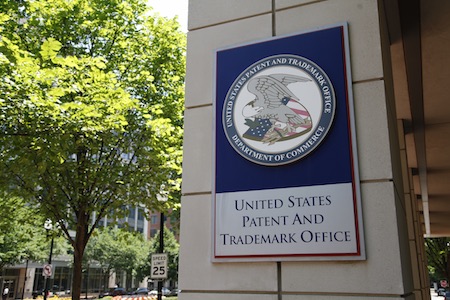 In the latest Director Discretionary Denial decisions to issue from the U.S. Patent and Trademark Office (USPTO), Acting Deputy Chief Administrative Patent Judge Kalyan K. Deshpande denied institution in six inter partes reviews (IPRs) brought by Samsung Electronics Co. Ltd. and Samsung Electronics America, Inc against GenghisComm Holdings, LLC over mobile communications patents—some of which are only three years old.
USPTO Acting Director Coke Morgan Stewart recused herself from the decisions due to a conflict and delegated her authority to Deshpande via a Notice of Delegation.
According to the decisions, Deshpande said that “[a]lthough the patents challenged in these proceedings have not been in force for as long as those in IPR2025-00780 and IPR2025-00781, this fact alone does not tip the balance against discretionary denial.”
The patent at issue in IPR2025-00780 was granted in 2017, while the patent in IPR2025-00781 was granted in 2019. But most of the patents at issue in the six IPRs denied institution August 22 (IPR2025-00788; IPR2025-00789; IPR2025-00790 IPR2025-00791 IPR2025-00792; and IPR2025-00793) were granted between 2021 and 2022.
In the IPR2025-00780 and IPR2025-00781 Director Discretionary Denial decisions, Deshpande highlighted two main reasons for granting the petitions: the timing of the parallel court proceeding and the age of the patents. The timing of the trial was noted first and presumably carried more weight than the age of the patents. He wrote:
“[I]t is unlikely that a final written decision in these proceedings will issue before the district court trial occurs, resulting in significant duplication of effort, additional expense for the parties, and a risk of inconsistent decisions. Additionally, there is insufficient evidence that the district court is likely to stay its proceeding even if the Board were to institute trial.”
Since the cases at issue in the Friday decisions contain “essentially the same discretionary considerations a[s] those presented in IPR2025-00780 and IPR2025-00781,” Deshpande incorporated the analysis, irrespective of the difference in patent age.
So far, six years is still the youngest patent to have been explicitly afforded the benefit of Stewart’s “settled expectations” doctrine. In Kahoot! AS v. Interstellar, Inc., the patent at issue was U.S. Patent No. 10,339,825, titled “System and method for on-line academic competition.” It was granted in 2019, making the patent just six years old, but according to Stewart’s July 31 decision, this is enough to create “strong settled expectations” for the patent owner, even in the face of a stayed parallel district court proceeding.
The patents at issue in the latest decisions are:
IPR2025-00788 (Patent 10,389,568 B1)
IPR2025-00789 (Patent 11,075,786 B1)
IPR2025-00790 (Patent 11,223,508 B1)
IPR2025-00791 (Patent 11,252,005 B1)
IPR2025-00792 (Patent 11,381,285 B1)
IPR2025-00793 (Patent 11,424,792 B2)
![[Advertisement]](https://ipwatchdog.com/wp-content/uploads/2026/03/NLPatent-Apr-2-2026-sidebar-700x500-1.jpg)
![[Advertisement]](https://ipwatchdog.com/wp-content/uploads/2026/02/Junior-Apr-7-2026-sidebar-700x500-1.jpg)







![[Advertisement]](https://ipwatchdog.com/wp-content/uploads/2021/12/WEBINAR-336-x-280-px.png)
![[Advertisement]](https://ipwatchdog.com/wp-content/uploads/2021/12/Ad-4-The-Invent-Patent-System™.png)






Join the Discussion
No comments yet.