
![[IPWatchdog Logo]](https://ipwatchdog.com/wp-content/themes/IPWatchdog%20-%202023/assets/images/temp/logo-small@2x.png)

 6
6 “By definition, there is no infringing material that resides on a § 512(a) service provider’s system or network, nor is there a ‘link’ or ‘directory’ that a § 512(a) service provider maintains.” – Ninth Circuit
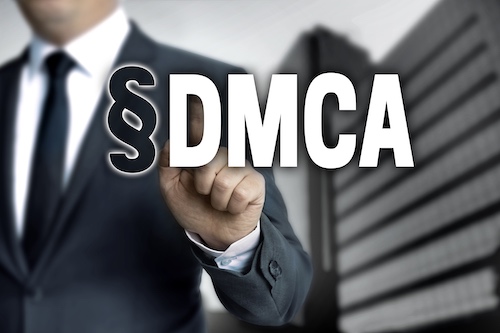 The U.S. Court of Appeals for the Ninth Circuit ruled Friday, August 15, that internet service providers (ISPs) who merely serve as a conduit for service are protected from subpoenas pursuant to Section 512(h) of the Digital Millennium Copyright Act (DMCA) under one of Section 512’a’s four safe harbors.
Section 512(h) under the DMCA reads:
(h)Subpoena To Identify Infringer.—
(1)Request.—
A copyright owner or a person authorized to act on the owner’s behalf may request the clerk of any United States district court to issue a subpoena to a service provider for identification of an alleged infringer in accordance with this subsection.
Capstone Studios Corp. sought to subpoena Cox Communications, Inc./ CoxCom LLC to obtain the identities of 29 users it claimed to be showing pirated copies of its movie, Fall via BitTorrent. One of the users objected and the United States District Court for the District of Hawaii held that “Cox qualified for one of § 512’s four safe harbors—17 U.S.C. § 512(a)—because Cox merely provided its users with an Internet connection and played no other role in the alleged infringement.”
When Capstone first asked the district court to issue the subpoena, the court granted it and Cox notified the 29 subscribers and told them to notify the court if they had any objections. One subscriber did object and wrote a letter claiming he had left his WiFi network open and someone else must have downloaded the pirated film while using it. Cox gave Capstone the information for the 28 other subscribers but a magistrate judge viewed the letter of objection as a motion to quash the subpoena and asked Capstone to respond. The magistrate judge ultimately issued findings and a recommendation that the subpoena “was invalid and should be quashed.” The Ninth Circuit explained: “Although not raised by John Doe or Capstone, the magistrate judge concluded that the subpoena was invalid because Cox’s role in disseminating the copyrighted material was confined to providing the Internet connection, which qualified Cox for one of § 512’s four primary safe harbors—§ 512(a).”
The district court then adopted the magistrate’s findings, agreeing with the view that a Section 512(a) service provider cannot be subject to a Section 512(h) subpoena as a matter of law, as well as that Cox acted only as a Section 512(a) service provider with respect to the infringement at issue. Capstone appealed.
The Ninth Circuit noted that this was an issue of first impression as the court had not had an occasion to weigh in on whether a Section 512(h) subpoena can issue to a Section 512(a) service provider. But to do so, the panel said they need look no further than the text of the DMCA. “By definition, there is no infringing material that resides on a § 512(a) service provider’s system or network, nor is there a ‘link’ or ‘directory’ that a § 512(a) service provider maintains.”
These ISPs cannot participate in the notice and takedown process because they serve only as conduits and there is nothing to take down, explained the court. Furthermore, the requirements for requesting a Section 512(h) subpoena include criteria for notifying the ISP of the alleged infringing activity that make it clear a “§ 512(a) service provider is not a contemplated recipient of a proper (c)(3)(A) notification” and thus, the appellate court concluded that the DMCA does not permit a § 512(h) subpoena to issue to a § 512(a) service provider.
The D.C. (Recording Indus. Ass’n of Am., Inc. v. Verizon Internet Servs., Inc., 351 F.3d 1229, 1237 (D.C. Cir. 2003)) and Eighth Circuits (In re Charter Communications, Inc., Subpoena Enforcement Matter, 393 F.3d 771, 775 n.3 (8th Cir. 2005)) have reached the same conclusion, noted the opinion.
Capstone argued that a Section 512(a) service provider can “disable access to” infringing material via processes such as “destination null routing” and “port blocking,” and that this justifies a subpoena issuing to such a provider. However, the Ninth Circuit said such remedies do not go far enough under the DMCA’s requirements:
“…an ISP cannot ‘disable access’ to infringing material via port blocking or destination null routing; it can only disable its subscribers’ access to infringing material. Capstone points to nothing in the text or legislative history of § 512 suggesting that Congress contemplated such a piecemeal application of the notice and takedown procedure.”
Turning to whether the district court erred in finding that Cox acted as a 512(a) service provider here, the Ninth Circuit again agreed with the district court’s assessment. Capstone argued that Cox also acted as a § 512(d) service provider, which deals with ISPs that merely provide tools for linking users to locations that contain infringing content, by assigning IP addresses to its subscribers and connecting those IP addresses to the Internet. But the appellate panel said that a “basic understanding of IP addresses and P2P networking defeats Capstone’s argument. Connecting a user to the Internet and assigning the user an IP address does not ‘link’ or ‘refer’ the user anywhere, much less to a particular location containing infringing material.”
Capstone further argued that an expert declaration Cox provided explaining that Cox acts only as a 512(a) ISP was “conclusory” and should not have been relied upon. The Ninth Circuit agreed that the declaration was conclusory but did not conclude that the district court clearly erred in finding Cox acted as a § 512(a) service provider “because the parties did not meaningfully dispute the role Cox played with respect to the alleged infringement.” The opinion explained: “The court clearly understood, and Capstone did not dispute, that the infringement took place via P2P networking and the extent of an ISP’s technical involvement in P2P networking.”
Thus, the district court orders quashing the subpoena and denying Capstone’s motion for reconsideration were affirmed.
Image Source: Deposit Photos
Author: 8vfanDP
Image ID: 131584728
![[Advertisement]](https://ipwatchdog.com/wp-content/uploads/2026/09/Patently-Sep-22-2026-sidebar-700x500-1.jpg)
![[Advertisement]](https://ipwatchdog.com/wp-content/uploads/2026/06/Womens-IP-Forum-2026-sidebar-regular-price-700x500-rev1.jpg)
![[Advertisement]](https://ipwatchdog.com/wp-content/uploads/2026/09/WE-BUY-PATENTS-SIM-IP-Ad-1-700x500-1.jpeg)
![[Advertisement]](https://ipwatchdog.com/wp-content/uploads/2026/08/OneTransform_700x500_v1-REVISED.jpg)
![[Advertisement]](https://ipwatchdog.com/wp-content/uploads/2024/09/Patent-Prosecution-Training-sidebar-700x500-2025-03-27.jpg)







![[Advertisement]](https://ipwatchdog.com/wp-content/uploads/2021/12/WEBINAR-336-x-280-px.png)
![[Advertisement]](https://ipwatchdog.com/wp-content/uploads/2021/12/Ad-4-The-Invent-Patent-System™.png)






Join the Discussion
6 comments so far.
Dwayne Albertson
August 24, 2025 07:27 amThe courts nibble at the edges the real problem and refuse to police their fellow guild members for practicing champerty financed by off-shore dark money. All the trolls are part of a partnership web running the scam in the US, UK, Brazil, etc – PML Process Management Limited, LLC based in Cyprus. PML was the rebrand used after Prenda Law’s lawyers were sent to serve decades in prison. It carries forward with many of the same movies’ supposed copyright “rights”. It should be investigated for apparent criminality since the lawyers split the money with PML, it’s not a lawyer, it funding litigation in the US with dark money from Cyprus and appears to be connected to tax evaders that use the funds to support human and child trafficking in the Philippines. BUT – the courts don’t want to cut off their lawyers’ $….
Anon
August 18, 2025 05:20 pmI don’t see them arguing that Cox provides a DNS service which allows its users to access the pirate cites. Had that argument been raised, there might have been more to this and names would have been provided. Since they did not argue it in the lower court, it can no longer be raised.
Anon
August 18, 2025 12:42 pmkotodama,
I stand corrected: the links are already present.
It’s a bit non-intuitive, but the text of “protected from subpoenas pursuant to Section 512(h) of the Digital Millennium Copyright Act (DMCA) under one of Section 512’a’s four safe harbors.” contains a hyperlink to the top-level code of 17 U.S. Code § 512 at the Cornell Law website.
Anon
August 18, 2025 08:11 amkotodama,
Hyperlinks are not only available, but have been selectively used in this very article. Your noting of “to include the text of the other key provisions” is not only apt, but easily done.
I do recommend the author of the article provide those updates.
kotodama
August 18, 2025 05:31 amAlso, it would be helpful to readers less immersed in DCMA issues (including me!) to include the text of the other key provisions at issue, like 512(a) and (c)(3)(A). But I realize at some point it starts to get unwieldy just for a blog entry. Generally, this is a very good writeup and bringing this issue to the readership’s attention is much appreciated.
kotodama
August 18, 2025 05:24 amWhat a strange result, although perhaps understandable if the court is strongly inclined to sync up with the Eighth and DC Circuits, especially the latter, which kicked off this whole line of decisions.