
![[IPWatchdog Logo]](https://ipwatchdog.com/wp-content/themes/IPWatchdog%20-%202023/assets/images/temp/logo-small@2x.png)

 0
0 “By requiring human contribution beyond just operating an AI tool, the USCO extends copyright protections to endeavors that contribute to the advancement of human creativity.”
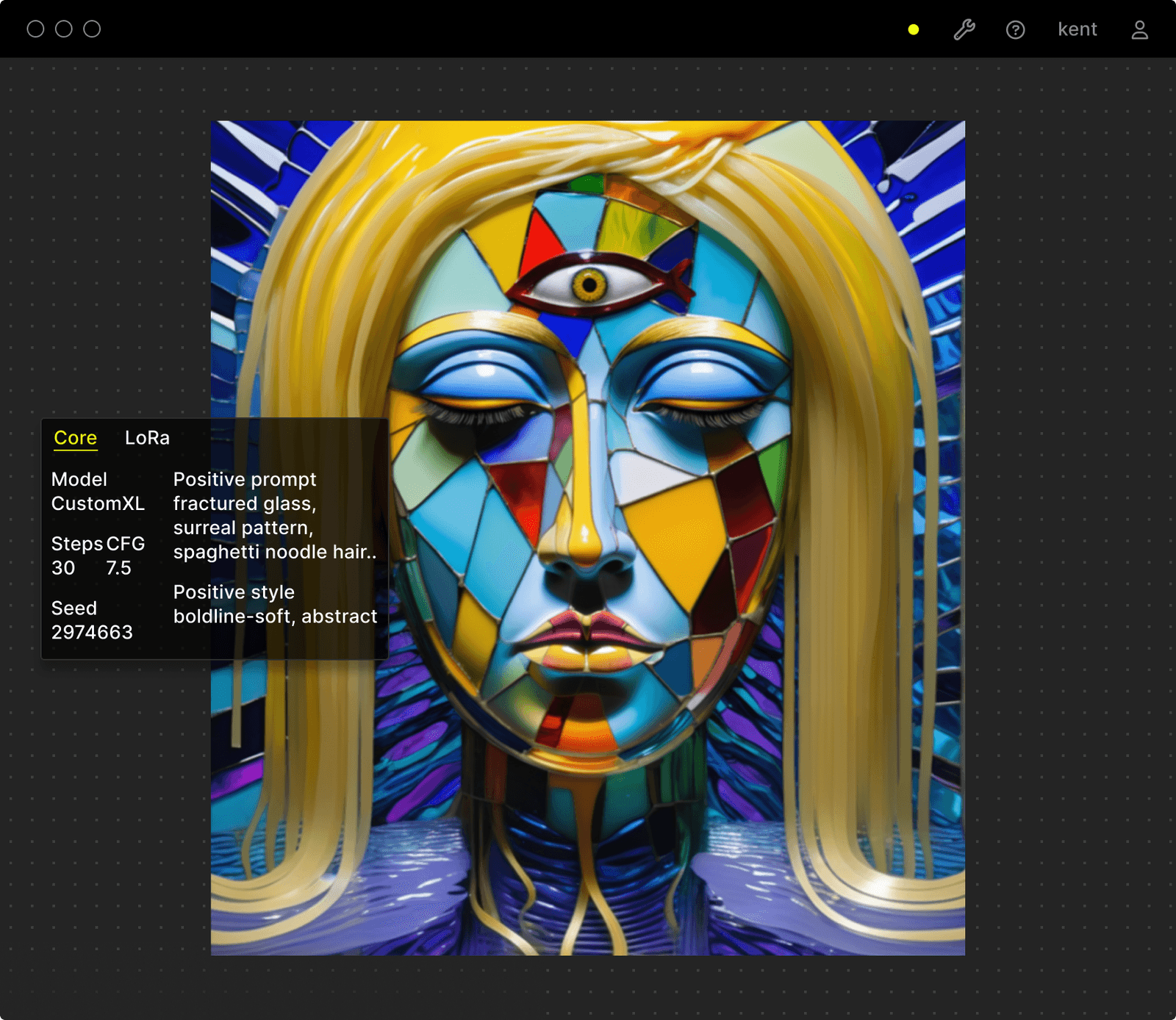
Copyrightability of AI-generated and AI-assisted work has been a hot topic for a while. The United States Copyright Office (USCO) clarified its position on AI contributions in its 2023 guidelines. This article explores the application of the guidelines as it relates to images generated using AI tools, and how to square the circle on some long-run concerns raised in the recent USCO report on the economic implications of AI.
Case Studies
For the graphic novel Zarya of the Dawn, author/artist Kris Kashtanova used a text-to-image AI tool to illustrate the images of the comic book; the USCO found that although the book as a whole is copyrightable as a compilation, individual images are not. This is in line with how the courts view the copyrightability of images. The Supreme Court in Burrow-Giles held that copyrightable images must be “representatives of original intellectual conceptions of the author,” and not “merely [a] mechanical [… process …] with no place for novelty, invention or originality.” Even though Kashtanova iterated on the AI-generated images for Zarya, the USCO did not believe it amounted to controlling and guiding the AI to reach a desired image; the USCO concluded that the AI tool in question, Midjourney, does not provide users “sufficient control over generated images to be treated as the ‘master mind’ behind them.”
Kashtanova then submitted Rose Enigma for copyright protection, along with the inputs selected for the AI tool Stable Diffusion: an original hand drawing and the accompanying text prompt. The prompt included thematic instructions like “photorealism” and “hyper detailed,” and visual instructions like asking for “cinematic lighting.” The USCO issued a limited registration for the final image, excluding all non-human expressions.
The Supreme Court in Community for Creative Non-Violence v. Reid held that an author is the “person who translates an idea into a fixed, tangible expression.” The USCO believes this threshold of translating an idea into an expression is met by A Single Piece of American Cheese. For this image, artist Kent Keirsey started with an AI-generated image and highlighted specific portions of the image to make modifications using text prompts until he achieved the overall image he desired. Among the evidence submitted to the USCO was a video of Keirsey creating the final image using 35 modifications, with Keirsey explaining his prompts in the audio. The USCO recently issued a copyright registration to the final image in its entirety (excluding individual AI-generated elements).
Long-Term Concerns of Generative AI
The USCO recently issued a report on the economic implications of AI. In it, economists remind the reader that long-run scientific and cultural innovation occurs when a diverse (in background, experience, and thoughts) group of humans undergo an iterative process of experimentation. If human progress is a path, human experimentation creates a multitude of forks at the end of each path for the human race to choose from, advancing culture and civilization. As AI crowds out human-generated works, we foreclose this stochastic process of experimentation, limiting the ways in which human culture can progress. The decisions discussed above reflect this concern. By requiring human contribution beyond just operating an AI tool, the USCO extends copyright protections to endeavors that contribute to the advancement of human creativity. And to the extent that fears of stagnating human culture are valid, the USCO position encourages authors to advance the creative arts with copyright protection – which this author favors.
![[Advertisement]](https://ipwatchdog.com/wp-content/uploads/2026/08/Solve-Intelligence-Aug-27-2026-sidebar-700x500-rev1.jpg)
![[Advertisement]](https://ipwatchdog.com/wp-content/uploads/2026/08/Tradespace-Sep-1-2026-sidebar-700x500-1.jpg)
![[Advertisement]](https://ipwatchdog.com/wp-content/uploads/2026/07/Womens-IP-Forum-2026-sidebar-register-early-bird-now-700x500-1.jpg)
![[Advertisement]](https://ipwatchdog.com/wp-content/uploads/2026/08/OneTransform_700x500_v1-REVISED.jpg)
![[Advertisement]](https://ipwatchdog.com/wp-content/uploads/2026/07/Juristat-Varsity-Ad-2026-IPW-ad-FreeTrial_2-UPDATED-on-Jul-15-2026.png)
![[Advertisement]](https://ipwatchdog.com/wp-content/uploads/2024/09/Patent-Prosecution-Training-sidebar-700x500-2025-03-27.jpg)



![[Advertisement]](https://ipwatchdog.com/wp-content/uploads/2021/12/WEBINAR-336-x-280-px.png)
![[Advertisement]](https://ipwatchdog.com/wp-content/uploads/2021/12/Ad-4-The-Invent-Patent-System™.png)





Join the Discussion
No comments yet.