
![[IPWatchdog Logo]](https://ipwatchdog.com/wp-content/themes/IPWatchdog%20-%202023/assets/images/temp/logo-small@2x.png)

 0
0 Bite (noun): more meaty news to sink your teeth into.
Bark (noun): peripheral noise worth your attention.

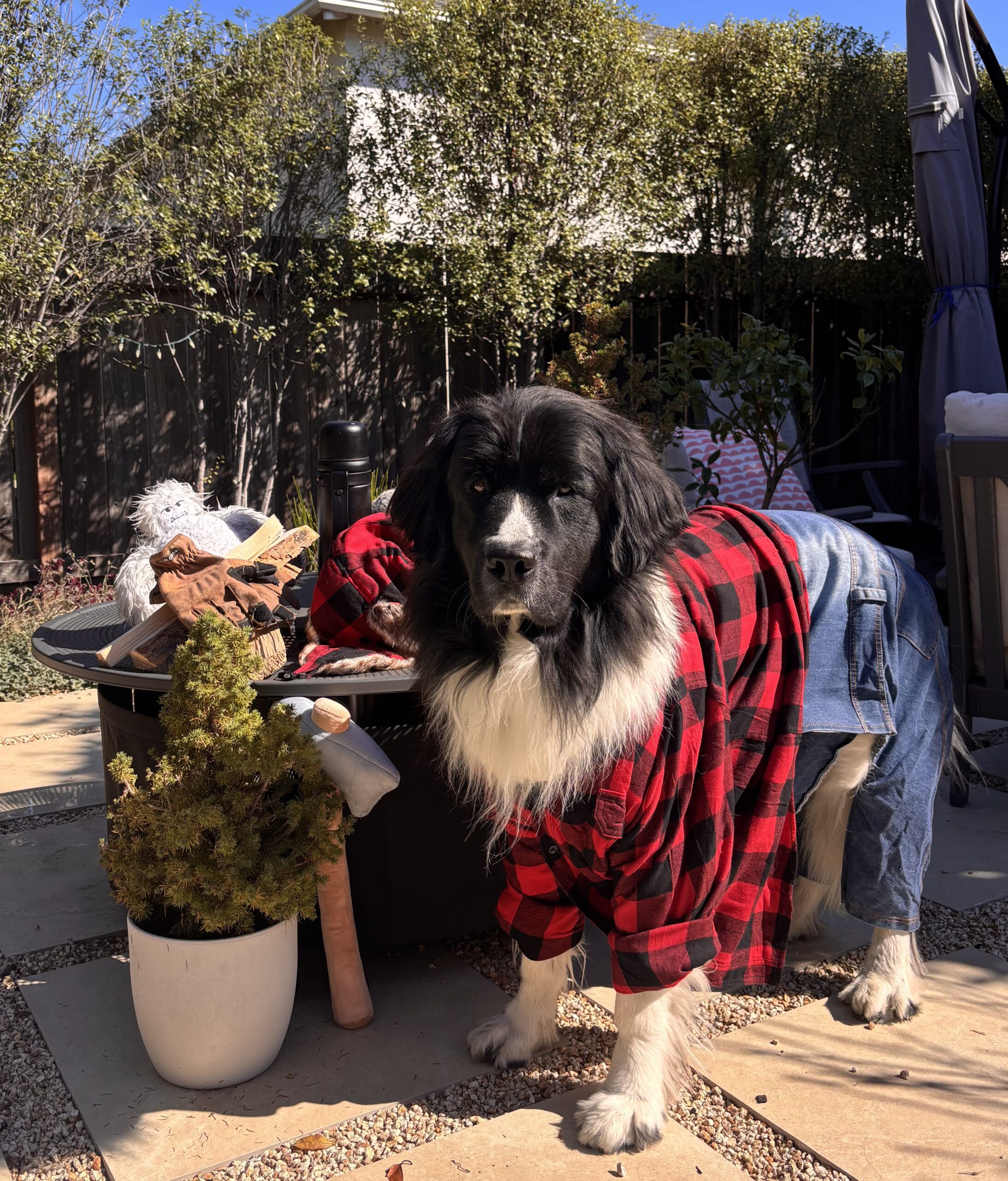
David Kappos with his fur babies: Amelia (tan) is a fox terrier mix, and Penny (black) is a husky/terrier mix
This week in Other Barks & Bites: the UK Court of Appeal grants Lenovo an interim cross-license after finding that Ericsson breached its FRAND obligations for SEP licensing; leaders of several committees from the U.S. House of Representatives want to examine China’s infiltration of the federal government’s small business innovation grant programs; demand for next-gen AI chips helps Nvidia stock rebound; the Supreme Court vacates a $43 million profits disgorgement award against non-party affiliates of the defendant; the RESTORE Patent Rights and REPAIR Act are introduced into Congress; former USPTO Deputy Director Laura Peter joins the Advisory Board of C4IP; and the Ninth Circuit dismisses challenges to Qualcomm’s chip licensing policy that were filed under California state antitrust law.
Bites
UK Court of Appeals Finds Lenovo is Willing Licensee for Ericsson SEPs – On Friday, February 28, the UK Court of Appeal ruled in favor of Chinese electronics manufacturer Lenovo in an infringement case over standard-essential patents (SEPs) covering 4G and 5G networking technologies owned by Ericsson. The court granted Lenovo an interim cross-license to Ericsson’s technologies after finding that Ericsson, by seeking injunctive relief and other remedies against Lenovo, is acting in breach of its fair, reasonable and non-discriminatory (FRAND) licensing obligations for SEPs covering standards promulgated by the European Telecommunications Standards Institute (ETSI).
SCOTUS Vacates Profits Awarded From Affiliates on Narrow Definition of “Defendant” – On Wednesday, February 26, the U.S. Supreme Court issued a ruling in Dewberry Group, Inc. v. Dewberry Engineers Inc. vacating a $43 million profits disgorgement award previously upheld by the U.S. Court of Appeals for the Fourth Circuit, which approved of the award reaching into the profits of affiliate entities of defendant Dewberry Group under the just sum provision of 15 U.S.C. § 1117(a). The Supreme Court passed on the question of whether the profits award was authorized under Section 1117’s just sum provision, vacating the Fourth Circuit’s ruling because the affiliates were not named defendants in Dewberry Engineers’ complaint and remanding the case for further proceedings.
House Committee Leaders Seek Investigation into China’s Infiltration of SBIR, STTR – On Wednesday, February 26, U.S. Representatives Brian Babin (R-TX), Chair of the House Science Committee, John Moolenaar (R-MI), Chair of the House Select Committee on the Chinese Communist Party, and Roger Williams (R-TX), Chair of the House Small Business Committee, collectively sent letters to 11 federal agencies urging them to examine potential vulnerabilities within both the Small Business Innovation Research (SBIR) and Small Business Technology Transfer (STTR) that Chinese entities may be using to not only obtain federal funding but also gain sensitive information regarding technologies targeted by the Chinese government.
Ninth Circuit Rejects CA State Antitrust Law Challenge to Qualcomm’s Licensing Policy – On Tuesday, February 25, the U.S. Court of Appeals for the Ninth Circuit issued an opinion in Key v. Qualcomm Inc. in which the appellate court affirmed most of the Northern District of California’s dismissal of a class complaint alleging antitrust claims under California state law against semiconductor developer Qualcomm over that company’s “no chips, no license” policy of tying chip sales to standard essential patent (SEP) licenses. The Ninth Circuit ruled that the class action plaintiffs could not establish an unlawful tying claim under California’s Cartwright Act, a similar conclusion reached by the Ninth Circuit in dismissing Sherman Act claims in Qualcomm v. FTC (2020), and found that plaintiffs could not avail themselves of injunctive relief under California’s Unfair Competition Law (UCL), although the appellate court remanded to Northern California with instructions to dismiss the UCL claim without prejudice for refiling in state court.
RESTORE Patent Rights Act Reintroduced to Restore Presumption of Injunctive Relief – On Tuesday, February 25, U.S. Senators Chris Coons (D-DE) and Tom Cotton (R-AR) reintroduced the Realizing Engineering, Science, and Technology Opportunities by Restoring Exclusive (RESTORE) Patent Rights Act into the Senate. First introduced last July, the bill would restore the rebuttable presumption that a patent owner proving infringement in U.S. district court should be entitled to injunctive relief preventing further infringing conduct that was abrogated by the U.S. Supreme Court in its 2006 eBay v. MercExchange ruling.
REPAIR Act Would Vest Ownership of Automotive Data in Owners, not Manufacturers – On Tuesday, February 25, Representative Neil Dunn (R-FL) introduced the Right to Equitable and Professional Auto Industry Repair (REPAIR) Act into the U.S. House of Representatives. If passed as drafted, the bill would clarify that vehicle repair and maintenance data would belong to the owners of the vehicle generating the data, not manufacturers, in an effort to address anti-competitive practices in the automotive industry that limit consumer options for car repair.
Barks
Fifth Circuit Says Invited Error Doctrine Bars Question of Law in Work for Hire Appeal – On Thursday, February 27, the U.S. Court of Appeals for the Fifth Circuit issued an unpublished opinion in Softketeers, Inc. v. Regal West Corp. in which the appellate court found substantial evidence supporting the jury’s verdict of copyright infringement and trade secret misappropriation claims and that software developed by Softketeers was not a work-for-hire for Regal West. The Fifth Circuit also dismissed Regal West’s argument that the district court erred in deferring to the jury’s verdict under the invited error doctrine after finding that Regal West had argued at trial that its work-for-hire and implied license theories could be decided by the jury.
Former USPTO Deputy Director Peter Joins C4IP Advisory Board – On Thursday, February 27, the Council for Innovation Promotion (C4IP) announced that Laura Peter, formerly the Deputy Director of the U.S. Patent and Trademark Office, will be joining C4IP’s Advisory Board, which helps to shape policies advancing innovation and technology commercialization.
Avago Loses Appeal of PTAB Obviousness Ruling at CAFC – On Thursday, February 27, the U.S. Court of Appeals for the Federal Circuit issued a ruling in Avago Technologies International Sales Pte., Ltd. v. Netflix, Inc. in which the appellate court affirmed an obviousness ruling by the Patent Trial and Appeal Board (PTAB) invalidating all challenged claims of Avago’s patent for addressing delays in user requests for streaming media. The Federal Circuit held that the PTAB’s findings regarding prior art references disclosing various limitations of Avago’s patent claims were supported by substantial evidence and that the PTAB did not err by crediting expert testimony.
Sens. Hirono, Tillis Among Leadership of Creative Rights Caucus for 119th Congress – On Wednesday, February 26, the Creative Rights Caucus, which serves the interests of the U.S. creative community in Congress, announced its bicameral, bipartisan leadership that will serve as Co-Chairs of the caucus, including Senators Mazie Hirono (D-HI) and Thom Tillis (R-NC) as well as Representatives Judy Chu (D-CA) and Laurel Lee (R-FL).
INTA Passes Resolution Supporting Legislative Solutions to Deep Fake Problems – On Wednesday, February 26, the International Trademark Association (INTA) announced that its board had passed a resolution pledging INTA’s support for legislatively-created specific protections outside of the trademark law context to specifically address harms posed to society by the creation of deep fakes, also known as digital replicas.
Fifth Circuit Affirms Denial of Preliminary Injunction in Rampart Trademark Case – On Monday, February 24, the U.S. Court of Appeals for the Fifth Circuit issued an opinion in Rampart Resources, Inc. v. Rampart/Wurth Holding, Inc. in which the appellate court affirmed the Eastern District of Louisiana’s denial of preliminary injunction to industrial real estate acquisition company Rampart Resources, finding that actual confusion consisting of phone calls from consumers looking for commercial and residential property management firm Rampart/Wurth did not weigh significantly in favor of finding a likelihood of confusion in the face of other factors considered by the Fifth Circuit, including the visual dissimilarity of Rampart/Wurth’s logo.
This Week on Wall Street
Nvidia Shares Rebound After Disappointing Earnings Report – On Friday, shares of American technology corporation Nvidia rebounded by about 2%, returning the company to the $3-billion market valuation club with Apple, after the company issued a disappointing quarterly earnings report on Wednesday, with demand for Nvidia’s next-generation artificial intelligence chips buoying the company’s fortunes in the near future.
Quarterly Earnings – The following firms identified among the IPO’s Top 300 Patent Recipients for 2024 are announcing quarterly earnings next week (2023 rank in parentheses):
- Monday: None
- Tuesday: Continental AG (t-169th)
- Wednesday: Bayer AG (108th); Marvell Technology Inc. (198th)
- Thursday: Broadcom Inc. (88th); Hewlett Packard Enterprise Co. (105th); Merck KGaA (271st); ZTE Corp. (67th)
- Friday: None
![[Advertisement]](https://ipwatchdog.com/wp-content/uploads/2026/09/Patently-Sep-22-2026-sidebar-700x500-1.jpg)
![[Advertisement]](https://ipwatchdog.com/wp-content/uploads/2026/06/Womens-IP-Forum-2026-sidebar-regular-price-700x500-rev1.jpg)
![[Advertisement]](https://ipwatchdog.com/wp-content/uploads/2026/08/OneTransform_700x500_v1-REVISED.jpg)
![[Advertisement]](https://ipwatchdog.com/wp-content/uploads/2024/09/Patent-Prosecution-Training-sidebar-700x500-2025-03-27.jpg)




![[Advertisement]](https://ipwatchdog.com/wp-content/uploads/2021/12/WEBINAR-336-x-280-px.png)
![[Advertisement]](https://ipwatchdog.com/wp-content/uploads/2021/12/Ad-4-The-Invent-Patent-System™.png)



Join the Discussion
No comments yet.