
![[IPWatchdog Logo]](https://ipwatchdog.com/wp-content/themes/IPWatchdog%20-%202023/assets/images/temp/logo-small@2x.png)

 5
5 “Kappos said he agrees the Commerce memo [on returning to work] is helpful and ‘hopefully that will hold. On its face it helps the whole PTO; how long it will help the PTAB remains to be seen.’”
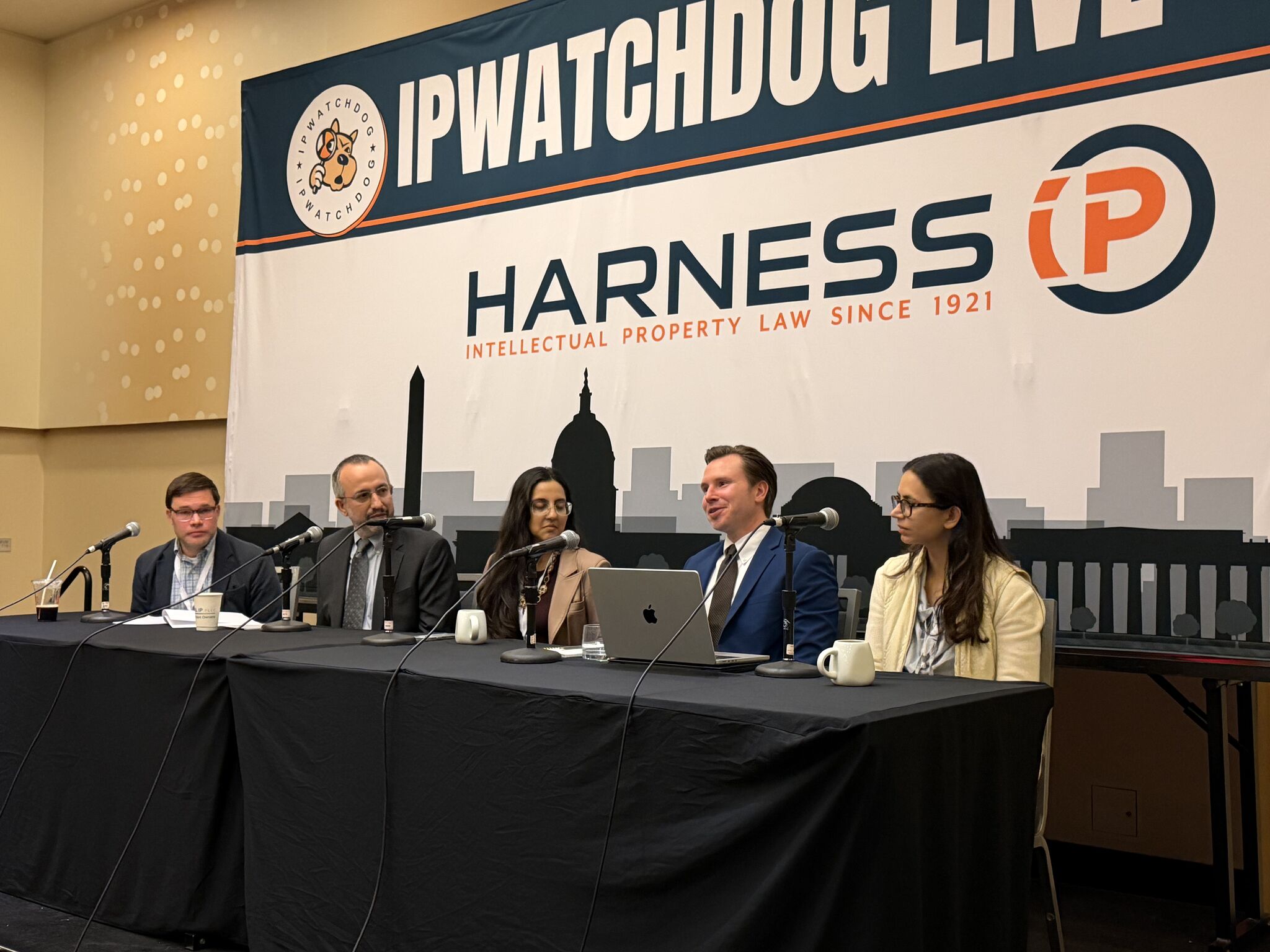
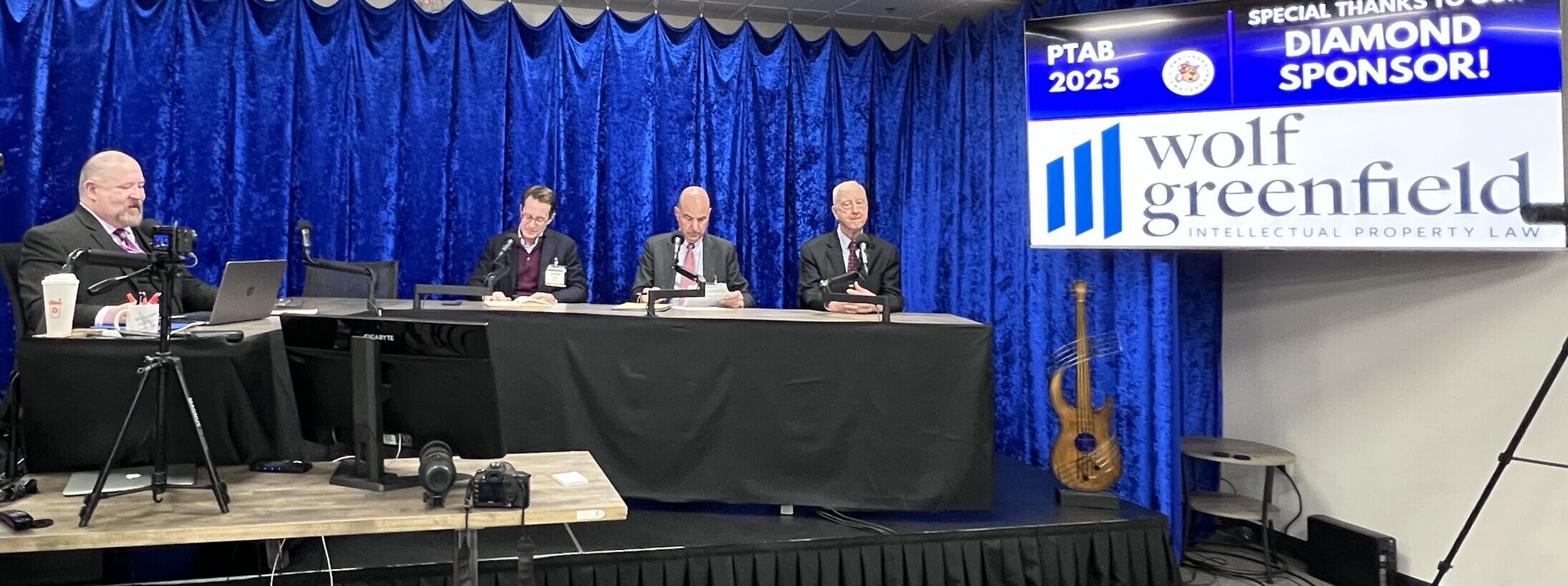 The first day of IPWatchdog’s PTAB Masters 2025 wrapped up with a session in which three IP luminaries weighed in on the future of key pending patent legislation, and the Patent Trial and Appeal Board (PTAB) more generally, under a Trump Administration. While the word “chaotic” was used, the panelists provided a roadmap for what the patent community should stay focused on amid all the noise.
Former U.S. Patent and Trademark Office (USPTO) Director David Kappos, for instance, said that “in times when things get chaotic, it’s important to have a good compass,” and urged attendees to pay attention to things that are not going to change, like the need for the Office to retain its fees, ways to tackle the sizeable backlog of applications, and the reforms contemplated by the three patent bills that will likely be reintroduced this congress (the Promoting and Respecting Economically Vital American Innovation Leadership Act (PREVAIL Act); the Realizing Engineering, Science, and Technology Opportunities by Restoring Exclusive Patent Rights Act (RESTORE Act); and the “Patent Eligibility Restoration Act” (PERA)).
Kappos noted that this administration includes leadership that is more directly familiar with patents than any he can remember in the past. The nominee for Secretary of Commerce, Howard Lutnick, for instance, is a prolific inventor and patent litigant. Coke Morgan Stewart, Acting USPTO Director, worked in-house with the agency for a decade in a variety of roles and also worked in the IP and Technology group at O’Melveny & Myers LLP.
Chris Israel, who has served as Deputy Chief of Staff to the Secretary of Commerce and later became the first U.S. International Intellectual Property Enforcement Coordinator, said the patent legislation that moved through the Senate Judiciary Committee last term will be re-introduced, but the real game-changer will be if the administration decides to actively support it. “If the administration were to lean in heavily or substantively into one or all of those bills, it would change things,” Israel said. Kappos recalled that the Obama Administration’s support for the America Invents Act (AIA) played a key role in ensuring that legislation moved forward: “It was the difference between failure and success, quite frankly,” he said.
Retired Chief Judge of the U.S. Court of Appeals for the Federal Circuit (CAFC) Paul Michel was not optimistic that the PREVAIL, PERA or RESTORE Acts would get through right away, but he said “they’ll ultimately pass because they’re needed.” However, at the moment, the bills “are not at the top of the list for anyone,” Michel said.
Return to Work Update
The panelists also addressed the recent Trump “Return to In-Person Work” Executive Order, which the Commerce Department said in a memo on Friday does not apply to the USPTO. The head of the Patent Office Professional Association (POPA), Kathy Duda, also said in an email that was posted to LinkedIn Friday that the collective bargaining agreement (CBA) POPA has with USPTO management exempts POPA members.

From left: Chris Israel, David Kappos and Judge Paul Michel
There remains some confusion, however, since both memos refer to exemptions for those covered by CBAs, which the PTAB judges and certain other USPTO staff are not. “Examiners seem safe,” said IPWatchdog Founder and CEO Gene Quinn, “but that leaves the PTAB judges and [Supervisory Patent Examiners] SPEs a little bit in limbo. The memo says it doesn’t apply to the patent office but there does seem to be this push [for staff to return to the office].”
The Commerce memo further states: “In collaboration with Department leadership, bureaus with employees covered by collective bargaining agreements addressing telework and remote work should continue to explore methods for maximizing in-person work.”
Quinn questioned the panel about what would happen if PTAB judges had to return to the Office. “They’d probably just quit,” Quinn commented. “Would the Office still be able to do the same number of IPRs for example, and still hit the 12-month [statutory timeline]?”
Michel said that the PTAB would need to focus on the “front end” in order to reduce its workload, namely, using its discretion to hear only the most important cases. The number of cases the PTAB sees already far exceeds that predicted by the AIA and while “it’s admirable that the Board has met the one-year deadline, so far,” if a lot of judges quit that’s going to be a big problem, Michel added.
Kappos said he agrees the Commerce memo is helpful and “hopefully that will hold. On its face it helps the whole PTO; how long it will help the PTAB remains to be seen.”
But beyond the Executive Order on returning to the Office, Kappos said the present hiring freeze is another problem. The USPTO is not exempted from that as far as anyone knows, and since the solution to the backlog starts with hiring examiners, “it’s really going to struggle” if it cannot hire for an extended period of time.
However, there are other areas the Office can focus on in the meantime, suggested Kappos. “In an era when you’re limited on hiring, you have to address the attrition issue,” Kappos said. There are also process improvements that can be made, for example, like implementing a Track 3 deferred examination option. The USPTO didn’t have the money to implement it when Kappos was at the Office, but now it does, he said. “When I was at the PTO, what the data showed was that 20% of those applications would fall out.”
Like the PTAB, if it is affected by the Return to Work order, the Office will have to find ways to become more discerning on the front end. And beyond that, the patent community will need to stand strong behind the USPTO and continue to advocate for patent reform, the panelists said.
The PTAB Masters Program will continue through tomorrow and Wednesday. See the agenda here.
![[Advertisement]](https://ipwatchdog.com/wp-content/uploads/2026/03/NLPatent-Apr-2-2026-sidebar-700x500-1.jpg)
![[Advertisement]](https://ipwatchdog.com/wp-content/uploads/2026/02/Junior-Apr-7-2026-sidebar-700x500-1.jpg)







![[Advertisement]](https://ipwatchdog.com/wp-content/uploads/2021/12/WEBINAR-336-x-280-px.png)
![[Advertisement]](https://ipwatchdog.com/wp-content/uploads/2021/12/Ad-4-The-Invent-Patent-System™.png)




Join the Discussion
5 comments so far.
F22strike
January 29, 2025 12:25 pmUSPTO patent examiners that accept the buyout offer will largely be those with the highest skill set. They will be confident in obtaining jobs in the private sector.
Of course, very experienced and productive USPTO patent examiners that are near retirement will also be inclined to accept the buyout offer.
ghostndragon
January 29, 2025 10:38 amDoes anyone know if examiners got the buyout letter that Pro Say mentions? Federal employees would be foolish to take it (they would have little recourse if the promise wasn’t met, and there are huge security implications), but some definitely will. If examiners are part of that group, we’ll see even more problems.
Pro Say
January 28, 2025 11:05 pmMore great news PTAB judges! Now you can resign from the PTO with — get this — almost 8 months pay! And you can actually defer doing so as well!
https://apnews.com/article/trump-buyouts-to-all-federal-employees-f67f5751a0fd5ad8471806a5a1067b5e
https://www.opm.gov/fork
So please do what’s right for both America . . . and you, too!
Hit the streets!
Pro Say
January 28, 2025 01:01 pmBecause it would likely put pressure on Congress to eliminate the experiment-gone-very-bad PTAB (including because the one-year time requirement (even with six-month extensions) would be impossible to meet, a mass resignation of the PTAB judges would be a big boost to American innovation.
Furthermore, our real courts with real judges would — as timely justice requires — soon end trial delays waiting for PTAB decisions . . . which might not come for untold years . . . if at all.
So PTAB judges . . . why wait? Best to leave now before you find yourself in a mad, mass rush return back to law firms . . . competing for whatever few jobs there may be.
Ask not what your country can do for you, but what you can do for your country.
Julie Burke
January 27, 2025 08:53 pmyes, time to consider the deferred examination option