
![[IPWatchdog Logo]](https://ipwatchdog.com/wp-content/themes/IPWatchdog%20-%202023/assets/images/temp/logo-small@2x.png)

 0
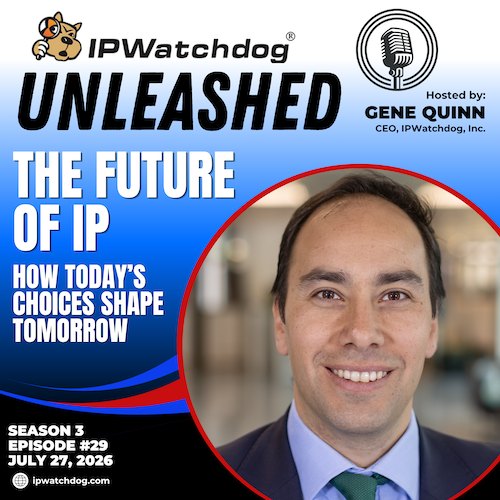
0 This week my conversation is with Leo White, who is Chief IP Counsel and Associate General Counsel for The Duracell Company. Leo is a patent professional by training, first starting out as an engineer, then, like so many in the patent field have done, he became a patent agent, then went to law school, and thanks to hard work, good mentoring and being in the right place at the right time, he became an IP attorney for The Duracell Company, ultimately rising to become the top IP counsel with one of the more iconic brands in the world. You can listen to our full discussion wherever you get your podcasts (links here) or visit IPWatchdog Unleashed on Buzzsprout. We have also posted a complete transcript, and you can also watch the video on YouTube.
During our conversation, we briefly speak about patent strategy, but then move quickly to brand protection, trademarks, trade dress and effectively working with customs agencies around the world. While Duracell does patent its various battery technologies, and while White is responsible for maintaining a worldwide patent portfolio for the company, the company’s trademark and trade dress portfolio are the IP tools of choice used most often when working to fight the never-ending battle against counterfeiters and copycats, and to also protect against gray market imports.
At one point during our conversation, I ask White whether the nefarious actions of counterfeiters and copycats is a 365-day a year problem, or whether there is an uptick in counterfeiting activities during the Christmas buying season.
“Obviously from a retail [and] revenue perspective, this is a huge time of the year for us and our competitors in the battery space,” White explained. When it comes to the bigger retailers, White says they have not had many issues with finding counterfeits being sold in such stores. But online platforms are a different story.
“As far as the marketplaces go, in a lot of ways, it’s the wild, wild west,” White said. But yes, we continually scour the marketplaces on a global basis, not just in the United States, but all over the world. And… there are various factors that drive the demand for counterfeit products.”
“You’ll hear people describe it as whack-a-mole. And I think in some ways it very much is, where you can go after one legal entity today that shuts down and opens up as a new legal entity tomorrow, literally,” White explained. “So, anything that you may want to do against that new purveyor of counterfeit goods requires a whole new set of evidence and action; all this kind of stuff is very much true and very much our experience.”
![[Advertisement]](https://ipwatchdog.com/wp-content/uploads/2026/08/Tradespace-Sep-1-2026-sidebar-700x500-1.jpg)
![[Advertisement]](https://ipwatchdog.com/wp-content/uploads/2026/08/IP.com-Sep-3-2026-sidebar-700x500-1.jpg)
![[Advertisement]](https://ipwatchdog.com/wp-content/uploads/2026/07/Womens-IP-Forum-2026-sidebar-register-early-bird-now-700x500-1.jpg)
![[Advertisement]](https://ipwatchdog.com/wp-content/uploads/2026/07/Juristat-Varsity-Ad-2026-IPW-ad-Solo_2.png)
![[Advertisement]](https://ipwatchdog.com/wp-content/uploads/2026/08/OneTransform_700x500_v1-REVISED.jpg)
![[Advertisement]](https://ipwatchdog.com/wp-content/uploads/2024/09/Patent-Prosecution-Training-sidebar-700x500-2025-03-27.jpg)



![[Advertisement]](https://ipwatchdog.com/wp-content/uploads/2021/12/WEBINAR-336-x-280-px.png)
![[Advertisement]](https://ipwatchdog.com/wp-content/uploads/2021/12/Ad-4-The-Invent-Patent-System™.png)







Join the Discussion
No comments yet.